

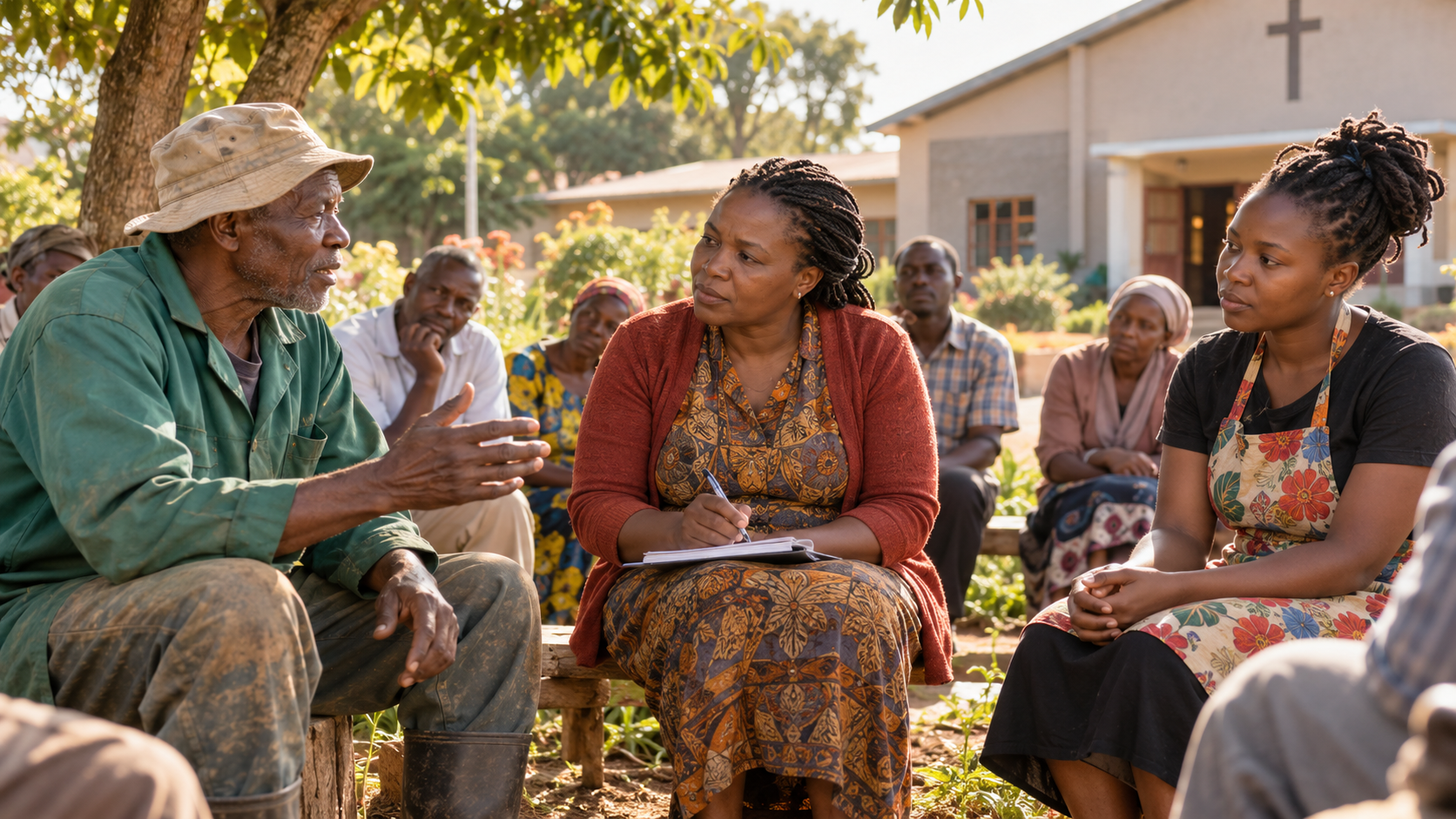
Can the people you lead tell you something you do not want to hear and still trust that you will treat them with dignity?
Primary Scriptures and translation
Primary Scriptures: 1 Kings 12:1–19; Acts 15:1–35; James 1:19–27
When a leader hears the words but misses the message
Consider this fictional situation. A school committee proposes a new contribution to improve classrooms. The plan looks convincing on paper. One teacher explains that several families are already struggling to meet their children's basic needs. Before the teacher finishes, the chairperson replies, “We understand the difficulties, but progress comes at a cost.” The proposal passes. Months later, some children begin missing school because their families cannot keep up.
The committee treated important information as an obstacle rather than a warning.
Having made room for truth in the previous article, we must ask: Once people have the freedom to speak, what does a leader do with what they say?
Listening is neither endless delay nor agreement with every opinion. It honors people, uncovers missing truths, and tests our plans before we use our authority.
Listening to Scripture in context
Rehoboam: advice requested but never received
After Solomon dies, Israel gathers at Shechem to make his son Rehoboam king. Through Jeroboam, the people ask him to ease the burdens imposed during his father's reign (1 Kings 12).
Rehoboam consults Solomon's older advisers, who urge gracious service. His own peers recommend greater severity. Rehoboam chooses the threatening answer, and the northern tribes break away (1 Kings 12:1–19, New International Version, NIV).
The division also fulfills earlier prophetic judgment (1 Kings 11:29–39; 12:15); it is more than one communication failure. Yet Rehoboam's choice reveals a moral failure: he preferred advice that magnified his power to counsel that took the people's suffering seriously.
Jerusalem: listening without surrendering the gospel
Acts 15 presents a very different leadership moment. Some believers insist that Gentile followers of Jesus must be circumcised according to Moses' custom in order to be saved. Paul and Barnabas oppose this demand. The apostles and elders gather in Jerusalem, and a substantial debate follows. Peter recalls how God received Gentiles and gave them the Holy Spirit. The assembly then listens to Paul and Barnabas describe God's work among them. James considers that testimony in the light of the prophets (Acts 15:1–21, NIV).
The leaders, together with the church, finally send a letter and trusted representatives to communicate their decision. They refuse to make salvation depend on circumcision, while offering guidance intended to support fellowship across different communities (15:22–35). It was a serious attempt to remain faithful to the gospel by listening to testimony, interpreting Scripture, and considering the people who would carry the consequences.
James 1:19–27 adds a personal challenge. Believers are urged to listen readily, speak carefully, and restrain anger. They must also become doers of God's word rather than merely hearers.
Hear the burden before defending the plan
The people at Shechem named a heavy yoke. When Rehoboam answered with threats, he defended the appearance of royal strength rather than asking whether the burden could be lifted.
This can happen in a church when a building project is evaluated only by money raised, without asking what families are sacrificing.
John C. Maxwell, in Connect with Your Ears, reflects on how his early leadership focused more on presenting ideas than receiving feedback. A leader can have a compelling vision and still overlook the people who must live with its consequences.
The gospel asks more of us. Jesus describes greatness in terms of service rather than the domination practiced by rulers who use power to elevate themselves (Mark 10:42–45). Listening to someone's burden does not require granting every request. It does require treating people as neighbors whose worth does not depend on whether we agree with them.
Ask yourself: Who is carrying the hidden cost of a plan I am proud of, and when did I last hear their account?
Distinguish consultation from willingness to be corrected
Rehoboam consulted two groups of advisers. But consultation became a way to select the answer that supported the image of strength he already preferred.
Real listening asks more than giving someone a few minutes during a meeting. It leaves room for the leader to be corrected.
An article published by Simon Sinek's organization, drawing on a conversation with Jocko Willink, explores the value of leaders resisting the urge to fill every silence with their own answers. It is a practical observation worth testing: when I announce my preferred solution first, do others still feel free to disagree?
A committee may appear open while everyone knows that the person who challenges the chair will never be entrusted with responsibility again. Christian leadership needs more than manners: records of competing proposals, space for dissent, and a process for reviewing decisions.
Ask yourself: When did I last change my mind because someone with less authority helped me see a truth I had missed?
Listen together, and test what you hear by the gospel
Acts 15 does not bury disagreement under a demand for immediate unity. The question is brought into the open. Testimony about the Gentiles is heard, but it does not replace the interpretation of Scripture. Scripture is examined, but not used to dismiss evidence of God's work among people whom others had regarded with suspicion.
This helps us distinguish listening carefully from letting popularity determine truth. Equally, a leader cannot invoke the Holy Spirit as an excuse to silence questions or escape scrutiny. Christian discernment involves prayer, the biblical story, careful examination of evidence, and counsel from people able to challenge one another honestly.
N. T. Wright argues that the church is called to model God's new creation in the power of the Spirit. By new creation, we mean God's promised renewal of his world and his people, inaugurated through Jesus' resurrection and awaiting final fulfillment. My application of Wright's theological emphasis is that a church meeting should offer small but recognizable signs of that promised future: different people treated with dignity, truth welcomed rather than feared, and those affected by a decision not dismissed as if they were invisible.
Still, the church is a witness to the kingdom, not the kingdom in its fullness.
In a school, business, or civic organization, the habits of hearing evidence, respecting those affected, and measuring justice remain valuable.
Ask yourself: In disagreement, are we seeking a truth we can serve or a winner who can end the conversation?
Make room for people whose voices carry the least power
Those most in need of being heard may have the least power to speak.
In Acts 15, the disputed demands would fall heavily on Gentile believers. Listening to what God had done among them helped the leaders recognize the weight of a requirement others wanted to place on their shoulders.
Safety cannot mean requiring a harmed person to confront someone accused of abusing them for the sake of a quick reconciliation. Reports of violence, exploitation, or misuse of authority require serious attention: protect those at risk, preserve relevant information, respect appropriate confidentiality limits, use impartial safeguarding or investigative procedures, and contact responsible authorities when required. Forgiveness is not a substitute for investigation. Reconciliation cannot be compelled. Restoring a person to leadership is a separate matter from forgiving them.
Sinek's work often connects careful listening with trust and relationships. But church safety requires independent reporting routes, not just the pastor's friendly manner.
Ask yourself: Can someone raise a concern about my own conduct through a process that I do not control?
Decide, explain the reasons, and remain open to correction
Listening is not the final stage of leadership. After the Jerusalem discussion, the leaders reached a decision, put it in writing, and sent trusted people to explain it to the communities affected.
Listening does not require unanimous agreement. A leader can explain what was heard, why a decision was made, how harm will be monitored, and how to request review.
A school might pilot a policy with family feedback; a business might examine employee and customer welfare. A church must ask whether decisions equip disciples for life and mission, rather than merely adding events.
Christ's resurrection gives believers hope that faithful labor in the Lord is not wasted (1 Corinthians 15:58). Yet we cannot declare every church decision a triumph of God's kingdom simply because it was made by religious people. The reign of Jesus has already broken into history, but its completion still lies ahead.
Ask yourself: What evidence would persuade us to revise this decision, and who would be free to bring it forward?
A difficult question: Won't listening to everyone paralyze leadership?
It can, if consultation has no purpose, timetable, or responsibility. Sometimes leaders must act urgently, especially when someone may be in immediate danger. But urgency is not a license to invent facts or conceal harm.
Different decisions call for different processes. Where there is an immediate safety threat, take proportionate protective steps, follow applicable procedures, and investigate appropriately. For policies with lasting consequences, make time to hear those affected before committing the organization. For small, reversible changes, start with a limited trial and seek feedback quickly.
Listening grounds decisions in evidence, legitimate authority, accountability, and respect.
Life Application
- Begin with a question, not a speech. At the next meeting, ask what problem people see and why it matters before presenting your favored solution.
- Identify people who will be affected but are absent. Consider children, families, employees, members, and neighbors whose views have not been represented.
- Separate facts, interpretations, and proposals. Write down what happened, what you think it means, and what action you suggest. Do not confuse the three.
- Create safe feedback routes. Provide confidential reporting where appropriate and an independent pathway for concerns about harm; state confidentiality limits clearly.
- Invite principled disagreement. Ask someone to make the strongest fair case against your proposal without risking retaliation.
- Explain decisions publicly where appropriate. Clarify reasons, responsibilities, timelines, and how a review may be requested.
- Measure outcomes that matter to people. Consider safety, fairness, participation, discipleship, and quality of service—not attendance, revenue, or applause alone.
This week's practice: Twenty minutes of listening
Goal: Learn something important that may never appear in an official report.
- Choose one person affected by your decisions, especially someone who is seldom heard. Explain that you want to learn, not defend yourself.
- Set aside twenty uninterrupted minutes. Ask: “What is working? What burden have I not noticed? What would you hope I might change?”
- Summarize what you heard and invite correction. Do not promise an outcome you cannot deliver or solicit sensitive disclosures without a safe procedure.
- Identify one feasible response, who is responsible for it, and when you will report back. If harm is disclosed, use appropriate protection and reporting channels rather than treating it as a private coaching exercise.
- Reflect with a trusted accountability partner without revealing confidential details. After seven days, ask: What did I learn? What did I change? Whose voice is still missing?
Reflection and Discussion Questions
- What were the people at Shechem asking for, and why did Rehoboam's answer deepen the crisis?
- How does Rehoboam's consultation differ from the discernment practiced in Acts 15?
- How does James 1:19–27 connect receiving God's word with concrete action toward others?
- Who has less authority than you and may need more freedom to offer feedback?
- When does fear of losing respect keep you from hearing correction?
- What policies would protect someone reporting harm, including when the concern involves a senior leader?
- How can we take criticism seriously while checking the evidence fairly and refusing to belittle the person who brings it?
- Which decision this week requires deeper listening before action?
Conclusion: Before signing the decision, open your ears
Return to that school committee. Perhaps the classroom project could still proceed, but with contributions designed not to exclude struggling children. The failure was not having a vision. It was deciding without fully seeing the people asked to carry it.
Jesus, the risen King, forms a people in whom truth and love can meet. Yet that grace reshapes our use of authority. When we listen faithfully, another person can flourish, a neglected truth can come to light, and leadership can become a blessing.
Prayer: Lord Jesus, give me ears that listen before I defend myself. Show me the burdens my authority has overlooked. Guard me against pride; teach me to seek truth, and give me courage to decide with justice and love. By your Spirit, help those I lead to flourish. Amen.
Bridge to Article 6: Listening brings us to the doorway of decision. Once we cross that threshold, how do we make decisions that are just, understandable, and accountable? That is our next conversation in A Better Leader – Decisions Shaped by Justice and Accountability.
References
- The Holy Bible, New International Version (NIV). 1 Kings 12; Acts 15; James 1:19–27. Additional references: 1 Kings 11:29–39; Mark 10:42–45; 1 Corinthians 15:58.
- John C. Maxwell. “Connect with Your Ears.” Maxwell Leadership, February 19, 2019.
- The Optimism Company / Team Simon. “Why the Best Leaders Know When to Keep Their Mouths Shut.” February 26, 2025. This article presents a discussion featuring Jocko Willink; his ideas are not attributed here as quotations from Simon Sinek.
- N. T. Wright Online. “Beginning to Think About the New Creation.” On the church as a Spirit-empowered community that models new creation.


Be the first to leave a comment.