


Are we so bound by our habits and past failures that real change is impossible?
01
Introduction
What do you do when the promise you made on Sabbath is already broken before Monday arrives? Can a person truly change without pretending that the wounds they caused never happened?
Anger rises before you have time to stop it. The lie you thought was small now needs another lie just to keep standing. Or perhaps you have promised to leave a certain habit so many times that even you are tired of hearing yourself say, “This time I will change.”
Then shame arrives with its verdict: “This is who you are. You will never change.”
On the other side, someone may tell you, “Just try harder,” as though the whole problem were simply a lack of determination.
But the Bible goes deeper than either answer.
Sin is more than a single wrong act. Repeated choices can become patterns, and patterns can begin to rule our desires, habits, thoughts, and relationships. When we keep walking the same road, eventually it can feel like the only road we know.
The good news is that God has not left us under that rule. In Jesus Christ, he has acted to break the power of sin and open the way to a new life.
That freedom does not mean temptation disappears overnight. It does not erase the damage we have caused, nor does it require the people we have hurt to forget what happened. It means something both humbling and hopeful:
Sin does not have to remain the master of your life.
These ten reasons invite us to move from simply admitting our bondage to learning how to walk in freedom.
02
1. Scripture recognizes a bondage that good intentions alone cannot break
Jesus says plainly that everyone who practices sin becomes a slave to sin—but he also says that the Son can truly set a person free (John 8:34–36).
Paul uses similar language when he explains how a person can keep yielding to a pattern until that pattern begins to rule over them (Romans 6:16–18).
The Bible is speaking here about more than an isolated mistake. Our choices leave footprints. When we repeat them, the footprints become a path. Before long, we may find ourselves walking that path almost without thinking.
That is why saying, “I didn’t mean to,” is not always enough.
A person who speaks harshly to family members every week may genuinely regret the pain they cause. But if the cycle continues, it must be named honestly. The pattern needs repentance, responsibility, and steady help toward change.
At the same time, we must be careful. Not every wound a person suffers is the result of their own sin. We must never use the word sin as a weapon against someone who has been abused, mistreated, or wounded by another person’s wrongdoing.
But when we are examining our own actions, telling the truth is the beginning of freedom.
Jesus promises freedom because he sees the chains clearly. They are not imaginary. They are real—and he desires to set us free.
Life Message: Name the habit that binds you for what it is. What remains hidden is harder to confront.
03
2. God promised to change the heart, not merely add more commands
Israel had God’s law. The people knew what was right. They had the prophets, worship, commandments, and generations of instruction. Yet they repeatedly returned to the same paths that wounded them and others.
Then Jeremiah announced the promise of a new covenant: God would write his instruction on the hearts of his people and forgive their sins (Jeremiah 31:31–34).
Ezekiel used an even stronger image. God would cleanse his people, give them a new heart, and put his Spirit within them so that they could walk in his ways (Ezekiel 36:25–27).
The prophets were not saying that God’s commands no longer mattered. They were making a deeper point:
Knowing what is right is not the same as becoming the kind of person who can faithfully do it.
You may know that harsh words wound your child. You may even promise never to speak that way again. Yet when anger rises, the same words may come out once more.
A rule on the wall can remind you what you ought to do. By itself, it cannot remake your heart.
God’s promise reaches deeper. His purpose is not merely to correct outward behavior but to transform the inner source from which our behavior flows.
Yet inner transformation never removes responsibility. A new heart teaches us to say, “I was wrong.” It teaches us to ask forgiveness without excuses, repair what we can, and get up tomorrow to walk a different road again.
Life Message: Ask God to do what your own strength cannot—and then take responsibility for each faithful step you can take.
04
3. At the cross, Christ confronted not only the guilt of sin but also its rule
Paul says that our old self was crucified with Christ so that we would no longer remain slaves to sin (Romans 6:6–7).
In Colossians, he describes God as forgiving our trespasses and, through the cross, disarming the powers that accused and dominated us (Colossians 2:13–15).
Christians have described the meaning of the cross through many biblical images. But Paul’s point here is unmistakable: Jesus did not come merely to give prisoners a longer list of instructions.
He came to break the bondage.
The cross also prevents us from treating sin lightly.
If we have wounded someone, we cannot use the words “I have been forgiven” as a way of escaping responsibility for what we did.
Freedom in Christ does not give us the right to demand immediate trust from someone we have hurt. Nor does it justify saying, “The past is the past,” while another person is still carrying the wound.
When Christ opens the door of freedom, he calls us to walk in the light: to confess, take responsibility, repair what we can, and respect the boundaries and safety of those we have harmed.
The cross does not hide evil beneath religious language. It gives us courage to face evil honestly because God’s grace is greater than our need to pretend we are innocent.
Life Message: Bring both your guilt and your bondage to the crucified Christ. His grace gives you courage to tell the truth instead of hiding.
05
4. The resurrection of Jesus says the old rule will not have the final word
Paul says that the risen Christ will never die again; death no longer has mastery over him (Romans 6:9–11).
In 1 Corinthians 15, Paul widens the picture to the end of history: the resurrection of Jesus is the beginning of a victory that will one day destroy even the final enemy—death itself (1 Corinthians 15:20–26, 54–57).
For Paul, sin and death belong to the same destructive reign. Both damage God’s good creation.
That is why the resurrection means more than one tomb being empty. It is the dawn of God’s future breaking into the darkness of the present world.
The powers that destroy life will not rule forever.
But dawn is not the same as midday. We still bury people we love. We still wrestle with old habits and desires. We still stumble.
That is why, after speaking about new life, Paul tells believers not to let sin rule in their bodies (Romans 6:11–13). If temptation had already disappeared, that warning would make little sense.
Resurrection hope does not deny the struggle.
It keeps us from surrendering to the darkness that says the struggle is all there will ever be.
Life Message: Today may be difficult, but it cannot erase the tomorrow God has already begun in the risen Jesus.
06
5. Union with Christ gives us another Lord to follow
Paul connects baptism with sharing in the death and resurrection of Jesus so that believers may begin to walk in newness of life (Romans 6:3–5).
Then he makes a remarkable statement: sin will not rule over them because they are now under grace (Romans 6:12–14).
This does not mean every old habit disappears overnight.
It means the authority has changed.
To belong to Christ means that sin no longer has the right to tell you who you are.
Your failures may still have consequences, and some of those consequences may remain for a long time. But they do not have the rightful authority to define your final identity.
Imagine an employee who has left an abusive employer after years of mistreatment. Even after starting a new job, they may still hear the old boss’s voice in their head. They may hesitate to make decisions or live as though the old rules still apply.
But that contract has ended.
They now have to learn how to live under a new authority.
In the same way, someone who belongs to Christ may still hear an old habit whisper, “You belong to me.” Each time they refuse that voice and turn toward Christ, they are learning again whose they are.
Grace does not remove the struggle all at once. It gives us new ground beneath our feet while we fight.
Life Message: When an old habit tells you that it still owns you, remember: you now belong to Christ.
07
6. The Spirit forms new desires and new actions within us
Paul tells believers to walk by the Spirit rather than be ruled by the desires of the flesh (Galatians 5:16–23).
When Paul uses the word flesh in this context, he is not saying that the human body is evil. He is describing human life bent away from God—desires, thoughts, and habits turned inward toward self-rule.
The Spirit produces a different kind of life: love, joy, peace, patience, kindness, faithfulness, gentleness, and self-control.
In Romans too, the Spirit gives life and enables believers to turn away from practices that destroy them (Romans 8:9–13).
But fruit does not grow with a thunderclap.
Often change begins in small moments that no one applauds:
Listening before answering. Pausing before angry words leave your mouth. Walking away from an argument before it becomes threatening. Telling the truth when a lie would be easier. Putting the phone down when an old habit begins to call.
Spiritual growth is often slower than the three-minute testimonies we love to hear.
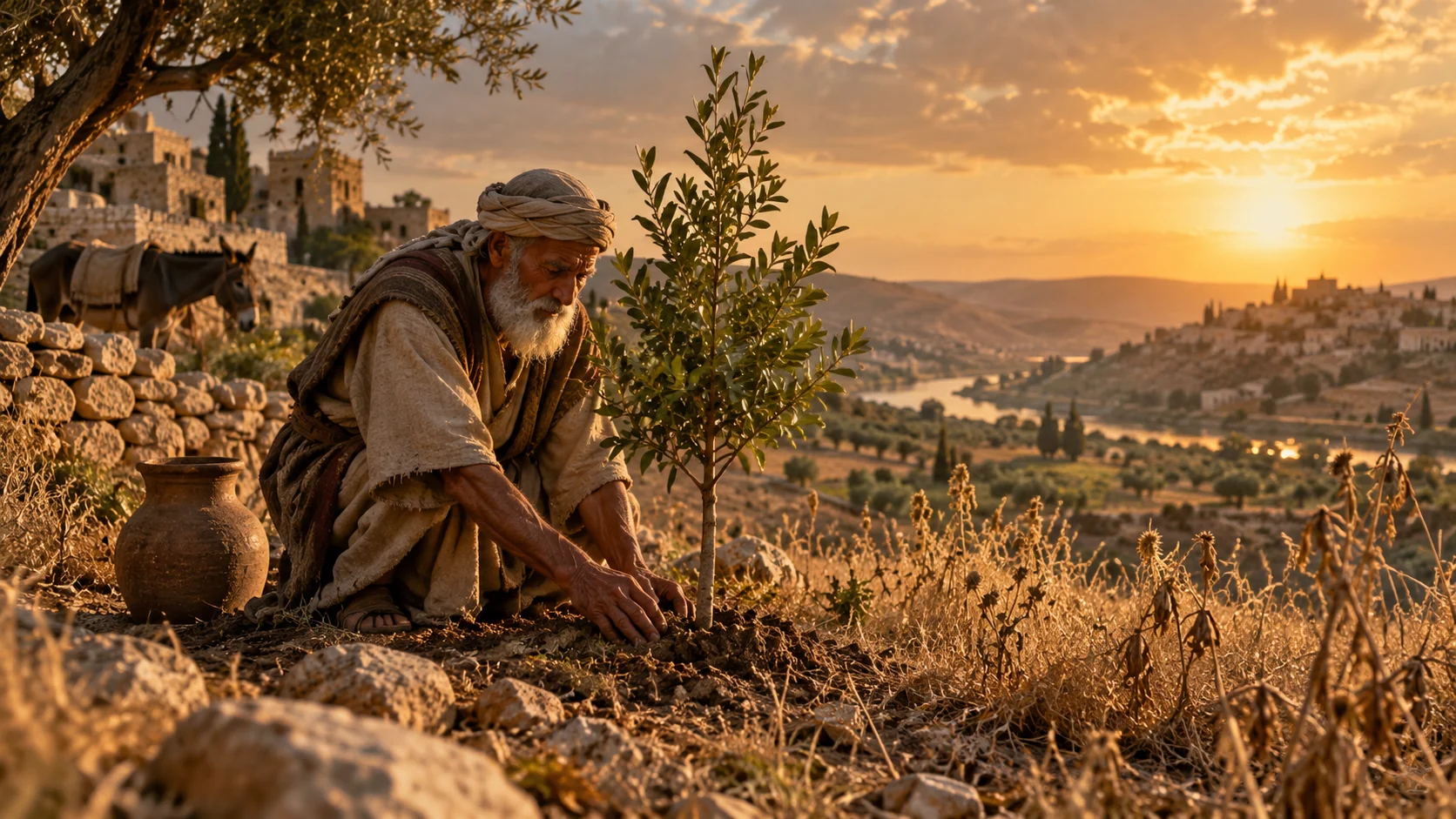
It is more like a tree. You cannot stand beside it and watch a branch grow. But after the seasons pass, the shade tells you that life has been quietly changing all along.
Prayer, repeated choices, and the work of the Spirit meet in the life of a person who is slowly learning to love what is good.
Life Message: Do not despise the quiet work the Spirit is doing within you, even when no one sees it or applauds it.
08
7. Confession breaks the darkness in which sin loves to hide
The psalmist describes the heaviness he carried while remaining silent about his sin, and then the relief that came when he confessed it before God (Psalm 32:3–5).
John likewise says that claiming to be without sin is self-deception. But when we confess, we meet the faithfulness and forgiveness of God (1 John 1:8–9).
James adds the importance of openness with others when he says, “Confess your sins to one another and pray for one another” (James 5:16).
Sin thrives in secrecy.
Silence can create two false stories: “There is no problem,” or “My problem is so terrible that no one can help me.”
Confession breaks both lies.
But confession does not mean exposing every sensitive matter publicly. Some situations require wisdom, confidentiality, and a trustworthy person who knows how to help.
Likewise, someone who has harmed another person cannot assume that confessing to a friend removes the deeper responsibility to address the person they wounded.
Still, one truthful sentence can become the beginning of freedom:
“I did this. It is harming me and others. I need help to change.”
Light does not erase every consequence immediately.
But once the light is on, we can finally see where to place the next step.
Life Message: Tell the truth before God and, when appropriate, before a safe and trustworthy person who can help you walk toward change.
09
8. New life is built through small decisions repeated every day
Paul urges believers to present their bodies to God and to be transformed by the renewing of their minds (Romans 12:1–2).
In Colossians, he uses the language of taking off and putting on. Believers are to put away anger, lying, and destructive behavior and clothe themselves with compassion, kindness, humility, gentleness, and patience (Colossians 3:5–14).
That is the language of action.
God’s grace does not make us spectators of our own transformation.
Someone who habitually wounds others with words can begin by admitting what they have done. They can seek help. They can learn to pause a conversation when anger rises instead of waiting until words become weapons. They can return later and speak calmly, without threats.
Someone who repeatedly stumbles in a certain area may need to change routines, environments, friendships, technology habits, or patterns that keep leading them back toward the same temptation.
These are not attempts to earn God’s love.
They are practical ways of learning to walk in the freedom he has already opened.
Old habits were formed through repetition. New habits are often formed the same way—through small acts of faithfulness repeated again and again.
Yes, sometimes our feet will slip.
But stumbling while moving forward is not the same as turning back and making the chains your home again.
Life Message: Choose one faithful action today that gives the old habit less room to rule you tomorrow.
10
9. God gives us people to help us in the struggle for freedom
Paul tells believers to restore gently someone caught in wrongdoing while watching themselves so that they too are not caught. Then he adds, “Carry one another’s burdens” (Galatians 6:1–2).
Hebrews also calls believers to encourage one another toward love and good works (Hebrews 10:24–25).
Christian freedom was never meant to be a one-person battle fought alone in a locked room with a secret.
We need other people.
But healthy support is neither the voice that says, “There is no problem,” nor the voice that shames someone until they believe change is impossible.
Healthy support may look like a friend brave enough to ask the question you would rather avoid. It may be a church community that refuses to hide abuse in order to protect its reputation. It may be a pastor, counselor, doctor, or trained professional with the wisdom a particular situation requires.
And this matters: the person wounded by your behavior is not required to become the person who helps you recover from that behavior.
They have the right to set boundaries. They may need distance. They may refuse to return to an unsafe environment.
The church serves genuine freedom when it creates spaces where truth can be spoken, vulnerable people are protected, boundaries are respected, and those who seek change are accompanied patiently without being hidden or humiliated.
Life Message: Seek help from trustworthy people, and make sure your accountability also protects those affected by your choices.
11
10. Freedom from sin is freedom to love
Paul says that we have been called to freedom. But he immediately explains what that freedom is for: not an opportunity for self-indulgence, but a call to serve one another in love (Galatians 5:13–14).
Here we see the true goal of Christian freedom.
It is not merely being able to say, “I no longer do that bad thing.”
It is becoming the kind of person who has more room within to love.
Hands that once grasped selfishly begin to give. A tongue that once lied begins to speak truth. The person who once hid begins to take responsibility. The one who used others begins to serve them.
Freedom has the shape of love.
Yet the work is still unfinished. John warns us not to claim that we are already without sin (1 John 1:8). At the same time, Paul reminds us that the God who began a good work in us will continue it until he brings it to completion (Philippians 1:6).
And the final pages of Scripture open an even wider horizon: God is making all things new (Revelation 21:1–5).
So when you stumble, do not let the old voice persuade you that change is impossible.
Return to Christ.
Tell the truth about what happened. Face the harm it caused. Accept the help you need. Then lift your foot and take another step along the road of freedom.
God did not break our chains so that we could become people with no master.
He set us free so that we might learn to become people of love.
Life Message: Measure your freedom not only by what you have stopped doing, but also by your growing ability to love God and your neighbor.
12
Conclusion and Invitation
Some habits have deep roots. They have woven themselves into memory, fear, desire, surroundings, and the rhythms of everyday life. The Bible does not ask us to pretend those roots are shallow or that one strong promise can pull them out overnight.
Scripture names the problem honestly:
Sin can bind us.
But that is not the end of the story.
The prophets announced the promise of a new heart. Jesus carried the weight of sin to the cross. His resurrection declared that the powers of destruction will not have the final word. The Spirit begins to grow new desires and new habits within us. Confession brings what was hidden into the light. Daily choices form a new path beneath our feet. And faithful people help us stand when we stumble.
This is not the magic of instant change.
It is the journey of redemption.
And that journey does not remove our responsibility to face what we have damaged. Grace does the opposite: it gives us courage to face the truth without hiding behind excuses.
So choose one thing you know has begun to rule you.
Do not call it “just my weakness” if, deep down, you know it is harming your life or the lives of others.
Name it before God.
If there is someone you have hurt, consider honestly how you can take responsibility and repair what can be repaired—without forcing them to forgive at your pace, trust you immediately, or return to an unsafe place.
Find a trustworthy person who can walk with you.
Then do not try to conquer your whole life today.
Take one faithful step.
Tomorrow, take another.
Christ does not call only the person who has never fallen. He also calls the person who is tired of getting up after falling again and again.
So if you are weary of hearing your own voice say, “I will try again,” perhaps today you do not need a bigger promise.
Perhaps you need to begin again while holding the hand of grace.
13
Final Prayer
Lord Jesus, you know the decisions I regret and the habits I sometimes fear I will never escape.
Forgive me where I have sinned. Give me courage to tell the truth without excuses, and lead me by your Spirit into a new way of life.
Help me repair what I can, respect those I have hurt, receive help when I need it, and grow in love.
When the old habit calls my name, remind me that it does not have to be my master.
And when I stumble, do not let me make the dust of my fall into my home. Take my hand, lift me again, and teach me to keep walking in the freedom you have opened.
Amen.
If this lesson has touched a struggle you know personally, or if you have a testimony of change you can safely share, send us a short message. Your words may become a light for someone who has grown tired of believing that change is impossible.

Be the first to leave a comment.