

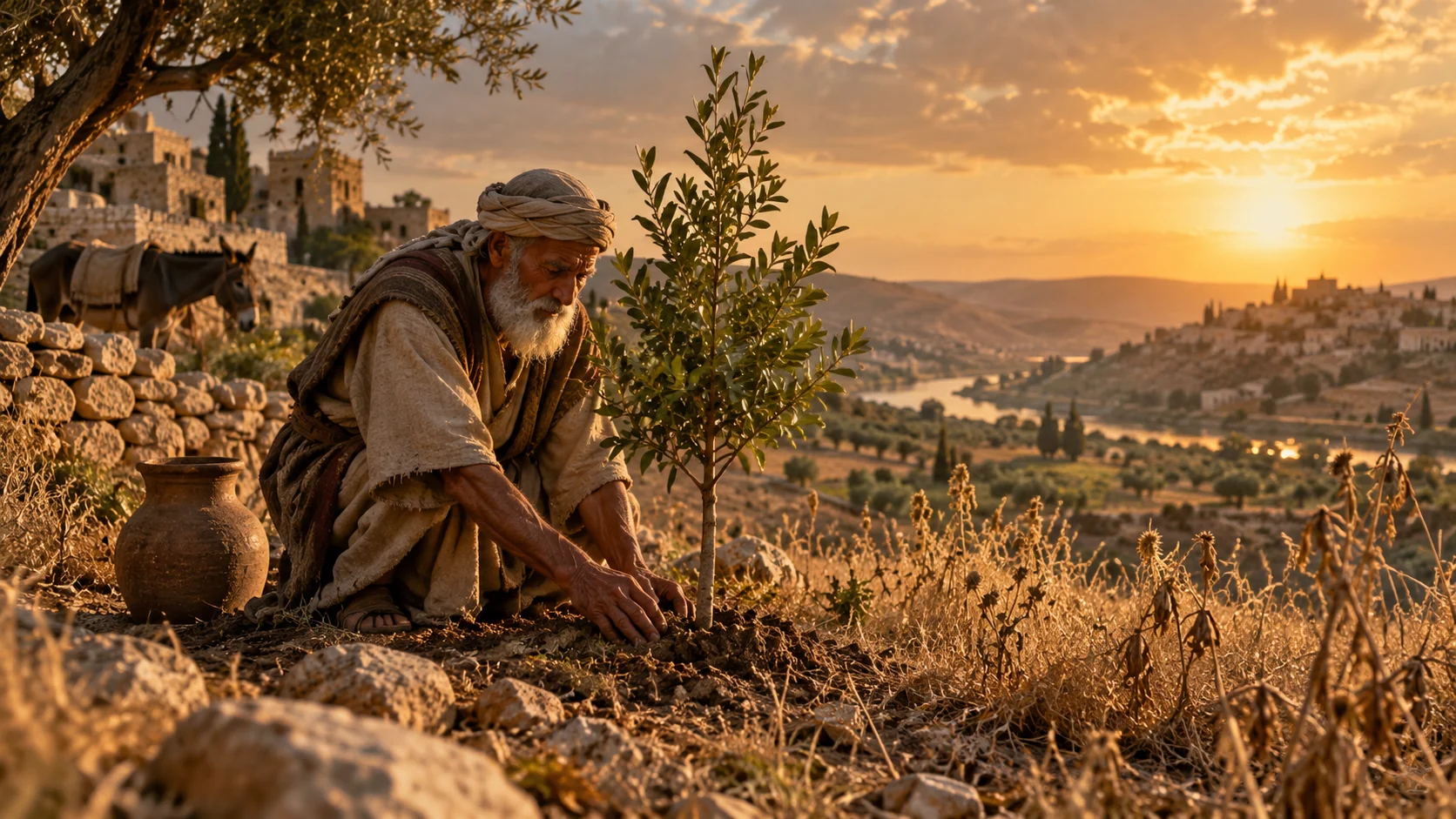
Do not let another person’s success set fire to your soul. Grass can look green while its roots are already failing. Psalm 37 teaches the faithful to live by a longer clock: trust, do good, be still, and wait for Yahweh.
Introduction
Few struggles corrode faith like watching injustice prosper. The ruthless gain influence, money, land, or reputation while faithful people feel pushed aside. Psalm 37 enters that heated inner world with a repeated command: do not fret. The Hebrew image suggests becoming inwardly hot because of evildoers.
The cure is redirection: trust Yahweh, do good, delight in him, commit your way, be still, wait, keep his way, and take refuge in him. This forms a person who refuses to let evil choose the methods.
This text is about anxious comparison becoming patient faithfulness, because the apparent success of the wicked must not be allowed to rewrite the character of the righteous. Psalm 37 teaches us to live by Yahweh’s future while the present still looks unfair.
Historical and Literary Context
Psalm 37 is an alphabetic wisdom psalm. Instead of lamenting to God, it teaches the worshiper. Goldingay compares its homily-like sayings to Proverbs: commands come with reasons, faithful and faithless are contrasted, experience is appealed to, and possession of the land recurs. The acrostic gives ordered shape to repeated wisdom, fitting the claim that the world is not finally chaotic.
Kidner highlights Psalm 37 as a major exposition of the third Beatitude. Its opening teaches a “quiet spirit”: look ahead, look up, and do good instead of being consumed by resentment.
Within Book One, Psalm 37 belongs to Psalms 35–41. After Psalm 35’s cry for justice and Psalm 36’s contrast between wickedness and Yahweh’s steadfast love, Psalm 37 asks how to live while justice is not yet fully visible. It also echoes Psalm 1 through the righteous/wicked contrast, “way,” Torah in the heart, the flourishing tree, and the wicked’s end.
Walking Through the Text
Psalm 37:1–11 — Do Not Let Evil Heat Your Heart
The opening gives a sequence of verbs for a pressured soul: do not fret; trust; do good; dwell; delight; commit; be still; wait. The wicked are like grass: green, but temporary. Success must be judged by duration, not brightness.
“Trust in Yahweh and do good” joins faith and ethics. Trust that makes us imitate evil is not biblical trust. “Delight yourself in Yahweh” is not a blank check for private desire; in context, Yahweh himself becomes the center of desire, freeing the heart from obsessive comparison.
Verse 5 pictures commitment as rolling one’s way onto Yahweh. Career, reputation, vindication, and future move into God’s care. Kidner stresses that “be still” means waiting, not inactivity. The worshiper refuses frantic self-assertion because Yahweh will act.
Verse 11 climaxes the section: the meek will inherit the land and delight in abundant shalom. The meek are not people without agency. In context they are those who choose patient faith rather than seizing the future by the methods of the wicked.
Psalm 37:12–20 — The Strong Are Not as Secure as They Look
The wicked scheme, grind their teeth, draw the sword, and bend the bow against the weak and needy. Psalm 37 is not naïve: evil can be organized and violent.
Yet the Lord laughs because he sees the day the oppressor cannot see. The weapon aimed at the vulnerable becomes part of the wicked person’s own collapse. Violence carries seeds of self-destruction.
Verse 16 reverses appearances: the little of the righteous is better than the wicked’s abundance. This does not romanticize poverty; it exposes false security. If Yahweh upholds someone, “little” is not abandonment, and unjust “abundance” is not permanence.
The psalm also names bad times and famine. Faith does not mean difficult seasons disappear. Yahweh “knows the days” of people of integrity; their lives remain within divine attention when circumstances are unstable.
Psalm 37:21–26 — The Upheld Person Becomes Generous
A striking test of righteousness is generosity. The righteous are gracious and give. The person upheld by God does not turn security into selfishness; provision serves another person’s good.
Verses 23–24 deepen the realism: a faithful person can fall. Psalm 37 does not promise a life without loss, humiliation, illness, or material collapse. It promises that falling is not the final sentence, because Yahweh holds the person’s hand.
Verse 25—“I have been young, and now am old”—is testimony, not a mechanical formula for judging sufferers. Goldingay notes that the psalm has already admitted the faithful may fall and appear abandoned for a time. The pastoral point is confidence: do not make a temporary crisis the final definition of God’s faithfulness.
Psalm 37:27–34 — Keep the Way While You Wait for the Outcome
“Turn from evil and do good” returns because waiting creates moral pressure. Persistent injustice tempts us not only to despair but to copy the enemy. Psalm 37 refuses that surrender. Torah is in the heart of the righteous; therefore speech becomes wise and steps become steady.
The wicked may even use legal power against the faithful, but Yahweh does not finally abandon them. Verse 34 joins two commands: wait for Yahweh and keep his way. Hope has a shape. It walks.
Psalm 37:35–40 — The Long View Changes What We Call Permanent
The teacher remembers a terrifying wicked person flourishing like a tree. Later the person was gone. What looks rooted can be temporary; what looks weak can have a future.
The psalm ends by telling us to observe the person of integrity, the upright, the person of peace. That person has a future. By contrast, the future of the wicked is cut off. Finally the whole alphabet of instruction resolves into one source: “the salvation of the righteous is from Yahweh.” He is their stronghold in trouble; he helps, rescues, and delivers because they take refuge in him.
Theological Reflection
First, biblical patience resists moral imitation. Envy can turn the wounded into a copy of the oppressor. “Do not fret” protects holiness as well as peace.
Second, security rests in Yahweh rather than visible advantage. Land, food, reputation, and stability matter, but the decisive reality is who upholds the person. Yahweh is repeatedly the acting subject: he acts, upholds, knows, keeps, exalts, helps, rescues, and delivers.
Third, the meek’s inheritance is social. The land promise concerns space where families can live without powerful people dispossessing them. The righteous response to provision is generosity; God’s justice makes room for the weak to live in shalom.
Fourth, Psalm 37 takes the long view without denying pain. Wisdom faith does not pretend every outcome is resolved; it refuses to treat injustice’s current success as history’s final interpretation.
Canonical and Christological Horizon
Psalm 37 reaches backward to Psalm 1 and forward to Jesus. Psalm 1 contrasts the rooted righteous with wicked chaff; Psalm 37 reaffirms that horizon after many laments. It is wisdom spoken after tears.
Jesus takes up Psalm 37:11: “Blessed are the meek, for they will inherit the earth” (Matt. 5:5). He announces God’s kingdom to people who refuse domination as their path to the future. Matthew 6:33 likewise calls disciples to seek first God’s kingdom and righteousness rather than let anxiety rule.
Jesus embodies this meek kingship. He refuses violent shortcuts, entrusts himself to the Father, suffers unjust power, and is vindicated in resurrection. The cross shows the righteous in wicked hands; resurrection declares those hands do not own the future. In him inheritance opens toward renewed creation, where God restores rather than abandons the earth.
The church reads Psalm 37 neither as prosperity formula nor permission for passivity: resist envy, refuse vengeance, do good, share, and trust the God who raises the fallen.
Life Application
- Identify what makes you “hot.” Name the person, system, or success that repeatedly triggers envy or resentment.
- Replace comparison with a practice of trust: pray, do one good act, and refuse one retaliatory impulse.
- Commit your “way” to God. Write down the career, reputation, relationship, or outcome you are trying to control.
- Practice stillness before action. Waiting may include reporting injustice, seeking counsel, wise organizing, or boundaries; it does not require revenge.
- Let provision become generosity. Ask whose dignity can be strengthened through your giving, lending, mentoring, or advocacy.
- Do not interpret a fall as final abandonment. Seek help, tell the truth about the loss, and let others hold your hand while you rise.
- Judge success by future fruit. Ask not only, “Is it working now?” but, “What kind of person and community will this produce?”
Reflection Questions
- Whose apparent success most tempts me to doubt the value of faithfulness?
- Which command in verses 3–7—trust, do good, delight, commit, be still, wait—is hardest now?
- Where am I tempted to fight injustice with the spirit or methods I condemn?
- How can my present resources become a blessing to someone more vulnerable?
- What would it mean to live this week as though Yahweh, not visible advantage, owns the future?
Response Prayer
Yahweh, when injustice looks green and strong, keep my heart from envy. Teach me to trust you and do good. Reorder my desires until I delight in you more than comparison or control. I roll my plans, name, fears, and future onto you. Hold my hand when I fall. Keep me from copying those who wound others. Make what you place in my hands a blessing to the weak. Through Jesus, the meek and risen King, teach me to wait without passivity, act without vengeance, and believe your justice has a future. Amen.
Window into What Comes Next
Psalm 37 teaches the soul not to fret while waiting for justice. Psalm 38 removes any illusion that patient faith produces an easy life. The next prayer enters pain, guilt, isolation, and hostility. The wise teacher says, “Do not let the wicked define your way”; the sufferer asks what faith sounds like when body and conscience collapse.
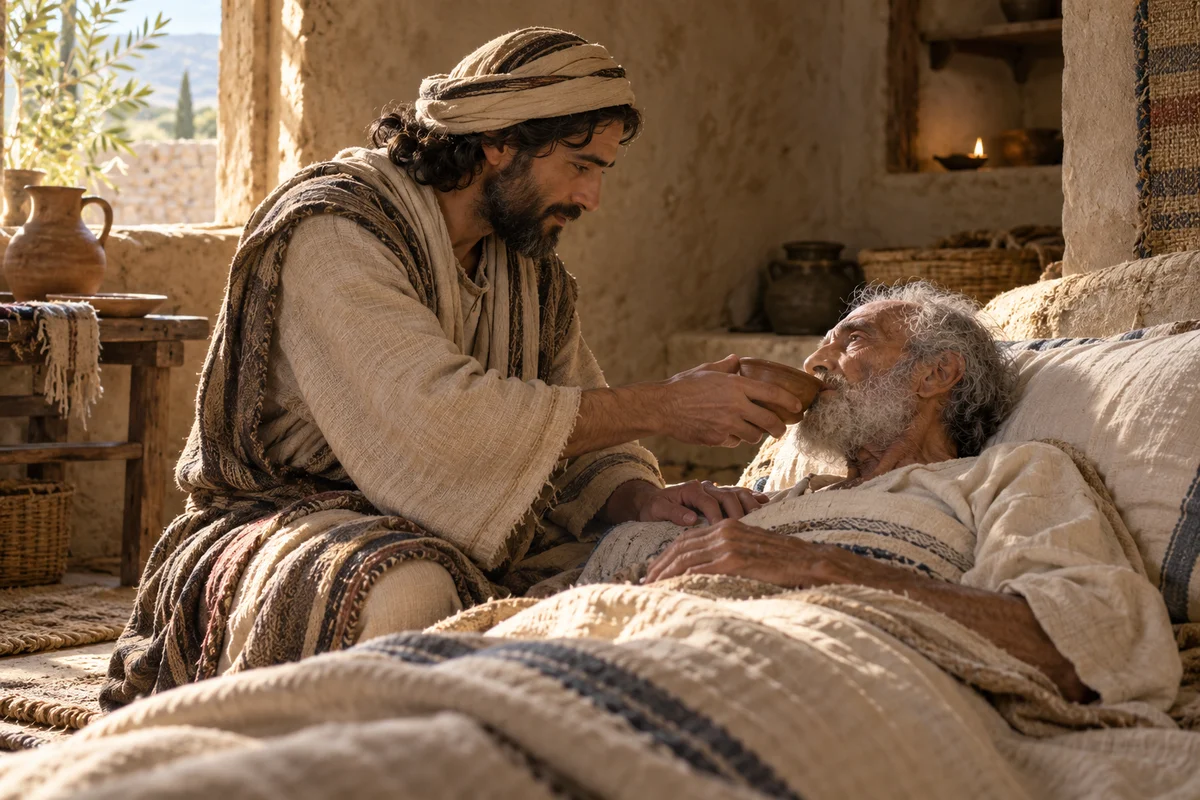
The long view now enters the sickroom. Waiting must learn how to lament.
Bibliography
- BibleProject. The Book of Psalms: Study Notes. Portland, OR: BibleProject.
- Goldingay, John. Psalms, Volume 1: Psalms 1–41. Baker Commentary on the Old Testament Wisdom and Psalms. Grand Rapids: Baker Academic, 2006.
- Kidner, Derek. Psalms 1–72. Kidner Classic Commentaries. Downers Grove, IL: IVP Academic, 2008.
- Wright, N. T. How God Became King: The Forgotten Story of the Gospels. New York: HarperOne, 2012.

Be the first to leave a comment.