

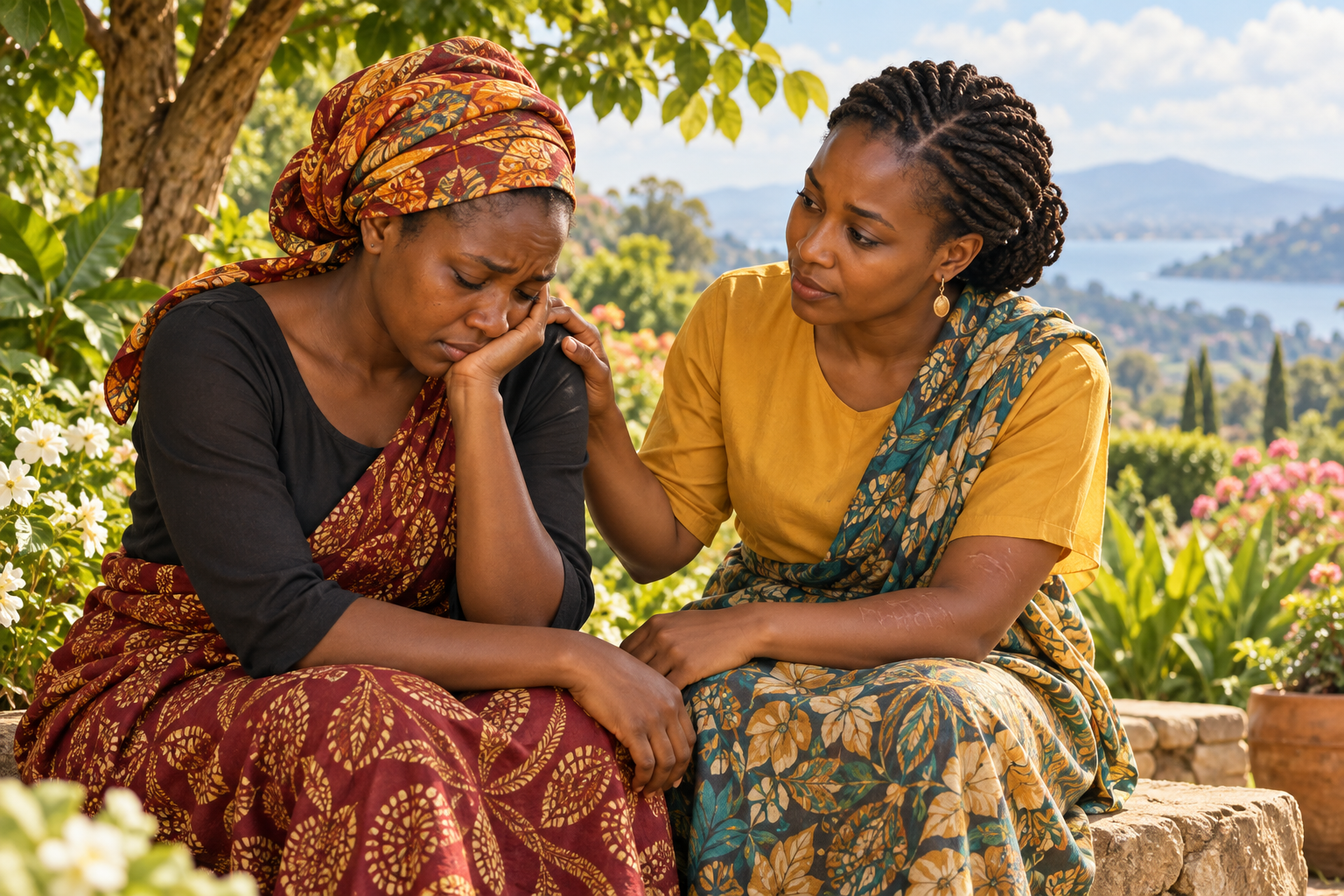
Can wounds become places through which grace enters the world?
01
Introduction
What can we say when pain has no lesson we can see?
Can God bring life out of harm without calling the harm good?
At a hospital gate, after a betrayal, or in a home made quiet by death, a well-meant explanation can land like another stone. “Everything happens for a reason” may leave the wounded person feeling that the wrong itself has been blessed. The Christian claim needs greater care. Scripture does not ask us to rename cruelty as kindness or to turn grief into a lesson on someone else’s schedule.
To say God can redeem suffering is to say he can meet people within it and bring about good that the wound could never produce by itself. Such good may include truth, companionship, justice, courage, or the ability to care for someone else. It is not guaranteed to appear quickly, and the person who suffers is not required to find it for an audience. These ten reasons trace the biblical hope while letting pain remain pain.
02
Ten reasons to believe
03
1. God sees suffering before asking anyone to explain it
When Israel cries under slavery, God says he has seen the people’s affliction and heard their cry; he comes to deliver them (Exodus 3:7–8). The psalmist says the Lord is near to the brokenhearted (Psalm 34:18). These texts do not present a distant observer looking for a clever account of why people hurt. They begin with God’s attention to people whose lives have been pressed down.
Someone may have spent months hearing advice but not the question, “What happened to you?” Being seen does not immediately reverse a loss. It can, however, be the first opening through which help enters. In the Exodus story, God’s seeing leads toward action. A believer who says God sees the suffering neighbor should be willing to see that neighbor too, and to ask what care or protection is needed.
Takeaway: Begin with the person’s pain and need, not an explanation you are eager to give.
04
2. Lament is a faithful way to speak when life hurts
The psalmist asks “How long?” and names the feeling of being forgotten (Psalm 13:1–2). Job curses the day of his birth in language that refuses a tidy answer (Job 3:1–26). These voices were kept within Scripture. Their presence tells us that a cry of distress need not be excluded from prayer.
You may be grateful for a friend and furious about a loss on the same day. There is no need to choose a polished spiritual mood before approaching God. Lament brings the truth of the moment into his presence and gives others a way to sit with us without correcting every sentence. It is neither the end of faith nor a promise that tears will stop by morning. It is a form of refusing to let pain have no listener.
Takeaway: Pray the truth you have today, even if it sounds more like a cry than a hymn.
05
3. Suffering is not a reliable measure of a person’s guilt
Jesus’ disciples asked whether a man’s blindness was caused by his sin or his parents’ sin. Jesus rejected their proposed blame (John 9:1–3). When people told him about deaths in a public calamity, he refused the claim that the victims were worse sinners than others (Luke 13:1–5). These passages do not say choices never have consequences. They forbid the quick inference from another person’s pain to that person’s moral failure.
After tragedy, questions can turn sharp: “What did they do to deserve this?” A sick person may begin asking the same thing of themselves. Jesus redirects us from accusation toward compassion, self-examination, and the work before us. Blame has often let bystanders remain comfortable. His words take away that comfort without taking away our responsibility to face real wrongdoing where it exists.
Takeaway: Do not use someone’s wound as evidence for a charge you cannot know to be true.
06
4. In Jesus, God entered suffering rather than explaining it from afar
Jesus knew rejection, violence, and a death carried out in public. The Gospel of Mark preserves his cry of abandonment on the cross (Mark 15:33–39). Hebrews speaks of a high priest able to sympathize with human weakness (Hebrews 4:14–16). The Christian claim is that God’s answer to evil includes the Son entering a world where it can wound him.
This does not make another person’s injury necessary or holy. No one should tell someone facing abuse to remain exposed to harm because Jesus suffered. His cross reveals God’s solidarity with the wounded and God’s costly confrontation with sin; it never authorizes us to make a victim carry more of someone else’s wrong. The sufferer is invited to bring even the words “Where are you?” to a Lord who knows that cry.
Takeaway: Look to Christ for companionship in pain, not for a command to tolerate further harm.
07
5. The resurrection says suffering and death do not own the future
Paul calls the risen Christ the firstfruits of those who have died and looks toward the defeat of death itself (1 Corinthians 15:20–26). The image is agricultural: the first sheaf is real, but the harvest has not yet been gathered. Christian hope rests on what God began in Jesus, not on the claim that believers already live beyond loss.
A grieving family still has to set a place at a table where someone is missing. The resurrection does not ask them to speak of that absence as small. It says death will not remain the final authority over the world God loves. That future can give courage for the work of today: arranging care, making a meal, standing up for someone vulnerable, and returning to prayer when words are thin.
Takeaway: Let resurrection hope accompany grief without asking grief to disappear on command.
08
6. The Spirit is present when prayer has run out of words
Paul describes creation groaning and believers groaning as they wait for full renewal. In that same passage he says the Spirit helps in weakness, including when people do not know how to pray (Romans 8:22–27). Jesus had promised his followers a Helper who would be with them (John 14:16–18). The promise of presence was made for unfinished lives, not for people who already know how to hold everything together.
There are mornings when a person can manage only a name and a long silence. A visit, a held hand, or another person praying quietly may be all they can receive. The Spirit’s help does not certify that the illness will end or the relationship will mend. It means weakness has not placed a person beyond God’s reach, even when they cannot assemble an impressive prayer.
Takeaway: When language fails, you can bring your silence and need before God.
09
7. God can draw good from evil without making the evil good
Joseph’s brothers sold him, and years later he described their intention as evil while speaking of God’s work to preserve lives through what followed (Genesis 37:23–28; 45:4–8; 50:20). The distinction matters. Their betrayal remains betrayal. Joseph’s later ability to feed people during famine does not retroactively turn slavery into an act of love.
His story is a testimony from someone who lived through loss and came to interpret part of its aftermath. It is not a sentence to impose on every injured person: “You will soon see why this happened.” Some stories remain unresolved in this life, and harm still calls for accountability. Yet Joseph gives us reason to hope that wrongdoers do not control every possible ending. God can work toward life even after people have worked toward ruin.
Takeaway: Hope that God can bring good from what happened while continuing to name the wrong as wrong.
10
8. A community can carry part of the burden
Paul asks believers to bear one another’s burdens and to weep with those who weep (Galatians 6:2; Romans 12:15). Acts describes a community sharing resources so that material need did not have to be faced alone (Acts 4:32–35). None of these commands asks the hurting person to become an inspiring story for the group. They place responsibility on others to make companionship practical.
Sometimes care is a meal left at the door, a ride to an appointment, help with a bill, or someone willing to listen without arguing with a person’s grief. Sometimes protection and qualified support are needed. A church that talks about redemption while hiding abuse or neglecting a hungry member has missed the shape of this calling. The presence of God should be visible in how his people treat those who are hurting.
Takeaway: Ask what burden you can help carry, and let the wounded person tell you what help is welcome.
11
9. Received comfort may become care for someone else, in its own time
Paul blesses the God of comfort who meets people in affliction, then says they may comfort others with the comfort they have received (2 Corinthians 1:3–7). He is speaking out of hardship, not claiming that pain is a training program God must give everyone. What comes from God is the comfort; suffering itself remains something to be resisted and relieved.
A person once left alone in grief may notice another mourner whom the room has overlooked. Their attention can become a small act of grace. But the person who has suffered owes no one public details, a ministry built around their wound, or a cheerful account of what it taught them. Sometimes their first task is simply to rest and receive care. If compassion later grows from what they have survived, it is a gift, not a debt.
Takeaway: Offer comfort when you are able, and give yourself permission to receive it first.
12
10. God promises a world in which tears are finally answered
Isaiah looks toward God swallowing up death and wiping tears from all faces (Isaiah 25:6–9). John sees God dwelling with humanity in a renewed creation where death, mourning, and pain are no more (Revelation 21:1–5). These promises do not supply a tidy explanation for each tragedy. They set suffering inside a story in which God will not leave it in charge forever.
Until then, wounds may remain open, and some relationships will not be restored. We work for justice and healing now because the promised future has that direction, not because our work can make the whole world new by tomorrow. The person still waiting is not a failed example of faith. There is room for them in the hope that God will finish what none of us can finish alone.
Takeaway: Seek honest healing today while holding open the future God has promised to all creation.
13
Conclusion and invitation
God sees the oppressed, receives lament, and refuses the easy accusation that suffering proves guilt. In Jesus he has entered the depths of human pain; in the resurrection he has begun the defeat of death. His Spirit meets weakness, and his people are called to carry burdens rather than explain them away. Joseph’s story leaves room for God to bring life out of evil, while Paul’s words leave room for comfort to become care. None of this blesses the wound. It points toward the God who can meet us within it and who promises a world where wounds no longer rule.
If you are suffering, begin wherever the truth is: a question, a cry, or silence. Tell one trustworthy person what kind of help you would welcome. You need not turn your experience into a lesson for anyone. If someone near you suffers, ask what they need, make room for their answer, and take a practical step to stand with them. Hope often arrives first as a person who stays.
14
Prayer
God who sees, you know the wounds we cannot explain. Receive our grief without asking us to disguise it. Draw near by your Spirit, give courage to those seeking safety and justice, and teach us to carry one another’s burdens. Where good can grow, let it grow gently; where pain remains, keep us within the hope of Jesus’ resurrection. Amen.
If this lesson raises a question or a story you can share safely, send a short message. Speak in your own time, with care for yourself and others.


Be the first to leave a comment.