

Did Jesus Truly Fulfil Israel’s Ancient Hope?
01
Introduction
Part II — Jesus Christ and the Heart of Christian Faith
Faith Built on Truth — Through Christ, Through Scripture, for Life
Was Jesus simply a later religious figure whom Christians forced into Israel’s Scriptures? Or did his life, kingdom announcement, cross, and resurrection bring Israel’s long story to the turning point it had been waiting for?
“Messiah” is one of those words Christians can use so often that we forget how Jewish it is.
It does not begin as a generic title for a spiritual rescuer.
It grows out of Israel’s story.
Israel had been called to bear God’s blessing into the world. Yet its own history became tangled in slavery, wilderness rebellion, failed kingship, idolatry, injustice, exile, foreign rule, and longing for restoration. The prophets and Psalms looked ahead to a day when God would act again: forgive sins, gather his people, defeat evil, restore David’s house, return to Zion, renew the covenant, pour out the Spirit, bring justice to the nations, and make creation flourish.
These hopes did not form one neat checklist.
They were more like rivers flowing through different books and centuries.
Some Jews longed for a Davidic king. Others emphasized priesthood, temple, wisdom, purification, or liberation. Some expected national restoration. Some looked toward cosmic renewal. The first-century Jewish world contained multiple messianic hopes, not one flat expectation.
Jesus enters that world.
He announces that God’s kingdom is arriving. He gathers twelve disciples. He heals the sick, confronts evil, forgives sins, challenges the temple, celebrates Passover around himself, rides into Jerusalem as king, accepts crucifixion, and is proclaimed risen.
Christians came to believe that Israel’s hope had been fulfilled—but in a form no one had completely anticipated.
Here are ten reasons to take that claim seriously.
02
1. The Hope for Messiah Grows Out of Israel’s Unfinished Story
The Bible’s messianic hope does not begin with isolated predictions.
It begins with an unfinished vocation.
God calls Abraham so that all families of the earth may be blessed through him [Genesis 12:1–3]. Israel is called to be a kingdom of priests [Exodus 19:4–6]. David receives a promise that his royal house will have a lasting future [2 Samuel 7:12–16].
But the story fractures.
Israel struggles to embody its calling. Kings fail. The kingdom divides. Jerusalem falls. Exile arrives.
Even after some exiles return, the deeper promises still seem incomplete. Foreign empires remain. Sin remains. The full glory promised by the prophets has not arrived.
That is why messianic hope exists.
Israel is waiting not merely for “a religious teacher,” but for God to complete what he began.
Jesus makes sense inside that unfinished story.
Takeaway: Messiah is not an answer dropped from heaven into a storyless world; he is God’s answer to Israel’s unfinished vocation and hope.
03
2. Jesus Fits the Hope for a Davidic King—But Redefines Kingship
God’s covenant with David created a durable expectation: a ruler from David’s line would carry God’s kingdom forward [2 Samuel 7:12–16; Psalm 2; Psalm 72].
The prophets keep that hope alive after the monarchy collapses.
Isaiah speaks of a child whose reign brings justice and peace, and of a shoot from Jesse’s stump upon whom the Spirit rests [Isaiah 9:6–7; 11:1–10]. Jeremiah expects a righteous Branch from David [Jeremiah 23:5–6]. Ezekiel speaks of one shepherd over God’s restored people [Ezekiel 34:23–24].
The Gospels deliberately place Jesus inside this hope.
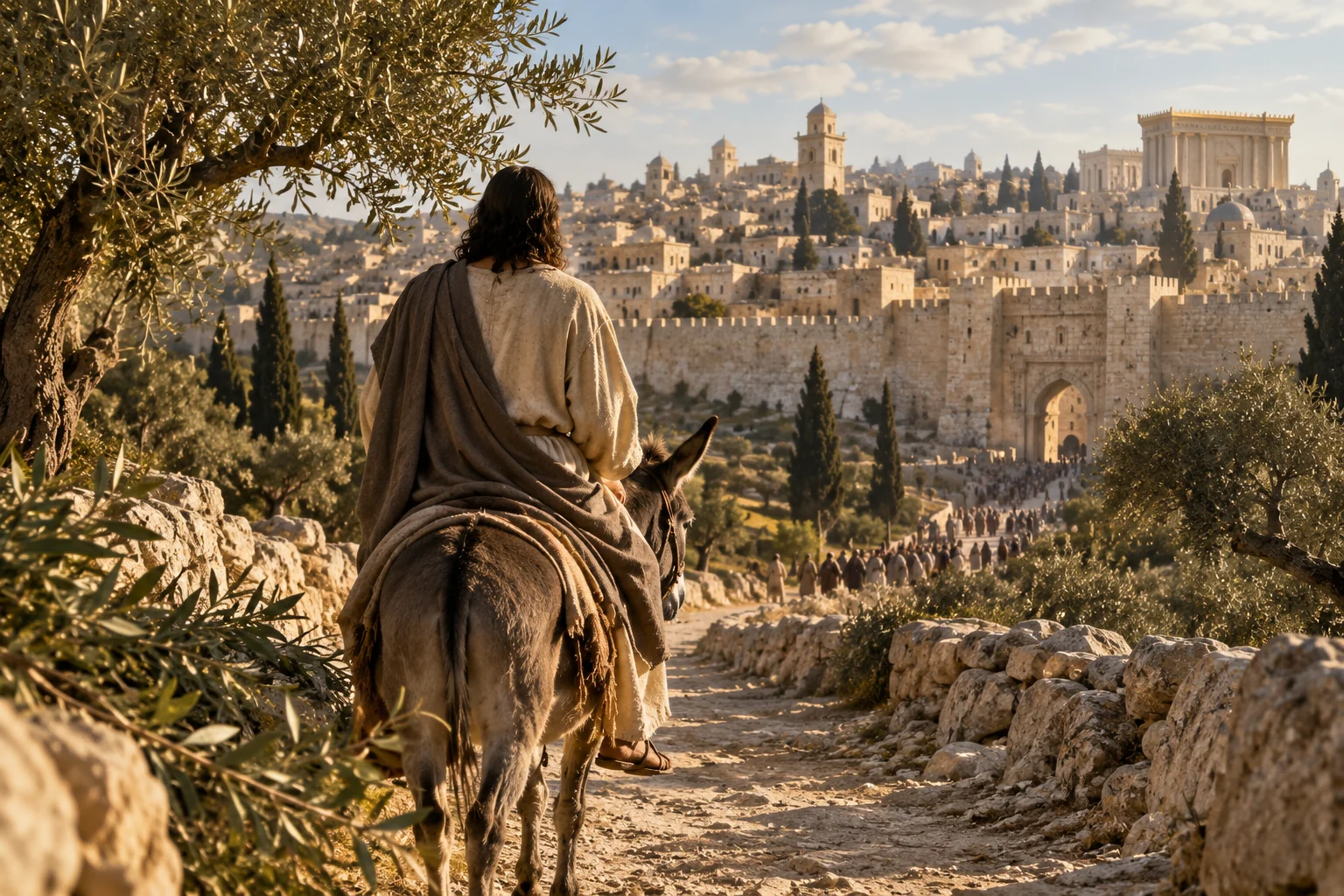
Matthew opens by calling him “son of David, son of Abraham” [Matthew 1:1]. Blind men call him Son of David. Crowds use royal language. He enters Jerusalem riding on a donkey, echoing Zechariah’s vision of Zion’s king [Matthew 21:1–9; Zechariah 9:9].
But Jesus refuses the normal script of kingship.
He does not seize power by the sword.
He washes feet.
He serves.
He goes to the cross.
The promised king arrives—but he redefines royal power around self-giving love.
Takeaway: Jesus fulfils Davidic hope not by copying earthly kings, but by showing what God’s true kingship looks like.
04
3. Jesus Announces the Kingdom Israel Had Been Waiting For
Jesus’ public ministry begins with an announcement:
“The time is fulfilled, and the kingdom of God has come near” [Mark 1:14–15].
That sentence is saturated with Israel’s hope.
The prophets had imagined God returning to rule, judge evil, rescue his people, and make his reign visible in the world [Isaiah 40:9–11; 52:7–10; Daniel 7:13–14].
Jesus says the time has arrived.
But the kingdom appears in unexpected form.
It looks like forgiveness.
Healing.
Deliverance.
Meals with outsiders.
Restored bodies.
Enemies loved.
Sinners welcomed and transformed.
Seeds growing quietly.
Yeast working through dough.
Jesus is not merely talking about heaven after death.
He is announcing that Israel’s God is becoming king in and through his own ministry.
The Messiah’s task and the kingdom’s arrival belong together.
Takeaway: Jesus presents his ministry as the moment when Israel’s God is beginning to establish his saving reign on earth.
05
4. Jesus Reenacts Israel’s Story and Launches a New Exodus
The Exodus was Israel’s great story of liberation.
God heard slaves, confronted Pharaoh, brought his people through water, met them in the wilderness, made covenant, and led them toward inheritance.
Later prophets used Exodus language for the restoration still to come [Isaiah 40:3–5; 43:16–21].
The Gospels portray Jesus through that pattern.
Matthew brings Jesus out of Egypt [Matthew 2:15]. He passes through water in baptism, enters the wilderness, resists temptation, and then goes up a mountain to teach [Matthew 3–5].
At the transfiguration, Luke describes Jesus’ coming death in Jerusalem with the Greek word exodos—his “departure” or “exodus” [Luke 9:28–31].
At Passover, Jesus interprets bread and wine around his own approaching death [Luke 22:14–20].
The new Exodus will not simply release Israel from Rome.
It will confront the deeper slavery of sin, evil, and death.
Takeaway: Jesus fulfils Israel’s Exodus hope by leading a deeper liberation—not merely from one empire, but from the powers that enslave humanity itself.
06
5. Jesus Acts as Though God’s Return to Zion Is Happening Through Him
The prophets promised that Israel’s God would return to Zion.
Isaiah pictures good news arriving because “Your God reigns” and Yahweh returns before the eyes of the nations [Isaiah 52:7–10]. Ezekiel sees the glory of God returning after judgment and exile [Ezekiel 43:1–7].
First-century Jews could look at the rebuilt temple and still ask whether the full promised return had really happened.
Then Jesus comes to Jerusalem.
He enters the temple, confronts its corruption, and announces judgment [Mark 11:15–18].
More startling still, he acts as though God’s presence is being relocated around himself.
He forgives.
He heals.
He speaks of his body as the temple [John 2:19–21].
He tells people that something greater than the temple is here [Matthew 12:6].
The messianic claim becomes larger than “Jesus is a king.”
It becomes: in Jesus, Israel’s God is returning to dwell with his people in a new way.
Takeaway: Jesus does not merely visit the temple; he behaves as though God’s promised presence is being centered in him.
07
6. Jesus Gathers Israel Around Himself as the Beginning of Restoration
The prophets imagined scattered Israel being gathered again [Isaiah 11:11–12; Ezekiel 37:21–28].
Jesus symbolically acts out that restoration.
He chooses twelve disciples [Mark 3:13–19].
The number is not accidental.
It evokes the twelve tribes of Israel.
Jesus is forming a renewed people around himself.
He eats with sinners and outsiders, announces forgiveness, heals those excluded by illness and impurity, and restores people to community.
His table becomes a sign of Israel’s restoration.
But the restoration expands.
Gentiles begin appearing at the edges of the story. Jesus praises the faith of a Roman centurion and envisions people coming from east and west to sit at the kingdom feast [Matthew 8:5–13].
Israel is being restored not so the nations can be excluded, but so Abraham’s blessing can finally flow outward.
Takeaway: Jesus gathers a renewed Israel around himself so that God’s ancient promise of blessing may reach the nations.
08
7. Jesus Takes Israel’s Covenant Story Into Himself
Israel’s hope was not merely for political independence.
The deeper wound was covenant failure.
Jeremiah promised a new covenant in which sins would be forgiven and God’s instruction written on the heart [Jeremiah 31:31–34]. Ezekiel promised cleansing, a new heart, and the Spirit [Ezekiel 36:24–28].
At the Last Supper, Jesus takes Israel’s Passover meal and says, “This cup … is the new covenant in my blood” [Luke 22:20].
That is an extraordinary act.
He interprets his approaching death as the event through which covenant renewal will happen.
The Messiah is not only the king who rules.
He becomes the representative Israelite who carries Israel’s story through judgment and into restoration.
In him, the covenant is not abandoned.
It reaches renewal.
Takeaway: Jesus presents his death as the turning point through which Israel’s failed covenant story is renewed and forgiveness opens again.
09
8. Jesus Fulfils the Servant Hope by Bearing Israel’s Calling Through Suffering
Not every messianic expectation centered on a conquering king.
Isaiah also speaks of a servant called to bring justice, restore Israel, become a light to the nations, and suffer on behalf of others [Isaiah 42:1–9; 49:1–6; 52:13–53:12].
Jesus repeatedly understands his mission in the language of service and suffering.
He says the Son of Man came not to be served but to serve and to give his life as a ransom for many [Mark 10:45].
At the Last Supper, he gives himself for others.
At the cross, he does not defeat violence by greater violence.
He bears rejection, shame, and death.
This is where Jesus’ messiahship becomes difficult for many of his contemporaries—and even for his disciples.
Peter can confess him as Messiah and still resist the idea of a suffering Messiah [Mark 8:27–33].
Jesus insists that the road to kingdom runs through the cross.
Takeaway: Jesus fulfils Israel’s hope by joining kingship with servant suffering—the Messiah conquers by giving himself.
10
9. Jesus Combines the Messiah with Daniel’s “Son of Man” and the Hope of Vindication
Jesus’ favorite self-designation in the Gospels is “Son of Man.”
The phrase can simply mean “human being,” but in key sayings it echoes Daniel 7, where “one like a son of man” comes to the Ancient of Days and receives dominion over the nations [Daniel 7:13–14].
Jesus uses this imagery in connection with suffering, authority, and future vindication [Mark 8:31; 10:45; 14:61–64].
At his trial, he tells the high priest that they will see the Son of Man seated at the right hand of Power and coming with the clouds of heaven.
The rejected prisoner speaks as though Daniel’s kingdom vision is about to be fulfilled through him.
The path is paradoxical.
The Son of Man suffers.
Then he is vindicated.
Messiah, servant, and Danielic ruler converge.
Takeaway: Jesus brings together strands Israel may have kept apart: suffering servant, royal Messiah, and vindicated Son of Man.
11
10. The Resurrection Is God’s Vindication That Jesus Really Is the Messiah
The crucifixion looked like the end of Jesus’ messianic claim.
A crucified Messiah sounded like a contradiction.
Messiahs were supposed to defeat Israel’s enemies, not be executed by them.
That is why resurrection is not an optional happy ending.
It is the decisive claim.
The earliest Christians announced that God raised Jesus from the dead and thereby vindicated him as Messiah and Lord [Acts 2:29–36; 13:30–39].
Paul says that Jesus’ resurrection is the beginning of the larger resurrection to come [1 Corinthians 15:20–28].
In other words, Israel’s hope has widened.
The true enemy is deeper than Rome.
It is sin and death.
The true restoration is larger than national independence.
It is new creation.
The resurrection tells Christians that Jesus did not fail to be Messiah because he died.
He redefined messianic victory by passing through death and defeating it from the other side.
Takeaway: The resurrection is God’s vindication that the crucified Jesus is Israel’s true Messiah and the beginning of the restoration Israel’s Scriptures had promised.
12
Truth and Your Decision: If Jesus Is Israel’s Promised Messiah
Did Jesus truly fulfil Israel’s ancient hope?
Not in the simple way many might have expected.
He did not drive Rome from Judea with an army.
He did not restore David’s throne by ordinary political conquest.
He did not rebuild Israel around nationalism.
Instead, he went deeper.
He announced God’s kingdom.
He gathered twelve around himself.
He enacted a new Exodus.
He brought forgiveness.
He challenged and replaced the temple’s centrality.
He renewed the covenant around his own death.
He joined Davidic kingship to Isaiah’s suffering servant.
He took Daniel’s Son of Man imagery onto his lips.
He died under Rome as “King of the Jews.”
And then, Christians proclaimed, God raised him.
This is why the first Christians did not conclude, “Jesus was a failed Messiah whose followers invented a new religion.”
They concluded that Israel’s Scriptures had reached their surprising climax.
The Messiah had defeated Israel’s enemies—but the deepest enemies turned out to be sin, evil, and death.
He had restored Israel—but as a renewed people gathered around himself and opened to the nations.
He had returned God’s presence—but centered now in himself and, through the Spirit, in his people.
He had begun the kingdom—but like a seed that would grow until new creation.
The fulfilment was not smaller than Israel’s hope.
It was larger.
The question is therefore not only whether Jesus fits a set of predictions.
It is whether he makes sense of Israel’s whole unfinished story.
And if he does, then the invitation of the Gospel is not merely to admire Israel’s Messiah.
It is to recognize him as the King through whom the Creator is putting the world right.
13
Closing Prayer
God of Abraham, Isaac, and Jacob, you carried your promises through slavery, wilderness, kingdom, exile, and long waiting.
Open my eyes to see how Israel’s hope finds its surprising center in Jesus.
Teach me not to reduce Messiah to power, nationalism, or victory as the world defines them.
Show me the King who serves, the Shepherd who gathers, the Servant who suffers, the Lord who forgives, and the risen Messiah who begins new creation.
Where I want a Jesus who only confirms my expectations, correct me.
Where I have separated your promises from the cross, bring them together again.
Teach me to trust Israel’s Messiah as my King and to live now as a faithful citizen of his coming kingdom.
Amen.
14
Join the Conversation
Which strand of Israel’s hope—Davidic king, new Exodus, temple, covenant, suffering servant, Son of Man, or resurrection—most helps you understand Jesus as Messiah? Which one would you like to explore more deeply?
Share your reflection, question, or testimony as we continue the Reasons to Believe series—Faith Built on Truth, Through Christ, Through Scripture, for Life.
Previous lesson: Jesus Truly Lived in History: Ten Reasons to Believe
Next lesson: Jesus Is the Son of God: Ten Reasons to Believe


Be the first to leave a comment.