


Sin, cleansing, and the mercy that remakes a person
01
1.0 Introduction: When “I Was Wrong” Is Not Enough
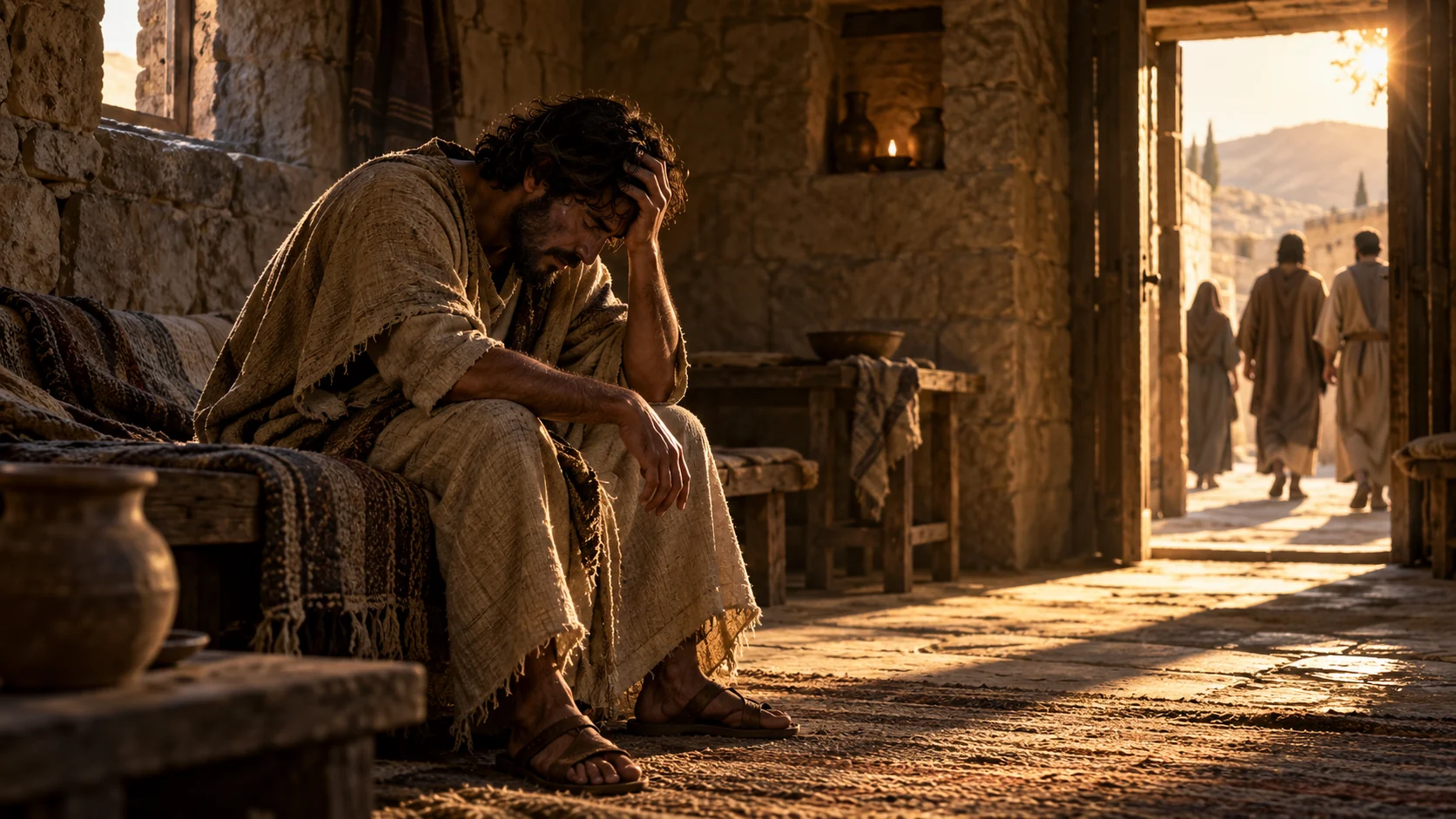
Sin leaves more than a stain on the record. It bends the heart that wrote the record. Psalm 51 asks God for both washing and re-creation.
Some apologies are designed to end a conversation. Psalm 51 does the opposite. It opens the door wider.
The superscription places the psalm beside one of the darkest episodes in David’s story: Nathan confronts him after his sin involving Bathsheba (2 Sam. 11–12). David had taken another man’s wife, arranged Uriah’s death, and then tried to continue as king while the truth lay buried beneath royal power. When Nathan finally says, “You are the man” (2 Sam. 12:7), the hiding place collapses.
Psalm 51 gives language to what comes after exposure.
David does not begin by explaining himself. He begins with God: “Have mercy on me, O God, according to your steadfast love” (Ps. 51:1). He knows that confession has nowhere to stand except inside the character of God. The prayer is not built on David’s goodness, usefulness, office, reputation, or past victories. It rests on God’s covenant love and abundant compassion.
Yet David also knows that forgiveness cannot mean merely cleaning the outside of the cup. Something in him has gone wrong at a deeper level. He needs washing, yes. But he also needs a new heart.
This text is about confession becoming re-creation, because God’s mercy does more than erase guilt; it restores the sinner for truthful worship and faithful life.
02
2.0 Historical and Literary Context
Psalm 51 stands in Book Two of the Psalter (Pss. 42–72), after Psalm 50’s sharp summons to genuine covenant faithfulness. Psalm 50 challenges a people who may still be offering sacrifices while forgetting the God to whom the sacrifices belong. Psalm 51 answers from the other side: what happens when the worshipper finally stops pretending?
The title connects the poem with David’s confrontation by Nathan (2 Sam. 12). That narrative background matters because David’s sin was not private in its effects. It damaged a woman, destroyed a loyal soldier, corrupted royal power, and brought violence into David’s household. Repentance therefore cannot be reduced to private regret.
The psalm moves in widening circles. It begins with cleansing (vv. 1–2), names sin without camouflage (vv. 3–6), asks for purification and restored joy (vv. 7–9), reaches its center in the cry for a newly created heart and renewed spirit (vv. 10–12), then turns outward toward witness and worship (vv. 13–17). The final verses widen the prayer again until Zion itself is in view (vv. 18–19). Personal repentance becomes communal restoration.
That movement matters. Sin curves life inward. Grace begins to open it outward again.
03
3.0 Walking Through the Text
04
3.1 “Wash Me Thoroughly” — Mercy Before Explanation (vv. 1–2)
David piles up images of removal: blot out, wash, cleanse. Sin is pictured as a record that must be erased, a stain that must be washed, an uncleanness that must be purified.
But the first words are not about sin. They are about mercy.
“According to your steadfast love” reaches back toward God’s own self-revelation as compassionate, gracious, and abounding in covenant loyalty (Exod. 34:6–7). David has broken covenant faithfulness, so he appeals to the One whose faithfulness is deeper than his failure.
This is where biblical repentance begins. Not with self-hatred. Not with bargaining. Not with the promise, “I will do better if you take this feeling away.” It begins by facing the truth about God and the truth about ourselves in the same room.
05
3.2 “Against You” — Sin Without Euphemism (vv. 3–6)
“For I know my transgressions, and my sin is ever before me” (v. 3).
The man who once arranged circumstances to hide his wrongdoing now refuses to rename it. Psalm 51 uses several words for evil: transgression, sin, iniquity. The vocabulary will not let David soften what happened into a poor choice, a complicated season, or a moment of weakness.
Verse 4 can sound troubling: “Against you, you only, have I sinned.” David plainly sinned against Bathsheba, Uriah, his household, and Israel. The point is not that human victims do not matter. It is that every sin, even when committed against another person, is finally rebellion against the God whose image that person bears and whose justice orders human life.
David then moves deeper: “Behold, I was brought forth in iniquity” (v. 5). He is not blaming his mother or claiming that his actions were inevitable. He is admitting that the problem cannot be confined to one night on a rooftop. Sin has roots. It reaches into the human heart.
That is why verse 6 matters: God desires truth “in the inward being.” The crisis is not merely that David did a sinful thing. The man who hides truth from others eventually becomes divided inside himself.
Repentance begins to heal that division.
06
3.3 Hyssop, Snow, and Crushed Bones — Cleansing That Restores Joy (vv. 7–9)
“Purge me with hyssop, and I shall be clean” (v. 7).
Hyssop evokes Israel’s purification rituals and the Exodus story (Exod. 12:22; Lev. 14). David is asking for more than emotional relief. He is asking to be made clean enough to return to the presence of God.
Then comes a surprising request: “Let me hear joy and gladness; let the bones that you have broken rejoice” (v. 8).
Repentance hurts because truth hurts when we have built our shelter out of lies. Yet the psalm does not glorify pain. Brokenness is not the destination. Joy is.
The prayer moves from washing to hearing: let me hear joy again. Guilt had made the world quiet. Worship had become difficult. Praise could not simply be switched on while the conscience remained buried under bloodshed.
Forgiveness restores sound to the soul.
07
3.4 “Create in Me” — The Prayer at the Center (vv. 10–12)
“Create in me a clean heart, O God, and renew a steadfast spirit within me” (v. 10).
The verb “create” is the great word of Genesis 1. David does not ask God to polish the old heart or strengthen his existing willpower. He asks for an act of creation.
That is one of Psalm 51’s boldest insights: some failures cannot be repaired merely by trying harder inside the same distorted patterns that produced them. The sinner needs God’s creative work within.
The next verses repeatedly speak of spirit: a steadfast spirit, God’s holy Spirit, a willing or wholehearted spirit. The prayer reaches for inner stability. David knows the danger of a heart that can sing psalms in one season and use power destructively in another.
“Do not cast me away from your presence” recalls what David had seen in Saul, from whom God’s Spirit departed in connection with his rejection as king (1 Sam. 16:14). David is not asking merely to keep his throne. His deeper fear is the loss of God’s presence.
Then comes the request many wounded consciences need permission to pray: “Restore to me the joy of your salvation” (v. 12).
Repentance is not complete when a person learns to live under permanent shame. God’s mercy aims to restore truthful joy.
08
3.5 From Silence to Witness — Forgiven People Learn to Speak Again (vv. 13–17)
The psalm now turns outward.
“Then I will teach transgressors your ways” (v. 13).
David does not imagine that his failure disqualifies him from ever speaking of God again. Neither does he return to ministry by pretending the failure never happened. His future witness will come through the memory of mercy.
Verse 14 names bloodguilt. The language fits the narrative shadow of Uriah’s death. David does not ask to escape responsibility through religious activity. He asks the “God of my salvation” to deliver him so that his tongue can sing again.
Then verse 15: “O Lord, open my lips, and my mouth will declare your praise.”
This is not stage confidence. It is the prayer of a conscience that has been silenced.
Verses 16–17 then place sacrifice in its proper order. God is not rejecting the sacrificial system he gave Israel. The issue is worship without truth. A burnt offering can be placed on an altar while pride remains untouched. The sacrifice God will not despise is “a broken spirit; a broken and contrite heart.”
A crushed heart is not a personality permanently destroyed. It is the end of resistance. The sinner stops defending the throne inside.
09
3.6 When One Person’s Prayer Reaches the City — Zion and Restored Worship (vv. 18–19)
The final verses pray for Zion and Jerusalem’s walls.
Whether these lines arose from David’s own wider concern or from later worshippers who took David’s confession onto their lips, their placement gives the psalm a fitting conclusion. Sin is never only personal. Neither is restoration.
“Do good to Zion in your good pleasure; build up the walls of Jerusalem” (v. 18).
The psalm that began with “have mercy on me” ends by looking toward the city. The forgiven person is returned to the community, and renewed worship becomes possible again.
Then sacrifices can be offered rightly, not as a substitute for repentance but as its embodied expression.
10
4.0 Theological Reflection
11
Mercy Is the Ground of Repentance
Psalm 51 does not teach that God forgives because David confesses perfectly. David confesses because he has nowhere else to go except the mercy of God.
Grace does not make sin small. It makes honesty possible.
12
Sin Damages More Than Behavior
David asks for cleansing, but he also asks for creation. The psalm understands sin as something that stains deeds and disorders desire. We need forgiveness for what we have done and renewal in what we are becoming.
That is why repentance must reach beneath reputation management. God desires truth in the inward being.
13
The Goal of Forgiveness Is Restored Vocation
The psalm moves toward teaching, singing, worship, and the good of Zion. Mercy returns the sinner to a life that can bless others.
Forgiveness is not God helping us escape the past so that we can resume unchanged. It is God reopening a future shaped by truth.
14
True Worship Begins Where Self-Defense Ends
The broken spirit of verse 17 stands opposite religious performance used as camouflage. God does not despise the person who finally comes without an alibi.
There is freedom in that. We do not have to arrive before God carrying a polished version of ourselves.
15
5.0 Canonical and Christological Horizon
Psalm 51 reaches backward into Israel’s story. Its language of washing and hyssop recalls purification and Passover. Its cry for God’s presence recalls the tabernacle and temple. Its request for a new heart reaches toward the prophetic hope that God would one day cleanse his people, give them a new heart, and put his Spirit within them (Ezek. 36:25–27).
The psalm also creates a longing David himself cannot finally satisfy. Israel needs more than a repentant king. It needs a faithful king.
In Jesus, the Son of David arrives without David’s hidden violence. He bears the sins of others rather than arranging the death of another to protect himself. At the cross, the innocent King enters the consequences of human sin; in the resurrection, God opens the path toward new creation.
The New Testament carries Psalm 51’s hope into the life of the church. Cleansing, forgiveness, the gift of the Spirit, and new creation become central ways of describing life in Christ (John 20:22; Acts 2:38; 2 Cor. 5:17; Titus 3:5–6).
The gospel therefore does not say, “Your sin does not matter.” It says something stronger: sin can be named fully because mercy has opened a way home.
16
6.0 Life Application
1. Name sin before trying to manage its consequences. If you have harmed someone, begin with truth. Do not hide behind explanations that make confession smaller than the damage.
2. Ask for cleansing and change. Forgiveness matters, but so do the habits, desires, and uses of power that led to the failure. Pray beyond “remove my guilt” toward “create in me a clean heart.”
3. Where others were wounded, repentance should become concrete. Psalm 51 is prayer, but David’s story reminds us that spiritual language cannot replace responsibility, restitution where possible, and changed conduct.
4. Do not confuse brokenness with hopelessness. A broken heart is not the final word. Psalm 51 keeps moving toward joy, praise, teaching, and restored worship.
5. Let forgiven failure make you gentler with other sinners. “Then I will teach transgressors your ways” should never become superiority. The teacher here speaks as someone who has been rescued.
6. Bring worship and ethics back together. Singing, giving, preaching, praying, and sacrificing become hollow when used to cover a life that refuses truth.
7. Pray for restoration larger than yourself. Sin damages households, churches, workplaces, and communities. Ask God not only to restore your heart but also to rebuild what your failure has weakened.
17
7.0 Reflection Questions
1. Where am I still explaining what God is asking me to confess?
2. What would “truth in the inward being” look like in my present situation?
3. Am I asking God only to remove consequences, or also to reshape the desires and patterns beneath my actions?
4. Is shame keeping me from believing that God can restore joy, worship, and useful service?
5. What person, relationship, or community may need concrete repair as part of my repentance?
18
8.0 Response Prayer
Merciful God, do not let me hide behind words when truth is needed.
Wash what I cannot wash. Expose what I keep covering. Create in me a clean heart, and make my spirit steady again.
Where my sin has wounded others, give me courage to repair what can be repaired. Where shame has silenced me, open my lips again—not for self-defense, but for praise.
Do not let me settle for appearing clean. Make me true in the hidden places.
Restore the joy of your salvation, and let your mercy rebuild more than my private life. Rebuild the walls I have helped weaken. Teach me to walk again in your presence.
Amen.
19
9.0 Window into What Comes Next
Psalm 51 brings a guilty king into the light. Psalm 52 immediately turns toward another man who uses power, speech, and violence without repentance. The contrast is sharp.
One sinner is broken open by mercy. Another boasts in evil.
The question left at the doorway is no longer whether human beings will fail. The question is what we do when truth finds us.
20
10.0 Bibliography
Goldingay, John. Psalms, Volume 2: Psalms 42–89. Baker Commentary on the Old Testament Wisdom and Psalms. Grand Rapids: Baker Academic, 2007.
Kidner, Derek. Psalms 1–72. Kidner Classic Commentaries. Downers Grove, IL: IVP Academic, 2008.
BibleProject. The Book of Psalms: Study Notes.
BibleProject. “The Book of Psalms.” Old Testament Overview Guide.

Be the first to leave a comment.