


What roots nourish your life when nobody is watching?
Key Scripture
Why Spiritual Growth Requires Grace, Daily Practices, and Faithfulness
Psalm 1:1–6
The Tree That Survives the Dry Season
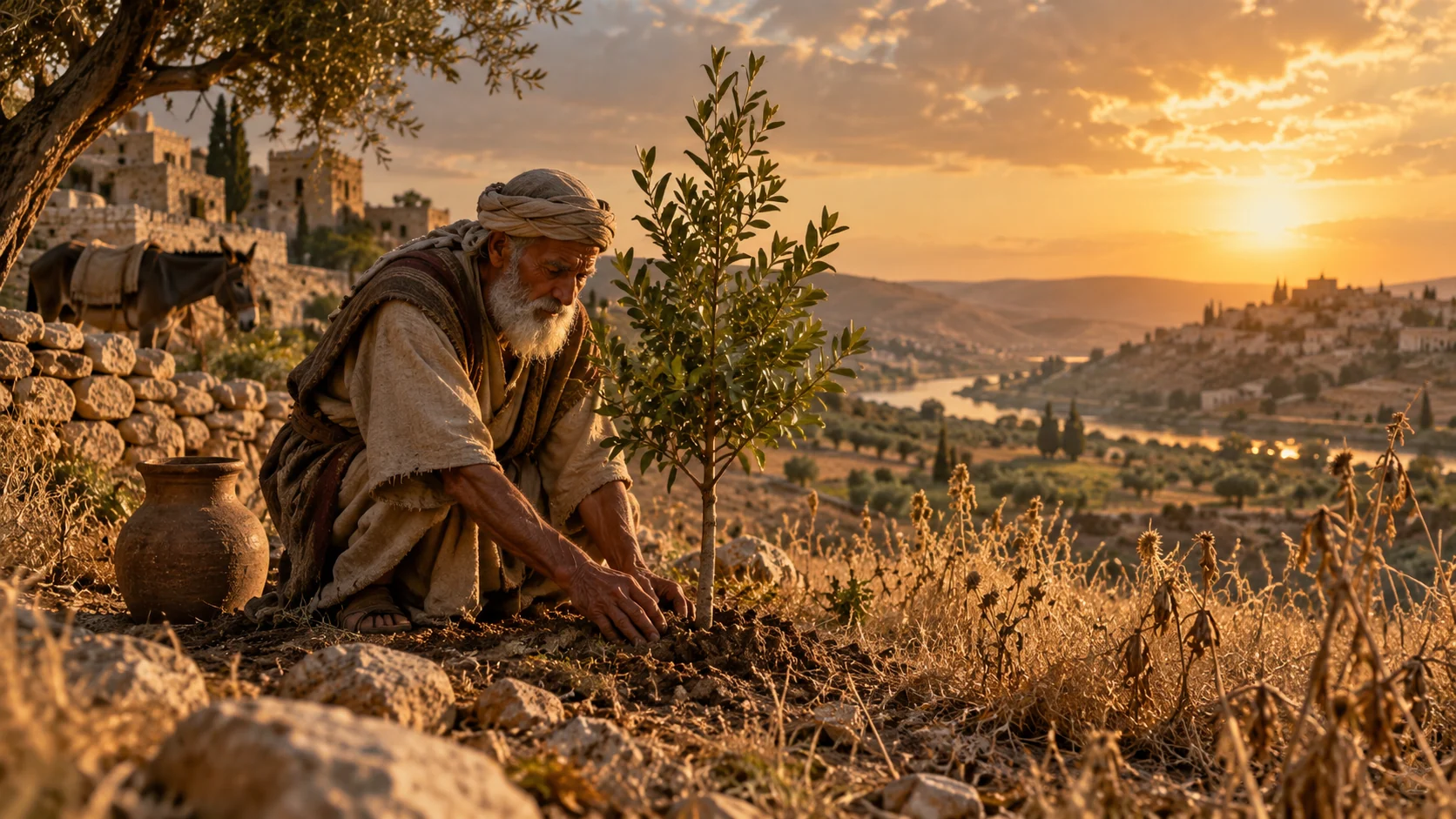
Look closely at trees during the dry season, and you will notice differences that were less obvious when the rains were falling.
Some begin to wither. Their leaves dry up, and their branches lose their vitality. Yet others remain green even under the burning sun.
The difference is not necessarily the size of their trunks or the number of their branches.
Often, the secret lies beneath the ground, where no one can see.
Their roots have reached water.
Something similar happens in our spiritual lives.
A person may begin the journey of faith with great enthusiasm. They pray earnestly, promise to change, and make serious commitments. But as time passes and difficulties return, the excitement of the beginning gradually fades.
They may find themselves returning to habits they had sincerely decided to leave behind.
Perhaps they depended upon the strength of one important decision without developing habits that could help them remain faithful.
In the previous article, we explored ways of facing anxiety through prayer, examining our thoughts, caring for our bodies, and seeking appropriate support. But a new life cannot be sustained by responding to emergencies alone.
It needs roots.
How can we build a life of faith that endures even when our emotions change and storms arrive?
Psalm 1 directs our attention to a tree planted beside streams of water.
Grace Comes Before Discipline
Before discussing Bible-reading schedules, prayer, or fasting, we need to understand one foundational truth.
We do not change so that God will begin to love us. We are transformed because his love has already reached us in Jesus Christ.
In Ephesians 2:8–10, Paul explains that we are saved by grace through faith, not by our works. Yet he immediately adds that we have been created in Christ Jesus for good works.
The order matters.
Grace comes first. A life of obedience follows as its fruit.
Even Israel's history teaches us this pattern.
God did not give Israel the law so that the people could first earn their deliverance from Egypt. He redeemed them by his grace, brought them to himself, and then taught them how to live as his people (Exodus 19:4–6; 20:1–2).
They were called to learn how to live in the freedom they had already received.
Likewise, in Christ, we do not pray to earn a place in God's family. We pray because we have been welcomed into that family.
We do not read Scripture to purchase salvation. We read it to know God and learn his ways.
We do not serve others to prove that we have value. We serve because we have received grace and have been called to become a blessing.
Spiritual disciplines are practices that place us in circumstances where we can receive and respond to the Holy Spirit's transforming work.
Grace is not opposed to effort. It is opposed to the belief that salvation can be earned through effort.
Spiritual disciplines are not ladders we climb to reach God. They are ways of learning to walk with the God who has already come looking for us.
Roots Beside the Water: The Secret of Psalm 1
Psalm 1 presents two contrasting pictures.
On one side stands a tree planted beside streams of water. Its roots are nourished, and it bears fruit in its season.
On the other side is chaff carried away by the wind.
The tree has roots that hold it firm. The chaff has nothing to anchor it.
The psalmist describes a blessed person who meditates on the law of the Lord day and night.
Here, the law means more than a dry collection of prohibitions. It refers to God's teaching and guidance for a life shaped by his will.
Meditating on Scripture is not rushing through many chapters merely to complete a reading plan.
It means reading, returning to the words, reflecting upon them, and allowing them to examine our lives.
We can ask: What does this passage reveal about God? What does it teach about the human heart? How does it fit into the biblical story that leads to Jesus? What does it call me to believe, abandon, or do?
When Joshua was preparing to lead Israel into Canaan, he was instructed to meditate on God's Word and lead faithfully according to it (Joshua 1:7–9).
He was not being offered a technique for success without difficulties. He was being taught to lead with covenant faithfulness and wisdom.
Jesus himself faced temptation in the wilderness by using Scripture in faithful obedience to the Father's will (Matthew 4:1–11).
Reading the Bible, therefore, is not collecting verses to use as protective charms. It is learning to think and live according to God's truth.
And we should notice something else in Psalm 1: the tree bears fruit in its season.
It does not produce fruit every day.
Spiritual growth also has seasons. Sometimes its fruit is clearly visible. At other times, the roots continue growing quietly beneath the surface.
Do not measure your spiritual life only by today's excitement. Ask where your roots are receiving their nourishment.
Scripture and Prayer: Learning to Remain in Christ
Jesus told his disciples that he is the vine and they are the branches (John 15:1–8).
A branch cannot produce fruit through independent effort. It must remain connected to the vine.
That is the purpose of spiritual disciplines: to help us remain in Christ.
Reading Scripture teaches us to listen to God through his Word. Prayer teaches us to respond with honesty and faith.
Prayer can include praise, thanksgiving, confession, requests, and intercession for others.
It does not have to be long to be sincere.
Jesus made time to pray in solitude (Mark 1:35). Yet he also warned against prayers performed to impress others (Matthew 6:5–13).
Prayer is not a performance of spiritual achievement. It is conversation with the Father.
Similarly, we should not use Scripture by pulling isolated verses from their context to justify whatever we already believe. We need to read humbly, ask questions, and remain willing to be corrected.
On a busy day, someone might begin by reading a short passage and asking one question: “Lord, what do you want me to learn about your character and my life?”
Then they can pray in their own words and take one practical step of obedience.
A person in prison, a parent caring for a newborn, a shift worker, and someone recovering from illness may have very different circumstances. One schedule will not fit every life.
What matters most is not the size of the practice, but the faithfulness of continually returning to Christ.
Silence, Rest, and Sabbath: Refusing to Live Like a Slave
Modern life can be filled with noise.
Phones ring. News continues throughout the day. Work demands attention. People need us. Even when we sit quietly, our thoughts may continue making noise.
This is why spiritual silence can be valuable.
It is not a technique for discovering hidden messages. It is an opportunity to reduce distractions, reflect upon Scripture, and become attentive to God's presence.
Jesus regularly made room for prayer. We can begin with a few quiet minutes away from our phones, reflecting on a biblical passage and honestly telling God what is happening within us.
But God did not create us to work and think without rest.
In Genesis 2:1–3, the seventh-day rest enters the biblical story of creation. Humanity is created on the sixth day and then enters a day that God blesses and makes holy.
The picture is deeply meaningful: before human beings have accomplished great things, they have already received life and creation as gifts.
Later, Israel, delivered from slavery, is called to observe the Sabbath (Exodus 20:8–11; Deuteronomy 5:12–15).
In Egypt, the Israelites had been subjected to forced labor. Now the Sabbath reminded them that they belonged to God rather than to Pharaoh.
Jesus taught that the Sabbath was made for humanity and declared himself Lord of the Sabbath (Mark 2:27–28). He connected the holiness of the day with mercy and healing.
Seen in this light, seventh-day Sabbath rest is neither an excuse for laziness nor a competition in religious achievement. It provides room for worship, fellowship, acts of mercy, and resting in God's care.
It also reminds us that our worth cannot be measured solely by how much we produce.
For someone whose circumstances limit control over their schedule—such as a patient, prisoner, or worker with demanding shifts—even smaller opportunities for quiet reflection and worship may help sustain a heart directed toward God.
Rest is a declaration of faith: I am not a machine, nor am I the savior of the world. God is Lord.
Fellowship, Confession, and Service: Roots That Connect Us to Others
A tree needs more than water. It also grows within an environment that supports its development.
Likewise, Christians were not created to grow in isolation.
In Acts 2:42–47, the early believers devoted themselves to the apostles' teaching, fellowship, the breaking of bread, and prayer.
They shared their resources, ate together, and learned to live as God's new family.
Healthy fellowship helps us learn, receive loving correction, find comfort, and serve others.
But fellowship is not control.
A Christian community should respect privacy, allow questions, hold leaders accountable, and protect vulnerable people.
The same principle applies to confession.
Psalm 32 and 1 John 1 teach us to bring our sins into God's light. Where appropriate, we may also share struggles with a trustworthy believer who can pray with us and support our accountability (James 5:16).
Confession, however, does not mean publicly announcing every mistake we have made. It should never be forced or used to humiliate someone.
Nor does spiritual growth end with improving ourselves.
Jesus came to serve and give his life for others (Mark 10:45). That is why service and generosity belong to a life growing in Christ.
You may visit someone who is sick, listen to a discouraged person, help a child learn, share food, teach a practical skill, or offer a word of encouragement.
You do not have to be wealthy to become a blessing.
Roots nourished by God's grace should produce the fruit of love toward others.
Begin Small and Grow Faithfully
Imagine someone who decides to begin a new life of prayer.
They make an ambitious schedule: waking very early, reading many Bible chapters, and praying for a long time every day.
For the first three days, everything goes well.
On the fourth day, they wake up late. On the fifth, they have no time to read. By the sixth, they feel as though they have disappointed God.
Eventually, they abandon the entire plan.
The problem may not be a lack of love for God. Perhaps they created a schedule that exceeded what they could realistically sustain at that stage of life.
A wise mentor might ask, “What small practice could you continue faithfully even on a difficult day?”
They might begin with ten minutes of Scripture reading and reflection, a short prayer, and one act of obedience.
Later, they can develop a longer rhythm as circumstances and spiritual maturity allow.
This is not a call to remain permanently satisfied with minimal effort. It is an invitation to establish a foundation capable of growing.
There is another danger, however.
Spiritual disciplines can become rigid rules that lead us to judge others, conceal our weaknesses, or imagine that God loves us more because of our religious accomplishments.
Paul reminds believers that they are called to walk in Christ, rooted and built up in him (Colossians 2:6–7).
Missing one day of prayer or Bible reading does not automatically remove us from God's family.
We return to his grace and continue.
A small practice sustained over time can develop deeper roots than a grand promise abandoned after a few days.
Summary of the Biblical Journey: Life Comes from Christ
Psalm 1 teaches us that a flourishing life is rooted in God's instruction.
Israel's history reveals that God first delivers his people and then teaches them to live in the freedom they have received.
In Jesus Christ, God's grace has reached us and joined us to the life of his Son. Through the Holy Spirit, we learn to grow in truth, love, and faithfulness.
Scripture, prayer, silence, Sabbath rest, fellowship, confession, worship, and service are not ways of purchasing God's love. They are practices God can use to shape us as we continue depending upon him.
We do not practice them to prove ourselves superior, but to become more like Jesus and bring blessing to others.
And when we reach the final chapters of the biblical story, we encounter the tree of life and the river of the water of life in the new creation (Revelation 22:1–5).
That picture reminds us that God's purpose is not only to deliver us from sin, but to bring us into the fullness of life with him.
Life comes from Christ. Spiritual disciplines help us send our roots deeper into him.
Life Application: A Simple Plan for This Week
- Choose a realistic time. Set aside 10–15 minutes each day for Scripture and prayer, according to your circumstances.
- Read, reflect, pray, and act. Read a short passage, identify one meaningful truth, pray about it, and take one step of obedience.
- Make room for silence and rest. Reduce daily distractions and honor the Sabbath as a time for worship, rest, fellowship, and acts of mercy.
- Build healthy spiritual relationships. Find a trustworthy person or group that helps you grow without controlling you.
- Serve and review. Offer one act of love. At the end of the week, consider what helped you grow and what needs adjustment.
- If you miss a day, do not turn that failure into a verdict on your life. Return and continue.
Questions for Reflection
- Have I treated spiritual disciplines as ways of receiving grace or as ways of proving that I deserve it?
- What small practice could help me become more deeply rooted in Christ?
- To what extent are my spiritual practices producing love, justice, humility, and service toward others?
A Prayer for the Journey
Heavenly Father,
Thank you for welcoming me through your grace in Jesus Christ, not because of the number of good works I have performed.
Forgive me for the times I have tried to prove my worth before you or compare myself with others through my religious practices.
Lord Jesus, teach me to remain in you as a branch remains in the vine.
Holy Spirit, root my life in your Word. Teach me to pray sincerely, rest in faith, and live in fellowship shaped by love.
Give me a heart that serves without seeking recognition and the humility to confess when I am wrong.
When I become tired or fail to follow my schedule, do not let me hide in shame. Remind me of your grace and help me begin again.
May my life become like a tree nourished by the water you provide, bearing fruit in its season for your glory and the blessing of others.
In the name of Jesus Christ. Amen.
A Window into the Next Article
Article 08: The Way Out — Overcoming Addiction and Temptation Through Christ's Grace
Spiritual roots help us stand firm, but maintaining a rhythm of prayer and Bible reading does not mean temptation will disappear.
What should we do when we return to a habit we sincerely promised to abandon? How can we recognize the triggers of temptation before we find ourselves falling again?
In the next article, we will explore 1 Corinthians 10:1–14 and learn how grace, truth, safer environments, accountability, and appropriate support can help us recognize the way out.
Read the next article: The Way Out: Overcoming Addiction and Temptation Through Christ's Grace
Sources and References
- Mwakalindile, Enos. Kutembea Katika Uhuru: Safari ya Urejesho wa Maisha Katika Kristo [Walking in Freedom: A Journey of Restoration in Christ]. First edition, 2026. Chapter 7: Spiritual Disciplines.
- The Holy Bible: Genesis 2:1–3; Exodus 19:4–6; 20:1–11; Deuteronomy 5:12–15; Joshua 1:7–9; Psalms 1:1–6; 32:1–5; Matthew 4:1–11; 6:5–13; Mark 1:35; 2:27–28; 10:45; John 15:1–8; Acts 2:42–47; Ephesians 2:8–10; Colossians 2:6–7; James 1:22; 5:16; 1 John 1:5–9; Revelation 22:1–5.

Be the first to leave a comment.