

How can repentance become changed practices and joyful worship?
Study overview
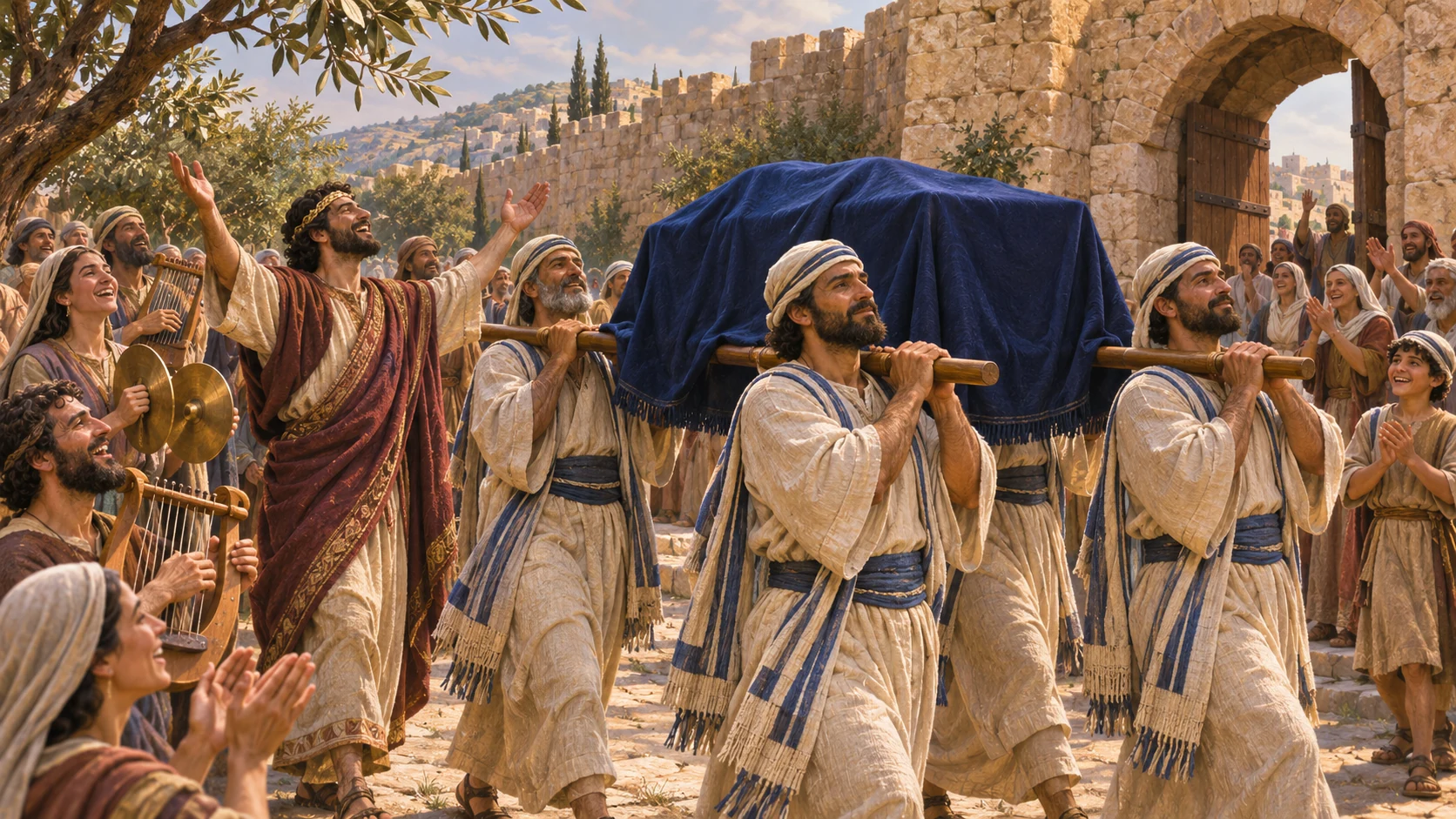
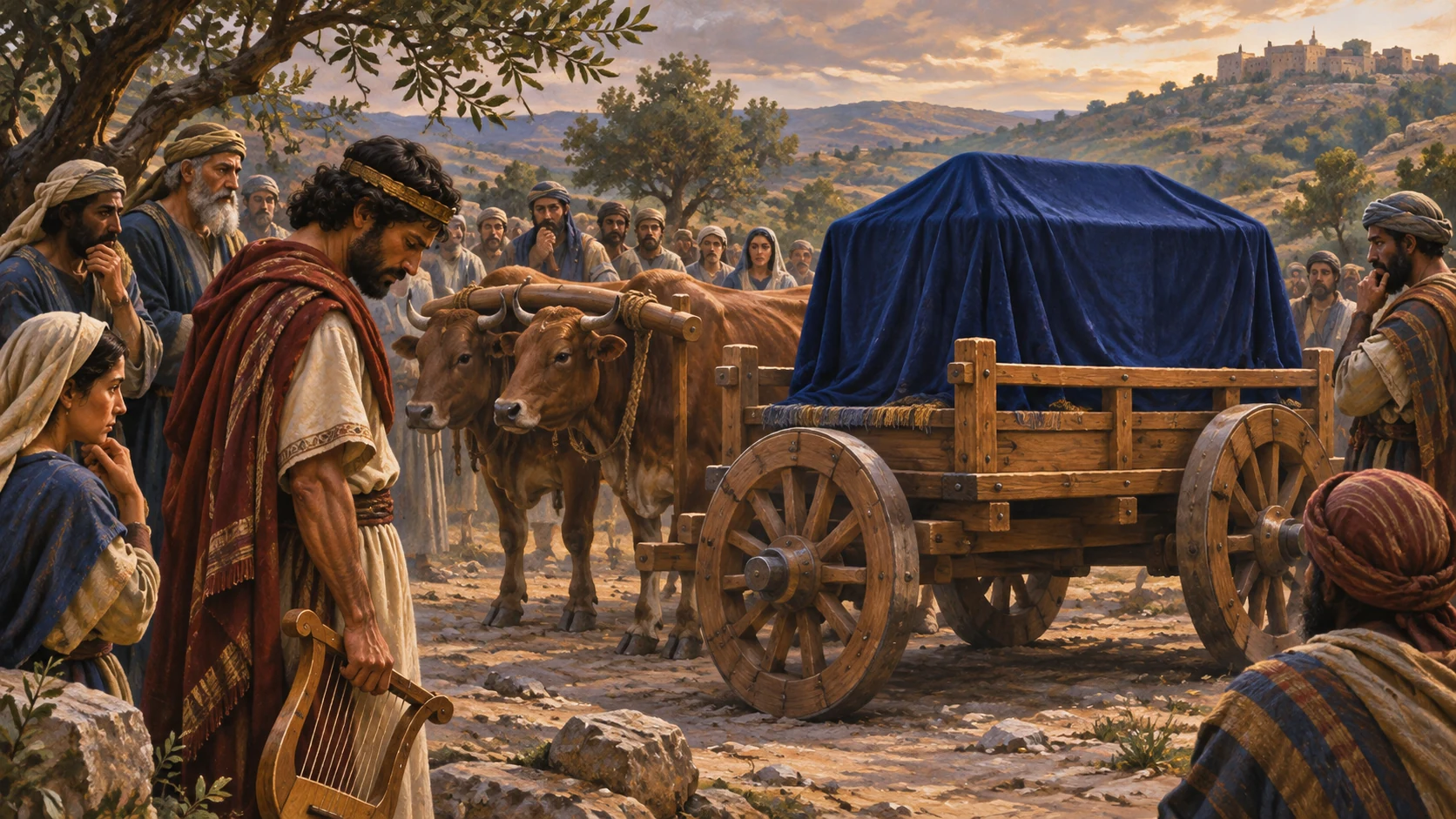
The cart has stopped, but the calling has not ended. Now shoulders carry what wheels could not, and trained voices lift a song. At Jerusalem's gate, joy dances beneath the weight of holiness.
Passage: 1 Chronicles 15:1–29
Controlling metaphor: Shoulders bearing the ark—holy responsibility carried with willing joy
Heart-question: After a painful failure, will God's people change their practices, or merely repeat their celebrations?
Introduction: When the Song Must Begin Again
A church remembers a plan ruined by neglected instructions or poor judgment. Some want to forget; others fear trying again. Faithful repentance asks: What must change before the song can return?
David prepares a place for the ark, summons Levites, admits earlier failure, and follows God's instructions. Music returns to Jerusalem, but Michal's contempt exposes a divided response to worship.
This text is about interrupted worship becoming joyful obedience through humility, holiness, and shared responsibility. The song returns without erasing Uzzah's death.
Historical and Literary Context: From a New Cart to Consecrated Shoulders
David's reign prepares Israel for worship. After Uzzah's death interrupts the ark procession (13:7–14), David inquires of God before battle (14:10, 14). Chapter 15 brings attentive obedience into worship.
The ark signified covenant presence above the cherubim, not a talisman (Exod 25:10–22). Torah assigned transport to Levites, especially Kohathites, and forbade touching holy furnishings (Num 4:15; 7:9).
Second Samuel 6:12–23 provides a parallel; Chronicles emphasizes consecration, music, and priestly service (Japhet 1993; Knoppers 2004). For people rebuilding worship after exile, a remembered priesthood, trained singers, and clearly assigned service could help a wounded community recover its vocation. Postexilic renewal requires covenant practices, not enthusiasm alone. Sailhamer (1983) reads the ark’s return as restored fellowship through obedience to God's word.
Walking Through the Text
When the King Prepares a Place, Not a Shortcut (15:1–3)
David builds houses in the City of David, prepares a place for the ark, and pitches a tent (15:1). The tent is not Solomon's temple, and the ark must not become another royal possession.
David now declares that only the Levites are to carry the ark, because the Lord chose the Levites to carry the ark and minister before God (15:2; cf. Deut 10:8). David then assembles all Israel (15:3). The king has not abandoned communal participation; the king has corrected the means by which the community approaches holy presence.
The previous failure concerned transport, not a shortage of supporters. A new beginning requires a changed method.
When Family Names Become Shared Responsibility (15:4–10)
The Chronicler names the descendants of Aaron and the Levite families with their leaders and numbers: Kohath under Uriel, Merari under Asaiah, Gershom under Joel, Elizaphan under Shemaiah, Hebron under Eliel, and Uzziel under Amminadab (15:4–10).
These names signify accountable people with particular duties within all Israel. The list insists that a good intention must become an organized act of faithfulness. The ark will not reach its destination through anonymous enthusiasm.
These ancient assignments imply neither superior families nor inherited Christian offices. Holiness requires prepared servants.
When Repentance Finally Names the Mistake (15:11–15)
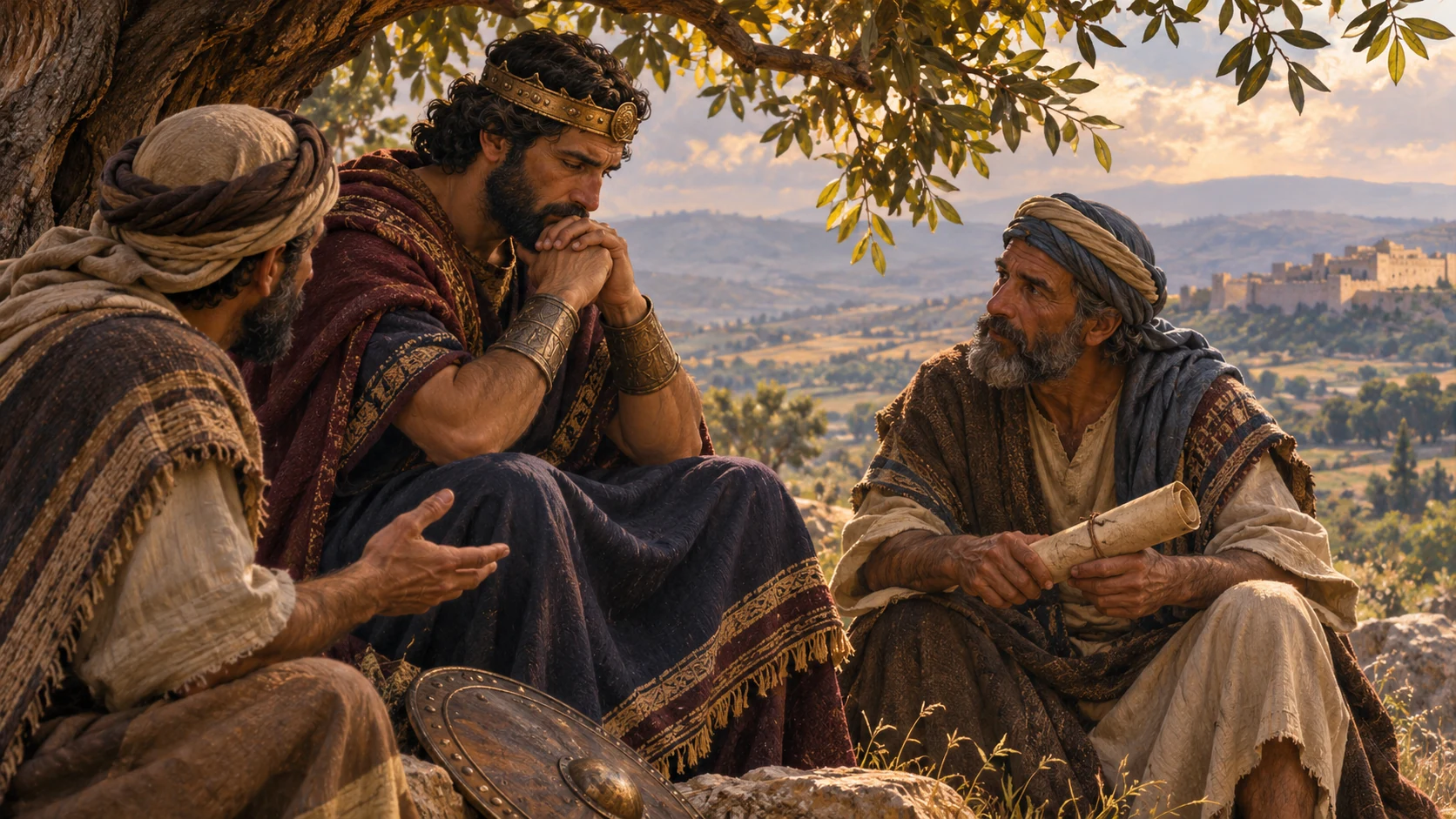
David summons the priests Zadok and Abiathar along with six Levitical leaders. The command is clear: consecrate yourselves, and bring the ark to the prepared place (15:11–12). Then David explains the tragedy of the first attempt: the Lord broke out against the people because the ark had not been carried according to God's prescribed order (15:13).
David refuses to blame Uzzah alone. The failure concerns leadership and Torah instruction (Num 4:15; 7:9). This does not make Uzzah’s death an easy story, nor authorize treating every modern accident as divine punishment. The Chronicler identifies the specific covenant command that had been neglected. David's confession takes visible form when priests and Levites consecrate themselves and Levites carry the ark on their shoulders with poles, according to the command through Moses (15:14–15).
Repentance changes the method and honors God's word. David now seeks God's will in worship as in battle (14:10, 14).
When Holiness Learns to Sing with Skill (15:16–24)
David appoints singers and instrumentalists (15:16). Heman, Asaph, and Ethan lead music; gatekeepers and trumpeting priests have defined roles (15:17–24).
Chenaniah is described as skilled and entrusted with oversight (15:22). Many translations understand the responsibility as musical direction; others understand supervision of carrying the ark. The Hebrew wording permits debate, so the passage should not be used to settle a narrow technical claim about ancient musical leadership (Klein 2006).
The musical terms alamoth and sheminith also remain uncertain (15:20–21). Preparation and skill make room for joy, not joyless formality. The procession needs people who can carry, guard, sound the trumpet, and lead the song. Careful order gives the whole assembly freedom to praise.
When God Helps and the Whole Assembly Rejoices (15:25–28)
David, elders, and commanders bring the ark from Obed-edom's house with rejoicing (15:25). The decisive explanation: God helps the Levites carrying the ark (15:26). Seven bulls and seven rams are sacrificed, and the ark enters amid shouting, trumpets, cymbals, harps, and lyres (15:26–28).
David, the Levites, and the singers wear fine linen; David also wears a linen ephod (15:27). The king is not described performing Aaronic priestly sacrifices; David joins the worshipers.
God's help is grace, not payment for perfect procedure. Yet grace and obedience now belong together. The shoulders obey, and the people sing.
When a Window Separates Contempt from Celebration (15:29)
As the ark enters David's city, Michal, daughter of Saul, watches from a window. Seeing David dancing and celebrating, Michal despises David in her heart (15:29). The chapter ends with this dissonant note.
Second Samuel 6:20–23 adds confrontation; Chronicles stops at contempt. Michal's full motives remain unreported. Calling Michal “daughter of Saul” recalls the previous dynasty; the window places an observer apart from the procession. Neither detail proves a complete political or psychological explanation.
Public joy may conceal private division. Yet the verse cannot be used to silence questions about worship.
Theological Reflection: Glory Carried with Reverence
Repentance Repairs Practice
The difference between the cart in chapter 13 and the shoulders in chapter 15 is the difference between regret and reform (13:7–10; 15:13–15). The Chronicler values worship that listens to God's instruction. Confession becomes credible when leaders amend harmful procedures rather than searching for scapegoats (2 Chr 7:14).
Holy Joy Needs a Whole Community
The procession involves priests, Levites, musicians, gatekeepers, elders, and the wider assembly. Holiness is not private religious intensity; worship involves ordered, shared service (15:3–28). The later temple will depend upon these ministries. Christian communities likewise need differing gifts serving one body (1 Cor 12:12–27).
Divine Help Is Gift, Not Control
Verse 26 attributes success to God's help, while verse 15 insists on obedience to Moses' instruction. Neither truth cancels the other. God is present by grace, never controlled by sacred objects or flawless ceremonies (2 Chr 6:18). Worship grows from trust, obedience, and thanksgiving (Heb 12:28–29).
Christ Opens the Way into God's Presence
The ark's approach anticipates the temple-centered hope of Chronicles (1 Chr 16:1–6; 2 Chr 5:2–14). The New Testament presents Jesus as the true meeting place of God and humanity (John 1:14; 2:19–21). Through Christ, God's people draw near by grace and are formed into a dwelling place for the Spirit (Heb 10:19–22; Eph 2:19–22). Christian worship therefore needs neither a transported ark nor inherited Levitical office, but remains marked by holiness, humility, and joy.
Life Application: Put Your Shoulders Beneath the Calling
- Name the real mistake. Where a ministry has harmed people, identify neglected safeguards and leadership decisions instead of blaming the nearest volunteer.
- Turn confession into correction. Rewrite unsafe procedures, communicate changes, and assign responsibility for checking that reforms endure.
- Prepare people, not only programs. Train musicians, teachers, stewards, and hospitality teams; provide rest, safeguarding, and clear expectations.
- Make worship everyone's concern. Include elders, children, newcomers, and overlooked workers while respecting appropriate roles and capabilities.
- Restore joy without coercion. Welcome singing and celebration, but allow grief, questions, and quiet participation without public shaming.
- Remember the source of help. Give thanks to God for progress without treating careful planning, numbers, or gifted leaders as guarantees of blessing.
- Examine the hidden heart. Before criticizing another person's expression of worship, ask whether the concern comes from Scripture, love, cultural preference, or contempt.
Reflection Questions
- Which past failure still needs an honest explanation and a practical correction?
- Where has the church trusted enthusiasm more than Scripture-shaped responsibility?
- Which neglected servant needs training, encouragement, or a lighter burden?
- What form of contempt is growing quietly while public worship continues?
- What would joyful, reverent obedience look like in the next congregational gathering?
Response Prayer
Holy Lord, God whose presence gives life, teach the church to carry sacred responsibilities with obedient shoulders and willing hearts. Where the cart of human convenience has failed, give humility to confess and courage to change. Purify the musicians' songs, the leaders' decisions, and the congregation's hidden thoughts. Help those who carry burdens, comfort those who remember painful failures, and restore joy without forgetting holiness. Through Jesus Christ, the true Son of David, gather a people who worship in truth and gratitude. Amen.
Window into What Comes Next
The ark has entered Jerusalem with ordered service and joyful song. First Chronicles 16 will show David appointing regular worship, blessing the people, sharing food, and placing a great hymn of remembrance on Israel's lips. After the shoulders carry the ark, the whole community must learn how to carry praise into daily life and among the nations.
Annotated Bibliography
- Hill, Andrew E. 1 & 2 Chronicles. NIV Application Commentary. Grand Rapids: Zondervan, 2003. Connects ordered worship and joyful participation with contemporary communal responsibility.
- Japhet, Sara. I & II Chronicles: A Commentary. Old Testament Library. Louisville: Westminster John Knox, 1993. Explains the Chronicler's expansion of priestly and Levitical roles compared with Samuel.
- Klein, Ralph W. 1 Chronicles: A Commentary. Hermeneia. Minneapolis: Fortress, 2006. Discusses textual details, musical assignments, and interpretive uncertainties.
- Knoppers, Gary N. I Chronicles 10–29: A New Translation with Introduction and Commentary. Anchor Bible 12A. New York: Doubleday, 2004. Examines the ark procession within the Chronicler's Davidic and temple-centered vision.
- Sailhamer, John. First and Second Chronicles. Everyman's Bible Commentary. Chicago: Moody Press, 1983. The supplied commentary emphasizes David's changed handling of the ark and the union of reverence with joyful praise.
- Williamson, H. G. M. 1 and 2 Chronicles. New Century Bible Commentary. Grand Rapids: Eerdmans, 1982. Situates the transfer of the ark within Israel's covenant worship and postexilic hope.
Be the first to leave a comment.