

How can worship’s enthusiasm mature into accountable obedience after failure?
Study overview
The drums are sounding; the road toward Jerusalem is bright with song. Then the wheels lurch, the music stops, and a king stands trembling. The Holy One has not abandoned the road—but the road must be walked differently.
Passage: 1 Chronicles 13:1–14
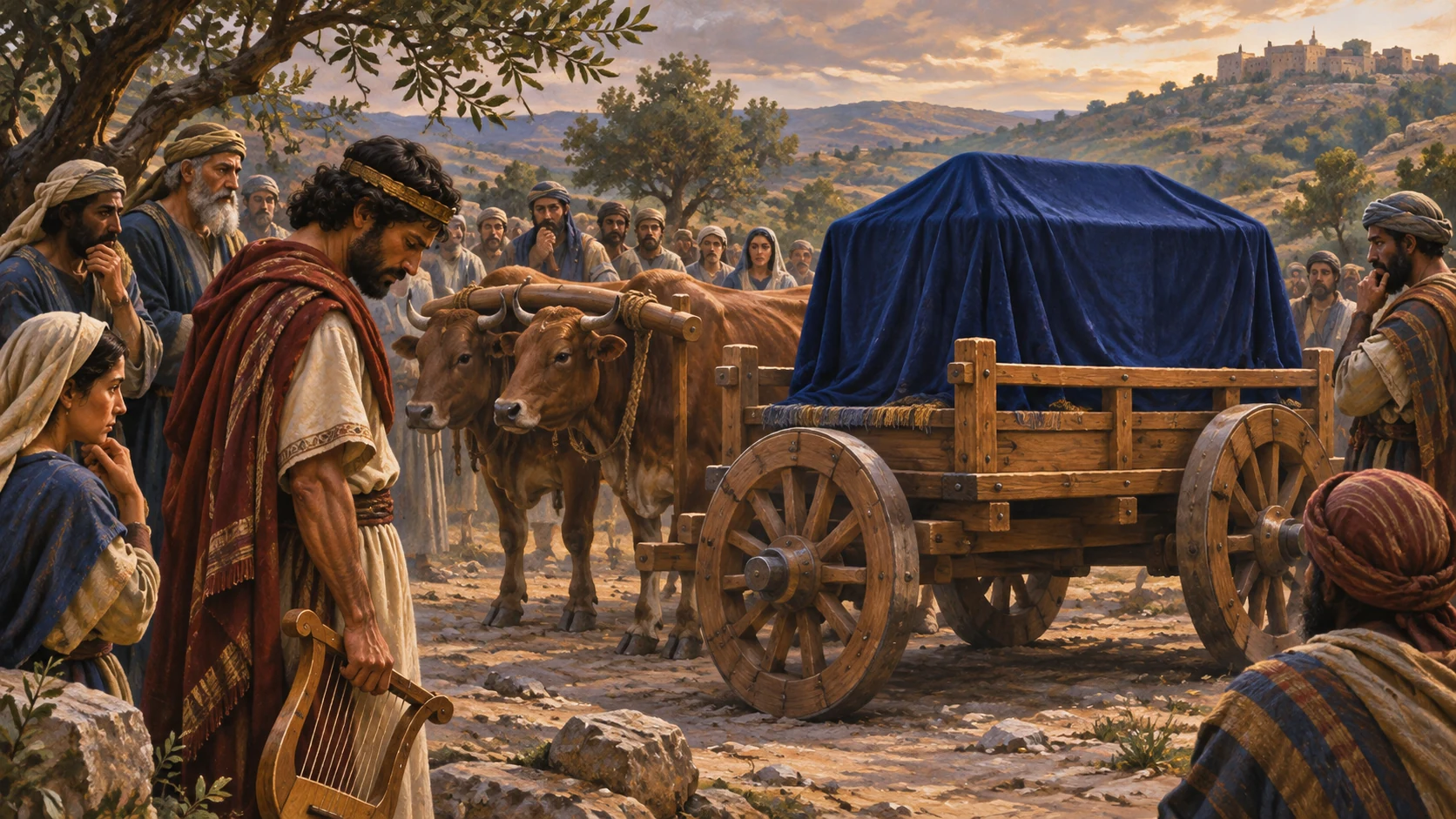
Controlling image: The new cart carrying the ark
Heart-question: Can sincere enthusiasm become faithful worship when a community neglects the word of the God being celebrated?
Introduction: When Good Intentions Are Not Enough
A congregation can appoint leaders, rehearse songs, and overlook the essential question: Has the community listened to God? Enthusiasm and planning do not guarantee obedience.
After Israel gathers around David (1 Chr 11–12), the nation seeks to bring God’s ark to Jerusalem. The procession is joyful, but a sudden death interrupts the celebration. The chapter ends in Obed-edom’s household, where blessing flourishes.
This text is about joyful enthusiasm becoming reverent covenant obedience. The transition remains unfinished until chapter 15. Joy must submit to the God who makes worship possible.
Historical and Literary Context: The Ark Before the Palace
Chapters 1–9 recover identity after exile. Chapter 10 explains Saul’s failure to seek the Lord (10:13–14); chapters 11–12 establish David through God’s promise and Israel’s support. Now worship becomes central to national renewal.
The ark, a covenant chest associated with God’s throne-like presence, belonged to Israel’s Sinai and tabernacle story (Exod 25:8–22). God was not confined within the ark (2 Chr 6:18).
Unlike the parallel in 2 Samuel 6:1–11, Chronicles emphasizes leadership consultation, priests, Levites, and all Israel (13:1–6). Placing this attempt before David’s royal establishment in chapter 14 makes worship, not royal magnificence, the nation’s priority (Japhet 1993; Knoppers 2004).
For postexilic worshipers, this is invitation and warning: impressive ceremonies cannot replace God’s instruction.
Walking Through the Text
When Every Voice Agrees but One Question Remains (13:1–4)
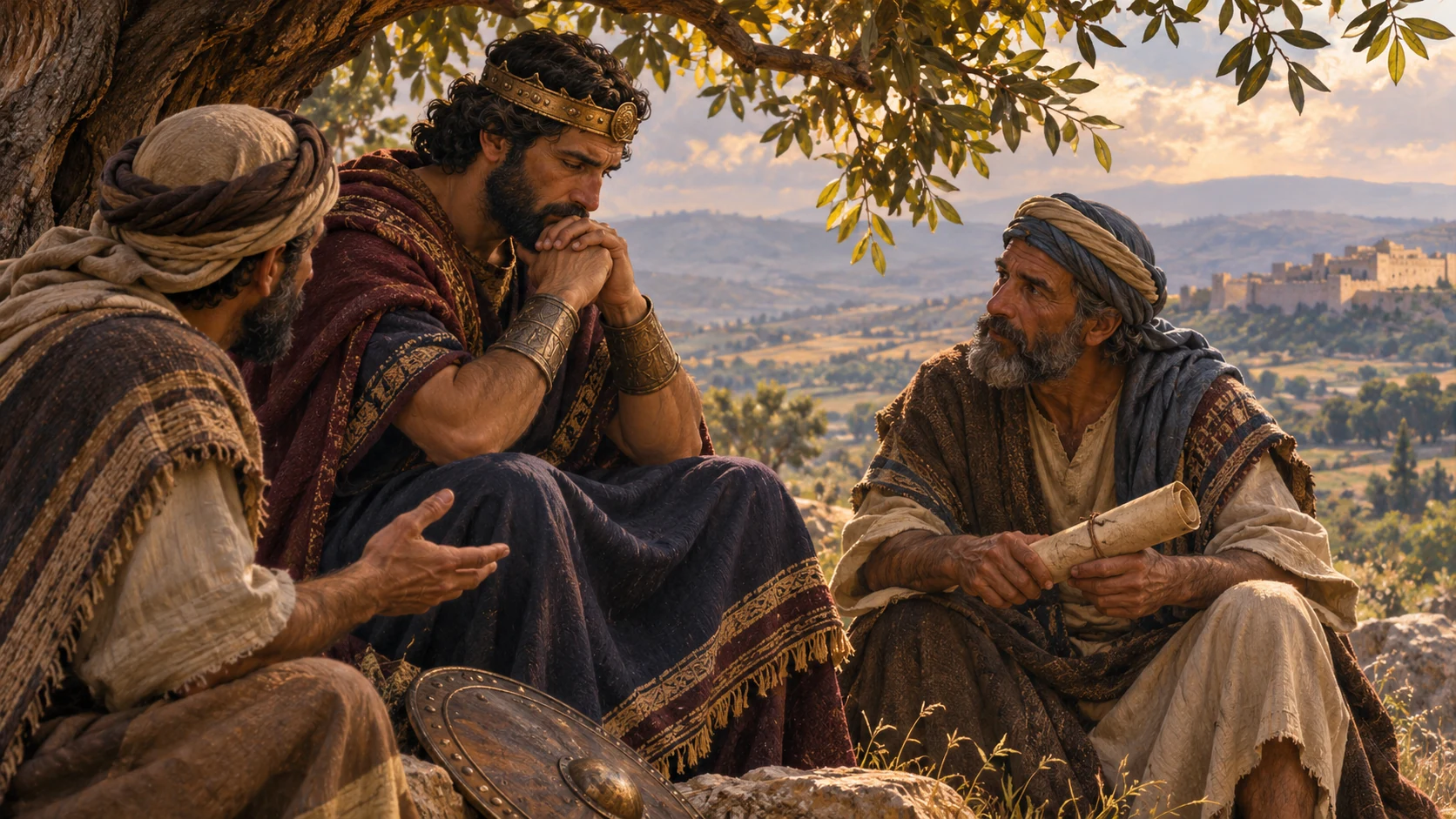
David consults commanders and invites Israel’s scattered families, priests, and Levites (13:1–2). The ark concerns all Israel, not the palace alone.
David recalls neglecting the ark during Saul’s reign (13:3), echoing Saul’s failure to seek the Lord (10:14).
Everyone agrees (13:4), and David has named God’s will (13:2). Yet no inquiry about how to transport the ark is recorded. Consensus cannot replace discerning divine instruction. David is repairing genuine neglect, not organizing a cynical performance. Yet a noble goal still requires careful obedience. Sometimes a community stumbles because familiar shortcuts seem harmless to everyone involved.
When the New Cart Carries an Ancient Calling (13:5–8)
From Shihor near Egypt to Lebo-hamath, Israel gathers (13:5). At Kiriath-jearim, or Baalah, the ark is retrieved from Abinadab’s house (13:6–7; 1 Sam 7:1–2).
The Lord enthroned above the cherubim (13:6; Exod 25:22) cannot be reduced to a portable ornament.
A new cart carries the ark, guided by Uzzah and Ahio (13:7). The Philistines once used a cart (1 Sam 6:7–12), but the Torah assigned carrying duties to Kohathite Levites, forbade touching holy objects, and specified poles (Num 4:15; 7:9; Exod 25:14–15).
David and Israel celebrate with instruments and song (13:8). Music is not condemned; careless obedience is. A new cart cannot replace a long-given word.
When the Music Stops at the Threshing Floor (13:9–11)
At Chidon’s threshing floor, the oxen lurch, Uzzah steadies the ark, and God strikes Uzzah dead (13:9–10). The text identifies prohibited contact, not inner motives. Inventing arrogance would be unwarranted.
The scene is disturbing. The Torah warned about touching holy objects (Num 4:15). Later, David admits collective failure to follow the prescribed order (15:13–15). Leaders cannot blame only the person nearest the cart. Nor does this episode authorize explaining every accidental death as divine punishment. This judgment occurs within Israel’s specific covenant and sanctuary regulations. Its warning must remain serious without becoming an accusation against grieving families.
Angry David names the place Perez-uzzah, recalling the Lord’s “breaking out” (13:11). “Breaking through” also describes victory at Baal-perazim (14:11). God’s power is no tame resource: divine nearness holds blessing and judgment (Sailhamer 1983).
Second Samuel 6:6 calls the threshing floor Nacon rather than Chidon; the relationship between names remains uncertain.
When Fear Diverts the Procession (13:12–13)
David fears bringing the ark into royal care (13:12) and diverts the procession to Obed-edom the Gittite (13:13).
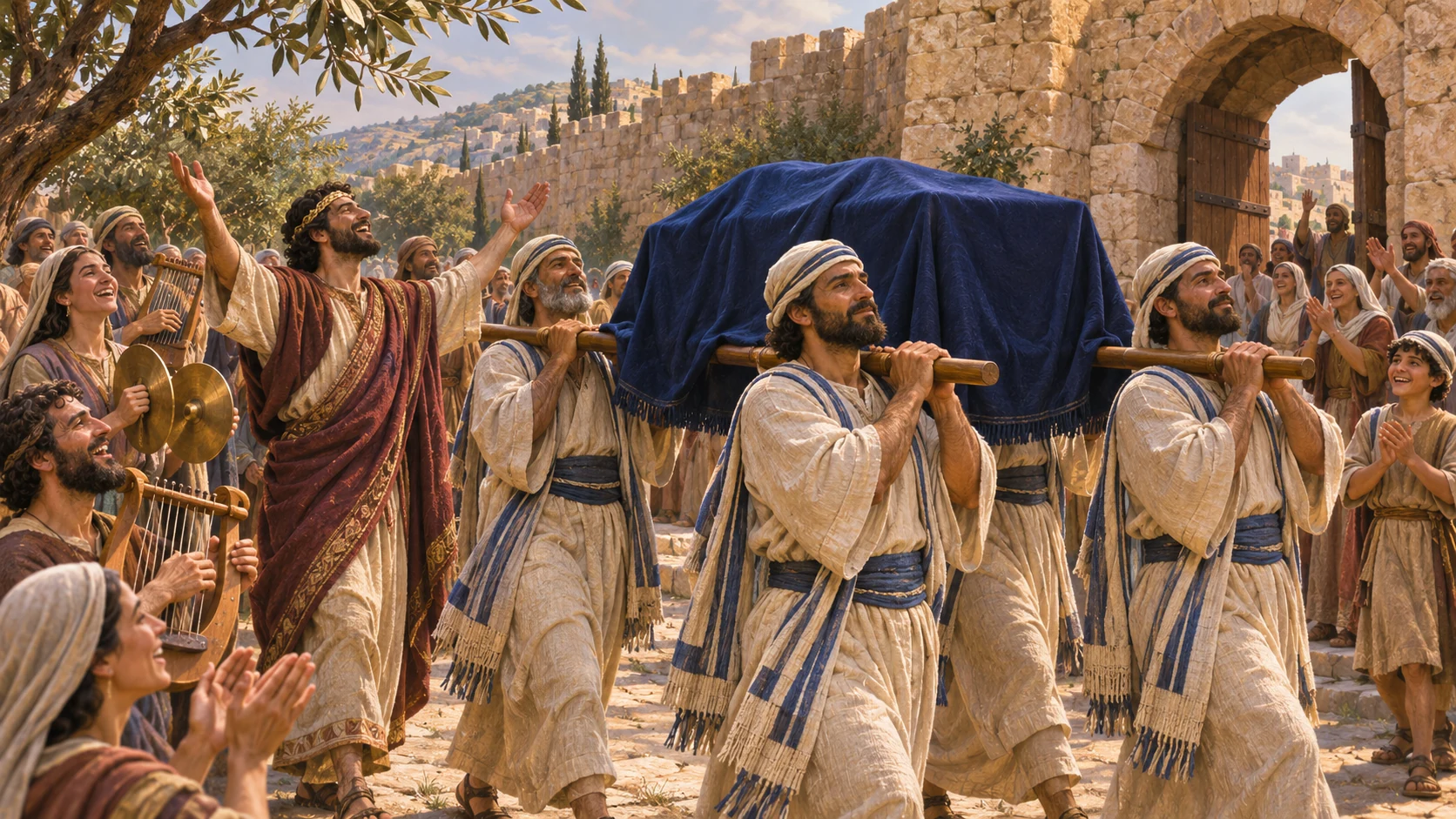
The interruption calls for humility and changed practice. Chapter 15 will show consecrated Levites carrying the ark with poles according to Moses’ instruction (15:14–15).
When Mercy Rests in an Ordinary House (13:14)
After three months with Obed-edom, the Lord blesses the household (13:14). The chapter’s final word is blessing.
No automatic prosperity is promised by proximity to sacred objects. Holy presence is not inherently a curse. The name Obed-edom appears again among temple servants (15:18, 24; 26:4–8), though the identification is not beyond dispute.
The ark has not reached Jerusalem. Mercy rests in a home while David learns.
Theological Reflection: The Weight of Glory
Seeking God Means Listening to God's Word
David wants to seek what Israel neglected under Saul (13:3; 10:14). Yet renewed intention must take the shape of obedient action. The neglected detail about Levite service matters because God, not the king, defines the approach to God's holy presence (Num 4:15; 1 Chr 15:13). Reverence is more than strong feeling. Reverence listens. The movement from asking whether the ark should come (13:1–4) to learning how the ark must be carried (15:2, 13–15) is David’s unfinished journey. Repentance means changing practice, not merely regretting the outcome.
Holiness and Joy Are Partners, Not Enemies
The music of 13:8 belongs in worship, but joy cannot erase the seriousness of God's holiness. Neither should the tragedy of 13:10 lead a church into joyless fear. The successful procession in 1 Chronicles 15 will join careful obedience with abundant singing (15:15–16, 25–28). Scripture calls God's people to grateful, reverent worship (Heb 12:28–29).
Spiritual Leadership Must Carry Responsibility
David consults widely and leads publicly; therefore David must also bear responsibility for the mistaken method. The lesson is not that consultation is wrong, but that consensus must be disciplined by Scripture and knowledgeable service. Leaders who acknowledge mistakes protect communities better than leaders who blame the nearest volunteer.
The Presence of God Moves Toward Fuller Hope in Christ
The ark points to God's desire to dwell with the covenant people (Exod 25:8, 22). In the New Testament, the Word becomes flesh and dwells among humanity (John 1:14); Jesus identifies the temple with the body raised after death (John 2:19–22). Through Christ, access to God is opened by grace, not human ingenuity (Heb 10:19–22). Holy presence remains holy, but Christ brings sinners near for cleansing and renewed life. The biblical hope reaches its fullness when God's dwelling is with humanity (Rev 21:3).
Life Application: Put Down the Cart, Carry the Calling
- Examine the method, not only the motive. Before a ministry initiative, ask whether procedures honor Scripture, human dignity, financial integrity, and accountable leadership.
- Invite qualified voices early. Include Scripture teachers, worship leaders, caregivers, and people affected by proposed decisions, not only influential officials (13:1–2; 15:2).
- Stop when warning signs appear. Pause a popular program if unsafe practices, manipulation, misconduct, or unaddressed harm become visible. Protecting people matters more than preserving momentum.
- Share responsibility for failure. Refuse to make one frontline worker carry the blame for a plan approved by leaders. Confess systemic negligence and change the procedures (15:13).
- Join joyful music to everyday obedience. Let congregational singing be accompanied by truthful speech, fair treatment of workers, generous care, and faithful stewardship.
- Make room for holy grief. Do not use Uzzah's death to explain every accident or bereavement as punishment. Sit with grieving families, acknowledge unanswered questions, and offer compassionate presence.
- Look for mercy after interruption. Like Obed-edom's household, cultivate prayer, hospitality, and faithful service while a larger plan is being reconsidered (13:14).
Reflection Questions
- Where has public enthusiasm moved faster than careful attention to God's word?
- Which “new cart”—a convenient but unexamined method—has become normal in church life?
- Who might be harmed by leadership decisions without having a voice in those decisions?
- When a plan fails, does the community practice honest repentance or search for a scapegoat?
- What act of obedience could turn fear and disappointment into renewed worship?
Response Prayer
Holy Lord, enthroned above the cherubim, receive the songs of the church and examine the ways of the church. Forgive religious confidence that has outrun obedience. Give leaders courage to confess negligence and protect the people entrusted to their care. Teach congregations to carry sacred responsibilities with humility, truth, and joy. Comfort the grieving where music has suddenly stopped. Let the blessing known in Obed-edom's house remind wounded communities that God's mercy has not departed. Through Jesus Christ, the true meeting place of God and humanity, make worship faithful and hearts whole. Amen.
Window into What Comes Next
The cart has stopped, and the ark waits in another household. David must learn before the journey resumes. 1 Chronicles 14 will first show a king receiving a house, a growing family, and victory through seeking God's guidance. The contrast is intentional: a king can build a palace and win battles, but the holy presence of God must never be handled as another royal possession.
Annotated Bibliography
- Hill, Andrew E. 1 & 2 Chronicles. NIV Application Commentary. Grand Rapids: Zondervan, 2003. Connects the ark episode with responsibility in communal worship and practical patterns of leadership.
- Japhet, Sara. I & II Chronicles: A Commentary. Old Testament Library. Louisville: Westminster John Knox, 1993. Examines the Chronicler's literary arrangement and the prominence of national participation.
- Klein, Ralph W. 1 Chronicles: A Commentary. Hermeneia. Minneapolis: Fortress, 2006. Discusses textual questions and the relation between the unsuccessful procession and the corrective action in chapter 15.
- Knoppers, Gary N. I Chronicles 10–29: A New Translation with Introduction and Commentary. Anchor Bible 12A. New York: Doubleday, 2004. Provides detailed treatment of the ark's transfer and the theological shape of the David narrative.
- Sailhamer, John. First and Second Chronicles. Everyman's Bible Commentary. Chicago: Moody Press, 1983. The supplied commentary stresses the reality of God's holiness, neglected Torah instructions, and blessing in Obed-edom's house.
- Williamson, H. G. M. 1 and 2 Chronicles. New Century Bible Commentary. Grand Rapids: Eerdmans, 1982. Explores the Chronicler's interest in worship, Levites, and covenant continuity.
Be the first to leave a comment.