


Fear counts the armies at the gate. Faith remembers the light already given. Psalm 27 does not deny the night; it teaches the heart where to look while morning delays.
01
1.0 Introduction: What Holds the Heart When Confidence and Fear Live Together?
Faith sometimes sounds like a trumpet: “Yahweh is my light and my salvation; whom shall I fear?” Yet the same believer can later pray, “Do not hide your face from me.” Psalm 27 refuses to choose between these voices. Its speaker remembers deliverance and still needs deliverance, confesses courage and still asks for help.
Biblical confidence is not emotional invulnerability. The psalm names armies, false witnesses, rejection, and delay, but places them inside a larger memory: Yahweh has been light, refuge, host, guide, and rescuer before.
This text is about remembered deliverance becoming courageous waiting, because yesterday’s grace becomes material for today’s prayer. Psalm 27 turns testimony into petition and petition into perseverance.
02
2.0 Historical and Literary Context: From the Altar to the Face of God
Kidner links Psalm 27 with Psalms 26 and 28 through Yahweh’s protection, joy in his house, and the worshiper’s loyalty. Psalm 26 ended on level ground; Psalm 27 again asks for a level path while enemies watch.
BibleProject places Psalms 25–34 in a Book 1 movement where David’s deliverance becomes a paradigm for Israel’s redemption. Psalms 26–28 especially emphasize David’s desire for Yahweh’s temple presence.
Goldingay highlights the psalm’s striking shape. Verses 1–6 sound like testimony and confidence based on past protection. Verses 7–12 turn to urgent prayer. Verses 13–14 become self-exhortation. The shift is deliberate: remembered rescue gives present prayer courage, and prayer matures into expectant waiting.
03
3.0 Walking Through the Text
04
3.1 Psalm 27:1–3 — When Light Answers Fear Without Denying Danger
“Yahweh is my light, my salvation … the stronghold of my life.” Light evokes life and the breaking of darkness; salvation names God as deliverer; stronghold pictures refuge when life is threatened.
“Whom shall I fear?” does not mean danger is imaginary. Goldingay observes that the question itself reveals a reason for fear. Confidence is rooted in memory: enemies once approached like predators, yet “they stumbled and fell.” God’s action, not the psalmist’s personality, grounds trust.
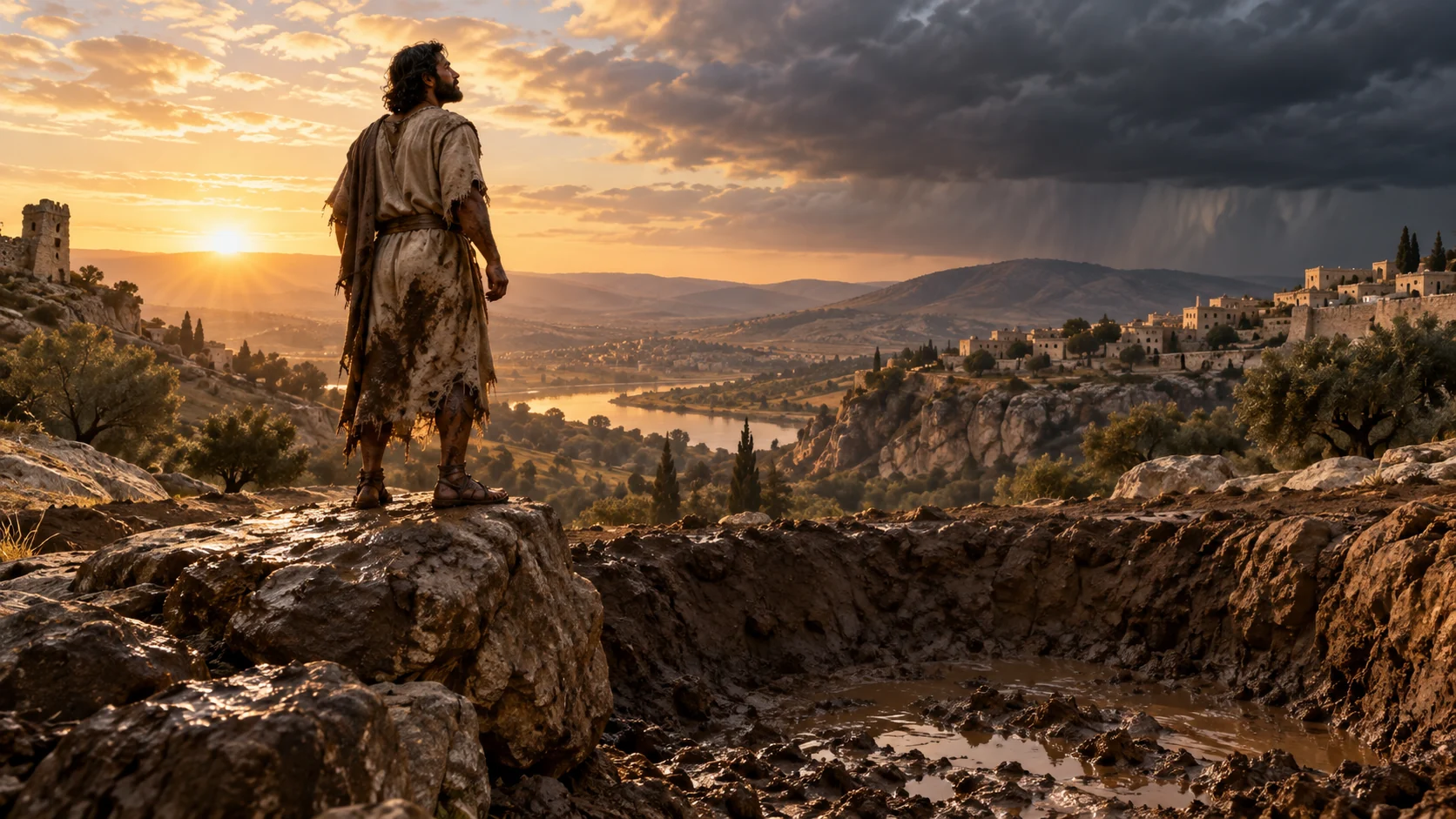
Verse 3 enlarges the threat to an army and war. Still, the heart need not surrender. Biblical courage is not the absence of fear’s physical signals; it is refusing to let danger become the only interpreter of reality.
05
3.2 Psalm 27:4–6 — When “One Thing” Gathers a Scattered Heart
“One thing I ask … that I may dwell in Yahweh’s house.” Kidner calls this singleness of purpose the answer to distracting fears. The psalmist’s deepest desire is not first the disappearance of enemies but nearness to God.
The temple language is concrete yet larger than a building. Goldingay sees the poem moving between sanctuary worship and Yahweh’s protective presence in ordinary life. The same God encountered in worship is present under pressure.
The worshiper wants to behold Yahweh’s beauty and inquire of him. Presence becomes guidance. In trouble Yahweh hides the worshiper, shelters him in his tent, and lifts him onto a rock. A lifted head then becomes sacrifice and song. Fear scatters; worship gathers.
06
3.3 Psalm 27:7–10 — When the God Who Hid You Seems to Hide His Face
The emotional weather changes: “Hear my voice … be gracious to me; answer me.” Mature faith does not require us to remain emotionally in verse 1 when life feels like verse 9.
The central word is “face.” The heart remembers God’s invitation, “Seek my face,” and answers, “Your face, Yahweh, I seek.” Then comes the plea, “Do not hide your face.” The God asked to hide the worshiper from danger in verse 5 must not hide himself from the worshiper.
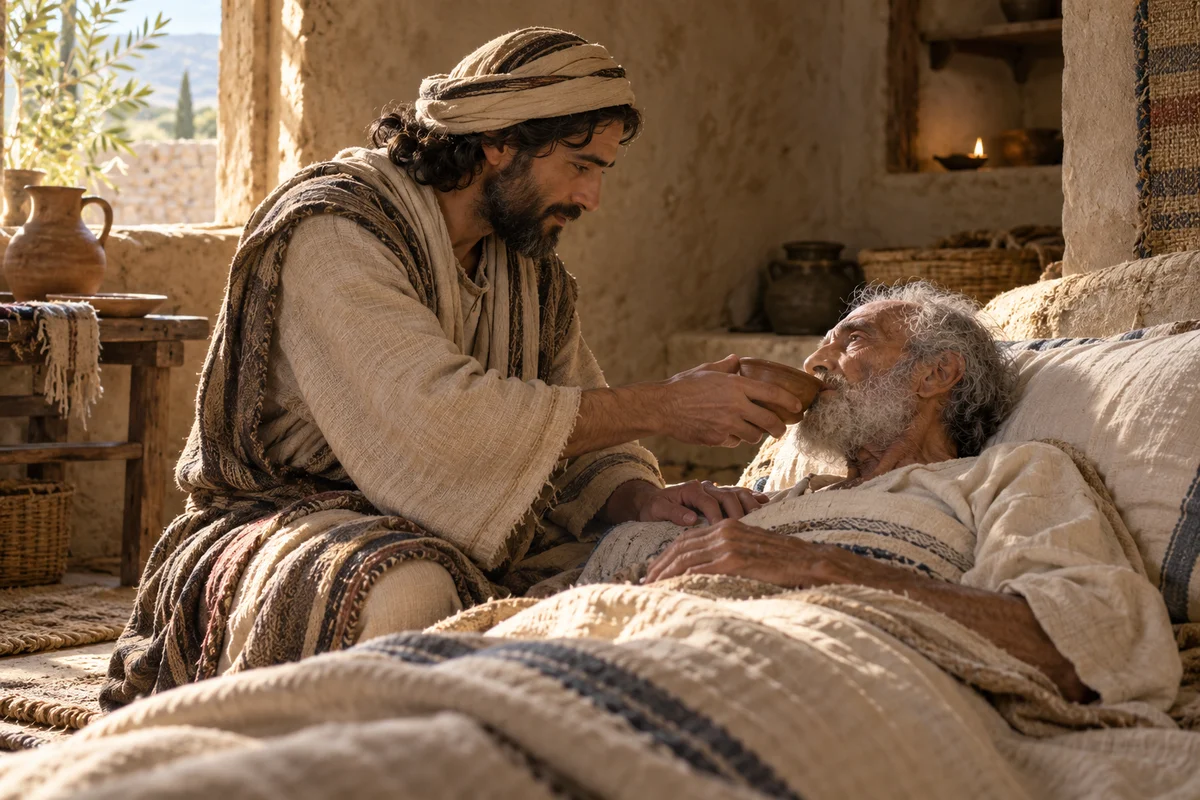
“You have been my help” turns memory into argument. Even if father and mother were to abandon him, Yahweh can receive him. Kidner reads the image as total human abandonment: where ordinary support reaches its limit, God’s welcome does not.
07
3.4 Psalm 27:11–12 — When Seeking God’s Face Requires Walking God’s Way
“Teach me your way … lead me on a level path because of my enemies.” Presence is not merely comfort; it becomes formation. The one who seeks God’s face must learn God’s way.
Goldingay understands the level path as a wise, reliable route through contested circumstances. Kidner stresses sure progress when watchful opponents wait for a slip. The prayer asks, “Show me how to walk faithfully when every step may be used against me.”
The enemies are false witnesses who breathe out violence. Words can threaten reputation, livelihood, liberty, and life. Psalm 27 does not answer slander with counter-slander. It asks God for a straight path and refuses to let hostile methods determine the worshiper’s character.
08
3.5 Psalm 27:13–14 — When Waiting Becomes an Act of Courage
“Unless I had believed that I would see Yahweh’s goodness in the land of the living …” The Hebrew thought trails off, as though life without that hope is unbearable. The hope concerns embodied life under God’s care.
Then the psalmist preaches to his heart: “Wait for Yahweh; be strong, and let your heart take courage; yes, wait for Yahweh.” Goldingay sees waiting framing courage. Waiting is not passivity; it refuses premature surrender while God’s action is not yet visible.
Kidner describes this as naked faith. No fresh answer is recorded. The worshiper has only the assurance that God is worth waiting for, and that is enough for the next faithful breath.
09
4.0 Theological Reflection
10
4.1 Confidence Is Remembered Grace, Not Natural Fearlessness
Psalm 27’s courage grows from what Yahweh has done. Testimony tutors a frightened heart. Faith rehearses past faithfulness as grounds for present prayer rather than manufacturing certainty from personality.
11
4.2 God’s Presence Is the Gift Beneath Every Other Gift
The “one thing” is not victory, safety, or reputation but communion with Yahweh. Deliverance matters, yet it is ordered toward dwelling, beholding, inquiring, singing, and seeking God’s face. Salvation restores us not only from danger but to God.
12
4.3 Seeking God’s Face and Walking God’s Way Belong Together
Spiritual intimacy cannot be separated from moral formation. The worshiper who wants God’s presence also asks for God’s path. Prayer that seeks comfort while refusing guidance becomes sentimental religion.
13
4.4 Waiting Is Active Fidelity Under Unfinished Conditions
Psalm 27 ends before the enemies disappear. Waiting is therefore a place of discipleship. Courage may mean remaining truthful, teachable, prayerful, and non-retaliatory while the verdict is delayed.
14
5.0 Canonical and Christological Horizon: From Wilderness Light to the Face of God
Psalm 27 gathers older biblical images. At the Exodus, Yahweh gives Israel light while shielding them from pursuit (Exod. 14:19–20). The wilderness tent embodies God dwelling among his people. “Be strong and courageous” recalls Joshua facing contested land with God’s promise attached (Josh. 1:6–9). Isaiah later declares that even if a mother could forget her child, Yahweh will not forget Zion (Isa. 49:15).
The New Testament does not quote Psalm 27 as a direct messianic prediction, so its larger patterns matter. Jesus is the light of the world (John 8:12), embodies God dwelling among humanity (John 1:14), and remains faithful under false testimony. Resurrection vindicates the rejected Son and announces God’s goodness in the land of the living.
Romans 8:31–39 echoes the psalm’s confidence that opposition cannot sever God’s people from love. Revelation completes the longing: God dwells with humanity, and his servants “will see his face” (Rev. 21:3; 22:4).
15
6.0 Life Application
1. Build a memory of deliverance. Record times God sustained, guided, corrected, or carried you, and use them when fear returns.
2. Name your “one thing.” Ask what desire organizes your decisions under pressure. Re-center your life around God’s presence rather than controlling every threat.
3. Seek guidance, not only relief. In crisis, pray both “Hide me” and “Teach me your way.” Ask for the next faithful step before the whole problem is solved.
4. Refuse false witness. Do not answer lies with lies or character assassination. Tell the truth, document what matters, seek wise counsel, and pursue justice without imitation.
5. Allow changing emotional weather. You may pray verse 1 in the morning and verse 9 at night. Bring courage and fear alike into God’s presence.
6. Practice waiting as obedience. While the answer is delayed, continue what is clear: truthful speech, responsible work, healthy boundaries, prayer, worship, and appropriate help.
7. Strengthen another waiting heart. Encourage without pretending to know God’s timetable: “Wait for Yahweh; be strong; let your heart take courage.”
16
7.0 Reflection Questions
1. Which past act of God’s faithfulness do I most need to remember in my present fear?
2. What competing desires are scattering my heart away from the “one thing” of God’s presence?
3. Where am I asking for rescue while resisting God’s instruction about the path I should walk?
4. How am I tempted to imitate the methods of people who misrepresent or oppose me?
5. What would courageous waiting look like in one concrete decision this week?
17
8.0 Response Prayer
Yahweh, be my light when fear narrows my world, my salvation when danger feels stronger than I am, and my stronghold when I do not know where to stand. Gather my scattered desires into hunger for your presence. When your face feels hidden, teach me to keep seeking. Receive me where human support reaches its limit. Lead me on a level path among watchful eyes, and keep me truthful when others speak falsely. Remind me of the good I have already seen from your hand. Give me courage for the unfinished day and faith to wait for you, through Jesus, the faithful and risen Son. Amen.
18
9.0 Window into What Comes Next
Psalm 27 ends without narrating the answer; it teaches the heart to wait. Psalm 28 enters that waiting with another cry from the sanctuary, but there the tone turns decisively: “Blessed be Yahweh, for he has heard the voice of my pleas.” The face has been sought; next, the worshiper celebrates the God who hears.
19
10.0 Bibliography
BibleProject. The Book of Psalms: Study Notes. Portland, OR: BibleProject.
Goldingay, John. Psalms, Volume 1: Psalms 1–41. Baker Commentary on the Old Testament Wisdom and Psalms. Grand Rapids: Baker Academic, 2006.
Kidner, Derek. Psalms 1–72. Kidner Classic Commentaries. Downers Grove, IL: IVP Academic, 2008.
Wright, N. T. How God Became King: The Forgotten Story of the Gospels. New York: HarperOne, 2012.
Be the first to leave a comment.