

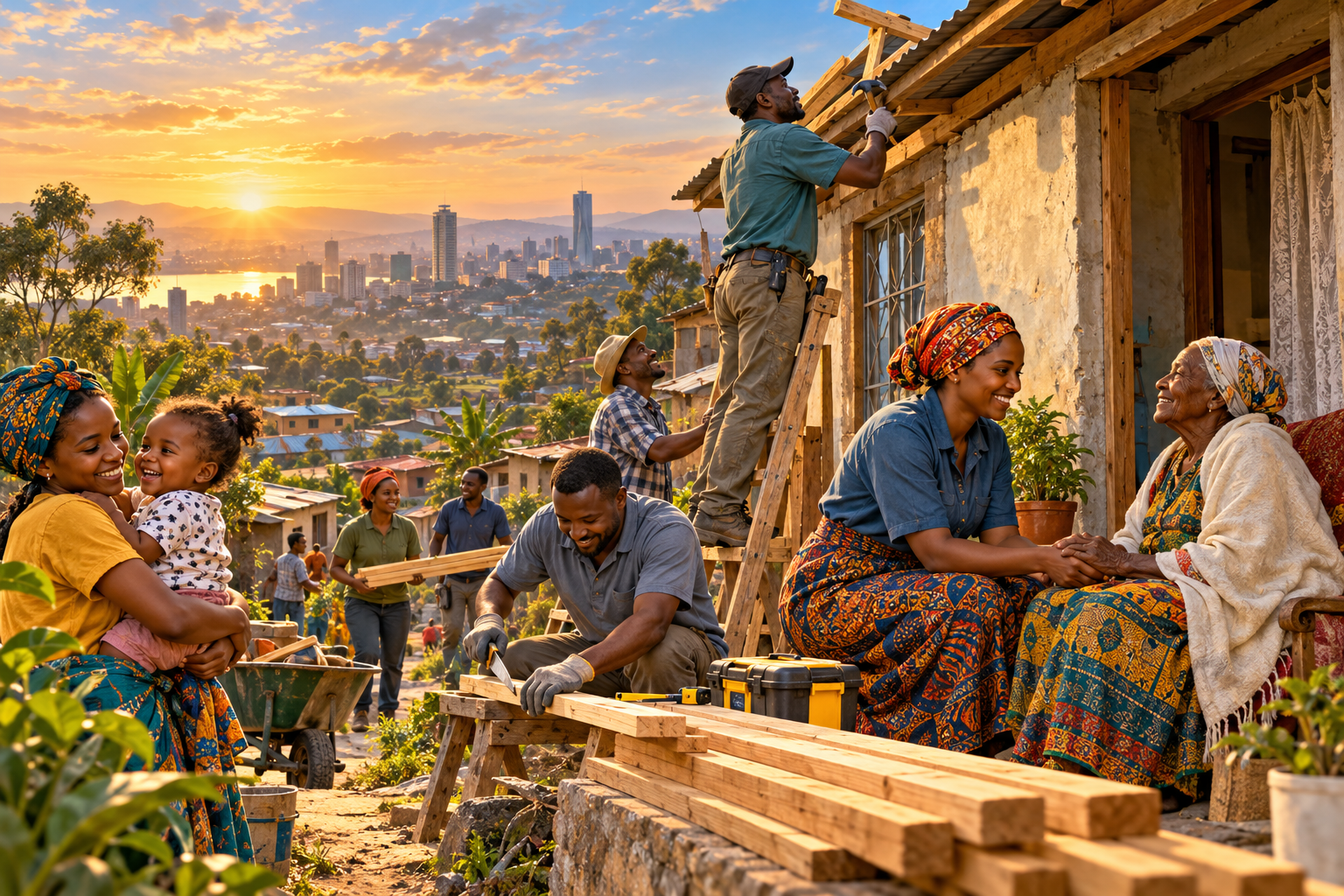
How should tomorrow’s resurrection change the way we live now?
01
Introduction
Faith Built on Truth — In Christ, Through Scripture, for Life
Hope is easy to misunderstand.
It can sound like optimism, wishful thinking, or even an excuse to postpone responsibility:
One day God will fix everything, so perhaps what we do now does not matter very much.
But biblical hope moves in the opposite direction.
The resurrection of Jesus does not make the present less important.
It makes the present more important.
If God intends to raise the dead, judge evil, renew creation, and dwell with humanity, then his promised future has already begun to cast its light into the present.
Christian hope therefore asks a deeply practical question:
If we know where God is taking the world, how should we live while we are on the way?
Here are ten reasons to believe that Christian hope can transform life today.
02
1. Hope gives us courage in suffering
Paul does not deny suffering.
He names it honestly.
Creation groans.
God’s people groan.
Pain is real.
Yet Paul insists that present suffering does not have the final word because God is leading creation toward freedom and glory (Romans 8:18–25).
Christian hope does not say to the wounded person:
“Your pain is small.”
It says:
“Your pain is real, but it is not final.”
That difference matters.
A traveler walking a difficult road experiences the darkness differently when dawn can already be seen on the horizon.
Hope does not make the road painless.
But it reminds us that the road is going somewhere.
Takeaway: Hope does not erase suffering; it keeps suffering from defining the whole story.
03
2. Hope changes the way we face death
Because Jesus has risen, death is no longer the unquestioned ruler of human life (1 Corinthians 15:20–26, 54–58).
This does not make funerals painless.
Jesus himself wept at the tomb of Lazarus (John 11:33–36).
Christian hope does not ask us to hide grief behind religious language.
We may weep.
We may miss those we love.
We may feel the terrible weight of absence.
But resurrection means grief is not surrender.
The grave is real.
It is not sovereign.
Death can wound us, but it does not own the future.
Takeaway: Resurrection hope allows us to grieve honestly without living as though death has the final word.
04
3. Hope gives holiness a new meaning
John says that those who hope to see Christ purify themselves (1 John 3:2–3).
Peter likewise connects God’s promised future with holy and godly living in the present (2 Peter 3:11–14).
Holiness, then, is more than keeping rules while waiting for heaven.
It is learning the character of God’s coming world before that world has arrived in its fullness.
If God’s future is marked by truth, purity, justice, love, faithfulness, and peace, then disciples begin practicing those qualities now.
It is like putting on clothes for daylight while the sky is still dark because you know sunrise is coming.
Christian holiness is not an anxious attempt to earn the future.
It is learning to live in harmony with the future God has already promised.
Takeaway: Hope turns holiness from anxious rule-keeping into preparation for the world God is bringing.
05
4. Hope gives ordinary work lasting meaning
Paul ends his great chapter on resurrection with a striking conclusion:
“Your labor in the Lord is not in vain” (1 Corinthians 15:58).
That sentence gives dignity to ordinary faithfulness.
Teaching a child.
Farming honestly.
Caring for a patient.
Building a table well.
Running a business without exploiting people.
Visiting a prisoner.
Writing truthfully.
Cleaning a room for someone who cannot do it themselves.
Listening patiently to someone who is hurting.
None of these acts raises the dead.
None of them creates the new creation by human strength.
But because God will raise the dead and renew creation, faithful work does not have to be meaningless.
The resurrection tells us that what is done in love, truth, justice, and faithfulness belongs to a story larger than what we can presently see.
Takeaway: Because God will renew creation, faithful work within creation is never merely wasted effort.
06
5. Hope frees us to practice costly love
Jesus calls his followers to love enemies, forgive, serve, and give without constantly calculating what they will receive in return (Matthew 5:43–48; Luke 6:32–36).
That kind of love can look foolish in a world built around self-protection.
Why give when someone may never repay you?
Why forgive when resentment feels safer?
Why serve when no one notices?
Resurrection changes the calculation.
If God is the keeper of our future, we do not have to extract every possible advantage from the present.
We can become generous because our lives are not secured by winning every exchange.
This does not mean ignoring abuse, abandoning wise boundaries, or pretending wrongdoing does not matter.
Costly love is not permission for others to destroy us.
It is freedom from making self-protection the highest law of life.
Takeaway: Hope makes generosity possible because our future does not depend on winning every exchange.
07
6. Hope gives us courage to pursue justice without becoming hateful
God has promised a world “where righteousness dwells” (2 Peter 3:13).
That future does not make justice less important now.
It gives justice direction.
Paul tells believers not to be overcome by evil, but to overcome evil with good (Romans 12:17–21).
Christian hope therefore allows us to confront corruption,
defend the vulnerable,
tell the truth,
challenge exploitation,
report wrongdoing,
and resist oppression
without surrendering ourselves to revenge.
We do not have to become like the evil we oppose.
Nor does hope require passivity.
Because God cares about justice, his people can pursue justice now.
But because final justice belongs to God, hatred does not have to become our master.
Takeaway: Hope gives us courage to oppose evil without allowing evil to decide what kind of people we become.
08
7. Hope creates communities of reconciliation
God’s promised future gathers people from every nation, tribe, people, and language before him (Revelation 7:9–10).
The Church is called to begin rehearsing that future now.
In Christ, dividing walls are broken down and strangers are brought into one household (Ephesians 2:13–22).
That means Christian community cannot be satisfied with saying that everyone is equal while old divisions continue to control who is welcomed, trusted, heard, or allowed to lead.
A church that crosses tribal, racial, economic, and social boundaries becomes a small preview of God’s coming world.
Reconciliation does not erase difference.
Nor does it hide injustice.
It brings difference under the peace of Christ and requires us to confront the habits and structures that keep people unnecessarily divided.
Takeaway: Hope teaches us to practice tomorrow’s reconciliation today.
09
8. Hope changes the way we use possessions
Jesus repeatedly warns against building life around wealth (Luke 12:13–34).
Paul tells those who are rich not to place their hope in uncertain riches, but in God, and to become generous and ready to share (1 Timothy 6:17–19).
If resurrection and new creation are real, possessions can no longer carry the weight of eternity.
Money matters.
Homes matter.
Savings matter.
Work matters.
But none of these things can become our final security.
Hope teaches us to hold possessions with open hands.
What we own becomes something entrusted to us rather than something that owns us.
Resources can become tools for hospitality, generosity, justice, care, and service rather than monuments to fear.
Takeaway: Hope loosens the grip of greed because our deepest future cannot be purchased.
10
9. Hope sustains mission
The risen Jesus sends his followers into the world (Matthew 28:18–20; Acts 1:8).
Why keep telling the story of Jesus?
Because resurrection means the gospel is not merely advice about how to become more religious.
It is news.
God has acted in Jesus.
The crucified Messiah has risen.
A new creation has begun.
And history is moving toward the reign of the risen King.
Christian mission is therefore an invitation.
It calls people to trust Jesus, receive his grace, enter his people, and begin living under his reign before his kingdom is visible in its fullness.
Mission should never become coercion.
Good news is announced, embodied, and offered.
It is not forced.
Takeaway: Hope sends us outward because good news about God’s future was never meant to be kept private.
11
10. Hope turns everyday faithfulness into a preview of new creation
Jesus calls his people “the light of the world” (Matthew 5:14–16).
Paul describes God’s kingdom as righteousness, peace, and joy in the Holy Spirit (Romans 14:17).
That means ordinary acts of faithfulness can become small windows opening toward God’s promised future.
An act of forgiveness.
A courageous truth told at personal cost.
A beautiful thing created with care.
A meal shared generously.
A broken relationship honestly repaired.
A vulnerable person protected.
A lonely person welcomed.
A wounded person treated with mercy.
We cannot manufacture the new creation.
We cannot complete God’s kingdom by our own strength.
But we can live in its direction.
A single lamp does not end the night.
But it tells the truth about the darkness:
darkness is not all there is.
Takeaway: Ordinary faithfulness becomes a sign that God’s promised future is already beginning to dawn.
12
Truth and Your Decision
Christian hope is not a chair in which we sit while waiting for heaven.
It is a road we walk because the resurrection has changed the destination.
If Jesus is risen, suffering is not final.
If Jesus is risen, death is not final.
If Jesus is risen, injustice is not final.
If Jesus is risen, faithful love is not wasted.
Tomorrow’s resurrection reaches backward into today.
It lays claim to our bodies,
our money,
our relationships,
our work,
our courage,
our worship,
our habits,
and our choices.
That is why Christian hope is more demanding than optimism.
Optimism says:
“Perhaps things will improve.”
Christian hope says:
“God has raised Jesus from the dead; therefore live now as though his future is true.”
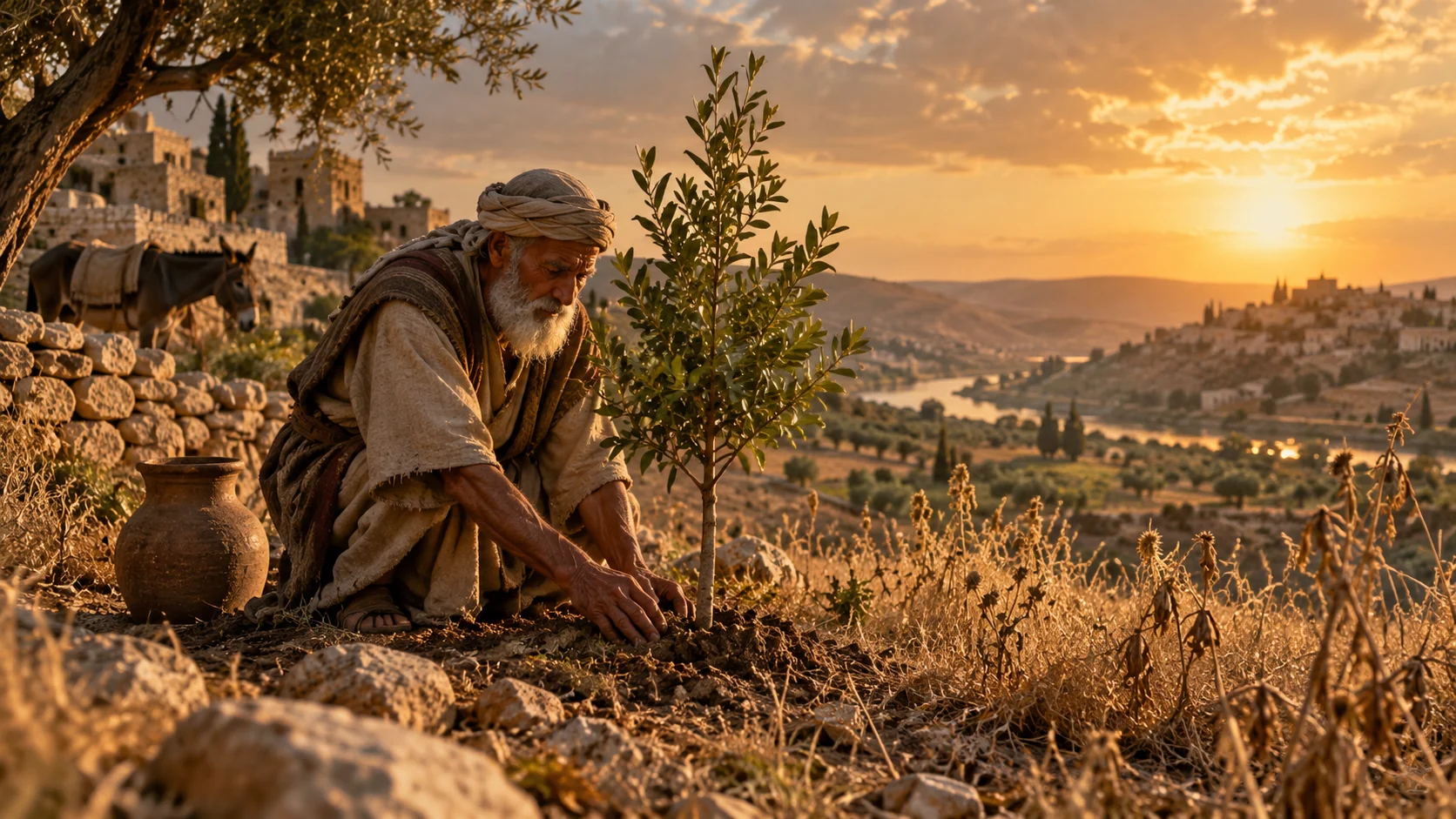
Plant because spring is coming.
Forgive because reconciliation is coming.
Seek justice because righteousness is coming.
Care for creation because renewal is coming.
Love your neighbor because God is forming one human family.
Stand beside the grieving because death will not reign forever.
Tell the truth because lies do not belong to God’s future.
Serve faithfully because your labor in the Lord is not in vain.
The question at the end of this series is therefore not merely:
“Do I believe these things?”
It is:
“What kind of person will these truths make me?”
Faith built on truth must eventually become faith lived in the world.
13
A Prayer for Hopeful Living
God of resurrection and new creation,
Thank you that our future rests not in our strength, but in your faithfulness.
Keep us from empty optimism.
Keep us also from despair.
Let the resurrection of Jesus reshape the choices we make today.
Make us courageous in suffering,
generous with what we possess,
truthful in a world of lies,
committed to justice without hatred,
peaceful without becoming passive,
and hopeful without escaping responsibility.
Through your Spirit, make our lives small signs of the world you have promised.
Until Christ comes and all things are made new, teach us to live toward the dawn.
Amen.
14
Continue the Journey
Which part of God’s promised future most needs to reshape the way you live today?
What is one concrete step you can take this week so that your present life begins to resemble the future you say you believe in?
Be the first to leave a comment.