

Are we merely intelligent animals, or creatures entrusted with sacred dignity?
01
Introduction
If human worth depends on intelligence, strength, or independence, what happens when those powers fade?
What protects the newborn child, the prisoner, the stranger, and the person who can no longer remember their own name?
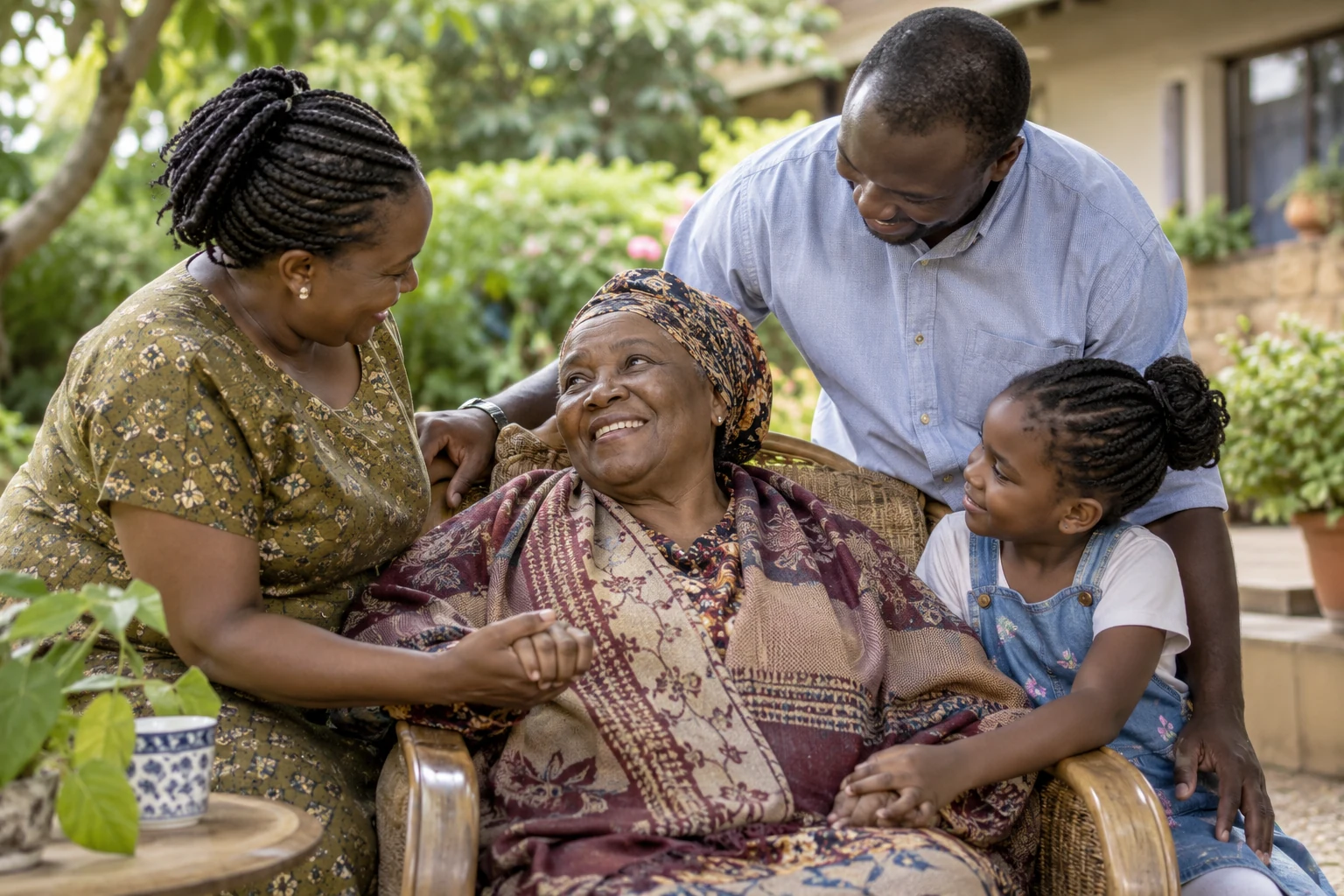
At a hospital bedside, the usual measures of importance fall silent. The patient may no longer hold a job, solve a problem, recognize a loved one, or speak. Yet the family adjusts the blanket, calls the patient by name, and refuses to say, “There is less of a person here.” Where does that conviction come from?
Christian faith answers with one of Scripture’s most daring claims: every human being bears the image of God (Genesis 1:26–28). The phrase does not mean that God has a human-shaped body or that human beings possess a spark of divinity. Nor does it deny our biological kinship with other creatures. We are formed from the earth, dependent on breath, food, community, and the mercy of God. The image is a dignity God gives and a vocation God entrusts.
This belief has often been confessed more faithfully than it has been practised. Christians have spoken of God’s image while tolerating slavery, racism, abuse, sexism, and contempt for people with disabilities. Those failures do not make the doctrine unimportant. They show how urgently it must be recovered. The following ten reasons form a cumulative case: human beings are embodied creatures within the animal world, yet we are called to represent God’s wise and loving rule. Our dignity is sacred because it is received, not achieved.
02
1. God’s image is a gift before it is an achievement
In Genesis 1, humanity does not apply for the image, pass an examination, or climb toward it. God speaks it over humankind: “Let us make humankind in our image, according to our likeness” (Genesis 1:26–27). Before the first field is cultivated or the first city built, human worth rests in God’s decision. The image begins with grace.
That order matters. If dignity is earned through intelligence, productivity, morality, wealth, or power, the strong will always invent a scale on which they stand at the top. Someone will be called advanced while another is called a burden. Genesis removes the measuring stick. God’s image is not a medal worn by exceptional people. It is the name of a calling given to the human family.
Takeaway: Your deepest worth is not a salary, examination result, title, or public reputation. It begins with the God who calls human life his image-bearing creation.
03
2. The image names a royal vocation of service
Genesis places “image” beside the command to rule over other creatures (Genesis 1:26–28). In the biblical story, therefore, the image is not merely an invisible quality stored somewhere inside us. It is a commission. Human beings are appointed to reflect the Creator’s wise care into the world, much as an ambassador represents a king in a distant province. The whole earth becomes the place where God’s character is meant to be made visible.
But rule has often become an excuse for domination. The wider biblical portrait corrects that misuse. God’s own rule gives food, hears the oppressed, protects the vulnerable, and judges violence (Psalm 72:1–14; Psalm 145:8–16). Adam is placed in the garden to serve and guard it, not strip it bare (Genesis 2:15). Authority that crushes the weak contradicts the One it claims to represent.
Takeaway: To bear God’s image is not permission to stand above creation with a whip; it is a call to stand within creation with responsibility.
04
3. Our kinship with animals does not cancel our calling
Biologically, human beings belong within the animal world. Fossil, anatomical, and genetic evidence places us among the primates and connects us with other apes through common ancestry.[^1] Scripture also refuses to make us creatures of another substance: animals and humans are formed from the ground and depend on God’s life-giving breath (Genesis 2:7, 19; Psalm 104:27–30). We are earthlings, not angels wearing skin.
Some fear that evolutionary history turns humans into “mere animals.” But the word mere carries a philosophical judgment that biology itself cannot establish. Explaining our physical ancestry does not determine whether God can call embodied creatures into covenant, responsibility, and communion. A child formed through pregnancy is no less a gift because medicine can describe embryonic development. In the same way, a biological process does not settle the theological meaning of the creature who emerges within it. The National Academies notes that acceptance of evolution can be compatible with religious faith.[^2]
Takeaway: You do not need to deny the earth beneath your feet in order to receive the calling God speaks over you.
05
4. The image belongs equally to the whole human family
Genesis immediately says that God created humankind “male and female” in the divine image (Genesis 1:27). Neither sex possesses a larger share. Later Scripture widens the horizon: humanity has one Creator, the nations share one ancestry, and God’s redeemed family gathers people from every tribe, language, people, and nation (Acts 17:26; Revelation 7:9–10). Difference is real, but it does not become a ladder of human value.
History shows how easily skin colour, ethnicity, caste, citizenship, education, and class are turned into borders around dignity. The image of God tears holes in those fences. The stranger at the roadblock, the refugee at the border, and the worker whose accent sounds unfamiliar do not first need to resemble us before they deserve justice. The modern language of equal human dignity, expressed for example in Article 1 of the Universal Declaration of Human Rights, resonates with this moral conviction even though people ground it in different ways.[^3]
Takeaway: Wherever society divides people into more human and less human, the image of God stands as a holy protest.
06
5. Human worth cannot be reduced to ability
Reason, language, creativity, and moral awareness are remarkable features of human life. They may help us understand how image-bearing is expressed, but they cannot safely become its foundation. A newborn cannot reason like an adult. A sleeping person is not exercising moral choice. Brain injury or dementia may take away speech and memory. If ability creates dignity, dignity will rise and fall with a medical chart.
Genesis anchors worth in God’s gift to humankind, not in a score assigned to each individual. This protects people whose capacities differ from what society calls normal. The Convention on the Rights of Persons with Disabilities speaks of the “inherent dignity” of persons with disabilities and their full and equal enjoyment of human rights.[^4] Christian communities should be among the first places where such dignity becomes tangible: accessible doors, patient listening, shared leadership, and care that does not confuse dependence with failure.
Takeaway: A person does not become less sacred when the mind slows, the body weakens, or help is needed.
07
6. The image is lived in relationship, not isolation
The first biblical use of “image” speaks of humanity in the plural and of male and female together (Genesis 1:26–27). No single person exhausts what humanity is called to reflect. We become ourselves through relationships we did not invent: a child receives language from others, a farmer depends on rain and neighbours, and even the most independent thinker lives from knowledge handed down by a community.
Relationship can be romanticized. Families wound, communities exclude, and crowds can multiply evil. Yet the answer is not the isolated self who owes nothing to anyone. The triune God revealed in the Christian story is love, and Jesus gathers a new family in which strangers become siblings (John 17:20–23; Galatians 3:28). Image-bearing ripens through truthful love, faithful presence, forgiveness, boundaries, and mutual service.
Takeaway: Sacred dignity is personal, but never private; it calls you to become a neighbour.
08
7. Moral agency makes human life answerable
Human beings do more than react. We deliberate, promise, betray, repent, repair, and ask whether our actions are just. Biology and culture shape every choice, sometimes profoundly, but ordinary life still depends on the conviction that reasons matter. We praise courage, expose corruption, teach children, and hold leaders accountable because we believe people can respond to truth and obligation.
The image of God gives this moral life a horizon. Humans are entrusted agents who will answer for what they do with power, bodies, land, speech, and neighbours (Genesis 4:9–10; Micah 6:8; Romans 14:12). Responsibility must be applied with compassion: trauma, coercion, illness, and diminished capacity can affect culpability. Biblical justice is not blind severity. Still, to erase agency altogether would also erase confession, forgiveness, growth, and the possibility of becoming wise.
Takeaway: Your choices matter because your life is entrusted; grace does not make responsibility smaller but makes repentance and renewal possible.
09
8. Human creativity can echo the Creator’s generosity
Soon after humanity is commissioned, Genesis tells of gardens, families, cities, music, metalwork, and the keeping of animals (Genesis 2:15; 4:17–22). Culture-making can be bent toward pride and violence, as Babel shows, but it can also serve life. A nurse designs a better routine for patients. A carpenter shapes a table where a family will eat. A musician gives grief a melody. A scientist discovers a treatment. Such work can become a small echo of divine generosity.
This does not mean only paid or celebrated work matters. Raising a child, repairing a neighbour’s roof, preparing food, cleaning a room, teaching someone to read, and planting a tree all participate in cultivating a shared world. Nor is productivity the measure of the worker’s value; dignity comes first. Work matters because image-bearers can offer their strength and imagination in love, not because output purchases their humanity.
Takeaway: Use whatever has been placed in your hands to leave a corner of God’s world more truthful, fruitful, and hospitable.
10
9. Sin damages the image-bearing vocation but does not erase dignity
The Bible is unsentimental about humanity. The same creature who writes a lullaby can design a weapon. Cain kills his brother; empires turn people into bricks; kings use bodies as possessions. If the image meant that humans naturally mirror God without distortion, history would refute it before breakfast.
Yet Scripture speaks of the image after humanity’s rebellion. Murder is condemned because humans are made in God’s image (Genesis 9:6), and James condemns cursing people who are made in God’s likeness (James 3:9–10). Sin vandalizes the vocation without cancelling the person’s claim to protection. This truth blocks two opposite errors: naïve praise of human goodness and cynical contempt for human life. The offender remains accountable; the victim remains sacred; neither becomes an object.
Takeaway: Human evil must be named truthfully, but no failure gives us permission to treat a person as rubbish.
11
10. Jesus reveals and restores true humanity
The New Testament calls Jesus “the image of the invisible God” (Colossians 1:15) and presents him as the truly human one whose rule takes the form of self-giving love. He touches those marked unclean, welcomes children, eats with the rejected, confronts oppressive power, washes his disciples’ feet, and forgives his executioners. In him, divine glory and mature humanity meet. The image is no longer an abstract definition; it has a face.
Jesus does more than offer an example. Through his death and resurrection, God begins the renewal of humanity and creation. Those joined to Christ are being renewed according to their Creator’s image, and their destiny is to be conformed to the Son (Romans 8:29; Colossians 3:10; 2 Corinthians 3:18). Resurrection means God does not discard embodied human life. He heals and transforms it. Christian hope is not escape from being human, but becoming fully human under the loving reign of God.
Takeaway: Look to Jesus to see both the God whose image we bear and the humanity we are being restored to become.
12
Conclusion and Invitation
Are we animals? Biologically, yes: earth-formed, breathing creatures with a history intertwined with other life. Are we merely intelligent animals? The Christian answer is no. No scientific instrument can measure the word merely, because it is not a biological finding. Scripture sees within our creatureliness a gift and a summons: God appoints human beings to reflect his wise love, guard the vulnerable, cultivate the earth, and answer for the use of power.
This vision refuses both arrogance and humiliation. We cannot despise animals as though sharing creaturely life were an insult. Nor can we rank human beings by intelligence, race, sex, health, age, status, or usefulness. The image belongs to the child before achievement, to the prisoner after failure, to the patient when memory fades, and to the enemy whose humanity we would rather forget.
Choose one place where dignity is being tested. Learn the name of someone others overlook. Make a room accessible. Refuse a joke that degrades a tribe, sex, disability, or nationality. Listen to a child. Visit the sick. Speak to a worker with the respect you offer a leader. The doctrine of the image of God becomes credible when it leaves the page and takes flesh in the way we see a human face.
13
Prayer
God our Creator, you formed us from the earth and entrusted us with your image. Forgive us for measuring people by power, usefulness, appearance, or agreement with us. Teach us to recognize sacred dignity in the child, the stranger, the wounded, the offender, and the forgotten. Shape us into the likeness of Jesus, so that our authority becomes service, our knowledge becomes wisdom, and our freedom becomes love. Amen.
Where is human dignity most threatened in your community, and what faithful action could begin to protect it? Share your question, experience, or testimony so that this conversation may grow into practice.
Previous article: Creation Testifies to God: Ten Reasons to Believe Next article: Human Longing for Meaning: Ten Reasons to Believe
14
Sources Consulted
[^1]: Smithsonian Institution, Human Origins Program, “Introduction to Human Evolution” and “How Do We Know Humans Are Primates?”.
[^2]: National Academy of Sciences and Institute of Medicine, Science, Evolution, and Creationism (2008).
[^3]: United Nations, Universal Declaration of Human Rights, Article 1.
[^4]: Office of the United Nations High Commissioner for Human Rights, Convention on the Rights of Persons with Disabilities, Article 3.
Be the first to leave a comment.