

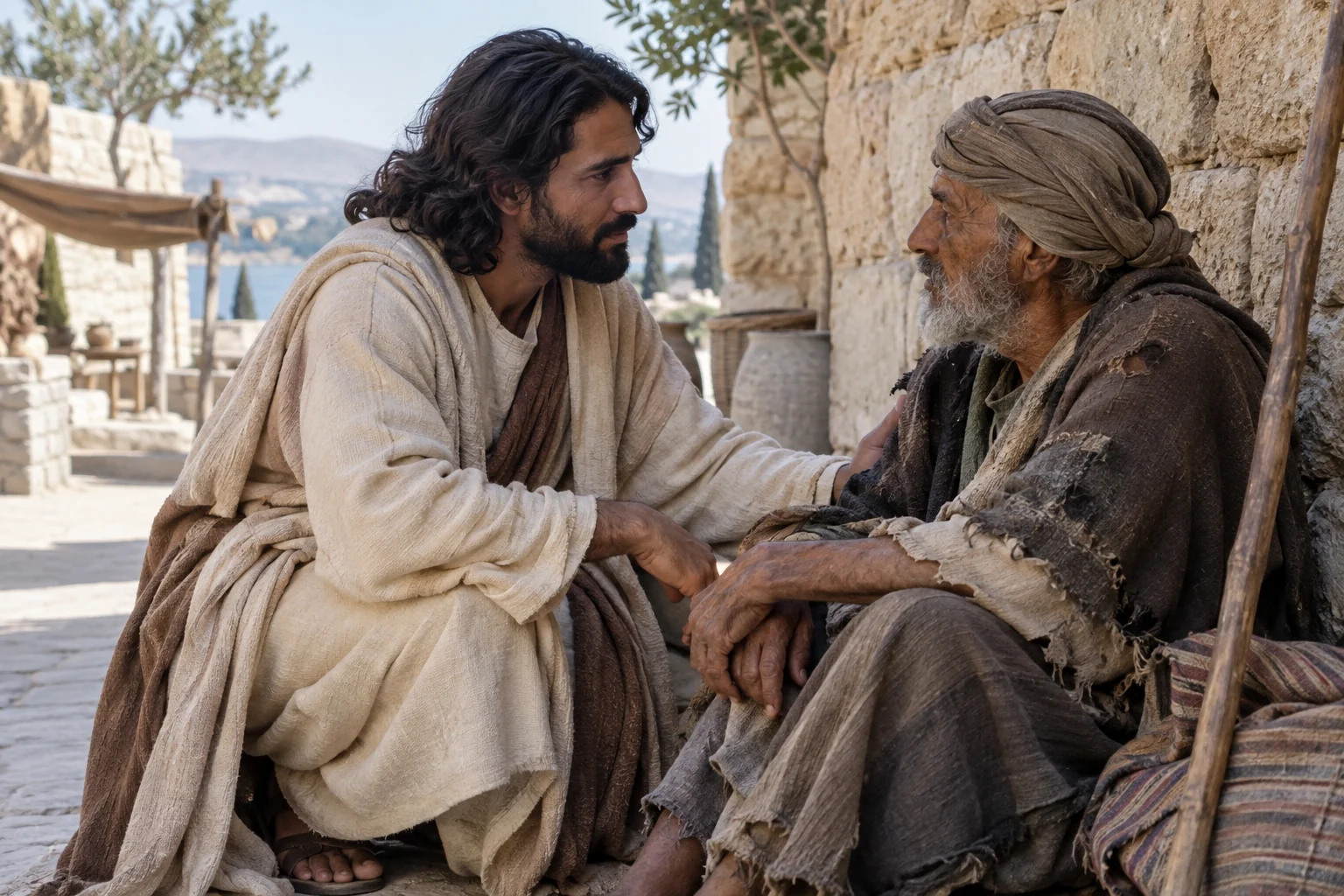
Can Anyone Truly Release Us from the Burden of Guilt?
01
Introduction
Part III — Jesus Christ: The Centre of the Story
Faith Built on Truth — Through Christ, Through Scripture, for Life
Can guilt really be removed, or can we only learn to live with it? Can anyone speak a word strong enough to release us from what we have done—and from what our failures have done to us?
Guilt has a long memory.
A sentence spoken in anger can return years later.
A betrayal may be hidden from everyone else and still remain loud inside the conscience.
A decision made in one hour can cast a shadow across a decade.
Sometimes guilt is appropriate. We have done wrong, and something within us knows it.
Sometimes shame goes further and says, “You did not merely do wrong. You are beyond repair.”
Modern life offers many ways to manage guilt.
We can deny it.
Rename it.
Distract ourselves from it.
Explain it psychologically.
Blame our circumstances.
Punish ourselves.
Or spend years trying to become good enough to outweigh what happened.
Some of these responses may help us understand ourselves. None, by itself, can answer the deepest question:
Can guilt actually be forgiven?
The Gospels place that question at the center of Jesus’ ministry.
Jesus does not merely tell people to forgive one another. He does not merely announce that God is merciful. He repeatedly acts as though the authority to forgive sins is present in him.
That is why the teachers of the law react so strongly when Jesus tells a paralyzed man, “Your sins are forgiven” [Mark 2:1–12].
They understand the claim.
Forgiveness belongs to God.
So who is this Jesus?
Here are ten reasons to believe Jesus has authority to forgive sins.
02
1. Jesus Forgives Sins Directly, Not Merely as a Messenger
Prophets can announce forgiveness.
Priests can declare cleansing within Israel’s covenant system.
But Jesus speaks with startling directness.
When a paralyzed man is lowered through a roof, Jesus does not say, “May God forgive you.”
He says, “Son, your sins are forgiven” [Mark 2:5].
The religious teachers immediately ask, “Who can forgive sins but God alone?” [Mark 2:7].
Their objection is not unreasonable.
If someone damages your neighbor’s house, you cannot simply step in and say, “I forgive you,” as though the offense were yours to release.
Yet Jesus speaks as if humanity’s deepest debt ultimately stands before him.
Then he heals the man so that those watching may know “the Son of Man has authority on earth to forgive sins” [Mark 2:10–12].
Jesus does not merely describe God’s forgiveness.
He embodies its authority.
Takeaway: Jesus speaks forgiveness with an authority greater than that of a teacher explaining mercy; he acts as though God’s own forgiving authority is present in him.
03
2. Jesus’ Forgiveness Announces That Israel’s Long-Awaited Restoration Has Begun
Forgiveness in the Bible is bigger than relief from private guilt.
Israel’s prophets connected forgiveness with covenant restoration.
Exile was not only a political disaster. It was interpreted as the bitter fruit of covenant failure. That is why the prophetic hope of restoration includes the removal of sin.
Isaiah announces comfort because Jerusalem’s sin has been dealt with [Isaiah 40:1–2].
Jeremiah promises a new covenant in which God will forgive wickedness and remember sin no more [Jeremiah 31:31–34].
Ezekiel speaks of cleansing, a new heart, and a new spirit [Ezekiel 36:24–28].
When Jesus travels through Galilee forgiving sins, eating with sinners, and announcing God’s kingdom, he acts as though this promised restoration is arriving through him.
Forgiveness is therefore not a side ministry.
It is a sign that exile is ending.
God is gathering his people again.
Takeaway: Jesus’ forgiveness belongs to the great biblical promise that God would restore his people, cleanse their sin, and renew the covenant.
04
3. Jesus Offers Forgiveness Outside the Normal Temple Setting
For first-century Jews, the temple stood near the center of sacrificial worship and covenant forgiveness.
Yet Jesus forgives people away from the temple.
In homes.
At meals.
On roads.
Beside sickbeds.
This is one reason the story in Mark 2 is so striking.
The paralyzed man has not first traveled to Jerusalem or offered a sacrifice.
Jesus speaks forgiveness where he lies.
Later, Jesus tells a woman known as a sinner, “Your sins are forgiven” [Luke 7:48].
This does not mean Jesus despises Israel’s temple story.
It means he behaves as though something greater than the temple is now present.
Indeed, he later speaks and acts as though the temple’s purpose is being gathered into his own person and mission [Matthew 12:6; John 2:19–21].
God’s forgiveness is no longer being announced only from a sacred building.
It is walking the roads of Galilee in Jesus.
Takeaway: Jesus’ authority to forgive suggests that God’s restoring presence is no longer centered only in a place, but is arriving personally in him.
05
4. Jesus Distinguishes Real Guilt from False Accusation
Not every feeling of guilt proves that a person is guilty.
Some people carry blame placed upon them by abusive families, manipulative leaders, broken religious communities, or their own wounded memories.
Jesus never teaches that healthy spirituality means confessing sins we did not commit.
He confronts actual wrong.
But he also refuses false condemnation.
When religious leaders weaponize shame, Jesus exposes their hypocrisy [Matthew 23:1–28].
When a man born blind is treated as though his suffering must be explained by someone’s personal sin, Jesus rejects the assumption [John 9:1–3].
This matters pastorally.
Forgiveness requires truth.
If there is real guilt, it should be confessed.
If there is false guilt, it should not be manufactured.
Jesus does not heal us by making us say we are guilty of everything.
He heals us by bringing us into the truth.
Takeaway: The forgiveness Jesus gives is rooted in truth; he calls real sin to repentance and refuses the false guilt that crushes people unnecessarily.
06
5. Jesus Separates Guilt from Shame Without Making Sin Small
Guilt says, “I did wrong.”
Shame says, “I am nothing but wrong.”
Jesus deals seriously with sin but refuses to reduce people to their worst act.
Zacchaeus is a corrupt tax collector, but Jesus sees more than corruption. His welcome creates space for repentance and restitution [Luke 19:1–10].
Peter denies Jesus, but failure does not become Peter’s final name. The risen Jesus restores him and gives him work to do [John 21:15–19].
The woman who anoints Jesus in Luke 7 carries a public reputation, yet Jesus gives her a new word: forgiven [Luke 7:36–50].
Grace does not erase moral responsibility.
It breaks the claim that failure owns our identity forever.
Jesus can say, in effect:
“What you did matters.
But it does not have the right to become your eternal name.”
Takeaway: Jesus removes guilt without allowing shame to define the whole person; forgiveness tells the truth about sin while opening a new future.
07
6. Jesus Joins Forgiveness to Repentance and a Changed Life
Biblical forgiveness is not permission to continue harming others.
Jesus welcomes sinners.
He also calls them to repentance.
His announcement is, “Repent and believe the good news” [Mark 1:15].
Zacchaeus responds to grace by giving to the poor and repairing financial harm [Luke 19:8–10].
Jesus teaches reconciliation, restitution where needed, and a new way of treating others.
Forgiveness therefore does not mean consequences vanish.
A broken trust may need rebuilding.
Stolen money may need returning.
An abusive relationship may require boundaries and protection.
Justice may still need to be done.
Grace is not a religious way of escaping responsibility.
It creates the freedom to face responsibility without being destroyed by it.
Takeaway: Jesus’ forgiveness does not cancel repentance; it makes honest repentance possible because we no longer need to hide in order to survive.
08
7. Jesus Bears the Cost of Forgiveness at the Cross
Forgiveness is sometimes spoken about as though it were easy.
“Just forgive.”
But real forgiveness is costly.
When someone releases a debt, someone absorbs the loss.
When a deep wrong is forgiven, the wound does not disappear as though it never happened.
The cross shows the costliness of divine forgiveness.
Jesus does not merely stand outside human evil and announce pardon.
He enters its consequences.
Betrayal.
Injustice.
Violence.
Shame.
Death.
At the Last Supper he interprets his coming death in covenant language: his blood is poured out for many for the forgiveness of sins [Matthew 26:26–28].
The New Testament does not present forgiveness as God pretending sin is harmless.
At the cross, sin is exposed in all its ugliness—and grace goes deeper still.
Takeaway: The cross shows that Jesus’ forgiveness is neither cheap nor casual; God bears the cost of reconciliation rather than simply ignoring evil.
09
8. The Resurrection Declares That Forgiveness Has the Final Word Over Condemnation
If Jesus had remained dead, his words of forgiveness might have sounded beautiful but defeated.
The resurrection changes the verdict.
The one condemned by human courts is vindicated by God.
The crucified Messiah is raised.
The New Testament therefore links resurrection with the announcement of forgiveness and new life [Acts 2:32–39; 13:37–39].
Paul says Jesus “was delivered over to death for our sins and was raised to life for our justification” [Romans 4:25].
The resurrection means condemnation is not the final word.
Death is not the final word.
The past is not the final word.
God has opened a future on the other side of judgment.
Forgiveness is therefore not merely a comforting idea.
It belongs to the new creation inaugurated in the risen Jesus.
Takeaway: The resurrection turns forgiveness into a future: the forgiven person is not merely cleared of the past but welcomed into new life.
10
9. Jesus Gives His Followers the Ministry of Forgiveness and Reconciliation
Jesus’ forgiveness does not stop with the person forgiven.
It creates a community that learns to practice forgiveness.
He teaches his disciples to pray, “Forgive us our debts, as we also have forgiven our debtors” [Matthew 6:12].
He teaches repeated forgiveness [Matthew 18:21–35].
After the resurrection, the church is sent with a message of repentance and forgiveness to the nations [Luke 24:46–49].
Paul later describes Christian ministry as a ministry of reconciliation [2 Corinthians 5:18–20].
This is difficult work.
Forgiveness between human beings is not identical to God’s forgiveness.
Nor does it erase justice or boundaries.
But people who have received mercy cannot build their identity around vengeance.
The forgiven become forgivers.
The reconciled become ambassadors of reconciliation.
Takeaway: Jesus’ authority to forgive creates a people who carry forgiveness into families, churches, friendships, and divided communities.
11
10. Jesus Can Release the Conscience Because His Authority Is Greater Than Our Accusing Hearts
Some guilt remains long after confession.
The facts may be forgiven before the emotions have caught up.
A person may believe the gospel intellectually and still wake at night hearing the old accusation.
The New Testament understands this struggle.
John writes, “If our hearts condemn us, we know that God is greater than our hearts” [1 John 3:19–20].
Paul declares, “There is now no condemnation for those who are in Christ Jesus” [Romans 8:1].
This does not mean conscience should be silenced when repentance is needed.
But once sin has been confessed and brought to Christ, endless self-punishment is not deeper holiness.
Sometimes it is another way of insisting that our verdict is stronger than God’s.
Jesus has authority to say what guilt cannot say:
“Forgiven.”
“Clean.”
“Go in peace.”
“Follow me.”
The conscience may need time to learn that language.
But grace keeps speaking.
Takeaway: When confessed guilt continues to accuse, faith learns to place Christ’s verdict above the changing emotions of the heart.
12
Truth and Your Decision: If Jesus Has Authority to Forgive Sins
Can anyone truly release us from the burden of guilt?
Human beings can forgive wrongs committed against them.
Courts can remove legal penalties.
Therapy can help us understand the wounds and patterns behind our actions.
Friends can remind us that we are more than our failures.
All of these can matter deeply.
But the Gospel asks a larger question:
Who can forgive the guilt that finally stands before God?
Jesus answers that question not only with teaching, but with himself.
He forgives the paralyzed man.
He welcomes sinners to the table.
He releases the ashamed.
He calls the guilty into repentance.
He carries forgiveness toward the cross.
He rises from the dead.
Then he sends a forgiven community into the world with the message of reconciliation.
This means forgiveness is not denial.
It does not say the wound was imaginary.
It does not call evil good.
It does not always remove earthly consequences.
It does not force victims to return to unsafe situations.
Forgiveness tells the truth about sin while refusing to let sin own the future.
And this is why Jesus’ authority matters.
If forgiveness depends finally on our ability to balance the moral account, many of us will spend life adding good deeds to one side while yesterday keeps adding weight to the other.
The Gospel announces something different.
The debt is not ignored.
It is dealt with.
The sinner is not discarded.
The sinner is called home.
The past is not rewritten.
A new future is opened.
So the deepest question is not merely:
“Do I feel forgiven?”
It is:
“Will I trust the authority of Jesus to speak a stronger word over my confessed sin than guilt, shame, and accusation can speak?”
The man in Mark 2 came lying on a mat.
He went home carrying it.
Forgiveness had changed which thing was carrying which.
That is still the invitation.
13
Closing Prayer
Jesus, Son of Man and merciful Lord, you know the things I have done, the wounds I have caused, the failures I remember, and the accusations I still carry.
Give me courage to tell the truth.
Where I have sinned, lead me to repentance.
Where repair is possible, give me humility to make it.
Where I carry false guilt, release me from a burden you never gave me.
Where shame has become my name, speak your name over me again.
Thank you that your forgiveness is not cheap, but carried through the cross.
Thank you that your resurrection opens a future beyond condemnation.
Teach me to receive your mercy deeply enough that I can extend mercy to others without denying truth or justice.
Let your word be stronger than my accusing heart:
Forgiven.
Restored.
Called again.
Amen.
14
Join the Conversation
Which is harder for you: admitting real guilt, receiving forgiveness, or believing that your past no longer has the right to define you? How does Jesus’ authority to forgive change the way you understand guilt and grace?
Share your reflection, question, or testimony as we continue the Reasons to Believe series—Faith Built on Truth, Through Christ, Through Scripture, for Life.


Be the first to leave a comment.