


When words become weapons, how do we pray for justice without giving ourselves to revenge?
01
Overview
Bringing betrayal, anger, and false accusation before the God who stands beside the vulnerable
Key text — Psalm 109:21, 30–31 (study rendering): But you, LORD my Master, act on my behalf for your name's sake; because your steadfast love is good, rescue me. I will praise the LORD openly among the many, for he stands at the right hand of the needy to save that person from those who pronounce condemnation.
What do you do when the people you tried to love turn your kindness into an accusation? What happens when a rumor becomes accepted as fact, when a trusted friend turns hostile, or when an influential voice can ruin a person's name before the person has been heard?
Psalm 109 does not answer such questions with easy optimism. It contains some of the fiercest language in the Psalter: accusations, calls for judgment, the threatened destruction of a household, and a sufferer so weakened that he feels as disposable as an insect. These are not comfortable words. They are in Scripture because the wounds created by cruelty and false testimony are real.
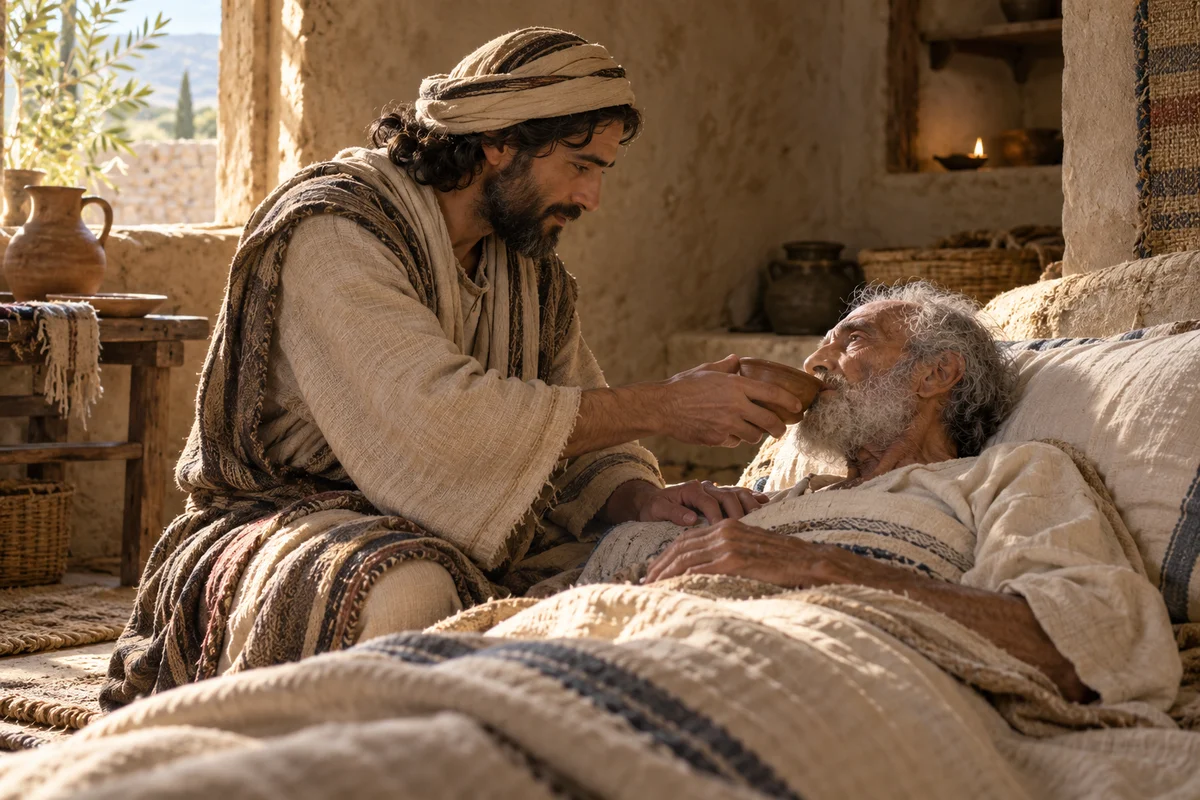
Yet the last word is neither the accuser's nor the victim's anger. It is a startling portrait of God taking his place beside the one who has no power to defend himself. The psalm invites us to tell the truth about our wounds, seek justice without becoming perpetrators of injustice, and place our case before the God who listens.
02
1.0 Introduction
Psalm 109 follows the determined praise of Psalm 108 with a cry from someone whose life has been surrounded by hostile speech. The problem is not simply that people disagree with him. They have used lying words, hatred, and accusation against a person who says he showed them kindness (vv. 2–5). The psalm's violence is largely verbal and judicial: words place the sufferer at risk of public disgrace, dispossession, and perhaps death.
This is one of the biblical imprecatory psalms—prayers containing severe wishes or appeals for judgment. We must not conceal its harshness or pretend that the destruction envisioned in verses 6–19 is gentle. Nor should we turn those words into a ready-made curse to pronounce over people who criticize us. Their setting, speakers, and place in the whole biblical story must be considered carefully.
The poem has four broad movements:
1. Verses 1–5 — Complaint: The sufferer appeals to the God he has praised and names the false accusations surrounding him. 2. Verses 6–20 — The terrifying language of judgment: The poem presents an extended series of hostile wishes, and scholars disagree about whose words they originally represent. 3. Verses 21–29 — Renewed appeal: The speaker asks God to act because of divine steadfast love, describing his own frailty and humiliation. 4. Verses 30–31 — Public praise: The conclusion locates hope in the LORD who stands at the right hand of the needy, in direct contrast to the accuser of verse 6.
Central message: When people are wounded by unjust accusations, biblical faith does not demand that they hide their pain. It gives them language to appeal to God for truth and justice, while the psalm's full movement and the teaching of Jesus keep that appeal from becoming a license for personal revenge.
03
2.0 Historical and Literary Context
The heading associates Psalm 109 with David and addresses it to the director of music. As with other Davidic psalms, the heading establishes a literary and worshiping connection with David, but the text does not identify a single episode in his life or provide a secure date for composition. David endured hostility from Saul, Ahithophel, Shimei, and others (1 Sam. 18–26; 2 Sam. 15–16), yet identifying one of these figures as the specific enemy of Psalm 109 goes beyond the evidence.
The speaker's language has a legal dimension. Words translated accuse, adversary, or prosecute suggest a dispute in which testimony and a verdict can determine another person's future. Israel's law warned against false witnesses and required careful inquiry rather than judgment by rumor (Deut. 19:15–21; Exod. 23:1–3). Other scriptures also describe innocent people harmed through dishonest legal action (1 Kgs. 21:1–16; Ps. 35:11–16). John Goldingay therefore reads the psalm as an especially explicit protest against false accusation, possibly associated with a formal or informal legal dispute (Goldingay 2008, commentary on Psalm 109, “Interpretation”).
At the same time, verses 22–25 describe poverty, physical weakness, fading strength, and public ridicule. The conflict may be connected with illness or another vulnerability that made the sufferer an easy target. It is not possible to determine the precise circumstance. The poem is deliberately usable by worshipers in more than one form of distress.
Psalm 109 also participates in the five-book design of the Psalter. It lies early in Book Five (Pss. 107–150), after Psalm 107's celebration of rescue and Psalm 108's confident request for victory. The literary placement keeps the reader from assuming that thanksgiving has removed every form of suffering. God's redeemed people still know accusation and injustice, and still need his intervention. BibleProject's study notes describe Book Five as renewing the hope for God's kingdom and the faithful Davidic king (BibleProject, The Book of Psalms: Study Notes).
The poem uses striking contrasts: kindness met with hatred; prayer answered with accusation; a person who feels like a fading shadow; garments that symbolize curses or shame; and, above all, two figures standing at the right hand. The images are carefully organized, not merely an uncontrolled outburst.
04
3.0 Walking Through the Text
3.1 Psalm 109:1 — Speak, God of my praise
The opening is urgent: “Do not be silent.” The worshiper calls the LORD the God of his praise, even when his present words contain almost no celebration. This is faith refusing to let pain dissolve an established relationship. He does not know what God will do next, but he knows to whom he must speak.
Silence is particularly painful when a lie is gaining ground. The speaker needs more than inner reassurance; he wants the God of justice to speak and act. Goldingay notes the irony: the worshiper is not silent, but the heavenly court appears silent (Goldingay 2008, on v. 1). This appeal resembles other laments that ask God not to hold his peace (Pss. 28:1; 35:22; 83:1).
The prayer gives permission to acknowledge that delayed justice is exhausting. Asking God to speak is not proof that prayer has failed. It is one way of praying when we are waiting for the truth to be heard.
3.2 Psalm 109:2–5 — Love answered by hostile words
The singer describes mouths opened against him, tongues that lie, and words of hatred that surround him. The verbs create a sense of being encircled. A person need not be physically imprisoned to feel trapped when every conversation seems to produce a new accusation.
Twice the psalm contrasts love with the hostility returned to it (vv. 4–5). The speaker claims that he answered others with friendship and goodwill but received evil in return. This is a testimony from the injured party, not an independent judicial finding that establishes every fact about the quarrel. A responsible reader should hear the testimony with seriousness while remembering that a modern allegation still calls for fair investigation.
Verse 4 contains an unusually compressed expression, literally something like “but I—prayer.” It can suggest that the speaker devotes himself to prayer rather than retaliation. Kidner judges that prayer for his opponents fits the references to love on either side, though that object is not explicitly stated in the Hebrew. Other readers understand the expression simply as the sufferer's continuing appeal to God (Kidner 2014, 422–23; Goldingay 2008, on v. 4).
Either way, a decisive contrast emerges: their mouths attack; his appeal is brought into God's presence. The passage speaks poignantly to settings where gossip, forged evidence, malicious posts, and calculated insinuation can destroy a reputation before truth has been tested.
3.3 Psalm 109:6–7 — An accuser at the right hand
A sudden grammatical shift changes the scene. The enemies had been plural; now the poem speaks of one man, asking that an evil person be appointed against him and that an accuser stand at his right hand. It goes on to imagine a trial that ends in condemnation, even with his prayer treated as guilt.
The Hebrew term associated with accuser (śāṭān) can designate an adversary or prosecutor. It does not automatically refer to Satan as a proper name in every occurrence. Here the image is well suited to a legal proceeding, especially in light of Zechariah 3:1, where an accuser stands at the right hand of the high priest Joshua (Kidner 2014, 424).
Who is speaking these terrible words? This question governs much of the interpretation of the psalm:
- Kidner's reading: Verses 6–19 are the psalmist's own severe appeals for judgment. The shift from “they” to “he” may focus on a representative enemy, or on each of the enemies individually. The words reflect a genuine cry for justice, yet contain a harshness Christians should not simply imitate (Kidner 2014, 423–25). - Goldingay's reading: Verses 6–19 can be understood as the accusers' hostile words against the sufferer, reported within his prayer. The shift from multiple accusers to a single targeted victim, followed by a return to plural accusers in verse 20, supports that reading (Goldingay 2008, “Interpretation” and on vv. 6–19).
The Hebrew text does not supply quotation marks or an explicit phrase such as “they said” at verse 6. Goldingay's proposal explains several literary features, but Kidner's reading remains a serious alternative. The article will not quietly treat either proposal as a proven fact. Under either reading, the psalm exposes the destructive reach of words when they are used to demand another person's ruin.
3.4 Psalm 109:8–15 — The frightening attack on a person's household
The terrible wishes continue: may the man's days be few; may another take his position; may his wife become a widow, his children fatherless, and his family stripped of support. The language reaches into property, inheritance, and the memory of previous generations. In an ancient society with limited protection for widows and orphans, these were not minor inconveniences. They threatened survival.
We must not soften these words. They name the devastation of an entire household. Whether they are the victim's anguished wish, as Kidner maintains, or the enemies' curse against the victim, as Goldingay proposes, no contemporary Christian should use this passage to pray for children to become destitute or for families to be destroyed. Such a use also contradicts the Bible's repeated command to defend widows and orphans (Exod. 22:22–24; Deut. 10:18; Jas. 1:27).
The original context also demands attention to ancient ideas of family solidarity. Actions and public judgments could have consequences across generations. Yet this is not permission to blame children personally for the moral failures of their parents. Ezekiel 18:1–20 insists that individuals are not to be condemned merely for another family member's sin. A modern reading must resist turning the psalm into a doctrine of automatic inherited guilt.
The line about another taking the man's office or position (v. 8) will become significant in Acts 1:20. Here its immediate setting concerns the removal of a person from his standing and livelihood; the larger canonical use will be considered below.
3.5 Psalm 109:16–19 — Mercy refused, cursing worn like clothing
Verse 16 names a striking injustice: the person in view did not remember to show steadfast kindness, but pursued the poor, needy, and brokenhearted. This is not merely a dispute over status. The underlying moral issue is what happens when the powerful target someone already vulnerable.
The imagery then turns inward. A curse is loved, worn like clothing, drunk like water, and absorbed like oil into the bones. It is a disturbing picture of speech shaping character and destiny. Goldingay reads this in the context of the accusers' words against the sufferer; Kidner sees a kind of moral correspondence in which the one who delighted in curses experiences their consequences (Goldingay 2008, on vv. 16–19; Kidner 2014, 425).
Not every line is framed as a fresh request. The Hebrew of verses 17–19 can also be rendered as descriptions of what a person has loved and has taken upon himself. This nuance matters: statements about the destructive character of evil should not automatically be expanded into additional wishes for violence.
The language challenges the reader: when sarcasm, slander, or hatred becomes someone's habitual clothing, that person's world begins to be formed by the cruelty he practices. We may speak more casually than the psalm, but repeated contempt still wounds both its victims and its speakers.
3.6 Psalm 109:20–21 — From terrifying words to an appeal for steadfast love
Verse 20 asks that the hostile words or their deserved consequences be directed toward the psalmist's accusers. It is particularly significant for interpreting verses 6–19. Kidner sees it as a summary of the judgment the sufferer is asking God to administer. Goldingay sees the sufferer asking God to turn his accusers' evil designs back upon them.
Then the whole tone pivots: “But you, LORD my Master…” The speaker does not introduce a stronger human ally or plan a private revenge. He turns to God and pleads, “Act for your name's sake,” grounding the request in the goodness of God's steadfast love (ḥesed).
The psalm is not free from the desire for consequences. Nor should a wounded person be required to suppress all anger before approaching God. But the appeal is directed to a Judge beyond the individual's control. Goldingay argues that presenting such feelings to God can become an alternative to either acting on vengeance or pretending that wrongdoing does not matter (Goldingay 2008, “Theological Implications”).
The request for God to act is therefore both a confession of vulnerability and a restraint on human retaliation. God is asked to decide what the worshiper cannot rightly appoint himself to carry out.
3.7 Psalm 109:22–25 — A fading shadow and a shaking body
The speaker now describes himself as poor and needy, wounded in heart, disappearing like an evening shadow, and shaken off like a locust. His knees weaken from fasting or lack of food; his body grows thin; people shake their heads at him. The passage is remarkably physical.
Such symptoms should not be flattened into a mere metaphor for ordinary inconvenience. The sufferer feels crushed in body, reputation, and social belonging. It may be illness, deprivation, psychological distress, persecution, or a combination; the poem does not tell us precisely.
The images of the shadow and insect communicate disposability: he feels he is vanishing, and others can brush him away without concern. Compare Job, whose vulnerability becomes an occasion for others to make harsh judgments about his integrity (Job 16; 19).
Pastoral care must not compound such suffering. A person who is sick, depressed, falsely accused, or publicly shamed should not be told that their condition proves hidden sin. Psalm 109 invites the community to hear the weak person's account rather than add its own accusations.
3.8 Psalm 109:26–29 — Let your blessing answer their curse
The prayer is repeated with renewed clarity: help me, rescue me because of your steadfast love. The speaker wants the outcome to reveal that God has acted rather than the enemy having the final word.
Verse 28 provides an arresting alternative to the accusers' speech: “They may curse, but you—bless.” The worshiper asks God to reverse the verdict pronounced by other people. He does not merely request that the attackers become silent; he longs for a reality in which God's blessing is stronger than their condemnation.
The language of shame and disgrace remains severe, and it should not be translated into a program for public humiliation. The biblical longing is for falsehood to be exposed and unjust power to lose its force. Responsible pursuit of that goal may involve clear evidence, impartial hearings, protection for victims, legal reporting, and proportionate consequences. It does not require mob outrage or the deliberate destruction of an offender's family.
For Christians, the distinction between seeking vindication and wishing unlimited harm becomes especially important in light of Jesus' teaching and example. The psalm can help us pray the pain honestly, while the whole canon shapes the response.
3.9 Psalm 109:30–31 — God stands where the accuser stood
The poem ends with a vow to praise God in the midst of many people. The speaker who had been isolated by hostile words hopes to speak publicly again—not to extend the rumor, but to testify that God has defended the needy.
The closing verse is the literary key. In verse 6, an accuser stands at the right hand of a man to secure his condemnation. In verse 31, the LORD stands at the right hand of the needy to save that person from those who judge or condemn. The same position is occupied by a radically different presence.
Kidner calls this reversal the psalm's complete answer (Kidner 2014, 426). God is not pictured standing above the wounded person with detached curiosity. He stands beside the person who lacks the power, money, or influence to defend himself. The point is not that every accused person is automatically innocent; it is that no human accuser has the last word over truth and justice.
Psalm 109 therefore moves from threatened condemnation to hoped-for vindication. It does not report every legal detail or guarantee that all sufferers will see immediate relief. Its final confidence is located in who God is and where God stands.
05
4.0 Theological Reflection
4.1 Words can become instruments of injustice
The psalm reveals how speech can create material consequences. A lie may lead to lost work, broken relationships, unjust judgment, public shame, or violence. The commandment against false witness protects human life, not merely polite conversation (Exod. 20:16; Deut. 19:15–21). Faithful communities must therefore resist gossip disguised as concern, accusations without opportunity for response, and pressure to reach a verdict before the facts are known.
4.2 Scripture gives the wounded permission to speak honestly
The Bible does not preserve only prayers that sound composed and comfortable. Lament makes space for anger, fear, and the desire that wrongdoing be taken seriously. That is an important mercy to people who have been betrayed. Yet the presence of a prayer in Scripture does not mean every wish inside it becomes a command for believers to repeat literally. Biblical interpretation must distinguish testimony, emotion, petition, and ethical instruction.
4.3 Justice cannot be reduced to revenge
Psalm 109 insists that cruelty matters and that an innocent person should not be abandoned to the strong. It does not require Christians to reject investigations, courts, protective boundaries, or legal accountability. Indeed, allowing violence or abuse to continue unchecked is not mercy toward victims. But retaliation that targets spouses, children, or unrelated people spreads the very injustice being resisted (Deut. 24:16; Ezek. 18:20).
4.4 The location of hope is the Lord beside the needy
The concluding image of the LORD at the right hand of the needy should reshape our picture of religious power. The God who rules does not require the poor to prove their importance before they deserve attention. This theme resonates with Psalm 72's vision of a king who rescues the needy and with the prophets' insistence that worship and justice belong together (Ps. 72:12–14; Isa. 1:16–17).
4.5 Forgiveness, truth, and safety belong together
Followers of Jesus are called to forgive and pray for enemies. But forgiveness must not be confused with declaring an allegation false, instantly restoring a person to authority, or abandoning reasonable safety measures. Reconciliation may require repentance, restitution, and trustworthy change; in some situations separation remains necessary. The psalm's concern for the vulnerable is betrayed when spiritual language is used to silence victims.
06
5.0 Canonical and Christological Horizon
Psalm 109 belongs to a larger scriptural conversation about truthful testimony, unjust suffering, and divine judgment. Joseph suffered through false accusations in Egypt (Gen. 39:7–20). Naboth was condemned after false witnesses were arranged against him (1 Kgs. 21:8–14). Job's friends magnified his pain by interpreting his losses as evidence of moral failure (Job 4–5; 16; 19). The prophets repeatedly insisted that justice for the poor and the protection of the vulnerable were tests of covenant faithfulness (Isa. 1:16–17; Mic. 6:8; Zech. 7:9–10).
The New Testament offers a particularly important connection. In Acts 1:20, Peter cites Psalm 109:8 in explaining why another person should take Judas's apostolic office after his betrayal of Jesus. This is a later, Christ-centered use of the psalm within the story of Jesus' death and the apostolic mission. It does not prove that the original psalm referred specifically to Judas in every line, nor does it authorize applying the wishes against a wife, children, and descendants to one's own opponents. Acts uses a particular verse in a new canonical setting; sound interpretation must respect both contexts.
Jesus himself experienced betrayal, false testimony, mockery, and unjust condemnation (Mark 14:55–65; 15:16–20). Yet he instructed disciples to love their enemies and pray for persecutors (Matt. 5:43–48; Luke 6:27–36). According to 1 Peter 2:21–23, when Jesus was insulted, he did not return insult but entrusted himself to the One who judges justly. This does not mean that evil receives no judgment. It means that disciples are not commissioned to turn their anger into unlimited personal revenge (Rom. 12:17–21).
There is also a striking difference in what the suffering Messiah makes possible. Jesus' cross exposes human violence while opening a path of forgiveness and reconciliation (Luke 23:32–34; Eph. 2:13–18). Christian hope is therefore larger than the destruction of an adversary: it looks toward God's defeat of evil and restoration of creation (Rev. 21:1–5). That hope does not call an abused person to remain in danger or give up the pursuit of justice. It gives the church a pattern of truthful witness, non-retaliation, protection of the vulnerable, and confidence that evil will not have the final word.
The two readings of Psalm 109's curses remain worth holding in view. If verses 6–19 give the enemies' words, the psalm exposes malicious speech and appeals for its reversal. If they give the sufferer's words, the psalm brings disturbing but recognizable emotions before God, where they must be weighed against God's character and Jesus' teaching. In neither case is the Christian vocation to manufacture new victims.
07
6.0 Life Application
- When accused, respond with truth rather than counter-rumor. Record what happened, preserve relevant evidence, seek a fair hearing, and distinguish verified facts from interpretations. Calm honesty can be stronger than a louder accusation (vv. 2–5).
- Make prayer a place for honest anger, not an instrument of harm. Tell God how betrayal feels. Ask for justice, protection, and truth. Do not turn the psalm's violent expressions into curses against individuals and their families (vv. 6–20).
- Protect those whose voices are weakest. Give special care to people whose poverty, illness, status, or isolation makes them easy to discredit. Where there is credible abuse, take proportionate protective action and involve appropriate authorities when required (vv. 16, 22–25).
- Guard the tongue in church and online. Before forwarding a voice note, screenshot, or allegation, ask whether it is accurate, necessary, fair, and responsibly handled. Public repetition of an untested accusation can become injustice (vv. 2–3).
- Differentiate forgiveness from immediate trust. Forgiveness may begin before trust can be restored. Accountability, restitution, boundaries, and institutional safeguards may remain necessary (Matt. 18:15–17; Rom. 12:18).
- Stand at the right hand of the needy. Offer practical support to someone falsely accused or vulnerable: accompany them to a meeting, help them obtain fair counsel, or simply listen without pre-judging. Let the conclusion of the psalm become a model of compassionate presence (v. 31).
08
7.0 Reflection Questions
- Why does the psalm begin by naming God as the object of praise before describing the accusations?
- What differences follow from reading verses 6–19 as the psalmist's own wishes, or as the accusations and curses of his opponents?
- How can we acknowledge genuine anger about injustice without allowing that anger to justify fresh injustice?
- How does the final reversal between verses 6 and 31 change the central image of the psalm?
- In a church, household, or workplace, what concrete practices make room for the truth when a powerful person accuses someone with less influence?
- How should Acts 1:20 and Jesus' teaching about enemies shape a Christian reading of Psalm 109?
- Who in our community needs someone to stand beside them as God stands beside the needy in verse 31?
09
8.0 Response Prayer
LORD, God of my praise, do not be silent when lies wound your children and powerful words place the weak in danger. You see what others may not see. You know the truth beneath rumor, the fears that keep people awake, and the shame that can make a person feel as small as a fading shadow.
Keep us from returning cruelty for cruelty. Give courage to speak plainly, patience to establish the facts, and wisdom to seek justice without harming the innocent. Protect the families that are made vulnerable by violence, slander, and abuse. Teach our communities to listen carefully, to act responsibly, and to refuse both cover-ups and mob judgment.
When we are angry, receive our prayer. When we have wronged another person, lead us to repentance and restitution. When we have been harmed, help us find safe and truthful ways forward. Let your blessing speak more strongly than lies.
Through Jesus Christ, who suffered unjust accusation and entrusted himself to you, form us into people who protect the vulnerable, love without surrendering the truth, and seek peace without abandoning justice. Stand beside the needy and teach us to stand with them. Amen.
10
9.0 Window into What Comes Next
Psalm 109 ends with a God who stands at the right hand of the needy against false judgment. The suffering worshiper has appealed for help, refusing to accept the accuser as the final authority over his life.
Psalm 110** begins with a different scene: a royal figure is invited to sit **at God's right hand**. The transition is striking. Psalm 109 has placed the LORD beside a vulnerable person; Psalm 110 pictures divine authority shared with a king who is also described in priestly language. The two texts are different genres and should not be forced into a single scene. Yet, in the arrangement of the Psalter, they invite an important question: **What kind of king will exercise God's authority so that the needy are defended and evil is confronted?
The New Testament repeatedly returns to Psalm 110 in speaking of Jesus' exaltation and priesthood (Mark 12:35–37; Acts 2:34–36; Heb. 5–7). Moving from Psalm 109 to Psalm 110, we travel from a wounded person's appeal for justice to the hope of a king whose rule is aligned with the LORD's purposes.
11
10.0 Bibliography
- Scripture: Psalm 109; Psalms 7, 28, 35, 57, 69, 72, 83, 101, 107–110; Genesis 39:7–20; Exodus 20:16; 22:22–24; 23:1–3; Deuteronomy 10:18; 19:15–21; 24:16; 1 Samuel 18–26; 2 Samuel 15–16; 1 Kings 21:1–16; Job 4–5; 16; 19; Isaiah 1:16–17; Ezekiel 18:1–20; Micah 6:8; Zechariah 3:1; 7:9–10; Matthew 5:43–48; 18:15–17; Mark 12:35–37; 14:55–65; 15:16–20; Luke 6:27–36; 23:32–34; Acts 1:15–26; 2:34–36; Romans 12:17–21; Ephesians 2:13–18; Hebrews 5–7; James 1:27; 1 Peter 2:21–23; Revelation 21:1–5. The opening key text is an original study rendering, not a verbatim quotation from a named modern Bible version.
- BibleProject. n.d. The Book of Psalms: Study Notes. Study resource on the Psalter's five-book design, the Davidic hope, and the movement from lament to trust in God's kingdom.
- Goldingay, John. 2008. Psalms, Volume 3: Psalms 90–150. Baker Commentary on the Old Testament Wisdom and Psalms. Grand Rapids, MI: Baker Academic. Commentary on Psalm 109, “How to Pray for Recompense,” especially “Interpretation” and “Theological Implications.”
- Kidner, Derek. 2014. Psalms 73–150. Kidner Classic Commentaries. Downers Grove, IL: InterVarsity Press. Originally published 1975. Commentary on Psalm 109, pp. 422–26, including discussion of the opposing interpretations of verses 6–20.

Be the first to leave a comment.