


How does reverence for God show in generosity and our financial decisions?
01
Overview
Reverence, generosity, and a steady heart in an uncertain world
Key text — Psalm 112:4–7 (study rendering): Light rises in darkness for the upright; the righteous person is gracious, compassionate, and just. Good comes to the one who gives generously and conducts affairs fairly. That person will not be overwhelmed by bad news, for the heart is firm, trusting in the LORD.
What makes a human life truly blessed? Is it money, the achievements of children, a good reputation, or freedom from unpleasant news? Psalm 112 mentions prosperity and family, yet its strongest portrait of blessing is not a person surrounded by possessions. It is someone who uses what they have to lift others, deals fairly, and remains anchored in God when frightening news arrives.
This psalm belongs beside Psalm 111. The earlier song praised the LORD as gracious, compassionate, and righteous; this one describes people who become gracious, compassionate, and righteous themselves. Worship is meant to shape character. The God we praise should become visible in the way we handle money, uncertainty, and our neighbors' needs.
02
1.0 Introduction
Psalm 112 is a wisdom-shaped song of praise. Like Psalm 111, it begins with Hallelujah—“Praise the LORD”—and follows the Hebrew alphabet in twenty-two short poetic units. The alphabetical pattern helped make its teaching memorable and presents a rounded picture of a life ordered by God. Its emphasis, however, shifts dramatically: Psalm 111 describes what God does; Psalm 112 shows what God forms in a person.
The movement of the poem may be read as follows:
- Verse 1: Reverence for the LORD and delight in his commands establish the foundation. - Verses 2–4: Blessing, enduring righteousness, and compassion appear in family and community life. - Verses 5–9: The person of faith lends, acts justly, faces unsettling news with a steady heart, and gives to the poor. - Verse 10: The frustrated desire of the wicked contrasts with the lasting influence of righteousness.
Goldingay describes this as an alphabetic relative of Psalm 111, not simply an identical twin. He notes the shift from theology to anthropology: from God's relation to the community to the individual life shaped by that relation (Goldingay 2008, on Psalm 112). Kidner titles it “Godliness at work” and stresses that its language transfers God's own qualities to the human worshiper (Kidner 2014, 433–35).
Central message: A blessed life begins in reverence for the LORD, expresses itself through generous and just treatment of others, and learns courage by trusting God rather than assuming that troubles will never come.
03
2.0 Historical and Literary Context
The Hebrew text does not name a composer or describe the occasion when Psalm 112 was first performed. Because its wisdom teaching uses familiar themes from Psalms 1 and 37 and from Proverbs, we should not assign it a precise historical setting without evidence. Its placement among the Hallelujah psalms is more informative than a speculative date.
Psalm 111 and Psalm 112 share an unusual alphabetic acrostic: twenty-two successive Hebrew letters begin twenty-two poetic phrases, typically two phrases in verses 1–8 and three in verses 9–10. The form cannot be reproduced fully in natural English or Kiswahili while preserving meaning. It should be appreciated as a carefully arranged meditation, not as a hidden code that yields extra doctrine.
The relationship with Psalm 111 is particularly striking. Psalm 111:3 says God's righteousness endures; Psalm 112:3 and 9 say something similar about the righteous person. Psalm 111:4 calls the LORD gracious and compassionate; Psalm 112:4 uses those qualities for the person shaped by him. Psalm 111:10 ends with reverence for the LORD as the beginning of wisdom; Psalm 112:1 begins by blessing the one who reveres the LORD. The neighboring poems teach that knowing God's character should transform human character.
This does not mean the believer becomes divine or perfectly imitates God. It means divine generosity calls forth human generosity. The graciousness praised in a sanctuary must become recognizable at a lending table, in a household, and when someone with less power asks for help.
The poem also reflects the Old Testament's concern for family stability, the responsible use of land and resources, and the endurance of a good name. Its social setting differs from modern employment or banking, but its moral questions remain recognizable: Who benefits from our resources? Do we use economic advantage fairly? What holds us steady when the future is uncertain?
04
3.0 Walking Through the Text
3.1 Psalm 112:1 — Blessed are those who delight in God's commands
The psalm begins with “Praise the LORD” and quickly turns to the blessed person who reveres God. Its language recalls Psalm 1: the good life involves not reluctant compliance but delight in divine teaching. Reverence is not terror before unpredictable power; it is serious recognition that God is worthy of loyalty. Delight is not mere enjoyment of interesting religious information. It bears fruit in obedience.
Goldingay emphasizes that reverence includes both attitude and action: a person who delights in God's commands yet continually disregards them is contradicting the very delight claimed. The poem joins affection and commitment (Goldingay 2008, on v. 1).
The word blessed (Hebrew ashrê) describes a life that is deeply fortunate or flourishing in God's way. It is not a financial contract. The rest of the psalm will describe resources, but its first line locates blessedness in a relationship to the LORD, not in an account balance.
3.2 Psalm 112:2–3 — Children, resources, and enduring righteousness
The poem imagines descendants who become strong in the land, a generation blessed, and a home with resources. These expressions reflect Israel's social world, where family continuity and material security were significant signs of well-being. The psalm presents them as aspects of the good life; it does not say that every person without children or wealth has displeased God.
Scripture itself resists such a simplistic reading. Job is described as upright yet loses children and possessions (Job 1–2). Psalm 73 protests the apparent prosperity of the wicked. Jesus refuses to treat every painful circumstance as evidence of a particular sin (John 9:1–3). Wisdom descriptions offer a truthful pattern or ideal; they are not guarantees that cancel lament, injustice, or mortality.
The decisive statement in verse 3 is that the person's righteousness endures. The phrase echoes Psalm 111:3, where it describes God. This is not a claim of independent moral perfection. It means that a life shaped by God's character can leave a moral legacy that lasts longer than wealth itself (Kidner 2014, 433–34).
A parent may give children possessions, but an even deeper inheritance is a model of truthfulness, care for the weak, and the refusal to exploit others.
3.3 Psalm 112:4 — Light in darkness and compassion in action
The righteous person is pictured as light rising in darkness. Some translations take God as the giver of light; Goldingay and Kidner both regard the upright person as the likely subject in this context. The individual becomes a source of light for others because that person is gracious, compassionate, and righteous (Goldingay 2008, on v. 4; Kidner 2014, 434).
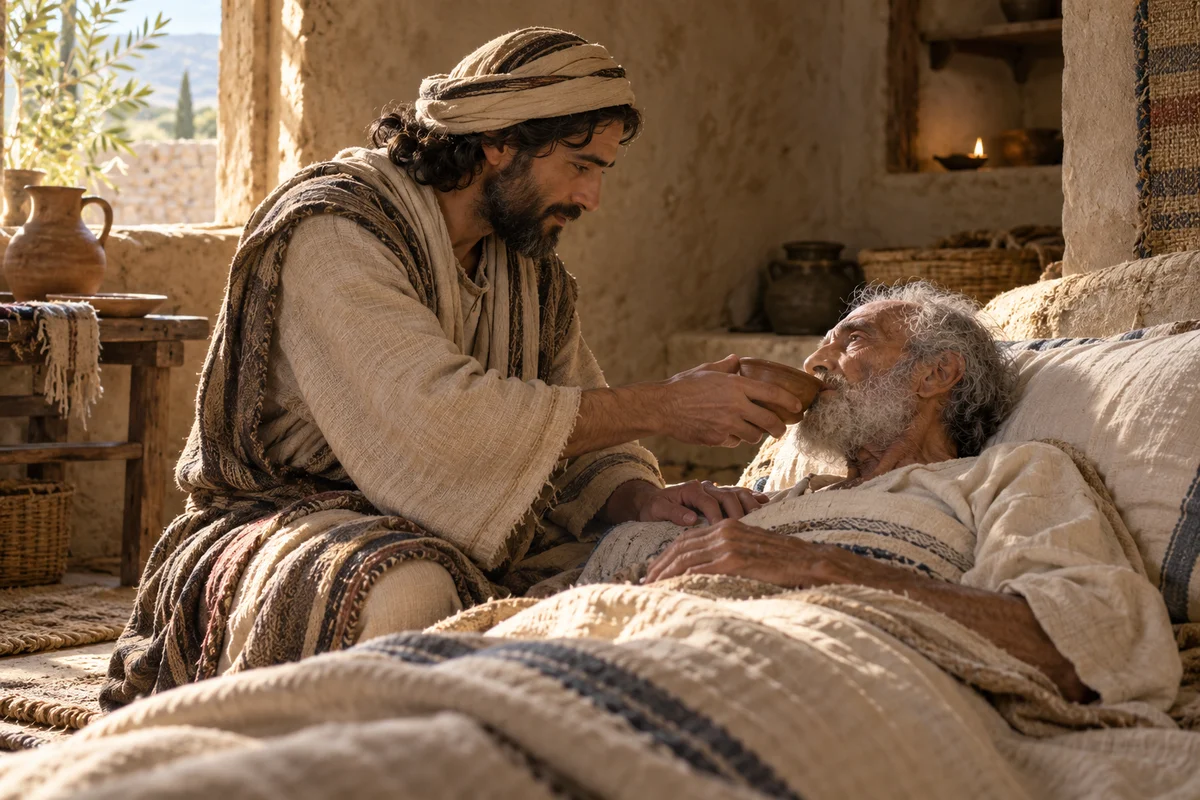
The phrase should not be reduced to “good people never experience darkness.” Verse 7 soon speaks of bad news. Darkness is a real presence. The remarkable point is that someone formed by God can bring light into another person's darkness: offering bread when a family faces shortage, advocating fairly for an exploited worker, or refusing to abandon someone whose reputation has been unjustly attacked.
God's own compassion in Psalm 111 now appears in a human life. Worship becomes credible when other people can experience something of the mercy we celebrate.
3.4 Psalm 112:5–6 — Generosity without exploitation
The blessed person lends generously and conducts affairs with justice. Lending in Israel's law was meant to prevent vulnerability from becoming a commercial opportunity for powerful people; interest and collateral practices were constrained, especially toward impoverished neighbors (Exod. 22:25–27; Deut. 15:7–11). The psalm praises someone whose economic dealings restore dignity instead of tightening another person's bondage.
Goldingay explains that lending may allow a person in trouble to regain stability rather than remain permanently dependent on gifts. The verse also emphasizes decisive, fair conduct in one's affairs. Kidner highlights the temptation for lenders to abuse the power money gives them (Goldingay 2008, on v. 5; Kidner 2014, 434–35).
Verse 6 declares that such a person will not ultimately be shaken and will be remembered. The language is poetic and forward-looking, not a promise that a fair business owner will never lose money or face legal trouble. The enduring memory is tied to righteous character, not mere commercial success. A person's reputation may be attacked in the present, but fidelity to justice remains meaningful before God.
3.5 Psalm 112:7–8 — A heart made steady by trust
Here the poem names a universal human experience: bad news. The person who trusts the LORD is not promised an uninterrupted sequence of good reports. What is promised in the portrait is a heart established, not a world without threatening circumstances.
Kidner makes the distinction particularly clear: the gift is not necessarily better news right away, but a heart supported by trust in the LORD (Kidner 2014, 435). The repeated language of firmness describes resilience that is received through reliance, not manufactured by pretending to be invulnerable.
Trust is not indifference to illness, job losses, family emergencies, violence, or debt. Responsible people still seek treatment, budget carefully, protect loved ones, and ask for help. Their calm comes not from controlling all outcomes but from refusing to give fear the final authority over their decisions.
The phrase about looking upon enemies belongs to the psalm's poetic vision of vindication. It does not license revenge, humiliation, or celebration of another person's suffering. The believer can entrust justice to God while choosing the good of others (Prov. 24:17; Rom. 12:17–21).
3.6 Psalm 112:9 — Generosity that is remembered
The righteous person distributes freely and gives to the poor. This is the clearest picture of what lasting righteousness looks like. Whatever resources were mentioned in verse 3 are not treated as trophies for private display. Their significance emerges in sharing.
The repeated claim that righteousness endures links this action with God's own enduring righteousness in Psalm 111. The raised horn is an ancient symbol of strength and honor (compare 1 Sam. 2:1, 10; Ps. 92:10). It should not be turned into a guarantee of public celebrity or unchecked authority.
Paul explicitly cites Psalm 112:9 in 2 Corinthians 9:9 while encouraging generous support for believers in need. Yet the wider context says that generosity may arise even from severe trials and poverty (2 Cor. 8:1–5). This prevents prosperity teaching from turning Psalm 112 into the claim that wealth is the indispensable sign of divine favor.
A small gift offered faithfully is not spiritually inferior to a large donation. Nor does the giver purchase God’s blessings. Generosity flows from grace and creates opportunities for thanksgiving to God (2 Cor. 9:10–12).
3.7 Psalm 112:10 — The frustration of the wicked
The closing verse contrasts the enduring righteousness of the generous person with the frustrated desire of the wicked. The wicked see, grow angry, grind their teeth, and find that their ambitions do not last. This completes a pattern also familiar from Psalm 1: the way of righteousness has enduring meaning, whereas rebellion against God cannot secure its own future.
The verse is not an invitation to delight in the downfall of particular people. The biblical story continues to invite sinners to turn from wrongdoing and live (Ezek. 18:23, 32). Its warning concerns the futility of a life built around selfish desire and envy.
Notice the contrast in what lasts. Wealth can disappear; influence can change; even the righteous person will die. Yet faithful action—especially mercy and justice—has lasting significance in the story God is bringing to completion.
05
4.0 Theological Reflection
4.1 Holiness becomes visible in economic relationships
Psalm 112 challenges a faith that measures devotion only by religious vocabulary or impressive ceremonies. The holy life is tested in the ordinary decisions of lending, giving, buying, selling, and exercising financial power. Biblical generosity is not simply an optional display of kindness; it is part of justice.
A church that praises God's compassion while exploiting workers or humiliating people who need help has separated Psalm 111 from Psalm 112. The two songs refuse that separation.
4.2 Blessing is not a promise of uninterrupted prosperity
The psalm offers a bright wisdom portrait, including provision and family blessing. But wise reading requires hearing it alongside Job, Ecclesiastes, Psalm 73, and Jesus' teaching about suffering. Wealth is neither proof of holiness nor poverty proof of divine displeasure. Some righteous people face severe deprivation; some wealthy people exploit others.
The appropriate question is not “How wealthy am I?” but “How faithfully am I using what has been entrusted to me?”
4.3 The opposite of fear is not denial but trust
The righteous person's steady heart responds to real threats. Faith does not forbid anxiety, lament, professional assistance, or prudent preparation. It reorders where ultimate confidence belongs. A congregation can accompany frightened people through practical help and prayer instead of rebuking them for not appearing confident.
4.4 Reflecting God's character without claiming God's place
The similarities between Psalms 111 and 112 do not make the righteous human equal to the LORD. They describe a relationship of imitation: divine grace creates gracious people; divine justice calls forth just dealings; God's faithfulness invites dependable character. This is a moral vocation, not a claim that human beings become flawless.
06
5.0 Canonical and Christological Horizon
Psalm 112 connects to the blessed person of Psalm 1 and the wise who reverence God in Proverbs 1:7 and 9:10. Deuteronomy 15:7–11 presents generosity to poor neighbors as a covenant obligation. Isaiah 58:6–10 joins care for the hungry and oppressed to the promise of light shining in darkness. These texts show that piety and public justice belong together.
Christians read the psalm in the light of Jesus, who embodied compassionate righteousness without treating wealth or social prestige as measures of divine approval (Luke 4:18–19; 6:20–26). His teaching warns against religious generosity practiced for applause (Matt. 6:1–4) and invites disciples to love enemies rather than avenge themselves (Matt. 5:43–48). The cross makes clear that righteousness can involve suffering and rejection, not only honor in the present world (Phil. 2:5–11).
Paul's use of Psalm 112:9 in 2 Corinthians 9:9 gives a direct New Testament bridge. The verse becomes a scriptural example for sharing resources with those who need them. Paul's appeal begins with the grace shown in Christ (2 Cor. 8:9), not a promise that giving guarantees personal enrichment. What God supplies can be used to multiply generosity and thanksgiving (2 Cor. 9:10–12).
Jesus also speaks of an enduring treasure that cannot be measured solely in present possessions (Matt. 6:19–21). In the new-creation hope of Revelation 21–22, justice and life belong together under God's dwelling with humanity. These are Christian developments of the psalm's moral vision, not claims that its original author directly described the details of Jesus' earthly ministry.
07
6.0 Life Application
- Let worship change your financial decisions. Review whether your prices, wages, debts, loans, and agreements treat other people fairly. If you possess the stronger position, do not exploit it.
- Practice generosity without humiliating recipients. Offer appropriate support in ways that preserve privacy and dignity. When a loan would deepen vulnerability, consider whether a gift or another form of help is wiser.
- Prepare for bad news without living under its rule. Seek sound advice, make reasonable plans, and share your burdens with trustworthy people. Build the habit of prayer, Scripture, and practical action rather than pretending nothing can go wrong.
- Give children a moral inheritance. Teach younger people not merely how to earn resources but how to use them to serve neighbors and act justly.
- Look for opportunities to bring light. A sick neighbor, an unemployed friend, a student needing support, or a mistreated worker may experience God's compassion through a concrete act of yours.
- Remember that righteousness outlasts applause. Let consistent integrity matter more than public recognition or the desire to defeat rivals.
08
7.0 Reflection Questions
- What changes when Psalm 111's description of God becomes Psalm 112's description of a faithful person?
- How can we recognize genuine reverence for the LORD in the way people use money and power?
- Why should Psalm 112's language of prosperity not be read as a guarantee that righteous people will never experience hardship?
- What does a steady heart look like when bad news is real and responsible action is necessary?
- Which concrete practice of generosity could make God's compassion more visible in my community this week?
- How does Paul's citation of Psalm 112:9 in 2 Corinthians 9 challenge the idea that giving is a strategy for becoming rich?
09
8.0 Response Prayer
LORD, whose goodness endures, teach us to delight in your ways. Let our worship not stop at words. Make us fair in our decisions, compassionate toward those with less power, and generous with the resources you have entrusted to us. When bad news comes, do not let fear become our master. Give us steady hearts and wise hands. Forgive our pride, our hoarding, and our tendency to judge others by wealth or success. Through Jesus Christ, whose love took the form of self-giving service, make our lives a small reflection of your righteousness. Amen.
10
9.0 Window into What Comes Next
Psalm 112 closes with an image of the generous person whose righteousness endures while selfish desire fades. Psalm 113 lifts our eyes to the LORD who is exalted over the nations and heavens yet stoops to raise the poor from the dust and lift the needy from the ash heap. The connection is fitting: the compassion Psalm 112 calls us to practice has its source in the God who himself notices the lowly.
Thus the journey continues from God's character (Psalm 111), to the life shaped by that character (Psalm 112), to the God who raises the humble (Psalm 113). Praise becomes a way of seeing people and a reason to serve them.
11
10.0 Bibliography
- Scripture: Psalm 112; Psalms 1; 37; 73; 92; 111; 113; Exodus 22:25–27; Deuteronomy 15:7–11; 1 Samuel 2:1, 10; Job 1–2; Proverbs 1:7; 9:10; 24:17; Isaiah 58:6–10; Ezekiel 18:23, 32; Matthew 5:43–48; 6:1–4, 19–21; Luke 4:18–19; 6:20–26; John 9:1–3; Romans 12:17–21; 2 Corinthians 8–9; Philippians 2:5–11; Revelation 21–22. Key text is a study rendering, not a verbatim quotation attributed to a modern Bible translation.
- BibleProject. The Book of Psalms: Study Notes. Resource on the Psalter's five-book design and the relationship between Torah, wisdom, and messianic hope.
- Goldingay, John. 2008. Psalms, Volume 3: Psalms 90–150. Baker Commentary on the Old Testament Wisdom and Psalms. Grand Rapids, MI: Baker Academic. Commentary on Psalm 112, “Beatitudes.”
- Kidner, Derek. 2014 reprint of the earlier commentary. Psalms 73–150. Kidner Classic Commentaries. Downers Grove, IL: InterVarsity Press. Commentary on Psalm 112, “Godliness at work,” pp. 433–35.

Be the first to leave a comment.