

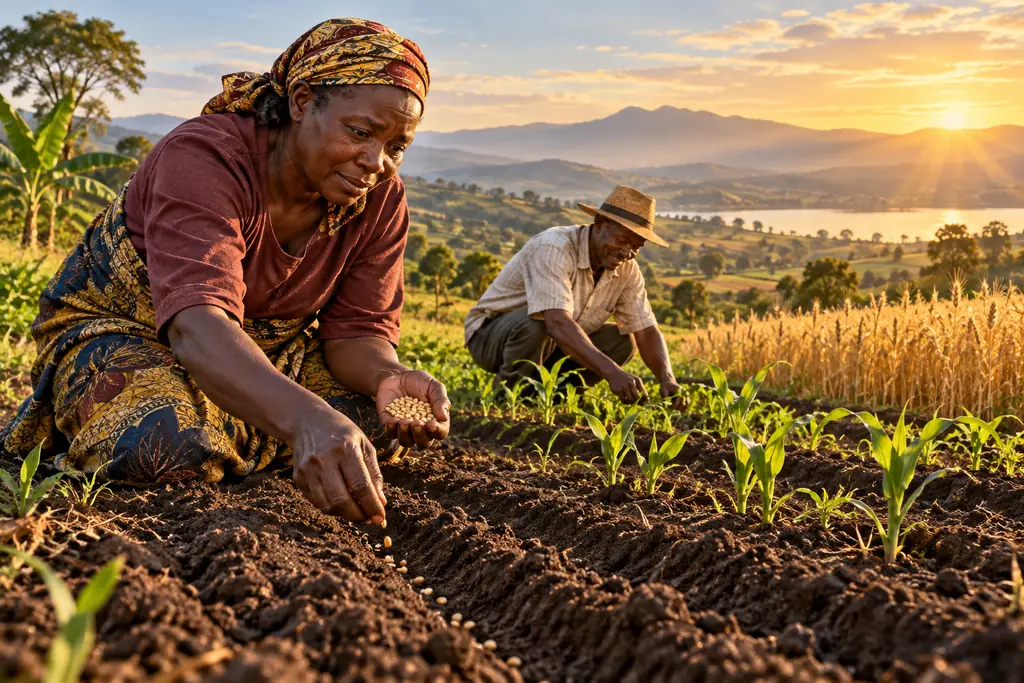
When tears become seeds, how do we sow hope while restoration remains unfinished?
01
Overview
The seventh Song of Ascents: remembering restoration, praying for renewal, and waiting for a harvest of joy
Key text — Psalm 126:5–6 (study rendering): “Those who sow with tears will reap with songs of joy. The one who goes out weeping, carrying seed for sowing, will surely come home with songs of joy, carrying bundles of the harvest.”
What happens when you remember a season in which God opened a door that seemed permanently closed—and then discover that another door remains shut? You can speak truthfully about a past answer to prayer and still need to pray again. A family may have survived a crisis without recovering its stability. A congregation may rejoice over lives renewed while struggling to care for neighbors who are hungry. A nation may celebrate freedom while its people still long for justice.
Psalm 126 makes room for that complicated testimony. It remembers laughter so wonderful that it seemed like a dream. Then, without apology, it asks, “LORD, restore our fortunes.” The community has been restored, and the community still needs restoration. Its faith is not a denial of unfinished work; it is the courage to take unfinished work to the God who has acted before.
The psalm ends in a field. A person walks into the soil carrying seed and tears, and returns carrying sheaves and songs. This is not a formula guaranteeing that every effort succeeds. It is a powerful picture of hope: the present season of weeping need not be the final definition of the future.
02
1.0 Introduction
Psalm 126 is the seventh of the fifteen Songs of Ascents (Psalms 120–134). The collection is associated with the movement of worshipers toward Jerusalem, whether on actual journeys or in the broader spiritual imagination of God's people. Here the travelers carry more than provisions. They carry collective memory: the story of a God who has brought his people back from ruin.
The six verses unfold in two closely linked movements:
- Restoration remembered (vv. 1–3). The LORD once reversed the community's circumstances so dramatically that mouths filled with laughter and outsiders acknowledged his action.
- Restoration requested and anticipated (vv. 4–6). The same community asks the LORD to act again, using two images: dry channels suddenly filled with water and a farmer whose tearful sowing gives way to a joyful harvest.
The movement is not from disbelief to belief, but from remembered grace to renewed dependence. Past help is not a reason to pretend that the present is easy. It gives language and courage for asking God to help now.
Psalm 125 has described those who trust the LORD as secure in his surrounding care, even while injustice threatens them. Psalm 126 takes the next step: What does faith do when protection is not yet the same as flourishing? It remembers, prays, works, waits, and hopes. Psalm 127 will then ask whether any of our building or labor can truly bear fruit without the LORD. Together the songs keep human effort and divine generosity in proper relationship.
The psalm is useful wherever recovery is real but incomplete: after conflict, displacement, bereavement, illness, economic loss, or division within a family or church. It teaches us to say both, “The LORD has done great things for us,” and “LORD, restore us.” One sentence does not cancel the other.
03
2.0 Historical and Literary Context
The seventh Song of Ascents
The heading simply identifies this as a Song of Ascents. It does not name an author, a date, or a particular event. Its communal voice—“we,” “our”—fits public prayer and thanksgiving. Goldingay notes that although the psalm does not read like a travel diary, it could naturally be used by pilgrims who came to worship carrying memories of national hardship and divine help. We should therefore distinguish its later use in pilgrimage from certainty about the occasion of its first composition.
The imagery of Zion and restored fortunes makes the return from the Babylonian exile a plausible reference point (compare Ezra 1–3). After destruction, exile, and the loss of the temple, rebuilding could feel almost unbelievable. Ezra 3:10–13 describes an extraordinary mixture of shouting and weeping when the temple's foundation was laid. Yet a precise postexilic date cannot be established from Psalm 126 alone. The language of “restored fortunes” also appears in accounts of recovery beyond exile, including Job 42:10. Kidner stresses that the reversal might have involved captivity, famine, siege, or another public calamity. Goldingay likewise regards the exile as a likely background without treating it as the only possible setting.
A poem of memory and petition
Goldingay draws attention to the verbal movement. Verses 1–3 most naturally recall an earlier act of restoration, while verse 4 is a direct request for something still lacking. Some interpreters have understood the first verses as anticipation of a future restoration, but the past-time recollection explains the turn to prayer especially well. Psalm 85:1–7 similarly recalls that God once restored his people and then asks him to revive them again.
The two halves share words and sounds: restoration (vv. 1, 4), joyful cries (vv. 2, 5–6), and the movement from an impossible-looking situation to surprising renewal. The nations' acknowledgment in verse 2 is echoed by the community's own declaration in verse 3. The repeated departures and returns in verse 6 give the concluding picture a memorable rhythm.
This is both a thanksgiving remembered and a lament still being prayed. It resists the false choice between celebrating what God has done and grieving what remains undone.
Three expressions requiring care
The phrase usually rendered “restore the fortunes” is related to the Hebrew verb shuv, “turn” or “return.” It can describe return from captivity, but its usage is broader: a situation is turned around or restored. We should not reduce every occurrence to a literal journey home.
In verse 1, a Hebrew expression can be understood as “like those who dream.” Goldingay notes an alternative based on a related Hebrew root, “like those restored to health.” Most familiar translations follow the dream image, which beautifully conveys the unreality of unexpected joy. The alternative underscores the equally relevant experience of recovering life after a grave illness. Neither possibility justifies making a precise medical or visionary claim about the community.
The Negev (or Negeb) in verse 4 is the dry country to Judah's south. Seasonal rainfall may rush through normally dry streambeds, changing the landscape quickly. This is an image of dramatic renewal, not a promise that every dry riverbed will always be full. In verses 5–6, sowing and harvesting add a second picture: unlike the sudden water, this transformation involves patient, vulnerable work.
The wider biblical setting
The psalm resonates with prophetic promises of return and renewal (Jeremiah 30:18–19; 31:4–12; Isaiah 35:1–10), accounts of painful rebuilding (Ezra 3; Haggai 1), and prayers for fresh mercy (Psalm 85). These passages illuminate its world but do not supply a specific event that the poem explicitly names. Its very openness allows later worshipers to recognize their own needs within the communal prayer.
04
3.0 Walking Through the Text
3.1 Psalm 126:1 — “When the LORD restored Zion, we were like those who dream”
The first word directs attention to the LORD's initiative. The community did not describe restoration simply as the reward of its competence. Whatever human journeys, rebuilding, organizing, and difficult decisions were involved, the worshipers confess that God brought about the decisive turning. Their gratitude is therefore directed beyond the human agents who may have contributed to recovery.
“Zion” names Jerusalem in its identity as the center of the people's worship and communal life. Restoration is more than moving a population or repairing buildings. It concerns a community's ability to live again as a people with memory, worship, belonging, and hope. That said, the psalm should not be made to claim that every aspect of social and political life became just or complete. The prayer in verse 4 confirms that the joy of verses 1–3 was not the end of every difficulty.
The dream comparison captures the shock of good news after prolonged distress. Someone who has spent years imagining a lost home, a reunited family, or the end of oppression can find the actual change almost impossible to absorb. We may say, “I never thought I would see this day.” That is the emotional territory of the verse.
Goldingay also discusses the possibility of reading the Hebrew as a recovery to health, and notes that dreams in Scripture can carry prophetic significance (Jeremiah 31:26; Joel 2:28). Yet the line itself does not require a particular revelation in a night dream. Its point is that restoration surpassed the community's ordinary expectations.
3.2 Psalm 126:2 — “Our mouths were filled with laughter ... the nations said”
The restored community does not merely report an improved statistic. Laughter breaks out. Voices that once carried lament begin shouting and singing. The mouth and the tongue make the change audible. Praise is an embodied response: breath, sound, company, and delight. This is why the psalm's joy need not be dismissed as shallow enthusiasm. It has a story behind it.
Then the perspective widens. People among the nations recognize that the LORD has acted greatly for Israel. In a world in which defeated or displaced peoples could be mocked as forgotten by their God (compare Psalm 115:2), this public recognition is striking. God has not merely restored private comfort; his action gives outsiders something to notice.
Goldingay carefully observes that the statement may portray the response the nations ought to give, rather than record a unanimous historical statement by every surrounding nation. That is an important restraint. The psalm is poetry and testimony, not a survey of foreign opinion. Nevertheless, its theological claim is substantial: God's saving work can become visible beyond the boundaries of the community receiving it.
A church likewise should be careful about announcing its own greatness. If its work attracts attention, the question is whether others can see God's compassion, truth, and justice—not merely impressive organization or influential leaders. The right kind of testimony points outward to the LORD.
3.3 Psalm 126:3 — “The LORD has done great things for us; we were glad”
Now Israel takes up the words attributed to the nations and owns them. The declaration is simple, but it is more than repetition. A community may need another voice to help it recognize the wonder of its own survival. When someone says, “Look what has happened among you,” the people themselves may find fresh words for gratitude.
The phrase “for us” is particular, but it is not necessarily exclusionary. The God whose action touches Israel's story is the God whom the nations are invited to acknowledge. Psalm 117 has already summoned all nations to praise the LORD because of his faithfulness. Here, Israel's testimony becomes one possible reason for the wider world's praise.
The line also gives the church a healthy language of gratitude. We can remember actual mercies: a relationship repaired, a community helped after flooding, a student supported, a patient cared for, or a ministry sustained through hardship. Such testimony should be concrete and honest. It must not imply that people whose outcomes were different were less worthy, less prayerful, or less loved by God.
Joy is real. It is also located in time. What God did before is grounds for gratitude, not evidence that every wound has already healed. That distinction prepares the great turn of verse 4.
3.4 Psalm 126:4 — “Restore our fortunes, O LORD, like streams in the Negev”
The sudden petition is the hinge of the poem. The same people who said “the LORD has done great things” now say, “Restore us.” At first the combination may sound contradictory. If God already restored Zion, why ask for restoration? Because a genuine breakthrough can be followed by an unfinished recovery. A city may be rebuilt without every home becoming secure. Exiles may return to find ruined farms, broken institutions, and bitter relationships. Memories of mercy do not cancel present need.
Both Goldingay and Kidner emphasize the breadth of “restore our fortunes.” It is not necessary to read verse 4 as a request for another literal release from captivity. What needs renewing may be land, livelihood, public stability, or the life of the community itself. Goldingay mentions situations of agricultural distress such as those reflected in Haggai and Joel as plausible parallels, without identifying one conclusively as the psalm's occasion.
The image of dry channels in the Negev evokes a surprising change. Where land looks barren and water seems absent, rainfall may suddenly send streams through the channels. Kidner notices that the verse pictures renewal arriving suddenly as a gift. Human effort cannot command the sky to open. Goldingay also draws attention to the contrast between the previous dry condition and the astonishing possibility of life-giving water.
We must resist treating this as a guarantee that any desired reversal will occur as soon as it is requested. A farmer who has experienced a drought knows too much for such a reading. The simile teaches us how to pray: bring apparently lifeless circumstances to the God who can create possibilities beyond present appearances. It is an appeal, not a timetable.
There is also a striking reversal within the Songs of Ascents. Psalm 124 used engulfing waters to picture destructive danger. Psalm 126 imagines waters bringing renewal. Water itself is not the savior. The LORD is the one to whom the community turns in both danger and need.
3.5 Psalm 126:5 — “Those who sow in tears will reap with songs of joy”
After the image of sudden rain, the psalm turns to farming. Sowing is an act of hope because the farmer releases into the earth what might otherwise be kept for immediate use. In conditions of scarcity, the cost is serious. Seed is not a decorative symbol. It is food surrendered now in the hope of food later. The tears may suggest hunger, exhaustion, uncertainty, or the memory of failed seasons.
Kidner brings the two images together: the first suggests a sudden divine gift; the second depicts slow, costly human participation. These are not competing explanations of restoration. They are two sides of dependence. The community asks for rain it cannot manufacture and must also undertake the work that lies within its responsibility.
Goldingay points out that verses 5–6 continue the prayer of verse 4 and voice confidence in its answer. They should not be detached as a universal rule that sadness always produces a measurable reward. Farmers know that seed can fail. Christians know that generous labor can go unrecognized, that illness sometimes ends in death, and that injustice may last beyond one person's lifetime. Scripture does not require us to deny those realities.
The agricultural image is nevertheless hopeful. Tears are not presented as evidence that sowing is pointless. A person can grieve and still plant. A family can mourn and still care for its children. A community can acknowledge serious harm and still begin rebuilding trustworthy relationships. The tears are not payment that forces God to provide a harvest; they name the pain within which faithful work continues.
For believers, this verse supports patient hope without glorifying suffering. We should feed hungry people rather than praising them for their tears. We should challenge unjust conditions rather than teaching those harmed by them simply to wait for later compensation. The hope of harvest gives courage to act compassionately now.
3.6 Psalm 126:6 — “Going out weeping ... coming home with sheaves”
The final verse slows the scene so that we can see the person walking out and returning. First comes a departure with a burden of seed. The traveler weeps because there is real risk and grief. Then comes a return with gathered sheaves, a visible sign that the vulnerable sowing has not been in vain. The poem moves from going to coming, from carrying seed to carrying grain, and from crying to joyful shouting.
In Hebrew, the verbal forms add force to both movements. Kidner notes the emphatic repetition behind the translations “surely goes out” and “surely comes back.” Goldingay explains that the verse uses closely parallel constructions, intensifying the contrast. The small grammatical choices matter because they make the ending sound like a confident response to the prayer, rather than a casual observation about agriculture.
The wording describing the seed carried is not entirely straightforward. Goldingay speaks of a bag of seed, while Kidner considers the possibilities of a bag or a trail of seed for sowing. The detail should not bear more interpretive weight than the Hebrew can carry. The essential contrast is clear: the vulnerable beginning and the joyful gathering.
This is a harvest of grace, not a celebration of self-sufficiency. The same field in which the farmer labored needed rain, soil, time, and life beyond the farmer's control. Conversely, the hope of divine blessing did not make the farmer stay indoors. Trust and work meet in the field.
The poem closes with hope rather than a report that every member of the community has already received abundance. Its assurance is spoken in the context of prayer. We are invited to join the community's confidence in God's faithfulness while refusing to turn its poetry into a weapon against people whose stories remain painful.
05
4.0 Theological Reflection
4.1 Memory is a resource for prayer, not a refuge in nostalgia
The worshipers remember what God did, but they do not stay in the past. Their recollection creates the courage to ask for new help. This is a biblical form of memory: gratitude looks backward so that faith can face forward. Psalm 85:1–7 follows a similar pattern, remembering restored favor and crying, “Will you not revive us again?”
Churches sometimes speak only about former days of growth, revival, or influence. Psalm 126 asks a more demanding question: If those memories testify to the LORD's generosity, what renewal should we ask him to bring among us today? Healthy memory stimulates prayer, integrity, and service instead of endless comparison with the past.
4.2 Restoration can be genuine and unfinished
The Bible rarely reduces recovery to one dramatic moment. Israel could return from exile and still struggle with poverty, exploitation, broken buildings, and fragile unity (Ezra 3; Nehemiah 5). The existence of continuing problems did not make the earlier deliverance imaginary.
Likewise, someone recovering from grief, addiction, conflict, or financial upheaval may have good reason to celebrate progress and still need care. Christian communities should make room for mixed emotions. We can give thanks for improvement without pressuring people to declare themselves completely healed.
4.3 Laughter belongs in worship, and so do tears
Psalm 126 treats laughter as a fitting response to mercy. It also treats weeping as a fitting response to distress. Neither emotion alone measures faith. God is not honored when believers are forced to hide their sorrow, nor when they are told that joy is spiritually inappropriate while injustice persists.
A church shaped by this psalm can sing with those who rejoice and sit beside those who cry (Romans 12:15). Its songs become more truthful when it remembers both the praise of verses 1–3 and the urgent request of verse 4.
4.4 God's gifts and human responsibility belong together
Rain in the Negev depicts what lies beyond human control; sowing depicts action that humans must undertake. That combination resists two temptations. One is frantic self-reliance, as though everything depends on our effort. The other is passive religiosity, as though prayer excuses us from planting, planning, reconciling, and caring.
The psalm offers a healthier partnership: pray for gifts we cannot produce, and faithfully use the opportunities placed in our hands. Psalm 127 will underline the same truth from another angle: labor is real, but its lasting fruit depends on the LORD.
4.5 Hope is not a prosperity mechanism
“Sow in tears, reap in joy” is often turned into an automatic transaction: if believers give enough money, endure mistreatment without complaint, or work until they collapse, God must make them wealthy. That is not the psalm's argument. Its subjects are a praying community needing restoration, not customers activating a guaranteed return on investment.
The broader biblical witness warns against such certainty. Faithful people suffer, and many do not see the full results of their obedience during their lifetime (Psalm 44; Hebrews 11:35–40). Psalm 126 gives language for hopeful prayer and perseverance; it cannot be used responsibly to shame those whose crops, businesses, families, or health have not recovered.
4.6 Restoration should become shared joy and public witness
When the psalm remembers laughter, the nations notice. When it prays for harvest, the picture suggests food, livelihood, and communal renewal. Biblical blessing is never merely private comfort. It should widen the circle of life and thanksgiving.
In a setting where one household celebrates abundance while neighboring families cannot afford food or schooling, Psalm 126 calls for more than religious excitement. Its movement toward harvest invites practical solidarity: sharing resources, supporting livelihoods, repairing broken trust, and rejoicing without forgetting those still waiting.
06
5.0 Canonical and Christological Horizon
God's promise to restore his people
The prophets describe restoration through images of homecoming, rebuilt cities, fruitful land, and songs replacing mourning (Isaiah 35:1–10; 43:19; Jeremiah 30:18–19; 31:4–12). Psalm 126 participates in that wider hope without supplying all its historical details. Israel's story is the first horizon: the LORD restores a vulnerable people, and their renewed life becomes a sign that the world's Maker has not abandoned his purposes.
This matters when Christians read the psalm. We should not erase Israel's historical suffering or leap over its hope to speak only about ourselves. The language of Zion, nations, and restoration carries a concrete communal memory before it becomes part of Christian reflection.
Jesus and the pattern of sorrow turning to joy
Jesus announced good news to the poor and release to the oppressed (Luke 4:16–21), continuing the biblical expectation that God's kingdom brings genuine restoration. He blessed those who weep with the promise that their sorrow would not be ultimate (Luke 6:21). He also told his disciples that grief would turn to joy as they encountered the reality of his resurrection (John 16:20–22; 20:11–18).
These texts resonate with Psalm 126, but they do not mean the psalm originally predicted each episode in Jesus' life. The connection is canonical and theological: the God who restores Israel acts decisively through Jesus' death and resurrection to address sin, death, and the brokenness of creation.
Jesus' saying about a grain of wheat falling into the earth and dying (John 12:24) offers a powerful parallel to the psalm's field imagery. Yet the point in John concerns Jesus' approaching death and its fruit, while Psalm 126 first concerns a community praying for restored life. The parallels enrich interpretation when those distinct settings remain visible.
Resurrection and the final harvest
The New Testament does not promise that every sorrow will disappear quickly in this age. Paul describes a creation groaning for liberation and believers waiting for redemption (Romans 8:18–25). He also presents Christ's resurrection as the firstfruits of the final victory over death (1 Corinthians 15:20–26). That is why Christian hope is both grateful and unfinished, like Psalm 126 itself.
Revelation 21:1–5 looks toward God's dwelling with renewed humanity and the removal of death, grief, and tears. That future allows Christians to take the psalm's hope seriously without pretending that all harvests have arrived. The final word belongs not to grief, but to the God who makes all things new. Until then, the church plants signs of his coming kingdom through truthful witness, compassion, justice, and patient love.
07
6.0 Life Application
- Name one real restoration you have witnessed. Write down a concrete instance in which your family, church, or community came through trouble. Thank God without exaggerating the outcome or erasing the people who helped.
- Admit what remains unfinished. Ask, “Where do we still need restoration?” It may concern trust after conflict, a neglected neighbor, health, livelihood, or reconciliation. Prayer becomes more honest when needs have names.
- Pray with the memory of God's faithfulness. Bring together the two sentences of the psalm: “You have done great things for us” and “Restore us again.” Do not treat gratitude and petition as opposites.
- Refuse to turn someone else's tears into a sermon illustration without care. Listen first. A grieving person may need practical help, companionship, or justice more urgently than explanations of future harvests.
- Recognize the seed you can plant today. Rebuild one conversation, offer a needed skill, help a student, support a family garden, or make a fair decision where an unfair one would be easier. Faithful action can be modest and still matter.
- Protect the vulnerable during seasons of scarcity. In the psalm, seed is precious. In our communities, money, energy, and opportunity may be scarce. Share burdens so that the poor are not expected to finance everyone's hope alone.
- Learn to distinguish patience from passivity. Waiting for God is not an excuse for leaving a dangerous home unsafe, permitting abuse, ignoring corruption, or failing to seek medical treatment. Prayer and responsible action can belong together.
- Make room for both laughter and lament in worship. Celebrate answered prayers, but allow those still weeping to speak. A truthful service can include testimony, silence, intercession, and practical commitments to help.
- Measure ministry by restored lives, not only visible excitement. Singing and public recognition have their place, but ask whether people are becoming safer, more justly treated, more connected, and better supported.
- Hold long-term hope without demanding an immediate timetable. The journey between sowing and reaping requires patience. When results delay, continue doing what is good while recognizing genuine limits and seeking help where needed (Galatians 6:9–10; James 5:7–8).
08
7.0 Reflection Questions
- What past act of restoration can I honestly remember with gratitude, and how might that memory strengthen prayer today?
- Why does Psalm 126 say both “The LORD has done great things for us” and “Restore our fortunes”? What does that teach us about incomplete healing?
- What difference does it make that the nations, not only Israel, recognize God's action in verses 2–3?
- Where do I need sudden help beyond my control, like water in the Negev? Where must I patiently plant and work?
- How can I speak of harvest and hope without burdening people who have experienced failure or bereavement?
- Does my church have space for testimonies of joy and unresolved cries for help?
- What “seed” of reconciliation, service, justice, or generosity could our community plant this week?
- How does Jesus' resurrection enlarge the hope of Psalm 126 without replacing its original concern for Israel's restoration?
- How can we share the fruits of recovery with neighbors who are still struggling?
- What would it mean to bring both my gratitude and my tears into prayer today?
09
8.0 Response Prayer
LORD, you have done great things, and we have reasons to give thanks. Yet you know the places in our lives where recovery is still incomplete. Remember those who have lost homes, work, security, health, or people they love. Give us honesty to grieve, courage to pray, and wisdom to do the good within our reach. Where our hearts and communities are dry, bring renewing mercy. Where we must sow with tears, sustain us in patient and generous work. Keep us from judging people whose harvest has not come. Shape our joy into service, our memory into hope, and our hope into love. Through Jesus Christ, the risen Lord. Amen.
10
9.0 Window into What Comes Next
Psalm 126 has shown two ways to picture restoration: streams appearing in a dry land and a farmer sowing through tears until the harvest. Both remind us that fruitful life requires more than human determination. We pray for what only God can give, yet we do not abandon the work entrusted to us.
Psalm 127 begins, “Unless the LORD builds the house, those who build it labor in vain.” Its subject is not the rejection of work but the danger of imagining that work, planning, or anxious vigilance can secure life's blessings independently of God. It will speak of building, guarding a city, sleep, and children—ordinary places where people are tempted to carry more than they can control.
Thus the journey moves naturally from praying for restoration in Psalm 126 to learning dependence in our daily labor in Psalm 127. We plant, build, guard, and care; the lasting gift of life remains in the hands of the LORD.
11
10.0 Bibliography
- Scripture: Psalm 126; Psalms 85:1–7; 117; 120–127; 124:4–5; 125; Job 42:10; Ezra 1–3; Nehemiah 5; Isaiah 35:1–10; 43:19; 55:10–13; Jeremiah 30:18–19; 31:4–12, 26; Haggai 1; Joel 2:21–27; Luke 1:46–55; 4:16–21; 6:21; John 12:24; 16:20–22; 20:11–18; Romans 8:18–25; 12:15; 2 Corinthians 9:6–11; Galatians 6:7–10; James 5:7–8; 1 Corinthians 15:20–26; Hebrews 11:35–40; Revelation 21:1–5.
- Goldingay, John. Psalms, Volume 3: Psalms 90–150. Baker Commentary on the Old Testament Wisdom and Psalms. Grand Rapids: Baker Academic, 2008. Commentary on Psalm 126, “Weeping and Laughter”: recollection followed by renewed petition, the interpretive breadth of restoration, the dream/health reading, the Negev comparison, and the confidence expressed by sowing and harvest.
- Kidner, Derek. Psalms 73–150. Tyndale Old Testament Commentaries. Downers Grove, IL: InterVarsity Press, 1975; later editions. Commentary on Psalm 126, “It was like a dream!”: remembered joy and renewed prayer, restoration broader than literal captivity, sudden rain contrasted with patient sowing, and the emphatic going and returning of verse 6.
- BibleProject. Book of Psalms overview and resources on biblical poetry and the shape of the Psalter. Used for broad canonical orientation, not as authority for disputed details of Psalm 126's Hebrew.
- Project resources: The Book of Psalms — Study Notes and Book of Psalms: Guide with Key Information and Resources. General orientation to the Psalter and the Songs of Ascents. Translation note: Verse lines labeled “study rendering” are interpretive renderings for this article and are not presented as exact quotations from any named modern Bible translation. The historical reconstruction, debated Hebrew details, and Christian applications are identified as such rather than treated as statements explicitly made in the original poem.


Be the first to leave a comment.