Refuge, Presence, and the God Who Ends the War
01
1.0 Introduction: What Holds When Everything Else Moves?
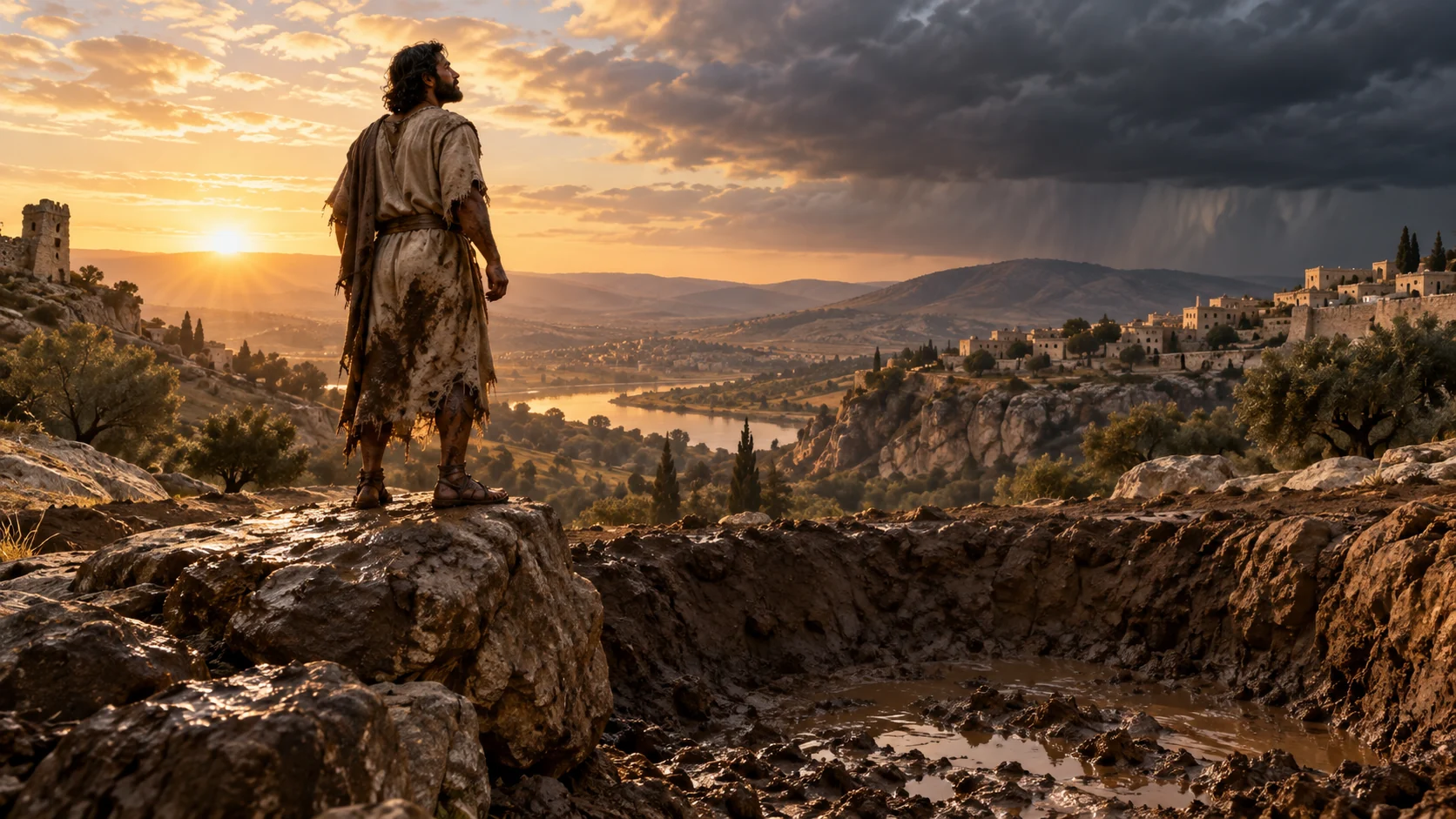
Mountains move. Seas roar. Nations rage. Yet a river runs quietly through the city of God. Psalm 46 teaches fear how to stand still in the presence of the One who cannot be shaken.
Some crises do not merely threaten one part of life. They make the whole world feel unstable.
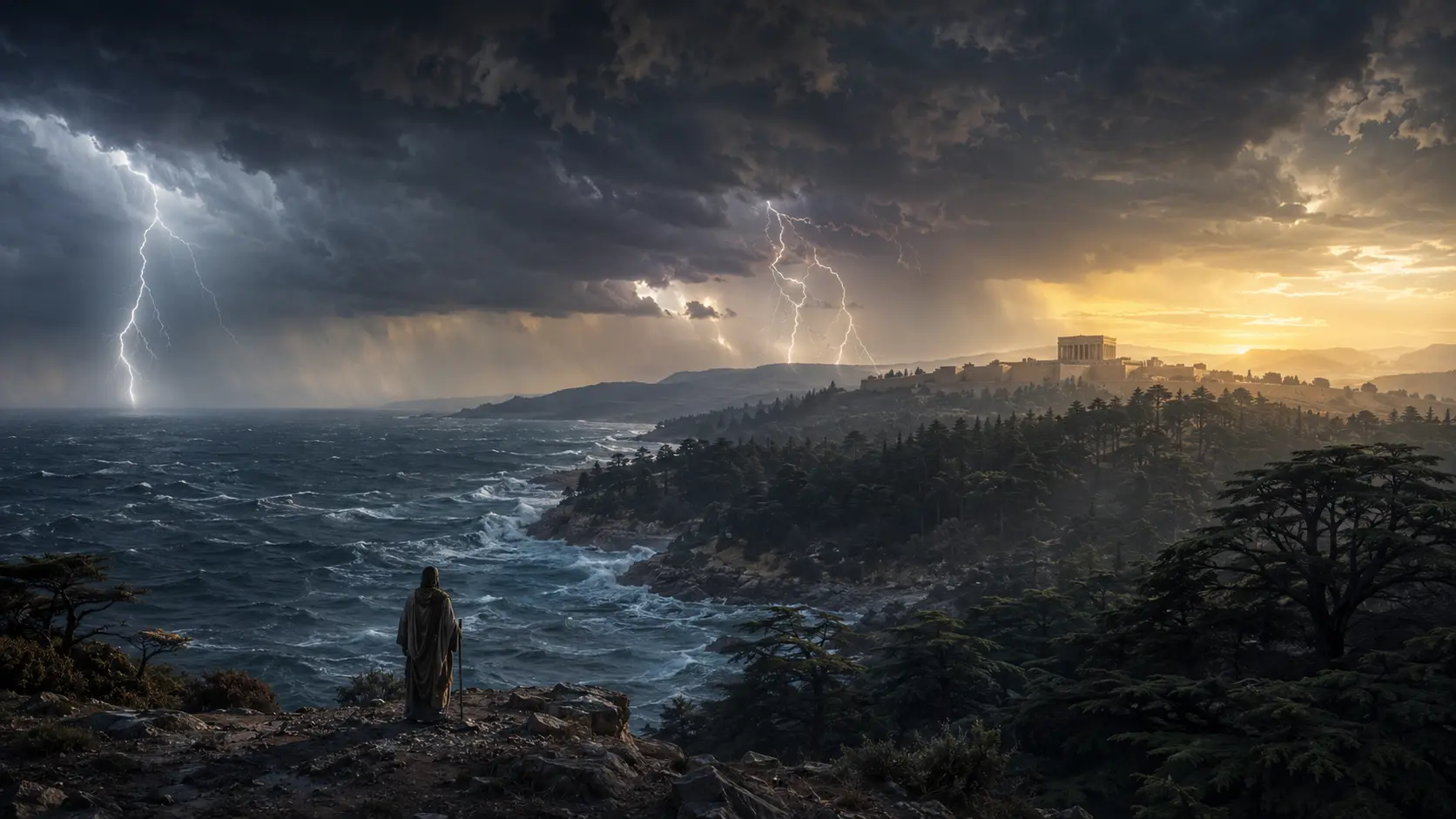
Psalm 46 imagines creation itself coming apart: earth changing, mountains collapsing into the sea, waters roaring, kingdoms shaking. It is the language of a world losing its fixed points.
Yet the psalm begins before the earthquake:
“God is our refuge and strength, an ever-present help in trouble” (46:1).
The first word is not disaster. It is God.
That order matters. The psalm does not deny danger. It relocates security.
The heart-question is: What can still be trusted when the things that looked permanent begin to move?
Psalm 46 is about fear becoming trust because the security of God’s people does not finally rest in mountains, walls, weapons, or governments, but in the presence of the God who is with them and who brings war itself to an end.
02
2.0 Historical and Literary Context: A Song of Trust in the Korahite Collection
Psalm 46 is a song of the sons of Korah and belongs to the cluster of Psalms 45–48. BibleProject describes this section as a celebration of God’s royal power in Zion, following the communal lament of Psalms 42–44.
Psalm 45 celebrated the king. Psalm 46 turns from the royal figure to the security of God’s city.
Goldingay describes Psalm 46 as a psalm of trust that does not fit neatly into the usual categories of hymn, thanksgiving, or lament. Its movement is nevertheless clear:
- God is refuge amid cosmic collapse (vv. 1–3), - God’s presence steadies the city amid political collapse (vv. 4–7), - God ends war and summons the nations to stop (vv. 8–11).
The repeated confession in verses 7 and 11 becomes the anchor:
“Yahweh of Armies is with us; the God of Jacob is our fortress.”
The song does not say nothing will shake.
It says God is present when everything shakes.
03
3.0 Walking Through the Text
04
3.1 Psalm 46:1–3 — When Creation Itself Becomes Unstable
“God is our refuge and strength, an ever-present help in trouble.”
The nouns are relational: refuge, strength, help.
God is not presented first as an explanation for the crisis but as a place to stand within it.
Then the psalm imagines the unthinkable: earth changes, mountains fall into the sea, waters roar and foam, mountains quake.
Mountains are among the Bible’s strongest images of stability. Seas often represent danger and untamed chaos. Here the stable falls into the unstable.
“Therefore we will not fear.”
This is not emotional numbness. The psalm does not say the scene is harmless. It says fear does not have final authority because God is a more durable reality than the landscape.
Faith is not the denial of shaking.
Faith is learning where not to place ultimate weight.
05
3.2 Psalm 46:4–5 — When the Roaring Sea Becomes a Life-Giving River
After the violent sea comes a radically different image:
“There is a river whose streams make glad the city of God” (46:4).
The shift is beautiful. The same poem that hears waters roaring now sees waters giving life.
Goldingay notes that Jerusalem had no great natural river like this, so the imagery functions theologically. God’s presence becomes the life-giving water of the city. He also notes the echo of Genesis 2: a river once watered the garden; here a river gladdens the city.
The biblical story appears to move from garden toward city.
“God is within her; she will not fall” (46:5).
The city’s security does not come from architecture, walls, wealth, or geography.
It comes from presence.
The contrast is sharp: mountains fall, but the city does not fall—not because cities are naturally stronger than mountains, but because God is “in her midst.”
“God will help her at break of day.”
Goldingay connects this morning language with Exodus 14:27, when the sea returned at dawn and Israel’s enemies were overwhelmed. Morning becomes a memory of divine reversal.
Night is not permanent.
06
3.3 Psalm 46:6–7 — When Nations Roar Like the Sea
“Nations rage, kingdoms totter.”
The political world now behaves like the waters of verses 2–3.
Chaos has moved from creation to empire.
But then God “lifts his voice, the earth melts.”
The nations roar; God speaks.
The contrast is almost effortless. Human power makes noise. Divine authority needs only a voice.
Then comes the refrain:
“Yahweh of Armies is with us; the God of Jacob is our fortress.”
“Yahweh of Armies” names the divine Commander. Yet the point of the title is not to glorify human militarism. The refuge of Israel is not its army but the Lord of all armies.
And “the God of Jacob” keeps the confession tied to covenant history. This is not an abstract force. This is the God who bound himself to a flawed family and carried them through generations.
The strongest line in the psalm may be the simplest:
“with us.”
07
3.4 Psalm 46:8–9 — When God Ends the Machinery of War
“Come and see what Yahweh has done.”
The psalm invites people to look.
What they see is startling: desolations, but desolations in the service of ending war.
“He makes wars cease to the ends of the earth. He breaks the bow and shatters the spear; he burns the shields with fire.”
God does not merely help one side win forever.
He destroys the instruments by which war keeps reproducing itself.
Bow, spear, shield: offense and defense alike are dismantled.
Goldingay emphasizes that the vision reaches toward the termination of war, not merely victory within war.
This gives Psalm 46 a horizon larger than national survival.
The final goal is not that our weapons become stronger.
It is that weapons become unnecessary.
08
3.5 Psalm 46:10 — “Be Still” Does Not Mean “Relax”
“Be still, and know that I am God.”
This verse is often read as a quiet invitation to private meditation. It can certainly speak peace to an anxious heart, but in context the command is stronger.
Goldingay renders the sense as “Stop, and acknowledge that I am God.” The likely first audience is the raging nations—and perhaps also Israel, tempted to secure itself through its own anxious striving.
The command is not merely, “Become calm.”
It is, “Cease. Drop the struggle for ultimate control. Recognize who is God.”
“I will be exalted among the nations; I will be exalted in the earth.”
The same nations that rage will not define the future.
God will.
Stillness, then, is not passivity. It is surrender of false sovereignty.
09
3.6 Psalm 46:11 — When the Final Word Is Presence
The psalm closes by repeating:
“Yahweh of Armies is with us; the God of Jacob is our fortress.”
Nothing new is added.
That is precisely the point.
After mountains, seas, nations, wars, broken weapons, and divine speech, the deepest truth remains the same:
God is with us.
The refuge is not a place to which God sends us.
God himself is the refuge.
10
4.0 Theological Reflection
11
4.1 Security Is Presence Before It Is Circumstance
Psalm 46 does not promise an unshaken environment. It promises an unshaken God.
Biblical security is not the guarantee that mountains will remain where we left them. It is the confidence that God remains God when they do not.
12
4.2 Chaos Can Be Transformed, Not Merely Escaped
The roaring waters of verses 2–3 become the gladdening river of verse 4. The poem does not simply flee from water imagery; it transforms it.
What threatens life is not beyond God’s power to reorder toward life.
13
4.3 God’s City Is Secure Because God Is Present
The city is not invincible by nature. Scripture itself later tells of Jerusalem’s destruction.
Psalm 46 should therefore not be turned into a magical guarantee that sacred institutions cannot fail. Its theological claim is deeper: the true ground of security is God’s presence, not the institution itself.
14
4.4 God’s Kingdom Aims Beyond Victory Toward Peace
The psalm’s climax is not a stronger army but broken weapons.
God’s kingship is finally revealed not by endless war but by war’s termination.
15
5.0 Canonical and Christological Horizon
Psalm 46 echoes several major biblical themes.
The river recalls Eden, where water flows out to sustain life (Gen. 2:10). Later prophetic visions picture a river flowing from God’s dwelling and bringing healing wherever it goes (Ezek. 47:1–12; Zech. 14:8).
The city theme continues as well. Isaiah speaks of God as Zion’s stability and salvation (Isa. 33:5–6, 20–22), while the final biblical vision presents the New Jerusalem with God dwelling among humanity (Rev. 21:1–4).
The river returns there too: “the river of the water of life” flows from the throne of God and the Lamb (Rev. 22:1–2).
For Christians, Jesus stands at the center of this movement from divine presence to renewed creation. John’s Gospel presents him as the true meeting place of God and humanity (John 1:14; 2:19–21), and the risen Christ’s repeated word to fearful disciples is peace (John 20:19–21).
The New Testament does not erase Psalm 46’s political horizon. It deepens it. The crucified Messiah defeats enemies not by reproducing the violence of empires but by absorbing evil and overcoming death through resurrection.
The final Christian hope remains profoundly Psalm 46-shaped: God with his people, creation renewed, nations healed, and the machinery of death brought to an end.
16
6.0 Life Application
1. Name what is shaking without pretending it is small. Psalm 46 does not minimize crisis.
2. Separate your refuge from your circumstances. Ask whether your deepest security rests in health, money, institutions, leaders, routines, or in God.
3. Look for the river, not only the sea. Even in disruption, ask where God’s life-giving presence is sustaining people.
4. Refuse to worship institutions. Churches, cities, governments, and organizations can be gifts, but none is identical with God’s presence.
5. Let “be still” challenge control. Stop treating anxiety-driven activity as if it were the same thing as faithfulness.
6. Work for peace shaped by God’s future. If God breaks bows and spears, his people should not glorify violence as though war were the goal of history.
7. Repeat the refrain. When fear rises, return to the simple confession: “The Lord of Armies is with us.”
17
7.0 Reflection Questions
1. What feels most unstable in my life right now?
2. Which “mountain” have I treated as though it could never move?
3. Where do I see signs of God’s life-giving “river” in the middle of chaos?
4. What striving do I need to stop so that I can acknowledge God’s sovereignty?
5. How does the psalm challenge my assumptions about power, security, and peace?
6. What would change this week if I truly lived from the confession, “God is with us”?
18
8.0 Response Prayer
God our refuge and strength, when the ground beneath us shifts, teach us not to build our faith on what can move. When seas roar and nations rage, make your presence more real to us than the noise. Let your river run through our fear. Be in our midst. Break the weapons we trust too much, quiet the striving by which we try to control tomorrow, and teach us to know that you are God. Make us people who seek peace because your kingdom ends war. Through Jesus, the crucified and risen Lord, keep us until the city of God is filled with life and every frightened heart learns again: you are with us. Amen.
19
9.0 Window into What Comes Next
Psalm 46 celebrates God as refuge in the city. Psalm 47 widens the horizon: the God who protects Zion is acclaimed as King over all the earth. The nations who rage in Psalm 46 will be summoned to clap, shout, and acknowledge the reign of God. The question moves from “Who is our refuge when the world shakes?” to “Who is the true King of all the nations?”
20
10.0 Bibliography
BibleProject. The Book of Psalms: Study Notes.
Goldingay, John. Psalms, Volume 2: Psalms 42–89. Baker Commentary on the Old Testament Wisdom and Psalms. Grand Rapids: Baker Academic, 2007.
Kidner, Derek. Psalms 1–72. Kidner Classic Commentaries. Downers Grove, IL: IVP Academic, 2008.
Be the first to leave a comment.