


“O God, you are my God; earnestly I seek you; my whole being thirsts for you.”
01
A Study in Desire, Presence, Satisfaction, and the God Who Holds Us Fast
Key Verse “O God, you are my God; earnestly I seek you; my whole being thirsts for you.” — Psalm 63:1
02
Big Idea
Psalm 63 begins in a wilderness, but its deepest thirst is not for water.
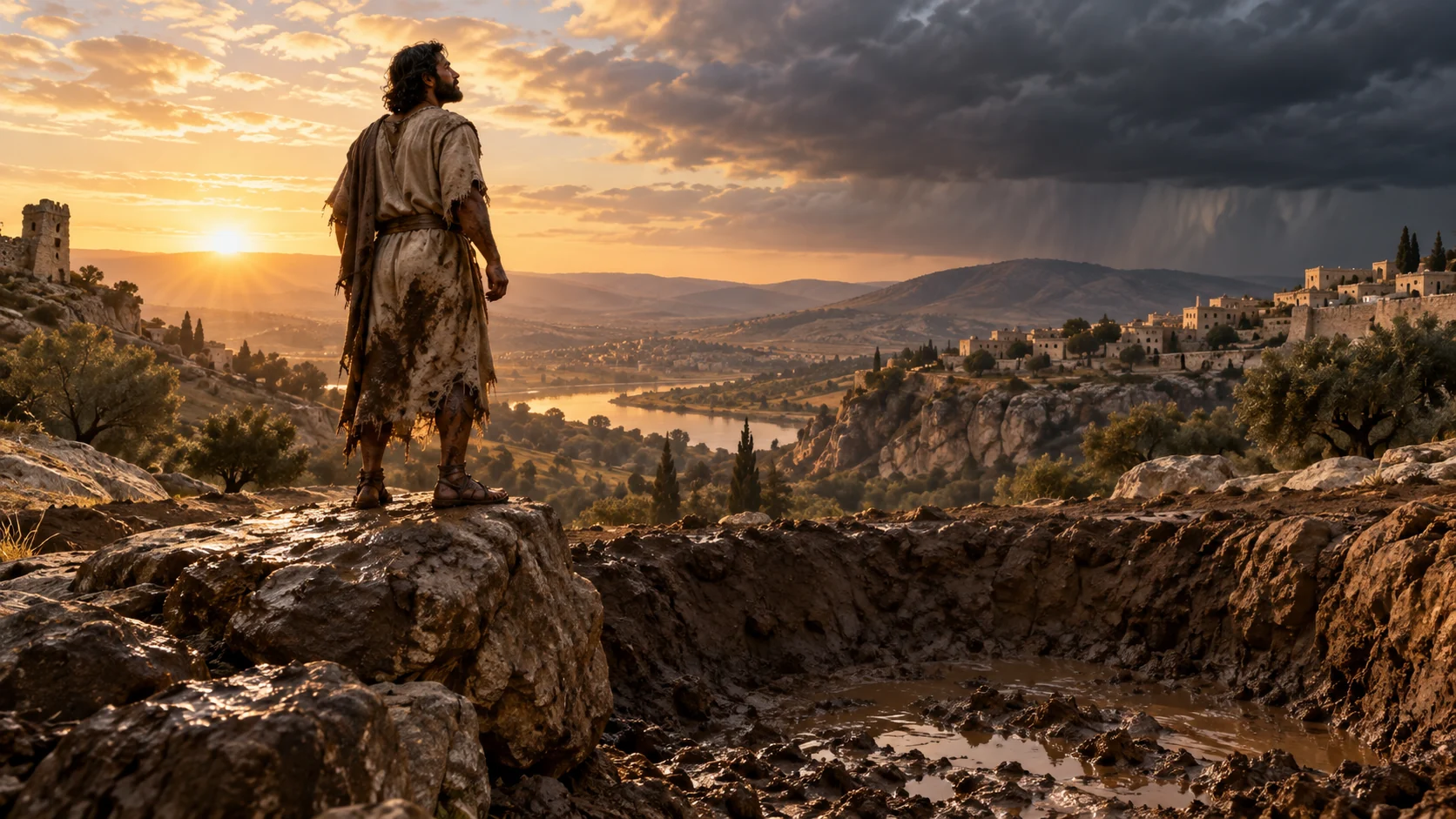
David is in a dry and weary land. The heading places him in the wilderness of Judah, and the psalm’s final reference to “the king” fits naturally with a period when he was under threat. Yet the surprising thing is what occupies the center of his attention. He does not begin with the enemy. He begins with God:
“You are my God.”
From that confession comes the movement of the whole psalm. David longs for God, remembers seeing God’s power and glory, declares that God’s steadfast love is better than life, finds himself satisfied as at a rich feast, meditates on God through the night, clings to him, and discovers that God’s right hand is already holding him.
The enemies are real, but they stay near the edge of the picture. God fills the center.
Psalm 63 therefore teaches a deep truth about spiritual life: our greatest need is not merely relief from the wilderness, but God in the wilderness.
03
1. Psalm 63 in Book Two of the Psalms
Psalm 63 belongs to Book Two of the Psalms (Psalms 42–72), a section shaped by longing, exile-like distance, enemies, royal hope, and the search for God’s presence.
Psalm 61 prayed from “the end of the earth” and asked to be led to the rock higher than the worshiper. Psalm 62 learned to wait for God alone as rock, salvation, and refuge. Psalm 63 takes another step:
the God who is refuge becomes the God who is desired.
The question is no longer only, “Where can I be safe?”
It becomes:
“Whom do I truly want?”
That is why Psalm 63 feels so intimate. Its language of thirst, longing, satisfaction, memory, clinging, and praise describes a relationship in which God is not merely useful. God is beloved.
04
2. The Wilderness Setting
The heading links Psalm 63 with David in the wilderness of Judah.
Both John Goldingay and Derek Kidner note that the setting fits especially well with the period of Absalom’s rebellion in 2 Samuel 15–17. David left Jerusalem, crossed the Kidron, and moved toward the wilderness. The narrative even describes David and his followers as weary (2 Samuel 16:14).
The setting matters because it sharpens the psalm’s language.
David is in a land without water.
He is away from Jerusalem and the sanctuary.
His throne is threatened.
His enemies are active.
And yet his deepest cry is:
“God, you are my God.”
The wilderness strips life down to essentials. Psalm 63 asks what remains when comfort, location, reputation, and control are taken away.
David’s answer is not an idea.
It is a relationship.
05
3. The Movement of the Psalm
Psalm 63 can be followed in three broad movements.
Verses 1–4 — Thirsting for God
David seeks God with his whole being and remembers encountering God’s power and glory in the sanctuary.
Verses 5–8 — Satisfied, Remembering, and Clinging
The thirsty soul becomes satisfied as at a rich feast. David remembers God in the night, rejoices under God’s wings, and clings to the One whose right hand holds him.
Verses 9–11 — Confidence in Vindication
The enemies who seek his life will not have the final word. The king will rejoice in God, and falsehood will be silenced.
The movement is therefore:
thirst → vision → praise → satisfaction → remembrance → clinging → vindication
06
WALKING THROUGH THE PSALM
07
4. “O God, You Are My God” — Desire Begins With Relationship
Psalm 63:1
Before David says what he needs, he says who God is to him.
“You are my God.”
That simple confession holds the psalm together.
David is not searching for an unknown deity. His longing is the longing of someone who already knows God and wants more deeply to live in that relationship.
Derek Kidner rightly emphasizes that this is not the groping of a stranger. It is the longing of someone who knows whom he seeks.
This is the difference between spiritual curiosity and covenant desire.
The psalmist is not asking:
“Is there perhaps a God somewhere?”
He is saying:
“You are my God, and therefore I seek you.”
The relationship creates the hunger.
08
5. “My Whole Being Thirsts for You” — The Desire of the Whole Person
Psalm 63:1
Psalm 63 uses the language of thirst and physical longing.
David says that his nephesh—his living self, his whole person—thirsts for God. He also speaks of his flesh or body longing for God.
This is important because the verse is not dividing David into two separate substances, a “soul” that wants God and a “body” that wants something else.
The poetry moves in the opposite direction.
The whole person longs for God.
Mind, body, memory, desire, emotion, and will are drawn into the same hunger.
The dry land around David becomes the perfect landscape for the dry ache within him.
But the deepest thirst is not caused by lack of water.
The wilderness exposes a thirst already present:
the human longing for the living God.
09
6. “In a Dry and Weary Land” — When the Landscape Mirrors the Heart
Psalm 63:1
The wilderness of Judah is hot, exposed, and short of water.
David’s surroundings give physical form to his prayer.
A thirsty person does not treat water as an interesting addition to life. Thirst simplifies everything. Water becomes urgent.
Psalm 63 uses that urgency to speak of God.
The psalm asks us whether our desire for God has ever become that direct.
Not:
“God would be a helpful addition.”
But:
“Without you, something essential is missing.”
The wilderness does not create God’s absence. It reveals David’s dependence.
Sometimes the places where our usual supports disappear become the places where our deeper hunger becomes visible.
10
7. “I Have Seen You in the Sanctuary” — Remembering the God of Worship
Psalm 63:2
David is away from the sanctuary, but he remembers what he has seen there:
God’s power and glory.
The sanctuary mattered because Israel gathered there to remember who God was and what he had done. Worship, sacrifice, prayer, story, symbol, and song all pointed beyond themselves to the living God.
Now David is far away.
But God is not imprisoned in the sanctuary.
Kidner draws attention to the same truth that appeared in Psalm 61: the God encountered in Zion is still God in the wilderness.
David can lose access to a place without losing access to God.
Memory therefore becomes a spiritual bridge.
He looks back on worship not as nostalgia but as fuel for present faith.
The God whose power he saw then is the God he seeks now.
11
8. “Your Steadfast Love Is Better Than Life”
Psalm 63:3
This is one of the boldest sentences in the Psalms.
David is asking God to preserve him, yet he says that God’s steadfast love is better than life itself.
The Hebrew word hesed speaks of God’s faithful, covenant love—his loyal commitment to his people.
David is not saying life is worthless.
He is saying that life receives its deepest value from relationship with God.
A long life without God would not be the highest good.
The presence and faithful love of God are greater even than the life we are trying to preserve.
This changes the center of prayer.
We often pray:
“God, keep my life secure.”
Psalm 63 teaches us to pray something deeper:
“God, whatever happens, do not let me lose you.”
12
9. Praise With Lips and Lifted Hands
Psalm 63:3–4
Inner devotion becomes outward worship.
David’s lips praise.
His hands rise.
His whole life becomes an answer to God’s steadfast love.
Biblical worship is not embarrassed by embodiment. Hands, lips, voice, posture, memory, and desire all participate.
This is important because longing for God does not remain a private feeling.
It becomes praise.
The one who thirsts for God begins to bless God.
The movement is simple:
desire becomes worship.
13
10. “My Soul Will Be Satisfied as With a Rich Feast”
Psalm 63:5
The imagery suddenly changes from thirst to feast.
The dry land has not necessarily changed.
But the inner landscape has.
The person who thirsted now speaks of being satisfied as with the richest food.
What happened?
God himself has become the answer to the thirst.
Psalm 63 does not say that every external need disappears. It says that there is a kind of fullness that circumstances alone cannot give.
The wilderness can remain dry while the soul becomes full.
This is one of the psalm’s great reversals:
the desert becomes a dining table because God is there.
14
11. “I Remember You on My Bed” — Faith in the Night Watches
Psalm 63:6
Night changes the way problems feel.
During the day, activity can distract us. At night, unfinished questions often return.
David uses those hours differently.
He remembers God.
He meditates on God through the watches of the night.
This is more than thinking vaguely about religion. He recalls who God has been and what God has done.
Memory becomes resistance against anxiety.
The night may still be dark, but it is no longer empty.
God’s past faithfulness gives the mind something stronger to dwell on than fear.
15
12. “You Have Been My Help” — Memory Turns Into Praise
Psalm 63:7
David does not remember abstract doctrines.
He remembers help.
“You have been my help.”
That sentence turns theology into testimony.
The God of Israel is not only powerful in the stories of previous generations. David has experienced that help personally.
Therefore he rejoices under the shadow of God’s wings.
The wing imagery has already appeared elsewhere in the Psalms as a picture of protection, nearness, and belonging (see Psalms 17:8; 36:7; 57:1; 61:4).
The king in the wilderness still lives under a greater shelter.
The sky above him may be open.
But he is not uncovered.
16
13. “My Soul Clings to You; Your Right Hand Upholds Me”
Psalm 63:8
This may be the theological center of the second half of the psalm.
Two movements appear together.
David says:
“I cling to you.”
Then:
“Your right hand upholds me.”
Human faithfulness and divine faithfulness meet in one sentence.
David holds on to God.
But beneath David’s grip is God’s stronger grip on David.
This protects the psalm from turning devotion into spiritual achievement.
The final security does not rest on how tightly David can hold God.
It rests on the God who holds David.
We seek.
We thirst.
We remember.
We cling.
And underneath all of it:
God upholds.
17
14. The Enemies Finally Appear
Psalm 63:9–10
Only near the end does the psalm turn directly to the people seeking David’s life.
That literary choice matters.
The enemies are serious, but they are not central.
If the psalm had begun with them, they might have filled the whole horizon.
Instead, David spends eight verses filling the horizon with God.
Only then does he speak about those who want to destroy him.
This is not denial.
It is proportion.
The psalm teaches us that danger should be named—but it should not be allowed to become larger than God in our imagination.
18
15. “But the King Will Rejoice in God”
Psalm 63:11
The psalm ends with the king.
Like Psalm 61, Psalm 63 moves from David’s personal experience toward his royal calling.
The king’s vindication matters because his life is connected with the life of the people. When the king trusts God and God upholds him, the faithful community has reason to rejoice.
The final contrast is striking.
False mouths are stopped.
Praising mouths are opened.
The people who speak lies do not have the final word.
The final word is joy in God.
19
MAJOR THEOLOGICAL THEMES
20
1. God Is Not Merely the Means to Something Else
Psalm 63 does not seek God only because God can restore comfort, position, or safety.
David wants God.
That is why the psalm can say:
“Your steadfast love is better than life.”
21
2. Spiritual Desire Involves the Whole Person
Biblical longing is not confined to an invisible “soul.”
David’s whole being thirsts.
His lips praise.
His hands rise.
His mind remembers.
His body lies awake.
His life clings to God.
Faith involves the whole person.
22
3. The Wilderness Can Clarify Desire
The wilderness removes distractions and exposes what we believe we cannot live without.
David discovers that beneath his need for water, safety, Jerusalem, and a throne lies a deeper need:
God himself.
23
4. Memory Sustains Faith
David remembers God in the sanctuary.
He remembers God on his bed.
He remembers that God has been his help.
Biblical memory is not sentimental nostalgia. It brings past faithfulness into present pressure.
24
5. God Can Satisfy Before Circumstances Change
The psalm moves from thirst to feast before it tells us that the enemies are gone.
That means satisfaction in God is not identical with comfortable circumstances.
God can feed the heart in the wilderness.
25
6. Our Clinging Rests Inside God’s Holding
Psalm 63:8 beautifully holds together human response and divine grace.
We cling to God. God upholds us.
Discipleship is active trust resting inside a stronger divine faithfulness.
26
7. Praise Reorders the Horizon
The enemies remain real, but God becomes larger in the psalmist’s vision.
Praise does not deny the crisis.
It refuses to let the crisis become the largest reality.
27
CONNECTIONS ACROSS SCRIPTURE
28
Thirst for God and Living Water
Psalm 63 joins Psalm 42 in using thirst as a picture of longing for God. The image reaches back to a world in which water means life and forward to the prophets’ promises of God satisfying the thirsty (Isaiah 55:1; 44:3).
In the New Testament, Jesus takes up this biblical language when he speaks to the Samaritan woman about living water (John 4:10–14) and later invites the thirsty to come to him and drink, language John connects with the Holy Spirit (John 7:37–39).
Psalm 63 is not a direct prediction of those scenes, but it belongs to the same biblical stream: human beings carry a thirst that created things cannot finally satisfy.
29
The Steadfast Love That Is Better Than Life
The hesed celebrated in Psalm 63 is the same covenant love proclaimed in Exodus 34:6–7 and celebrated throughout the Psalms.
The New Testament deepens this theme by showing God’s covenant faithfulness reaching its climax in Jesus. Paul can speak of nothing in creation separating God’s people from the love of God in Christ (Romans 8:38–39).
The Christian reading of Psalm 63 therefore learns to say that life is precious, but life finds its deepest meaning inside the faithful love of God.
30
Remembering God in the Night
Night prayer appears throughout Scripture. Psalm 119 speaks of remembering God’s name in the night (Psalm 119:55), while Jesus himself sometimes spends extended hours in prayer (Luke 6:12).
The night watches can become hours of anxiety, but Scripture repeatedly turns them into occasions for attention to God.
Psalm 63 teaches us that what the mind rehearses in the dark matters.
31
Clinging to God and Being Held by God
The language of “clinging” to God appears in Deuteronomy as the covenant calling of Israel (Deuteronomy 10:20; 11:22). Israel is to hold fast to Yahweh rather than turn to other gods.
Psalm 63 adds the other side:
God’s right hand upholds the one who clings.
The New Testament expresses a similar assurance when Jesus speaks of his sheep as held securely in his hand and the Father’s hand (John 10:27–29).
Human faith is real.
God’s preserving grace is stronger.
32
The King Who Rejoices in God
Psalm 63 ends with “the king,” keeping David’s personal devotion connected to his royal vocation.
Within the wider biblical story, the imperfect line of Davidic kings creates hope for a faithful king who will trust God without compromise. Christians see that royal hope fulfilled in Jesus, the Son of David, whose faithfulness passes through suffering and death into resurrection and reign.
The psalm therefore teaches kingship from the inside out: the ruler fit to lead God’s people is first a worshiper who thirsts for God.
33
DISCUSSION QUESTIONS
1. What is the difference between wanting God and wanting something from God? 2. Why is the wilderness such a powerful setting for Psalm 63? 3. What does it mean that David’s whole being thirsts for God? 4. How can memories of worship strengthen faith when we feel far from familiar spiritual places? 5. What might it mean in practice to say that God’s steadfast love is “better than life”? 6. Why does Psalm 63 move from thirst to the image of a rich feast? 7. What do you tend to remember during sleepless or anxious nights? 8. How do the two statements “I cling to you” and “your right hand upholds me” belong together? 9. Why do the enemies appear so late in the psalm? 10. What would change if God, rather than the crisis, occupied the center of your attention?
34
PERSONAL PRACTICE: PRAY PSALM 63 IN FOUR MOVEMENTS
1. Name Your Thirst
“God, beneath everything else I am longing for…”
2. Remember
“I have seen your faithfulness when…”
3. Receive
“Let your steadfast love satisfy me even before my circumstances change.”
4. Cling and Rest
“I cling to you; thank you that your right hand is holding me.”
Then spend a few quiet moments simply repeating:
“You are my God.”
35
CLOSING PRAYER
God, you are my God.
In every dry place, teach me to seek you.
When my heart reaches for comfort, control, recognition, or escape, take me beneath those desires until I discover my deeper thirst for you.
Remind me of the places where I have seen your power and glory. Bring your faithfulness into my memory when the night is long.
Let your steadfast love become more precious to me than the life I am trying so hard to protect.
Satisfy me with your presence. Shelter me beneath your wings.
Teach my whole being to cling to you— and when my grip grows weak, remind me that your right hand is still holding me.
Do not let fear, enemies, or falsehood occupy the center of my vision.
Open my mouth in praise.
And through Jesus, the faithful Son of David, lead me toward the living water of your Spirit and the life of your coming kingdom.
Amen.
36
Sources Consulted
John Goldingay, Psalms, Volume 2: Psalms 42–89, especially “Psalm 63: A Threefold Dynamic for Life.”
Derek Kidner, Psalms 1–72, especially “Psalm 63: All My Longing.”
BibleProject, The Book of Psalms study materials, for the literary setting of Book Two.
Be the first to leave a comment.