


Does Biblical Faith Rest on History or Religious Imagination?
01
Introduction
Part II — Scripture and God’s Revelation
Faith Built on Truth — Through Christ, Through Scripture, for Life
Is the Bible a window opening onto the real world of the past—or a painted wall made to resemble one? If its central events did not happen, can its spiritual message still carry the weight Christians place upon it?
The Bible is not a modern history textbook.
That matters.
Its pages contain songs, prayers, proverbs, parables, laws, visions, letters, genealogies, prophetic speeches, and historical narratives. A psalm sings. A proverb gives wisdom in compressed form. A parable may tell an imagined story in order to reveal truth. Revelation speaks in symbols. The Gospels announce good news by remembering the words, actions, death, and resurrection of Jesus.
Faithful reading begins by asking what kind of writing is in front of us.
But recognizing literary variety does not push the Bible outside history. Much of biblical faith stands or falls with claims about things said to have happened in the public world. Israel remembers slavery and deliverance. Kingdoms rise and collapse. Jerusalem falls. Exiles return. Jesus lives in first-century Judea and Galilee, is crucified under Roman authority, and is proclaimed risen.
Christianity does not begin, “Once upon a time, somewhere beyond history.”
It says that the Creator acted within Israel’s history and decisively through Jesus of Nazareth.
Historical research cannot put God in a laboratory. It cannot weigh forgiveness, measure providence, or prove resurrection the way chemistry measures a reaction. But it can ask serious questions. Do the texts know the geography and culture they describe? Do external sources fit their world? How early is the testimony? How openly was it transmitted? Are the central claims rooted in memory or in legends that appeared centuries later?
Here are ten reasons the Bible deserves to be taken seriously as historically trustworthy.
02
1. The Bible’s Story Is Anchored in Real Geography
Biblical narratives unfold in places that belong to the map.
Abraham travels through Canaan. Israel moves through wilderness country. David’s conflicts take place among the hills of Judah and the plains near Philistine territory. Pilgrims “go up” to Jerusalem. Jesus travels through Galilee, Samaria, Judea, villages around the lake, and roads leading toward the temple [Genesis 12:4–9; 1 Samuel 17:1–3; Luke 9:51–53; John 4:3–6].
The land is not stage decoration.
Mountains become refuges. Valleys become battle routes. Wells become meeting places. Trade roads shape travel. Jerusalem’s elevation explains the biblical language of ascent. The geography often presses into the story itself.
Of course, real geography does not prove that every event described at a real place happened exactly as narrated. A novelist can use real cities. But repeated geographical rootedness matters because the Bible does not normally float in a mythical “nowhere.” It remembers events in a landscape people could travel, inhabit, defend, lose, and return to.
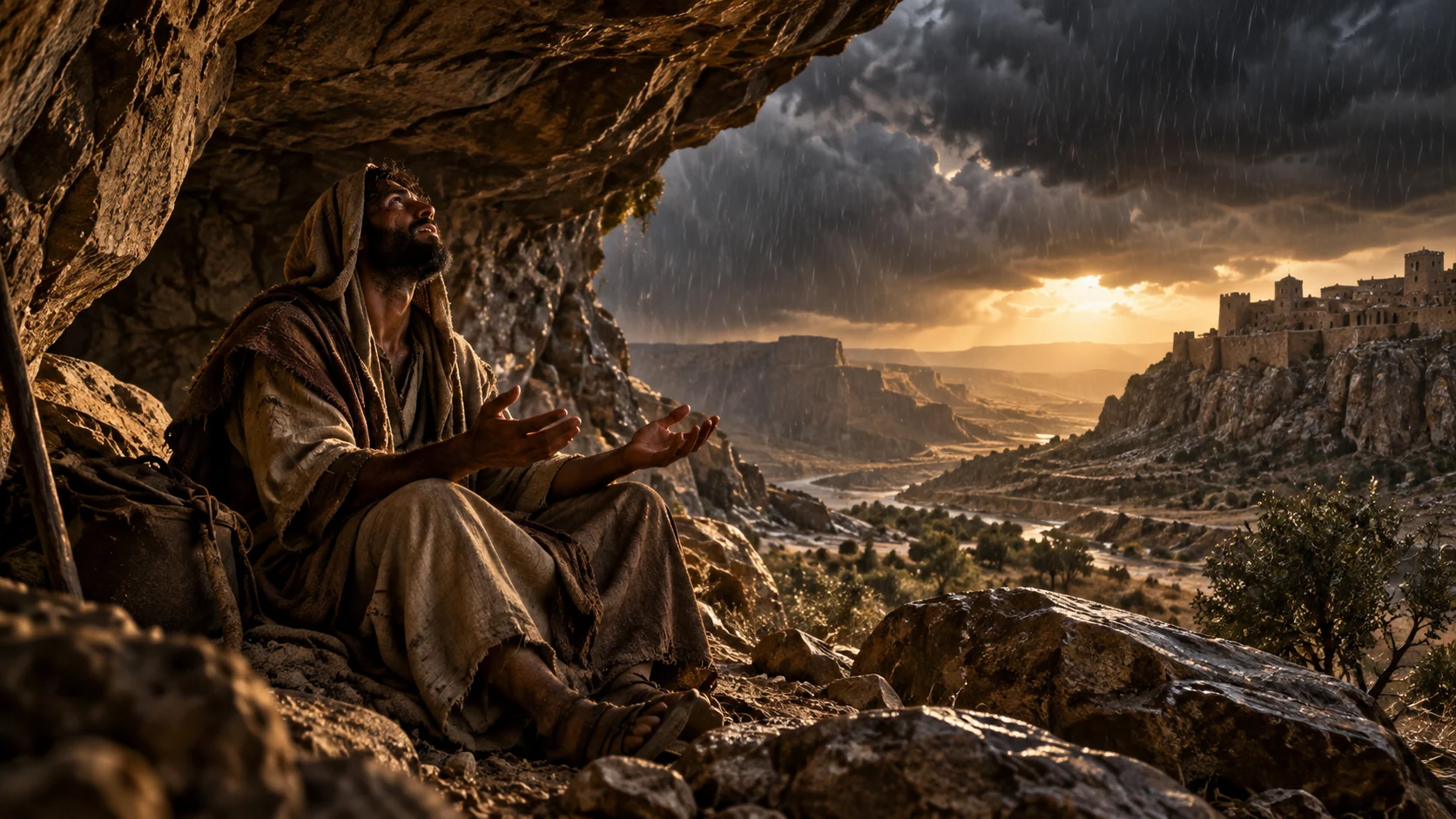
Biblical faith has dust on its sandals.
Takeaway: The Bible presents God as acting not in an imaginary spiritual world, but along real roads, in real towns, among real human communities.
03
2. The Biblical Narratives Reflect the Ancient Worlds They Describe
The Bible bears the fingerprints of ancient life.
Its stories assume customs, political arrangements, household structures, agricultural cycles, legal practices, covenants, royal courts, temple worship, taxation, patronage, synagogue life, crucifixion, and imperial administration that belong to the ancient Near Eastern and Greco-Roman worlds [Genesis 15:7–21; Ruth 4:1–12; 1 Kings 22:1–28; Luke 2:1–3; Acts 18:12–17].
Modern readers often need commentaries, archaeology, and historical study simply to notice what the original writers take for granted.
That is what we expect from texts that grew within the worlds they describe.
This does not settle every debate about when a biblical book was written or how it reached its final form. Nor does an accurate cultural detail prove every event surrounding it. But the writings repeatedly sound like voices speaking from inside ancient societies rather than modern authors carelessly dressing stories in ancient costumes.
An old family letter may mention harvest, inheritance, village elders, or taxes without explaining any of them because the writer assumes the reader knows the world. The Bible often sounds like that.
Takeaway: Learning the Bible’s historical setting does not weaken Scripture; it helps us hear ancient voices on their own ground before asking what they mean for ours.
04
3. Archaeology Repeatedly Illuminates the Bible’s Historical Setting
Archaeology cannot “prove the Bible” in one sweep.
A broken wall cannot tell us whether God forgave someone. An inscription cannot explain the theological meaning of exile. A coin cannot prove a miracle.
But archaeology can illuminate the world in which biblical claims are made.
Inscriptions, coins, buildings, fortifications, water systems, royal records, and excavated cities have provided evidence for rulers, dynasties, places, invasions, construction projects, and political settings familiar from Scripture. Evidence associated with the Davidic dynasty, Assyrian campaigns, ancient Moab, Jerusalem’s infrastructure, and Roman administration in Judea helps place biblical texts within the wider history of the region.
The same evidence can also challenge popular assumptions. Sites are debated. Dates are revised. Some confident claims turn out to have outrun the evidence.
That is not a reason for fear.
Responsible faith does not need archaeology to say more than archaeology can say. The point is cumulative: again and again, the biblical world intersects the material world recovered from the ground.
A shard of pottery is not a sermon.
But it may come from the street where the sermon was preached.
Takeaway: Historical evidence is strongest when we let it speak at its proper volume—neither silencing it nor forcing it to preach beyond what it can support.
05
4. The Bible Preserves Embarrassing Failures Instead of Polishing Its Heroes
Ancient rulers often used public records to magnify victories and hide humiliation.
The Bible is strikingly willing to do the opposite.
Israel’s ancestors lie, fear, manipulate, and fail. The wilderness generation rebels. Aaron participates in the golden calf. David commits adultery and arranges a man’s death. Solomon’s kingdom fractures after his compromises. Jerusalem falls. Exile is remembered not merely as foreign aggression but as judgment upon Israel’s own unfaithfulness [Exodus 32:1–10; 2 Samuel 11–12; 1 Kings 11:1–13; 2 Kings 24–25].
The New Testament does not polish the disciples either.
They misunderstand Jesus, quarrel over status, flee when he is arrested, and initially struggle to believe resurrection reports [Mark 9:33–34; 14:27–50; Luke 24:9–11].
Embarrassing material does not prove every detail of an account. Historians rightly avoid simplistic “embarrassment equals truth” arguments.
Still, this moral candor matters.
The Bible does not read like a sustained campaign to make its founders look flawless. It repeatedly places even its greatest figures beneath judgment.
Its heroes need grace too.
Takeaway: Scripture’s refusal to protect its heroes strengthens the impression that its purpose is not national self-glorification but truthful memory under the judgment and mercy of God.
06
5. Israel’s Historical Memory Was Carried Publicly, Not Hidden in a Private Archive
Israel’s foundational memories were woven into communal life.
Passover rehearsed liberation from slavery. Parents were instructed to tell children what the rituals meant [Exodus 12:24–27]. Memorial stones prompted questions about crossing the Jordan [Joshua 4:4–7]. The Law was read publicly. Psalms rehearsed both God’s faithfulness and Israel’s repeated rebellion [Nehemiah 8:1–8; Psalm 78:1–8].
These memories were sung, celebrated, argued over, taught, and transmitted.
That does not make communal memory infallible. Communities can reshape stories, forget details, and interpret the past through present needs.
But public memory places constraints on invention.
A story already embedded in worship, festivals, land, institutions, and shared identity cannot be endlessly reinvented by one isolated storyteller without friction from those who also carry the tradition.
The New Testament emerges in a similar network. Churches receive letters, read them aloud, exchange them, preserve shared traditions about Jesus, and remain connected to known leaders and witnesses [1 Corinthians 11:23–26; 15:1–8; Colossians 4:16].
The testimony travels through communities, not through a locked room.
Takeaway: Publicly remembered faith is open to communal testing in a way that secret revelation and private invention are not.
07
6. The Manuscript Tradition Allows the Biblical Text to Be Examined in the Open
We do not possess the original handwritten copy of Isaiah, Romans, or John.
What we possess are copies—many copies—along with ancient translations, quotations, and manuscript traditions transmitted across generations.
Those manuscripts contain variations.
That should not shock us. Hand copying produces spelling differences, repeated words, omitted lines, clarifications, and other changes. Textual criticism compares manuscripts in order to identify, as closely as possible, the earliest recoverable wording.
The important point is that the differences are visible.
The Hebrew Scriptures are witnessed through streams that include the Masoretic tradition, the Dead Sea Scrolls, the Samaritan Pentateuch, and ancient translations. The New Testament survives in a large and geographically dispersed manuscript tradition. Modern Bibles often place significant textual questions directly in footnotes.
Christian confidence therefore does not rest on pretending that every copyist was perfect.
It rests on a transmission history open enough to inspect.
The footprints are visible.
Takeaway: Textual questions need not frighten a faith committed to truth; the manuscript tradition can be studied rather than hidden behind religious claims.
08
7. The Gospels Stand Close to Early Testimony About Jesus
The four Gospels are not carbon copies.
Matthew often highlights Israel’s Scriptures and fulfilment. Mark moves urgently toward the cross. Luke emphasizes careful investigation and repeatedly notices outsiders. John slows down, reflects deeply, and arranges material around signs, festivals, and Jesus’ identity [Luke 1:1–4; John 20:30–31].
Their differences create real interpretive work.
But they also show that early Christians did not simply flatten every memory into one standardized script.
Alongside the Gospels stand the letters of Paul, several of which are earlier than the final written form of the Gospels. Paul already knows core traditions: Jesus is a Jewish descendant of David; he shares a final meal interpreted around his death; he is crucified and buried; and resurrection appearances are proclaimed to named individuals and groups [Romans 1:3–4; 1 Corinthians 11:23–26; 15:3–8].
Paul also knows Peter and James personally [Galatians 1:18–19].
The picture of Jesus does not suddenly appear centuries after the events. Its central contours are present while the first generation remains close enough to the movement to matter.
Takeaway: The Gospel testimony deserves historical attention because its central claims arise near the beginning of the Christian movement, not at the end of a long legendary fog.
09
8. Non-Christian Sources Confirm the Basic Historical Outline of Jesus and the Early Movement
Christian documents are our richest sources for Jesus because Christians were the people most interested in preserving his memory.
That is not unusual. Most ancient movements are best known through people connected with them.
Still, external sources matter.
Ancient Jewish and Roman writers refer to Jesus, his followers, or the early Christian movement. The Roman historian Tacitus connects the name “Christian” with Christus and reports that he suffered the extreme penalty under Pontius Pilate during the reign of Tiberius. Other external witnesses help confirm that Christianity spread early enough to attract notice beyond the churches themselves.
Such sources do not prove resurrection.
They do not verify every saying in a Gospel.
They often write decades after Jesus.
But they make one conclusion difficult to sustain: that Jesus was simply invented centuries later.
A reasonable historical minimum remains: Jesus was a first-century Jew, gathered followers, was executed under Roman authority, and very early became the center of a movement that worshiped him as Lord.
Takeaway: Christian faith asks us to respond not merely to a religious idea, but to a Jewish man of the first century whose life and death left traces beyond Christian memory itself.
10
9. The Resurrection Proclamation Appears Early and Demands Historical Explanation
History cannot repeat the resurrection in a laboratory.
Nor can a historian force a philosophical conclusion about whether miracles are possible.
But history can investigate what people claimed, when they claimed it, and what happened afterward.
Paul preserves a tradition declaring that Christ died, was buried, was raised, and appeared to Peter, the Twelve, other believers, James, and finally Paul himself [1 Corinthians 15:3–8]. The tradition is already established when Paul writes.
The Gospels agree that Jesus was crucified and that his followers soon came to believe he had been raised. Women occupy a prominent place in the empty-tomb traditions. Peter becomes a public herald. James, once described as skeptical, becomes a leader in the Jerusalem church. Paul moves from persecuting the movement to proclaiming the risen Christ [Mark 16:1–8; John 20:1–18; Acts 2:22–36; Galatians 1:13–24].
None of these observations, taken alone, mechanically proves resurrection.
Martyrdom proves sincerity, not truth. Changed lives can have more than one explanation. Historians debate the details.
But the resurrection proclamation cannot simply be pushed into a distant age of legend. It belongs near the movement’s beginning and demands explanation.
Christianity’s central claim is historical in a stubborn way: something happened to Jesus, and his followers said death had been defeated.
Takeaway: The resurrection deserves investigation because Christianity rests not merely on Jesus’ teachings but on the claim that God acted upon Jesus’ dead body.
11
10. Biblical Theology Interprets History Without Escaping It
The Bible never stops at bare chronology.
It asks what events mean.
The Exodus is liberation from Egyptian slavery, but Israel also understands it as revelation of the covenant God [Exodus 6:2–8]. The fall of Samaria and Jerusalem is geopolitical catastrophe, but the biblical writers also interpret exile through idolatry, injustice, and covenant failure [2 Kings 17:7–23].
The cross is a Roman execution.
It is also proclaimed as reconciliation, forgiveness, and God’s victory over sin and evil [Colossians 2:13–15].
The resurrection is a claim that something happened to Jesus.
It is also interpreted as the beginning of new creation [1 Corinthians 15:20–28].
History can investigate emperors, governors, inscriptions, texts, customs, chronology, testimony, and consequences. It cannot put “covenant faithfulness” or “forgiveness” on a scale.
Those are theological interpretations.
But biblical theology does not replace events with ideas. It interprets events it claims occurred.
A melody is more than vibrating strings, but it does not exist without them.
In the same way, Scripture asks us to hear meaning within history, not to flee from history into imagination.
Takeaway: Historical evidence may bring us to the doorway; faith then asks what these events mean and whether the God revealed through them is calling us.
12
Truth and Your Decision: If the Bible Is Historically Trustworthy
No single artifact proves the Bible.
No inscription settles every debate.
No manuscript removes every textual question.
No historical argument can force faith.
The case is cumulative.
Real geography. Ancient cultural texture. Archaeological illumination. Uncomfortable honesty about failure. Public communal memory. A manuscript tradition open to examination. Early and multiple testimony concerning Jesus. External historical points of contact. A resurrection proclamation close to the beginning of the Christian movement. Theology that interprets claimed events instead of replacing them.
Together, these lines of evidence place the Bible in serious conversation with history.
Not everything is equally certain. Some events are better documented than others. Archaeological debates continue. Literary genres must be respected. Difficult questions remain.
But “religious imagination” is too small a box for the Bible.
Its faith has geography beneath its feet, empires over its shoulders, graves in its path, and a Roman cross at its center.
And then comes the claim that changes everything: the grave did not keep Jesus.
The Bible therefore asks for more than admiration as ancient literature. It brings us before the God of Abraham, Exodus, exile, cross, and empty tomb.
If this witness is historically serious, then history is not a sealed room where humanity suffers alone.
A window has opened.
Will you examine the evidence only as a spectator—or allow the history of Jesus to question, summon, and reshape your own?
13
Closing Prayer
God of truth, you chose to meet people within real history—among families, nations, roads, empires, suffering, and hope.
Give me courage to examine the evidence honestly, without fear, exaggeration, or prejudice. Where questions remain, give me patience. Where my assumptions need correction, give me humility.
Lead me through the history of Scripture to Jesus Christ, crucified under human power and proclaimed risen by your life-giving power.
Keep my faith from hiding from truth. Let it walk toward the light.
Amen.
14
Join the Conversation
Which historical line of evidence most strengthens your confidence in the Bible, and which question still deserves deeper investigation?
Share your reflection, question, or testimony as we continue the Reasons to Believe series—Faith Built on Truth, Through Christ, Through Scripture, for Life.

Be the first to leave a comment.