

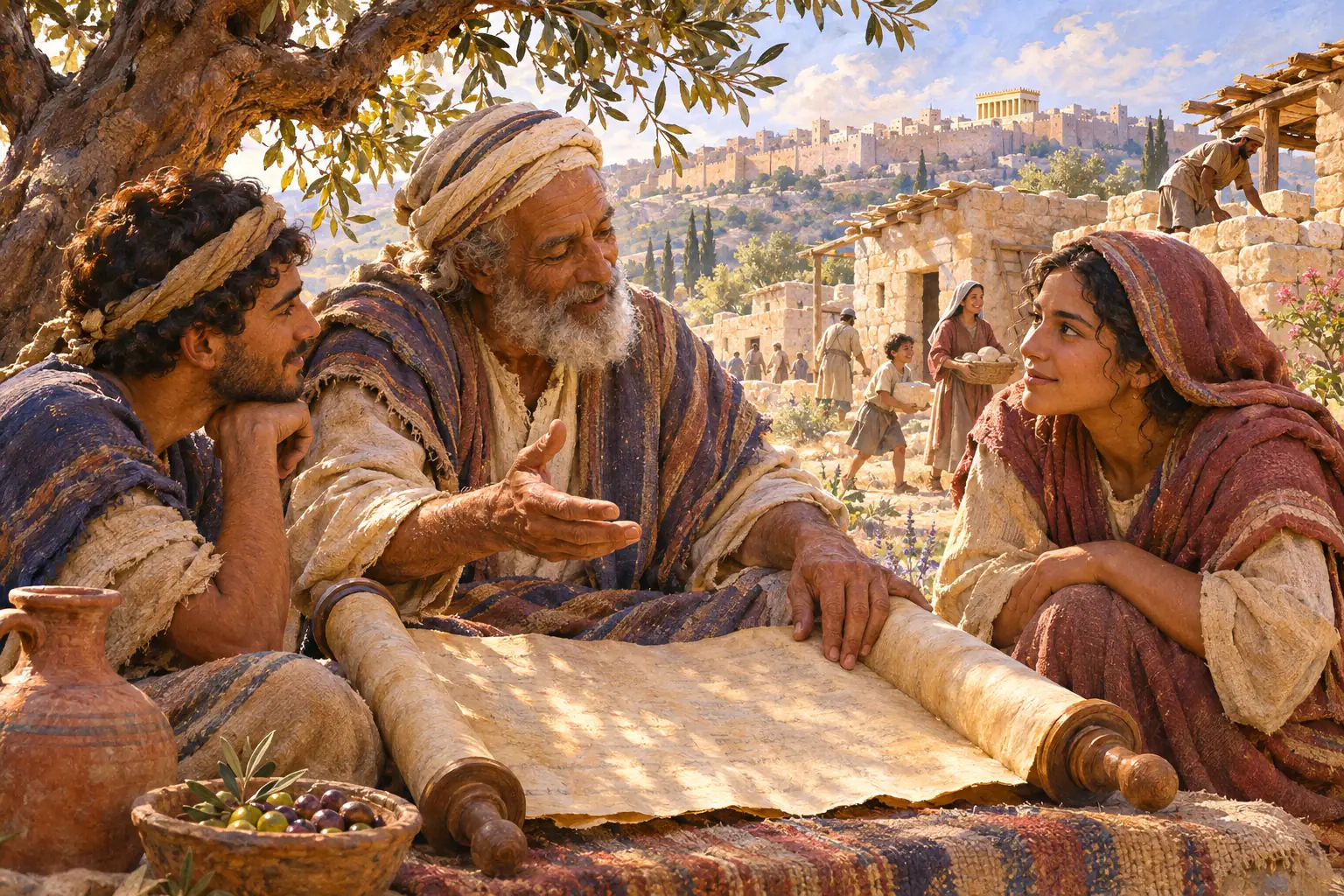
How can genealogies, worship, and temple preparation nurture hope after devastation?
Study overview
Introduction: memory, covenant, and the house of God
Key passages: 1 Chronicles 1:1; 9:1–3; 17:7–14; 29:10–19.
Introduction: A List Becoming a Door of Hope
A family leaving a damaged home may carry photographs, names, and memories in a small wooden chest. The stones are gone; the remembered story still calls a community toward life. First Chronicles opens such a chest. The first name is Adam. Before David’s crown or the temple’s gold, the narrative places Israel within the wider human family.
Long genealogies serve more than a test of patience. Names connect a community marked by exile with the continuing story of God’s covenant. The governing question concerns life after loss: how can a wounded people remember God’s calling and practice faithful worship? Hope grows through truthful memory rather than nostalgia for lost royal splendor.
Context: Reading History after Devastation
The book does not identify the author. Some traditions associate composition with Ezra, but the text does not establish the identification. The descriptive name Chronicler preserves appropriate restraint. Genealogies extending beyond exile and the closing reference to Cyrus place the work in a postexilic setting; the exact date of composition remains debated.
First and Second Chronicles belong to a closely connected narrative. Reading the volumes together reveals movement from Adam through Israel, David, and the temple to Jerusalem’s fall and the possibility of return. The genealogies of chapters 1–9, however, span many periods. Chapter order does not supply a year-by-year calendar of successive events.
Samuel and Kings remain essential reading partners. Chronicles selects and arranges history around worship, leadership, and continuing promise. Selection does not make David sinless: the destructive census in chapter 21 remains a major warning against royal self-confidence.
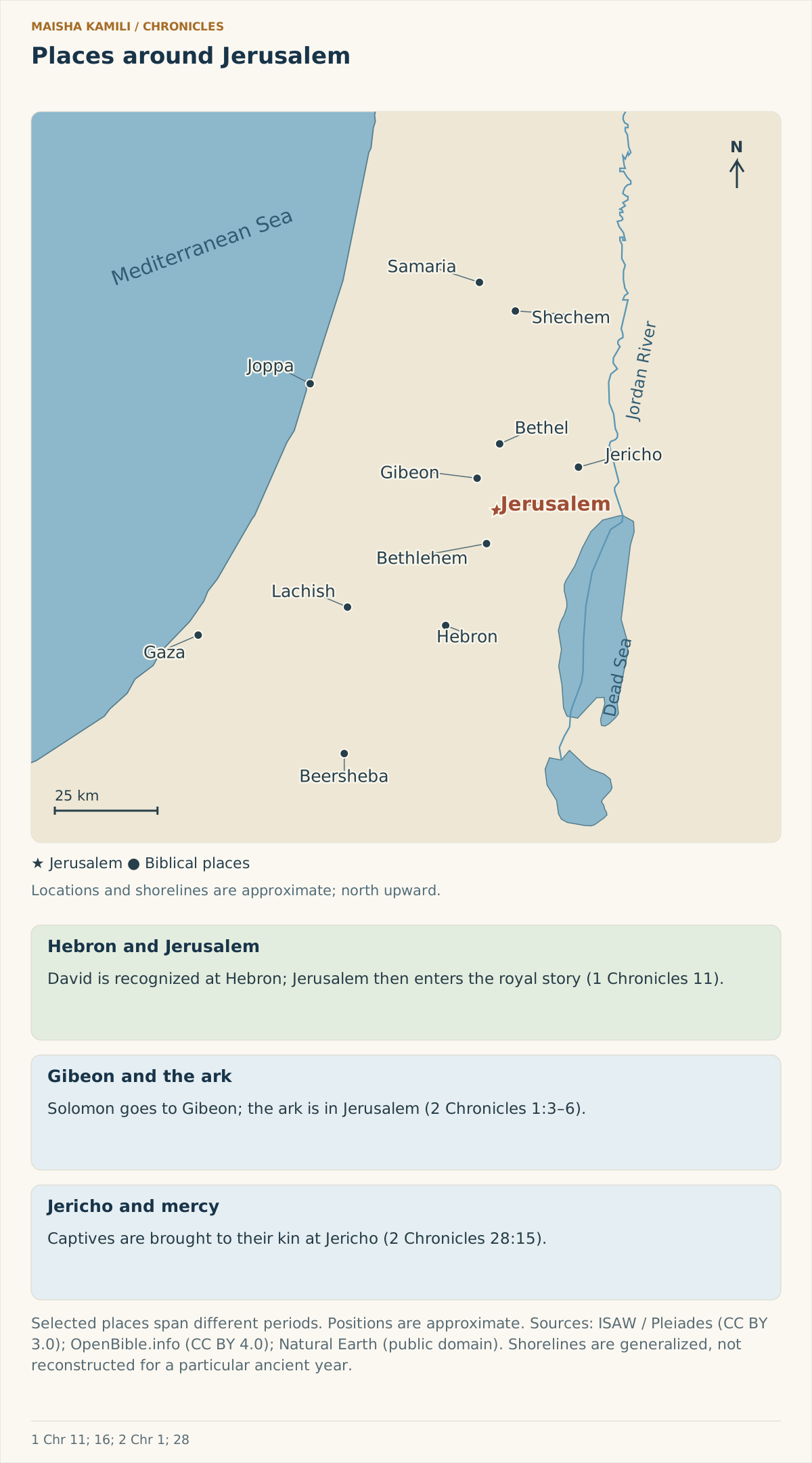
Visual reflection: How do the locations clarify the narrative without inventing boundaries or routes?
A Reading Map
Chapters 1–9: the people’s roots. Genealogies move from Adam toward the community resettled in Jerusalem. Judah and David’s family, Levi and worship, and Benjamin and Saul’s household receive particular attention. Names preserve belonging and responsibility rather than a certificate of ethnic superiority.
Chapters 10–12: crown and gathering. Saul’s death introduces David’s story. People from different groups assemble around the new reign. Leadership develops within communal relationships rather than residing in a royal name alone.
Chapters 13–16: ark and worship. Enthusiasm for bringing the ark to Jerusalem encounters divine holiness and the need to heed instruction. Chapter 15’s correction joins good intentions with faithful practice. Chapter 16’s songs extend praise before the nations.
Chapters 17–21: promise, power, and mercy. God promises to build David’s house before the building project reaches fulfillment. Military achievement cannot remove responsibility for justice. The census exposes reliance on measurable strength, while the altar site becomes associated with mercy restraining catastrophe.
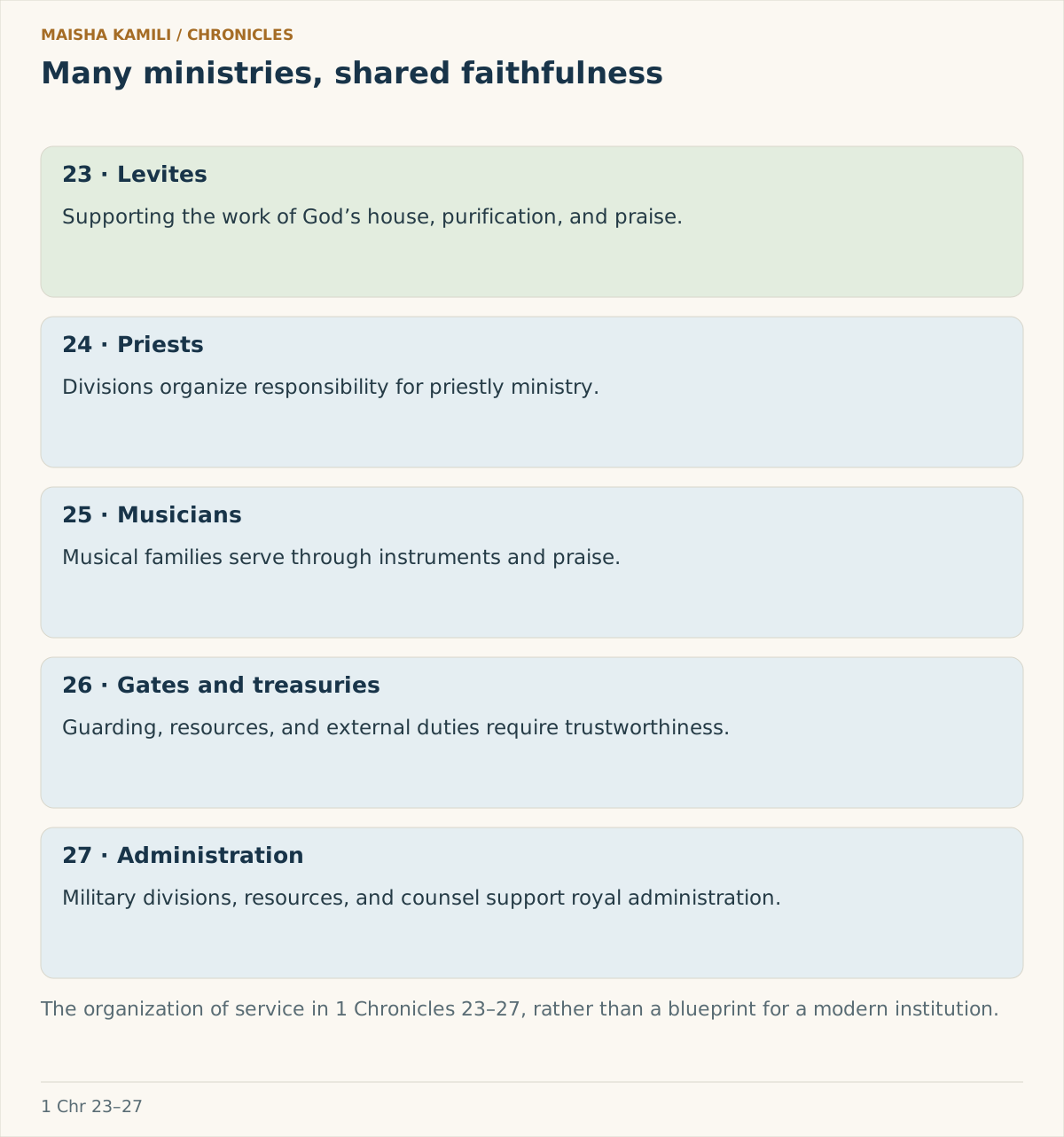
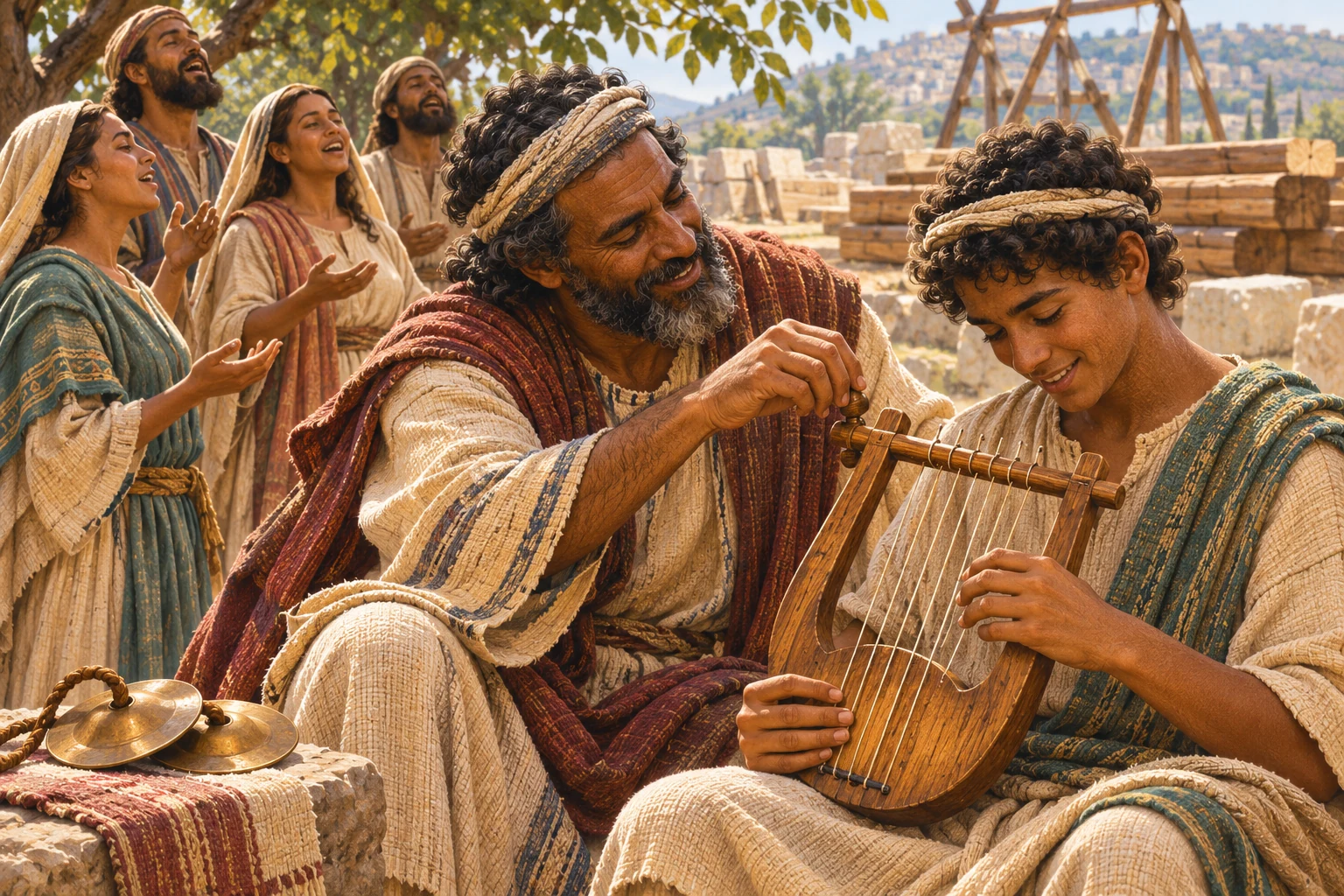
Chapters 22–29: preparing a future. Materials, artisans, Levites, priests, singers, gatekeepers, and administrators receive responsibilities. David entrusts the work to Solomon. Open hands, prayer, and willing generosity close the volume. God’s work exceeds the working lifetime of a single servant.
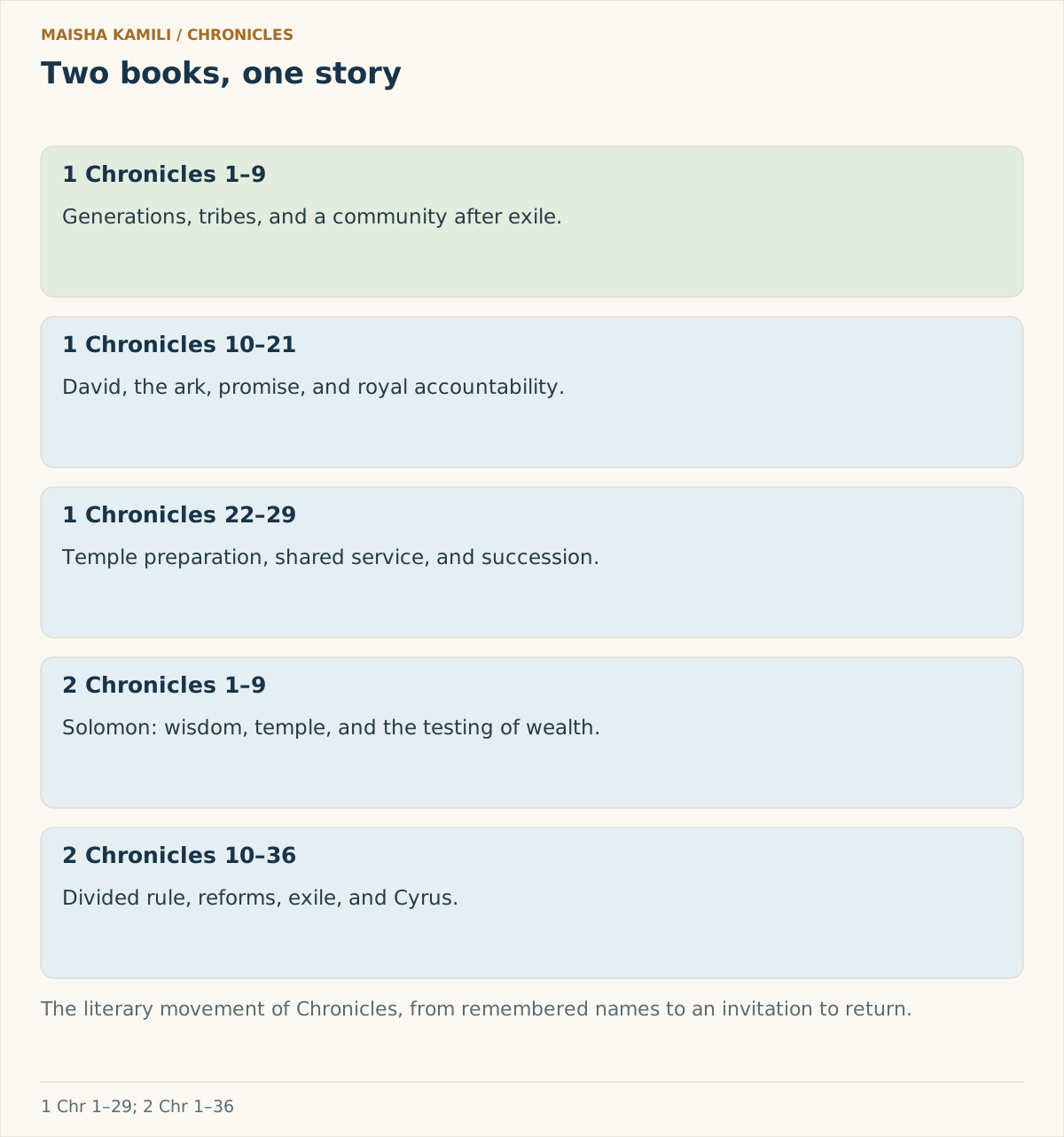
Visual reflection: How does covenant memory change the reading of ruins?
Keys to the Message
Covenant precedes achievement. In 17:7–14, God recalls the grace lifting David from tending sheep. The royal promise does not arise from the size of David’s proposed gift. Obedience answers grace rather than purchasing divine presence through impressive construction.
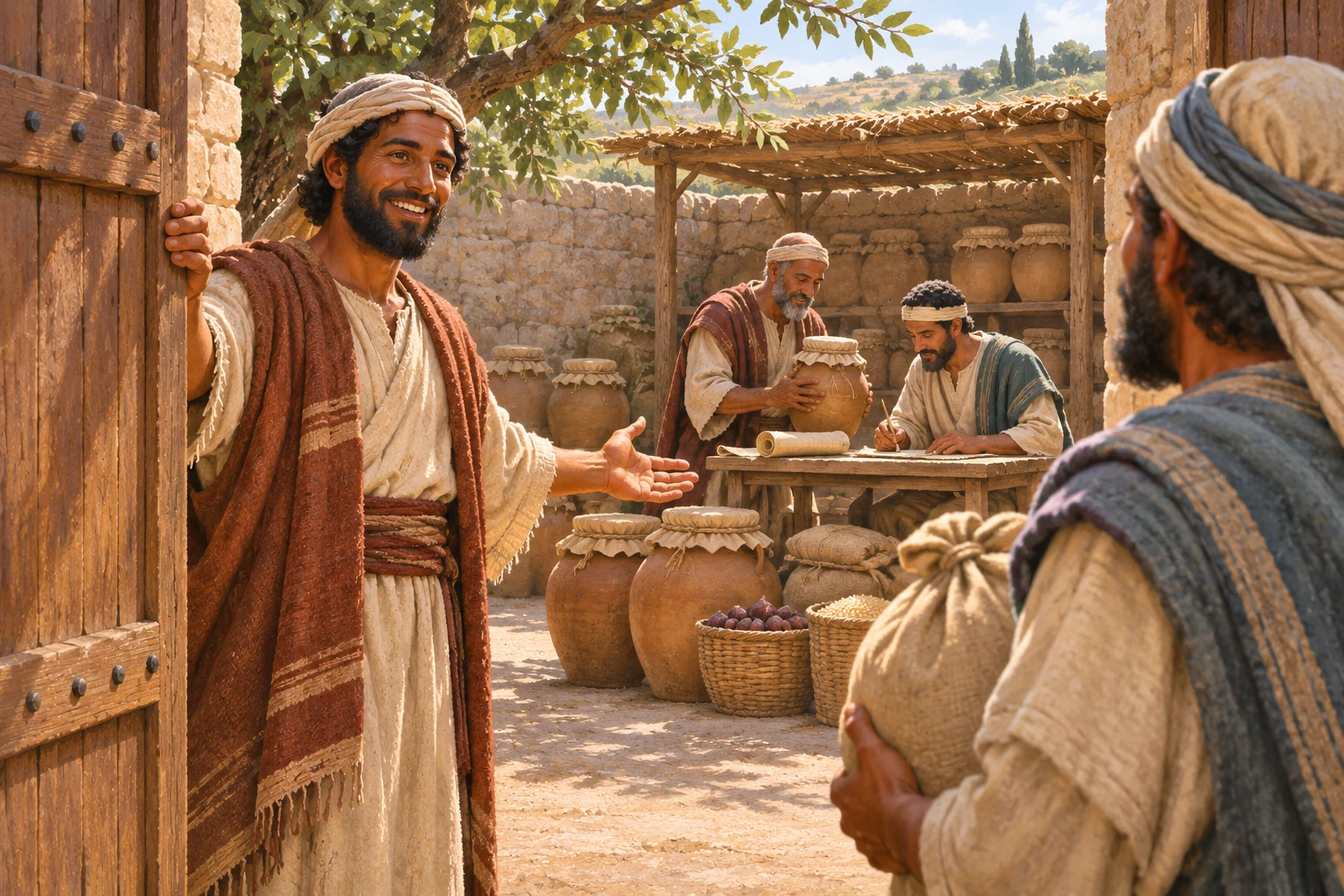
Worship has many hands. Chapters 23–27 attend to labor beyond the public platform. Gates, treasuries, agriculture, and judicial responsibilities belong within the community’s life before God. Ordered service should protect people and faithful work rather than turn an institution into an owner of human lives.
History requires truth and compassion. Ancient warfare and judgments do not authorize Christian religious violence. The plague narrative does not permit assumptions about hidden guilt among present-day patients. Responsible interpretation recognizes victims’ suffering and leaders’ accountability alongside theological claims.
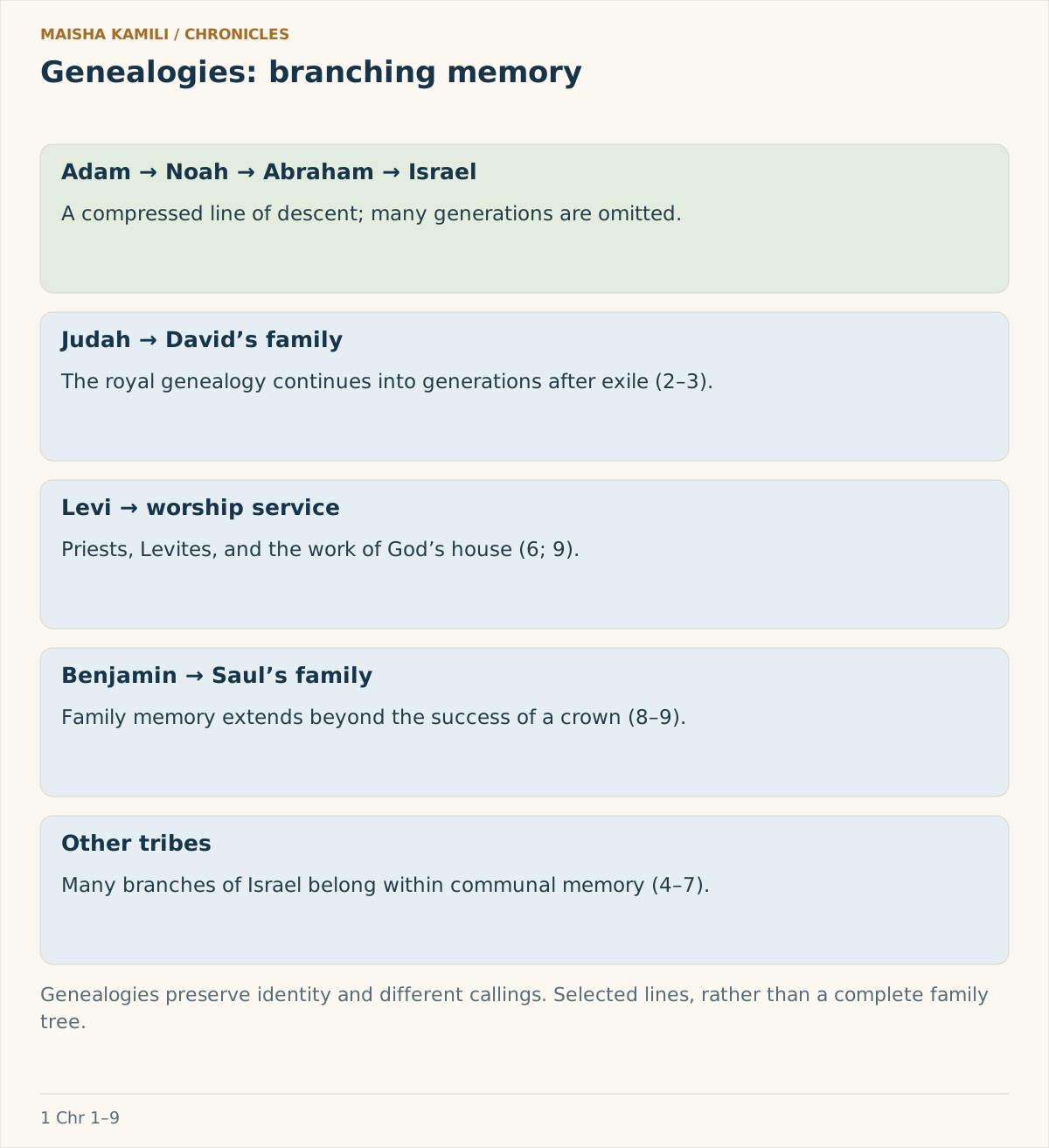
Visual reflection: Why do overlooked names and forms of service need remembering?
Christ and New Creation
The promise concerning David’s house creates expectation for faithful kingship. Christians read the expectation in the light of Jesus Christ, the Son of David (Luke 1:32–33). The connection follows covenant and canonical narrative rather than secret messages assigned to every name or number.
In Christ, former outsiders are brought near and formed into God’s dwelling through the Spirit (Eph 2:13–22). Adam at the beginning and divine presence at the horizon invite attention to creation renewed. Hope for God’s house calls the present community toward truth, dignity, and generous service.
Visual reflection: How can less visible service receive recognition?
Life Application
- Read meaningful units. Connect genealogies with places, responsibilities, and promises rather than attempting to memorize every name.
- Compare the narratives. Read Samuel beside Chronicles and identify the selected material and guiding question in each account.
- Honor unseen service. Include caregivers, artisans, and administrators in prayer and ministry preparation.
- Test authority through protection. Examine finances, reporting, and decisions through transparent accountability.
- Prepare another generation. Entrust knowledge and responsibilities alongside genuine opportunities for learning.
Reflection Questions
- How can family or congregational memory cultivate faithfulness instead of inherited prestige?
- How are unnoticed workers remembered in the community’s account of ministry?
- How does God’s promise to David reshape the evaluation of successful service?
- How can worship practices protect vulnerable people and truthful correction?
- How can preparation for another generation become an act of present worship?
Response Prayer
God of covenant, open Scripture and awaken hopeful memory. Expose pride hidden within stories of achievement. Protect people wounded by authority. Strengthen teachers, caregivers, artisans, and singers. Through Jesus Christ, form a community of truth, generosity, and hands prepared to entrust the work to another generation. Amen.
Annotated Bibliography
- Bible. 1 Chronicles 1–29; 2 Samuel 7; Luke 1:32–33; Ephesians 2:13–22. Primary passages for covenant, leadership, and God’s dwelling.
- BibleProject. “Books of 1 & 2 Chronicles.” A guide to literary unity and future hope; historical proposals require comparison with the primary text.
- Crossway. “Introduction to 1–2 Chronicles.” An outline and postexilic context; authorial identity and exact date are not directly established by the text.
- American Bible Society. “1 Chronicles.” A reading aid for genealogies within communal life.
- Institute for the Study of the Ancient World. Pliny–Pleiades location dataset. Reference positions for maps, without establishing changing kingdom boundaries.
- OpenBible.info. Bible Geocoding. Place identifications and confidence levels. The article maps are original teaching graphics; location data are licensed CC BY 4.0.
Be the first to leave a comment.