

How can Asa’s victory open a question about the cost of security and the light of promise?
Study overview
Courageous Reform, Compromised Security, and God’s Promise amid the Changing Thrones
Key passage: 1 Kings 15:4 — For David’s sake, God preserves a lamp in Jerusalem through a continuing royal line and the establishment of the city. (Summary, not a direct quotation.)
Thrones change, and the old war continues. An idol falls beside the Kidron. Temple treasure travels toward a foreign king. In Jerusalem, a lamp survives by the faithfulness of God.
Introduction — A Changed Nameplate Can Leave the Old Road Untouched
A new leader can arrive with a new signature and still leave the old habits undisturbed. The office changes occupants; the community continues carrying familiar burdens. Real renewal requires more than succession. Real renewal reaches the loyalties beneath decisions.
First Kings 15 moves through several reigns. Abijam continues the sins of the previous generation. Asa takes a different direction, removing idols and challenging religious patronage inside the royal family. In the north, Nadab follows Jeroboam, and Baasha kills Nadab before continuing Jeroboam’s sinful pattern.
The chapter also refuses a simple celebration of Asa. The reforming king faces a military threat, sends sacred and royal treasure to Damascus, and secures relief through a foreign attack on northern Israel. A successful maneuver carries costs beyond the relieved capital.
What kind of renewal changes inherited loyalties, and what kind of success merely moves the cost onto another community? First Kings 15 shows reform becoming costly obedience, political success raising questions about trust, and God’s promise preserving hope beyond the failures of kings.
The repeated royal notices can sound distant until the pattern becomes familiar: an inherited wrong, a courageous correction, a frightening crisis, an expedient arrangement. The lamp in Jerusalem directs hope toward God’s continuing faithfulness while the details call for honest examination of human leadership.
Historical and Literary Context — Brief Reigns, Long Consequences
The divided monarchy is now established. Chapter 14 closed the accounts of Jeroboam and Rehoboam, placing both kingdoms beneath covenant judgment. Chapter 15 follows Abijam and Asa in Judah before returning to Nadab and Baasha in Israel. The accounts overlap in time; the arrangement is not a single straight chronology.
Abijam’s three-year reign contrasts with Asa’s forty-one years. Nadab rules two years, and Baasha begins a twenty-four-year reign. Such differences in duration do not determine the theological verdict. The narrator asks whether a king walks faithfully before the LORD. Leithart notes the accelerating narrative and repeated notices of warfare, sin, and succession, creating a sense of entrenched patterns beneath changing names (Leithart 2006, commentary on 1 Kgs 15:1–16:14).
The covenant remains the measuring rod. Deuteronomy commands the removal of rival worship and places royal authority beneath God’s instruction (Deut 12:2–4; 17:18–20). The promise to David supplies another governing theme (2 Sam 7:12–16). The lamp of 15:4 echoes 11:36: God preserves a Davidic future despite the failures within David’s house.
The chapter therefore holds promise and accountability together. Brueggemann emphasizes the tension between the continuing Davidic commitment and the truthful acknowledgment of royal sin, including David’s crime against Uriah (Brueggemann 2000, 187–89). Grace keeps the story open; grace does not turn the record into flattery. The preserved lamp illuminates a troubled history rather than hiding the trouble.
Walking Through the Text
A Failing King Lives beneath a Preserved Promise — 15:1–8
Abijam succeeds Rehoboam in Judah. The verdict is direct: the king continues the ancestral sins, and the royal heart lacks wholehearted loyalty to the LORD. The family line has continued without a corresponding renewal of devotion.
Yet God preserves a lamp in Jerusalem for David’s sake. The passage explains the image through succession and the establishment of Jerusalem. The lamp signifies a continuing future for David’s house, not an endorsement of Abijam’s conduct.
David appears as the covenant comparison, followed immediately by the exception concerning Uriah. The qualification matters. Kings remembers the violent abuse of royal power recorded in 2 Samuel 11–12. The model of faithfulness cannot become a claim of moral perfection or permission to minimize a victim’s suffering.
Warfare also continues. Abijam’s short account contains no great movement toward repair. At death, the king is buried in David’s city, and Asa succeeds. The promise carries the line forward, while the negative verdict leaves the need for a different direction unresolved.
Reform Reaches the Royal Family — 15:9–15
Asa receives a markedly different assessment: the king does right in the LORD’s sight. Reform takes visible form through the removal of idols and male cult personnel associated with the condemned worship. The inherited religious landscape is no longer accepted as an untouchable family possession.
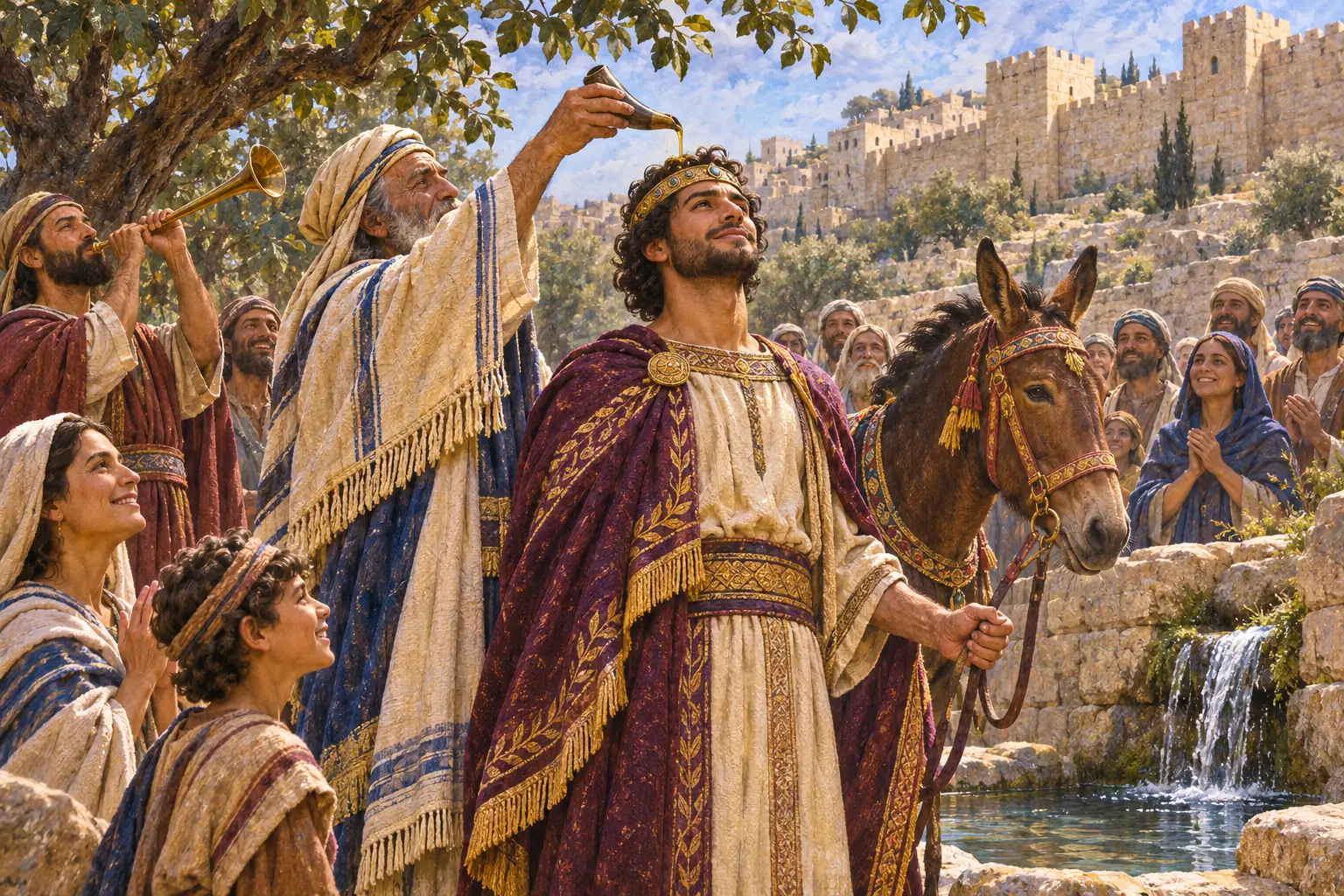
The action reaches Maacah, the influential queen mother within the royal family. Asa removes Maacah from the royal position because of an object made for Asherah. The king cuts down and burns the object beside the Kidron. Close family standing cannot provide immunity from covenant accountability.
The passage does not describe the exact form of the object, and reconstruction is unnecessary for grasping the issue. Religious patronage has royal protection; faithful reform withdraws the protection. The cost includes challenging a powerful relationship.
The assessment nevertheless retains a limitation: the high places remain. Asa’s heart is described as wholehearted toward the LORD, while unfinished reform remains on the page. Provan understands the positive verdict as sustained covenant allegiance rather than sinless perfection (Provan 2012, commentary on 1 Kgs 15:9–15). Asa also brings dedicated silver, gold, and vessels into the temple. Renewal includes a positive direction for resources alongside the removal of idols.
Pressure Arrives at the Border — 15:16–19
Baasha advances against Judah and fortifies Ramah, restricting movement toward Asa’s kingdom. The threat is concrete. A fortified position close to Jerusalem can affect security, access, and the movement of people.
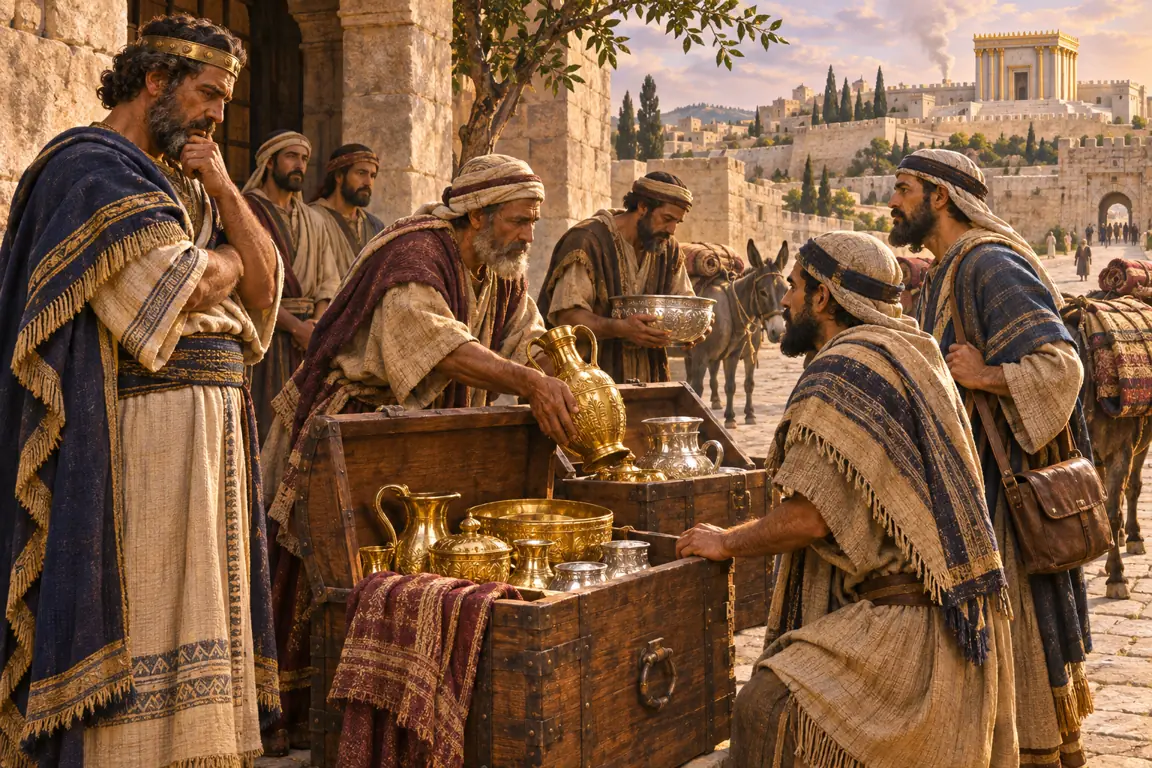
Asa responds by taking silver and gold from the remaining temple and palace treasuries and sending the wealth to Ben-hadad in Damascus. The request is explicit: break the existing alliance with Baasha and force the northern king to withdraw. Asa seeks protection through a purchased change of allegiance.
The sequence is striking. Dedicated treasure enters the temple in verse 15; treasure leaves for a political arrangement in verse 18. The text invites attention to the direction of trust and resources during pressure.
First Kings reports the strategy without placing a direct prophetic condemnation inside the scene. Second Chronicles 16:7–9 later supplies an explicit criticism through Hanani: Asa relied on Aram rather than the LORD. The distinction allows the account in Kings to speak in the quieter language of costly consequences before the canonical reflection becomes more direct.
The Strategy Works, but the Cost Travels — 15:20–24
Ben-hadad accepts the proposal and attacks northern cities, including Dan and the region of Naphtali. Baasha stops fortifying Ramah and withdraws to Tirzah. Asa obtains the immediate relief sought through the arrangement.
Yet the achievement leaves northern communities exposed to a foreign army. The security of Judah has been purchased partly through destruction elsewhere in Israel. Provan draws attention to the contrast with Solomon’s earlier international position: Asa sends treasure abroad and depends on a stronger partner, while Israel loses ground to foreign power (Provan 2012, commentary on 1 Kgs 15:16–24).
Asa then mobilizes Judah without exemption to remove Ramah’s stones and timber. The materials strengthen Geba and Mizpah. The defensive gain also requires collective labor. The narrator does not provide a full account of working conditions, but the compulsory mobilization belongs within the chapter’s costs.
The final notice records disease in Asa’s feet during old age, followed by death and succession by Jehoshaphat. Kings gives no diagnosis or explicit explanation of the illness as punishment. The brief notice should retain the restraint of the text.
A Dynasty Falls According to the Prophetic Word — 15:25–31
Nadab, Jeroboam’s son, rules in Israel for two years. The king continues the religious path established by Jeroboam, including the influence leading Israel into sin. An inherited throne has become the channel of an inherited spiritual direction.
During the siege of Philistine Gibbethon, Baasha conspires against Nadab and kills the king. Baasha then destroys Jeroboam’s house. The narrator connects the destruction with the word previously spoken through Ahijah (14:10–14).
The violence is severe and cannot be softened into a clean transfer of administration. The judgment reaches a household, and the new ruler establishes power through bloodshed. The text recognizes the fulfillment of God’s word without turning Baasha into a model of righteous leadership.
The name Ahijah also appears in Baasha’s ancestry in verse 27. The text does not identify Baasha’s father with Ahijah the Shilonite prophet. A shared name should not become an invented family connection. The important connection in the account is prophetic fulfillment, not a hidden genealogy.
A New Throne Keeps the Old Sin — 15:32–34
The repeated notice of warfare links Asa and Baasha across the national boundary. Baasha reigns from Tirzah, but the moral verdict follows the familiar northern pattern: the king walks in Jeroboam’s way and continues the sin drawing Israel away from God.
The irony is sharp. Baasha removes Jeroboam’s family while preserving Jeroboam’s religious policy. The successful overthrow changes the occupant of the throne without changing the governing allegiance. Opposition to a failed leader does not automatically produce faithful leadership.
The next chapter will place Baasha beneath a prophetic judgment as well. First Kings 16:7 makes clear that participation in the destruction of Jeroboam’s house does not remove Baasha’s accountability. God’s purpose in history cannot become a personal license for violence. The new king still stands beneath the same covenant word.
Theological Reflection
A Whole Heart Still Needs Correction
Asa’s favorable assessment stands alongside remaining high places and a troubling political arrangement. The narrator can recognize genuine allegiance while recording limitations. Faithful discipleship therefore requires both gratitude for real growth and openness to correction. Perfectionism cannot explain the text, and complacency cannot honor the text. A sincere direction of love toward God should make unfinished obedience a matter for further attention rather than a protected exception.
The Nearest Idol May Be the Costliest to Challenge
Removing Maacah’s royal position brings reform inside the circle of influence. A leader can condemn distant failures while protecting a damaging practice maintained by a relative, sponsor, or respected colleague. Covenant accountability must reach close relationships as well. The present application concerns truthful boundaries, fair processes, and the withdrawal of improper privilege. The account gives no permission for religious coercion or violence against present-day neighbors.
A Working Strategy Still Requires Moral Examination
Asa’s arrangement succeeds in stopping Baasha’s fortification. Immediate success does not settle the questions raised by depleted resources, a broken alliance, attacked communities, and compulsory labor. Fear can narrow attention to the leader’s most urgent problem. Faithful judgment widens the field to include vulnerable neighbors and long-term dependence. Brueggemann highlights the purchase of an ally and the resulting mobilization of Judah’s workforce (Brueggemann 2000, 191–92). A solution deserves examination through both purpose and cost.
God’s Promise Outlasts Royal Failure
The preserved lamp and the fall of Jeroboam’s house display the continuing authority of God’s word. Human actors remain responsible within the story. The promise to David sustains hope beyond Abijam’s failure, and the judgment against Jeroboam reaches fulfillment despite a temporary succession. The chapter calls neither for despair about every inherited pattern nor confidence in mere political turnover. Hope rests in God’s faithfulness and invites renewed obedience within the present generation.
Canonical and Christological Horizon — The Faithful King and a Renewed People
The Davidic lamp carries the narrative toward the promise of an enduring throne. Luke 1:32–33 identifies Jesus as the Son receiving David’s throne and reigning in a kingdom without end. The failures of Abijam and the mixed record of Asa deepen the longing for faithful kingship.
Jesus also confronts the temptation to secure royal power through compromised worship. In Matthew 4:8–10, the offer of kingdoms meets a refusal grounded in exclusive allegiance to God. The connection concerns loyalty under pressure; the passage does not make every diplomatic agreement inherently sinful.
Mark 10:42–45 reveals the character of the kingdom through service and the Son of Man’s life given as a ransom. The King bears the saving cost through self-giving love. The cross and resurrection open the way for communities to change inherited patterns rather than merely change enemies. Titus 2:11–14 describes grace training a people for godliness and good works. Christian reform grows from the faithful King’s rescue and becomes visible in courage, truthful stewardship, and care for neighbors.
Life Application
- Identify an inherited practice requiring examination. A family or ministry team can name one custom involving worship, authority, or money and evaluate the custom through Scripture before defending the custom as tradition.
- Apply accountability inside the trusted circle. When a relative or influential supporter maintains a harmful practice, establish a clear boundary through a fair conversation. Accept the possible loss of favor or support.
- Complete one neglected part of a good beginning. List an unfinished responsibility after a recent reform, apology, or renewed commitment. Set a date and name the person responsible for the next action.
- Count the cost beyond the immediate victory. Before accepting a donation, partnership, or solution to conflict, examine the obligations created and the people likely to carry the burden. Invite an independent review where needed.
- Change the practice after changing the leader. A committee receiving new leadership should review the underlying habits of secrecy, favoritism, or intimidation. Replace one harmful process with a transparent and accountable process.
- Let grace sustain continued faithfulness. Read Titus 2:11–14 with a study group. Choose a shared act of service and encourage honest correction rather than defending a reputation for spiritual maturity.
Reflection Questions
- Which inherited loyalties are current decisions strengthening?
- Where would faithfulness require challenging a protected relationship or privilege?
- Which unfinished responsibility remains beneath an otherwise good beginning?
- What apparent success has transferred the cost onto less visible people?
- How can trust in the faithful King create courage for reform without pride, coercion, or despair?
Response Prayer
God of the enduring promise, keep the lamp of hope burning amid the failures of human leadership. Give families and congregations courage to examine inherited paths. Expose the idol protected by affection, the harmful practice defended by habit, and the fear concealed beneath a successful plan.
Lord Jesus, faithful King, train leaders in the freedom of truthful service. Give wisdom to set fair boundaries near home and humility to complete unfinished obedience. When pressure makes compromise look necessary, widen concern toward neighbors carrying the hidden cost. Let resources entrusted for good purposes remain governed by integrity and love.
Guard communities from replacing a failed leader while preserving a destructive pattern. Through the cross and resurrection, give grace for deeper change. Let reform become patient faithfulness, correction become an opening for growth, and the next generation receive a clearer witness to God’s goodness. Amen.
Window into What Comes Next — Thrones Rise Faster than Faithfulness
Chapter 15 ends with Baasha repeating the path of Jeroboam. Chapter 16 will show the northern throne changing hands through judgment, conspiracy, and violence. Elah, Zimri, and Omri will enter the story before Ahab brings another deepening of the religious crisis.
Watch the growing difference between gaining power and learning faithfulness. The speed of political change cannot heal a pattern of misdirected worship. Prophetic words will continue confronting royal strategies, even when the strategies appear effective. Which kind of stability can survive when rulers keep changing the palace while leaving the heart of the kingdom untouched?
Bibliography
- Bible. 1769. The Holy Bible: King James Version. 1 Kings 15; 2 Chronicles 16:7–12. BibleGateway. https://www.biblegateway.com/passage/?search=1%20Kings%2015&version=KJV; https://www.biblegateway.com/passage/?search=2%20Chronicles%2016%3A7-12&version=KJV. Scripture wording in the study is paraphrased unless otherwise indicated.
- Brueggemann, Walter. 2000. 1 & 2 Kings. Smyth & Helwys Bible Commentary. Macon, GA: Smyth & Helwys. See “A Series of Undistinguished Monarchs,” 187–93.
- Leithart, Peter J. 2006. 1 & 2 Kings. Brazos Theological Commentary on the Bible. Grand Rapids: Brazos Press. See commentary on 1 Kings 15:1–16:14.
- Provan, Iain W. 2012. 1 & 2 Kings. Understanding the Bible Commentary Series. Grand Rapids: Baker Books. See “Abijam and Asa (1 Kgs. 15:1–24)” and “From Nadab to Ahab (1 Kgs. 15:25–16:34),” including additional notes.

Be the first to leave a comment.