

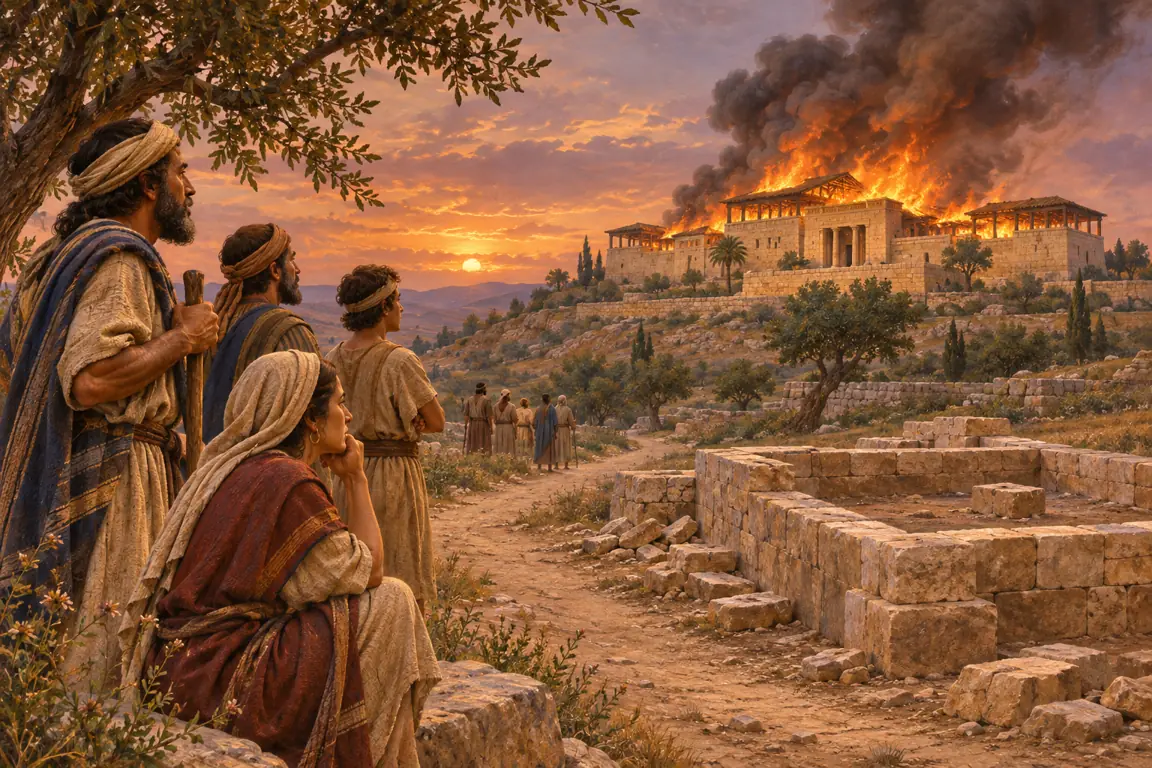
Why can a growing Samaria and a rebuilt Jericho fail to demonstrate a kingdom’s health?
Study overview
Changing Dynasties, Deepening Idolatry, and the Enduring Word of God
Key passage: 1 Kings 16:1–2 — God’s word confronts Baasha with the gift of leadership and the responsibility for leading Israel into sin. (Summary, not a direct quotation.)
One throne falls; another name rises. Behind the changing banners, the old altar remains. A palace burns, a capital grows, a household loses sons. Across the years, the word of God refuses to disappear.
Introduction — New Walls Cannot Repair an Unchanged Allegiance
A builder can raise a new wall on damaged foundations. Fresh plaster attracts attention, and a painted doorway promises a better beginning. Yet the weakness beneath the building remains. Visible change needs a sound foundation.
First Kings 16 presents political change at an unsettling pace. Baasha’s house falls, Zimri briefly occupies the throne, and Omri emerges from a struggle for power. Omri establishes Samaria, and Ahab brings the dynasty into another phase. The names and buildings change while worship continues moving away from God.
The chapter’s movement is more than repetition. The narrator intensifies the verdict against Omri and then Ahab. The inherited sin becomes a platform for deeper disloyalty. At the end, the rebuilding of Jericho carries the loss of Hiel’s sons and recalls an ancient warning.
Can a kingdom build a secure future while refusing the word of God? First Kings 16 portrays political change becoming moral repetition, and impressive construction becoming a witness to neglected covenant faithfulness.
The chapter offers no comfortable hero among the northern kings. Hope emerges through God’s continuing speech. The throne remains accountable, the old warning remains active, and the next chapter will bring a prophet into the apparent triumph of royal idolatry.
Historical and Literary Context — The Reed Keeps Shaking
Ahijah warned that Israel would become unstable like a reed in water and eventually face exile (14:15–16). Baasha destroyed Jeroboam’s house but continued Jeroboam’s sinful direction (15:25–34). Chapter 16 follows the consequences through another dynasty and prepares the extended confrontation with Ahab.
The notices of Asa’s regnal years locate the northern upheavals alongside Judah’s longer continuity. The chapter reports successive rulers rather than a complete history of every achievement. Military strength, building activity, and succession receive attention, but covenant allegiance governs the verdict.
Deuteronomy supplies the background. Kings must remain under God’s instruction, and Israel must reject worship leading toward other gods (Deut 13:1–5; 17:18–20). The temple and altar for Baal therefore represent a serious covenant breach, beyond an ordinary adjustment of religious administration.
The recurring reference to God’s word also organizes the chapter. Jehu announces judgment against Baasha; the fall of Baasha’s house fulfills the announcement; Hiel’s rebuilding recalls Joshua’s earlier word. Provan emphasizes the authority of divine speech across both immediate events and long stretches of history (Provan 2012, commentary on 1 Kgs 15:25–16:34).
The story now approaches a major turn. The compressed accounts of the divided kingdoms will give way to the prophetic narratives beginning in chapter 17. Brueggemann reads the sequence of northern rulers as a mounting account of instability and failed covenant responsibility (Brueggemann 2000, 197–204). The rapid changes prepare the setting for a sustained contest over the identity of the living God.
Walking Through the Text
A King Raised from Dust Remains Accountable — 16:1–7
The word of the LORD comes through Jehu son of Hanani against Baasha. God recalls raising Baasha from the dust and making the king a leader over Israel. The opening places royal authority within divine gift rather than personal entitlement.
Baasha has answered the gift by following Jeroboam’s way and leading Israel into sin. The judgment announces the destruction of Baasha’s house, matching the fate of Jeroboam’s dynasty. The ruler responsible for ending another house now faces the loss of the royal future.
Verse 7 also names Baasha’s destruction of Jeroboam’s house within the indictment. The relationship between divine judgment and human action remains difficult. Provan stresses that fulfillment of God’s purpose does not remove moral responsibility for violence (Provan 2012, additional note on 1 Kgs 16:7). Baasha cannot claim innocence merely because an earlier prophecy came true. The prophet’s name is Jehu son of Hanani, distinct from the later king Jehu son of Jehoshaphat.
A King’s Private Indulgence Meets Public Violence — 16:8–14
Elah succeeds Baasha and reigns two years in Tirzah. The next scene locates the army at Gibbethon; Elah’s final scene places the king in Tirzah, drinking heavily in Arza’s house. Arza serves as the palace steward.
Zimri, commander of half the royal chariot force, kills Elah and takes the throne. The violence immediately expands. Zimri destroys Baasha’s house, including relatives and friends. A palace coup becomes a household catastrophe.
The narrator connects the destruction with Jehu’s announcement and with the sins of Baasha and Elah. The royal line has continued the worship of worthless idols and the influence drawing Israel into sin. The account reveals a pattern larger than a single night of drunkenness. Royal indulgence, false worship, and violent ambition belong within a public life failing beneath covenant judgment. A new ruler has acquired the throne without creating a faithful future.
Seven Days End in a Palace Fire — 16:15–20
Zimri’s reign lasts seven days. The army at Gibbethon hears of the assassination and proclaims Omri, the army commander, king. Omri leads the troops to Tirzah and besieges the capital.
When the city falls, Zimri dies in the burning royal palace. The place intended to shelter authority becomes the place of the ruler’s death. The scene carries the tragedy of destructive power rather than the glory of a heroic final stand.
The narrator also places Zimri within Jeroboam’s sinful pattern. A short reign does not receive a moral exemption simply because the time in office was brief. The point concerns the direction of allegiance, beyond the length of the record (Provan 2012, additional note on 1 Kgs 16:19).
The repeated mention of Gibbethon recalls the setting of Nadab’s murder in 15:27. The text does not require imagining one uninterrupted siege across the intervening years. The repeated setting nevertheless deepens the impression of political turmoil amid unfinished conflict.
A New Capital Cannot Supply a New Heart — 16:21–28
After Zimri’s death, support divides between Tibni and Omri. Omri’s supporters prevail, Tibni dies, and Omri rules. The passage does not describe the precise circumstances of Tibni’s death.
Omri purchases a hill from Shemer for two talents of silver and builds Samaria. The new capital becomes an important setting for the remaining history. Political consolidation and a durable center now emerge after repeated upheaval.
Yet the narrator’s judgment becomes more severe: Omri does more evil than the preceding kings and continues Jeroboam’s way. The account can acknowledge construction and royal might without making achievement the measure of covenant faithfulness. Leithart highlights the persistence of idolatry beneath changing dynasties and the escalation of the moral verdict (Leithart 2006, commentary on 1 Kgs 16:15–34).
Omri dies and is buried in Samaria; Ahab succeeds. The new city and continuing dynasty appear to promise stability. The unresolved allegiance beneath the construction prepares another crisis.
An Old Compromise Becomes an Expanded Religious System — 16:29–33
Ahab reigns twenty-two years in Samaria. The narrator again intensifies the assessment: Ahab does more evil than the preceding kings. Jeroboam’s established sins no longer mark the outer limit of royal disobedience.
Ahab marries Jezebel, daughter of Ethbaal, king of the Sidonians, and serves Baal. A temple and altar for Baal arise in Samaria, and an Asherah object joins the religious arrangements. The king gives royal support to rival worship at the center of the kingdom.
The indictment concerns covenant allegiance. Jezebel’s foreign origin does not make ethnicity a sufficient explanation for evil, and the passage gives no basis for turning Jezebel into a sexual stereotype. Ahab remains the acting subject of the worship and construction. Brueggemann cautions against the popular erotic portrait and points toward the religious and social commitments at stake (Brueggemann 2000, 202–3).
The worship of Baal prepares the confrontation ahead. Royal sponsorship has made the dispute public, institutional, and costly for the nation.
Foundations and Gates Recall an Unforgotten Warning — 16:34
During Ahab’s reign, Hiel of Bethel rebuilds Jericho. The laying of the foundation is associated with the loss of Abiram, Hiel’s firstborn; the setting of the gates is associated with Segub, the youngest son. The narrator explicitly connects the losses with the word spoken through Joshua (Josh 6:26).
The manner of the deaths is not described. A proposal involving foundation sacrifice appears in scholarly discussion, but the text does not establish deliberate child sacrifice as the explanation. The certainty concerns the narrative’s identification of prophetic fulfillment, while the physical circumstances remain unspecified (Brueggemann 2000, 203–4; Provan 2012, additional note on 1 Kgs 16:34).
The final verse interrupts the language of royal advancement with the cost borne by a household. The old word has not expired. A completed building project cannot cancel God’s warning, and visible progress cannot settle the question of faithfulness.
Theological Reflection
God’s Word Retains Authority across Changing Reigns
The chapter opens and closes beneath divine speech. Kings die, families fall, and capitals change, but God’s word remains part of the story’s governing reality. The emphasis challenges the assumption that a delayed consequence means an obsolete command. Faithful communities need patient memory: a warning should remain open to examination even after the original messenger has left the scene. God’s speech confronts the present rather than decorating the record of the past.
Worship Shapes the Uses of Power
The repeated verdict about leading Israel into sin makes worship a public responsibility. Royal religious policy trains a community’s loyalties. The growth from Jeroboam’s system to Ahab’s Baal worship shows the danger of treating an inherited compromise as harmless. Religious provision can become more elaborate while devotion moves further from God. The later account of Naboth will expose the connection with the misuse of power against a neighbor (1 Kgs 21). False allegiance eventually demands examination beyond the sanctuary.
Achievement Cannot Replace Covenant Faithfulness
Omri builds a capital and establishes a dynasty, yet the narrator preserves a negative verdict. Competence deserves accurate recognition; competence cannot erase the question of loyalty. A congregation, business, or household can expand while retaining harmful habits. The chapter invites evaluation of both the visible work and the loyalties underneath the work. A new structure becomes a blessing through truthful purposes, just practices, and care for the people affected by the project.
Divine Judgment Does Not Make Human Cruelty Innocent
The destruction of dynasties fulfills announced judgment, yet violent rulers remain accountable. The narrative refuses a simple equation between historical success and moral approval. Claims about providence cannot sanctify a personal appetite for control. Christian application requires particular care: an ancient judgment narrative is not a commission for violence against present opponents. The appropriate response is humble repentance, protection of vulnerable neighbors, and the truthful examination of power.
Canonical and Christological Horizon — A King Bringing a Different Kind of Rule
The collapse of northern dynasties deepens the biblical longing for faithful leadership. Ezekiel 34:1–16 later condemns shepherds feeding personal interests while neglecting the flock and promises God’s intervention. John 10:11–18 identifies Jesus as the good shepherd, giving life for the sheep.
Mark 10:42–45 also describes the kingdom through service and the Son of Man’s saving self-giving. The answer to destructive power comes through faithful love reaching the cross. Acts 2:23–24 holds divine purpose and human responsibility together in Jesus’ death, then announces God’s reversal through resurrection. The chapter’s difficult relationship between judgment and human action belongs within a wider story reaching the crucified and risen King.
The closing loss of children also directs longing toward God’s renewal of life. Jesus receives children and restores a widow’s son (Mark 10:13–16; Luke 7:11–17). Revelation 21:4 promises the end of death and mourning. Christian hope therefore reaches beyond another change of throne toward a world healed under God’s faithful reign.
Life Application
- Examine the allegiance beneath a new beginning. After a change of leadership or location, name one old pattern still operating. Set a practical correction instead of assuming the new arrangement has repaired the heart of the problem.
- Keep sober attention to entrusted responsibilities. Identify one habit of escape weakening care for a family or ministry. Arrange support and accountability before neglected duties become a burden for neighbors.
- Review the worship a program is forming. A church team can ask whether a practice increases love for God and care for people or mainly strengthens dependence on a personality. Change one practice serving prestige more than discipleship.
- Count people before celebrating construction. Before expanding a building or institution, examine the effect on workers, children, families, and essential services. Adjust the budget or timetable where the project is displacing necessary care.
- Refuse to call every victory divine approval. After winning a dispute or gaining influence, review the methods used. Acknowledge intimidation, falsehood, or unfair pressure and make the required repair.
- Let the good shepherd shape leadership. Read John 10:11–18 with a study group. Choose a shared act of protection or service for a vulnerable neighbor and connect the action with the love of Jesus.
Reflection Questions
- Which old pattern has survived beneath a new title, building, or leadership team?
- What repeated compromise has become easier to defend because the compromise is familiar?
- Which visible achievement has distracted attention from the condition of people carrying the cost?
- Where has a successful outcome been used to excuse a harmful method?
- How could the good shepherd’s care reshape a concrete decision during the coming week?
Response Prayer
God of the enduring word, speak into the noise of changing power and repeated promises. Give communities courage to remember neglected warnings and humility to examine familiar compromises. Let new beginnings reach deeper than names, walls, and public celebrations.
Lord Jesus, good shepherd, expose the loyalties beneath ambition. Free leaders from the hunger to prevail at any cost. Guard households from the wounds of rivalry, and protect children and vulnerable neighbors from being forgotten beneath impressive plans. Give workers rest, caregivers support, and grieving families patient companionship.
Through the cross and resurrection, renew the imagination of the church. Teach congregations to recognize greatness in faithful service and strength in truthful love. When old patterns appear stronger than hope, let the word of God open a path of repentance and life. Build communities ready to welcome the justice, mercy, and peace of the coming kingdom. Amen.
Window into What Comes Next — A Living Word beside a Drying Brook
Chapter 16 ends with a rebuilt city and the loss of sons. Chapter 17 will begin with Elijah confronting Ahab, then follow God’s provision at a brook and in a widow’s household. The royal system supporting Baal will face the God holding rain, food, and life.
Watch the movement from the scale of palaces and dynasties to the needs of a prophet, a mother, and a child. The God judging false worship also sustains life amid scarcity. What kind of power will become visible when the throne cannot command rain and a small household becomes the setting of extraordinary mercy?
Bibliography
- Bible. 1769. The Holy Bible: King James Version. 1 Kings 16; Joshua 6:26. BibleGateway. https://www.biblegateway.com/passage/?search=1%20Kings%2016&version=KJV; https://www.biblegateway.com/passage/?search=Joshua%206%3A26&version=KJV. Scripture wording in the study is paraphrased unless otherwise indicated.
- Brueggemann, Walter. 2000. 1 & 2 Kings. Smyth & Helwys Bible Commentary. Macon, GA: Smyth & Helwys. See “Northern Upheavals,” 197–204.
- Leithart, Peter J. 2006. 1 & 2 Kings. Brazos Theological Commentary on the Bible. Grand Rapids: Brazos Press. See commentary on 1 Kings 16:15–34.
- Provan, Iain W. 2012. 1 & 2 Kings. Understanding the Bible Commentary Series. Grand Rapids: Baker Books. See “From Nadab to Ahab (1 Kgs. 15:25–16:34),” including additional notes.
Be the first to leave a comment.