


The streets are crowded with polished words, but truth has become scarce. Then Yahweh speaks— silver tested in the fire.
01
1.0 Introduction: What Happens When We Can No Longer Trust the Words Around Us?
Communities do not collapse only when walls fall. They also collapse when words lose their weight. Promises become tactics, praise hides manipulation, and rumor ruins reputations. When language becomes unreliable, trust weakens and the vulnerable become easier to exploit.
Psalm 12 enters that world. The psalmist feels that faithful people have vanished. Lips are smooth, hearts divided, and skilled speakers boast that their tongues will secure victory. The crisis is a struggle over what kind of world speech will create.
Then Yahweh speaks. His words stand against the verbal counterfeit: pure like silver refined repeatedly. Yet the psalm does not end with every liar silenced. The wicked still walk about. Faith must live between divine promise and an unchanged street.
This text is about corrupted speech becoming a crisis of trust, because when human words are emptied of truth, God’s faithful word becomes judgment on deception and hope for the vulnerable.
02
2.0 Historical and Literary Context: When the Crisis Moves into the Mouth
Psalm 12 bears a Davidic heading and an uncertain musical direction. It names no specific historical event, but its social setting is clear: faithfulness is scarce, deceit is normal, and the weak suffer under people whose speech serves power.
Within Book 1, Psalm 12 belongs to Psalms 11–14. Psalm 11 asked what the righteous can do when foundations collapse; Psalm 12 shows one way they collapse: speech itself is debased. BibleProject places Psalms 9–14 among poems where David is joined by the poor and afflicted, and Psalm 12:5 makes that concern explicit.
Kidner sees the poem moving through prayer, promise, and prayer again. Goldingay notes that the triumph of the faithless frames verses 1 and 8. At the center Yahweh speaks in verse 5, and verse 6 celebrates the purity of his words. The poem is therefore a contest of voices: empty speech, arrogant speech, the groan of the needy, and the trustworthy word of God.
03
3.0 Walking Through the Text
04
3.1 Psalm 12:1–2 — When Faithfulness Seems to Disappear
The psalm begins abruptly: “Help, Yahweh.” Biblical prayer allows social despair to come before God without decoration. The reason follows: the faithful have vanished. This is not a census but the language of a person who feels surrounded by unreliability.
Verse 2 explains the crisis. People speak “emptiness” to one another. The problem includes lies but extends to speech that is insincere, irresponsible, or detached from loyal intention. “Smooth lips” flatter because they are designed to gain approval or advantage. A “double heart” reveals the source: outward language and inward intention no longer agree.
Biblical integrity is the opposite. A whole heart produces words that can carry trust. A divided heart turns conversation into performance.
05
3.2 Psalm 12:3–4 — When the Tongue Claims the Throne
The psalmist asks Yahweh to silence flattering lips and the tongue that speaks “great things.” The severe language matches the hidden violence of speech used to dominate.
Their boast is chilling: “With our tongue we will prevail … who is lord over us?” They believe they can talk their way past accountability. If they control the story, label opponents, flatter audiences, and intimidate critics, who can stop them?
The final question exposes the spiritual problem. “Who is lord over us?” is practical atheism. The tongue becomes an idol when people believe their power to frame reality releases them from answering to God.
06
3.3 Psalm 12:5 — When God Hears the Groan Beneath the Noise
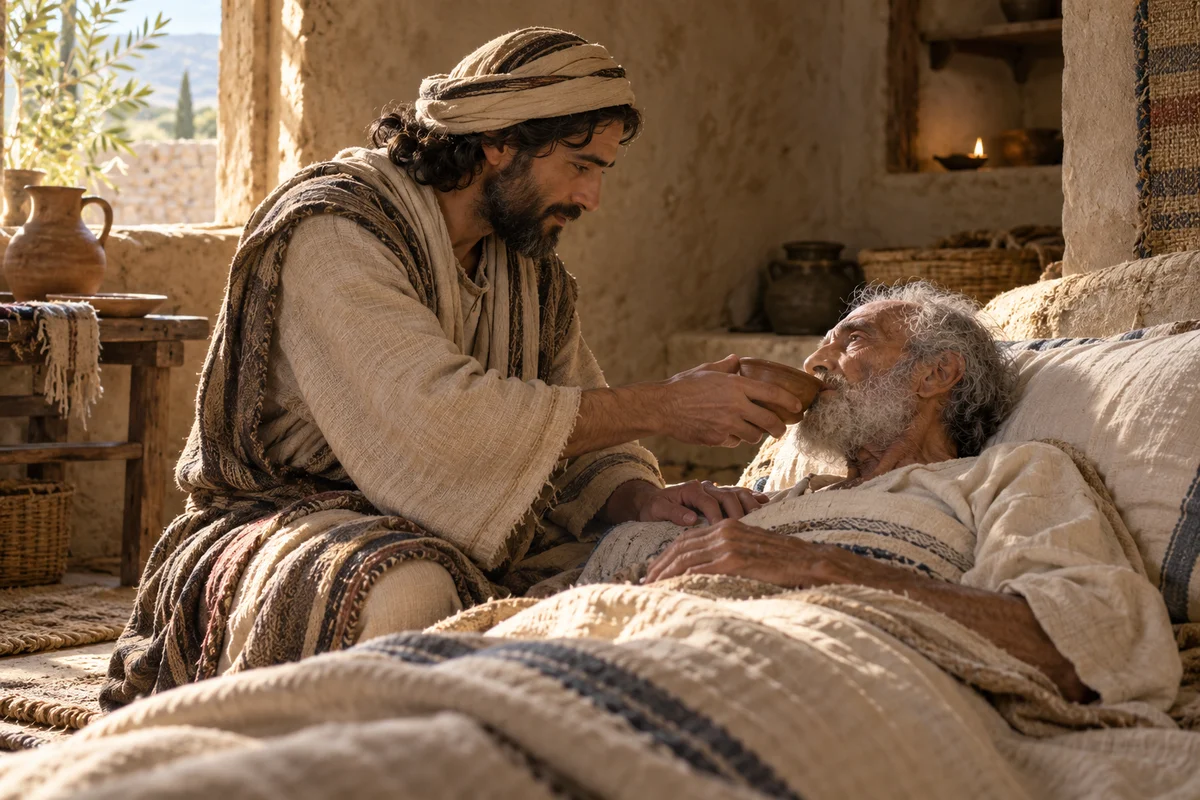
A new voice enters: “Because the poor are plundered, because the needy groan, now I will arise,” says Yahweh.
The poem has spoken about lies; Yahweh names their victims. Deceptive systems rarely harm everyone equally. Those with fewer resources or weaker protection often pay most. A false report can remove a livelihood, and a powerful denial can silence someone already afraid.
The wording echoes Exodus, where God hears Israel’s groaning and acts (Exod. 2:23–25; 6:5). The needy may lack polished prayers, but God hears pain that power ignores. “Now I will arise” is royal language: God’s kingship is revealed by intervention for those being crushed.
07
3.4 Psalm 12:6 — When One Word Passes Through the Fire
Against smooth, double, boastful human words comes the contrast: “The words of Yahweh are pure words, like silver refined in a furnace … seven times.” Seven suggests completeness. The image stresses tested reliability, not that God’s word began impure.
Human words in verses 1–4 fail examination; God’s word survives the fire. His promise is dependable because the Speaker is faithful. We often prefer smooth words that protect comfort; God gives pure words that correct, heal, and call us back to faithfulness.
08
3.5 Psalm 12:7–8 — When Promise and Reality Share the Same Street
The final movement is striking because the world has not visibly changed. The psalmist asks Yahweh to keep and guard his people. Then the wicked are still walking around while what is vile or worthless is exalted.
Psalm 12 refuses a premature happy ending. God has spoken, but deceptive people remain visible. The needy possess a promise, not yet the complete repair of society.
This is mature biblical hope. Faith does not require calling darkness light. We can trust God’s word and still protest conditions that contradict it. Because Yahweh has said he will arise, the community can keep praying for him to do what he has promised.
09
4.0 Theological Reflection
First, speech is part of the moral infrastructure of community. Families, churches, courts, markets, governments, and friendships depend on words carrying meaning. When speech is manipulated, the strong gain room to exploit the weak.
Second, God listens downward. Yahweh rises because the poor are devastated and the needy groan. His kingship is tied to people others can ignore.
Third, God’s word is trustworthy without making circumstances instantly easy. Verse 6 celebrates pure words; verse 8 still sees wicked people walking freely. Promise and protest can coexist.
Fourth, lament resists cynicism. The psalmist does not conclude that truth no longer matters. He prays. Prayer refuses to accept corruption as normal merely because it is common.
10
5.0 Canonical and Christological Horizon
The Bible repeatedly treats speech as a kingdom issue. In Genesis 3 the serpent corrupts trust through distorted words. Prophets confront leaders who prefer smooth messages to difficult truth (Isa. 30:9–11; Jer. 5:30–31), while Proverbs warns that death and life can be in the power of the tongue (Prov. 18:21).
Psalm 12 creates longing for a human life in which word and heart are one. The New Testament presents Jesus in that direction. He refuses manipulation, exposes hypocrisy, announces good news to the poor, and speaks truth even when it leads to the cross. First Peter says that “no deceit was found in his mouth” (1 Pet. 2:22). His crucifixion gathers lies and accusation against the righteous; resurrection declares that the false story will not have the last word.
Jesus forms a people whose speech is renewed by the Spirit. The church is told to put away falsehood and speak truth in love (Eph. 4:15, 25). The community of the risen King must make speech a place of truth, grace, protection, and good news.
11
6.0 Life Application
1. Audit the gap between your words and intentions. Ask where praise, promises, or spiritual language may hide another motive.
2. Do not reward flattery simply because it feels good. Welcome people who can tell you the truth without trying to control you.
3. Verify before repeating. Misinformation becomes a justice issue when another person’s reputation or safety is at stake.
4. Make church speech safer for the weak. Do not let titles, influence, or public image silence reports of harm.
5. Use words to give shelter, not leverage. Keep promises, apologize clearly, and refuse threats disguised as counsel.
6. Pray the groans you cannot polish. God does not require eloquence before he hears pain.
7. Hold promise and protest together. Trust God’s pure word while naming what remains false or unresolved.
12
7.0 Reflection Questions
1. Where has my speech become smoother than my heart is truthful?
2. Whose voice is easiest for my community to dismiss?
3. What false or exaggerated story am I tempted to repeat because it serves my side?
4. Where do I need to trust God without pretending that the situation is already repaired?
5. How does Jesus’ truthful way of speaking challenge the way I use influence?
13
8.0 Response Prayer
Yahweh, God whose words are pure, rescue us from divided hearts and make our speech trustworthy. Hear those wounded by lies, flattery, threats, and silence. Arise for the poor and needy. Refine our words until truth and love belong together. Guard us from cynicism while deception still walks openly. Form us after Jesus, in whose mouth there was no deceit, and make our communities places where your faithful word becomes shelter for the vulnerable. Amen.
14
9.0 Window into What Comes Next
Psalm 12 hears Yahweh say, “Now I will arise,” yet closes with the wicked still walking about. Psalm 13 enters that painful gap between promise and visible fulfillment. The social cry becomes intensely personal: “How long, Yahweh?” The word has been spoken, but waiting will test whether the heart can keep trusting before circumstances change.
15
10.0 Bibliography
BibleProject. The Book of Psalms: Study Notes. Portland, OR: BibleProject, 2020.
BibleProject. Visual Commentary: Psalm 8—Study Notes. Portland, OR: BibleProject, 2021.
Goldingay, John. Psalms, Volume 1: Psalms 1–41. Baker Commentary on the Old Testament Wisdom and Psalms. Grand Rapids: Baker Academic, 2006.
Kidner, Derek. Psalms 1–72. Kidner Classic Commentaries. Downers Grove, IL: IVP Academic, 2008.
Wright, N. T. How God Became King: The Forgotten Story of the Gospels. New York: HarperOne, 2012.

Be the first to leave a comment.