


How long can a heart live beneath a hidden face? How long can night count the same unfinished hours? Psalm 13 does not silence the clock; it turns the waiting itself into prayer.
01
1.0 Introduction: What Do We Do When God’s Delay Becomes Part of the Pain?
Some suffering hurts twice. There is the wound itself—threat, loss, injustice, illness, uncertainty—and then there is the passing of time without visible answer. When tomorrow keeps becoming another today, the soul begins to ask, “How long?”
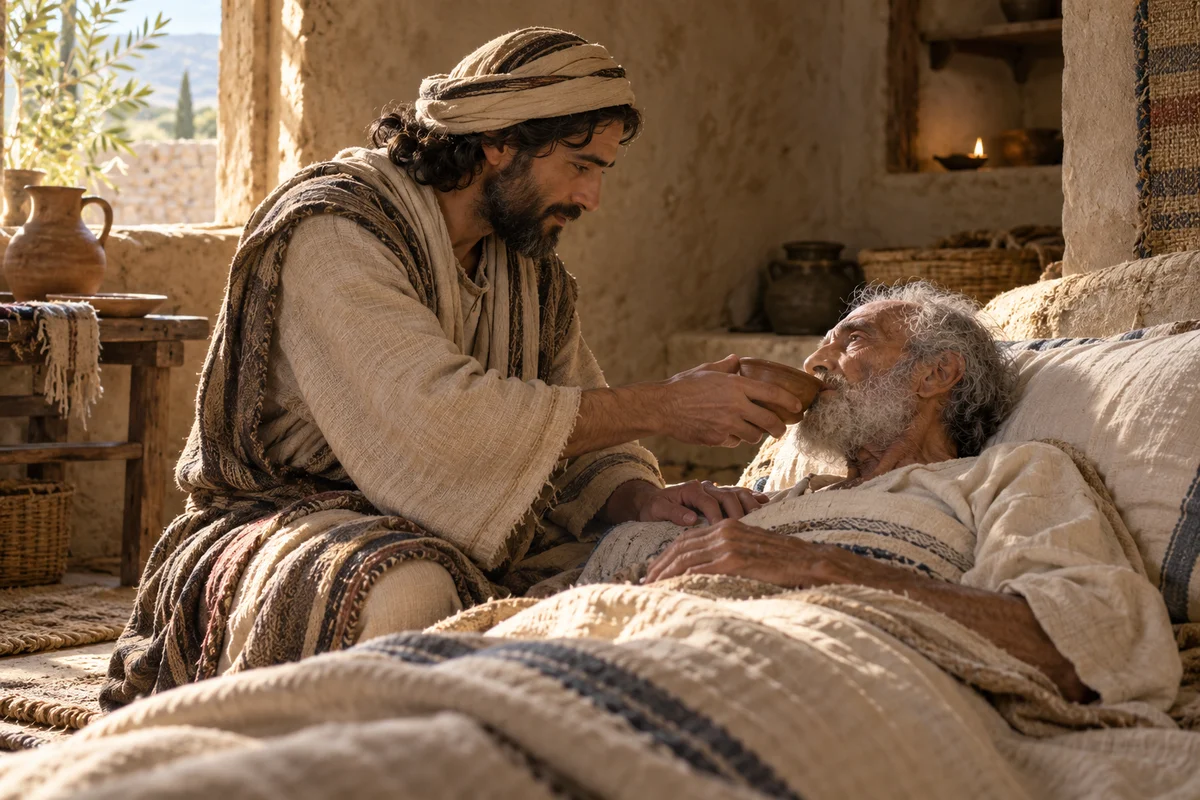
Psalm 13 gives remarkable room to that question. Four times the psalmist asks it. He feels forgotten by Yahweh, left beneath a hidden divine face, trapped in anxious counsel, and overshadowed by an enemy who appears to be winning. Then the movement changes: “Look. Answer me. Brighten my eyes.” Lament becomes petition. Finally, without any report that the enemy has left or circumstances have changed, he says, “But I have trusted in your steadfast love.” The night has not yet ended, but a song has begun inside it.
This text is about delay becoming prayerful trust, because biblical faith does not measure God’s covenant love by the speed of visible change; it brings the unbearable length of waiting before God and keeps asking him to act.
02
2.0 Historical and Literary Context: A Personal Cry Inside the Larger Battle of the Psalms
Psalm 13 belongs to Book 1 and to the cluster of Psalms 3–14. Psalms 1–2 introduce the Torah-shaped righteous one and Yahweh’s anointed king. Psalms 3–14 place those hopes inside danger. David and the afflicted are surrounded by enemies, violence, deceit, and apparent divine delay. BibleProject notes that enemy language and cries for deliverance run through this section.
Psalm 12 hears Yahweh declare, “Now I will arise” for the poor and needy, yet closes with the wicked still walking openly. Psalm 13 enters that gap: God has promised to act, but the worshiper still waits.
Goldingay describes three movements: complaint in verses 1–2, plea in verses 3–4, and confidence with commitment to praise in verses 5–6. Kidner likewise sees three pairs climbing from desolation toward delight.
03
3.0 Walking Through the Text
04
3.1 Psalm 13:1–2 — When “How Long?” Becomes the Language of Faith
“How long, Yahweh? Will you forget me forever? How long will you hide your face from me?” This is not a request for a date. It is protest: this has lasted too long; something must change.
Goldingay observes that the complaint moves in three directions—toward God, inward toward the self, and outward toward the enemy. First comes the theological wound: Yahweh seems to forget and hide his face. In Scripture, God’s remembering leads to action, as in Exodus 2:24–25. The shining face signals blessing (Num. 6:24–26). A hidden face therefore means, “You know, but I cannot see you acting.”
Then the pain moves inward: “How long must I wrestle with my thoughts and day after day have sorrow in my heart?” Threat has entered the mind. The sufferer keeps holding meetings with himself, rehearsing possibilities and searching for a plan that will make danger manageable.
Finally, the enemy is exalted over him. Suffering becomes public: the wrong side appears vindicated. Psalm 13 refuses to separate spiritual distress, emotional distress, and social distress.
05
3.2 Psalm 13:3–4 — When Prayer Asks God to Look, Answer, and Give Light
The questions become urgent requests: “Look on me and answer, Yahweh my God. Give light to my eyes, or I will sleep in death.” The psalmist does not merely ask for a better feeling; he asks for divine attention that becomes action.
“Yahweh my God” presses relationship into the prayer. The hidden face has not erased belonging. Because you are my God, your silence matters—and your help can still be sought.
“Brighten my eyes” suggests renewed life, courage, and vitality. Death stands close enough to be called sleep. Verse 4 adds the fear that the enemy will boast, “I have overcome him,” and rejoice when he falls. It asks God to deny destructive power the right to write the final interpretation of the story.
06
3.3 Psalm 13:5–6 — When the Circumstances Have Not Changed but the Pronoun Has
Then comes the turning word: “But.” “But I have trusted in your steadfast love; my heart shall rejoice in your salvation.” The enemy expects to rejoice; “but I” will rejoice. The opponent’s anticipated song is answered before it begins.
The foundation is hesed —God’s steadfast covenant love. Kidner emphasizes that even under pressure, the choice to trust remains because God’s covenant remains. Trust is not confidence in the strength of one’s own emotions. It is leaning the threatened heart against the pledged character of God.
Nothing says rescue has already appeared. Goldingay therefore sees no need to invent an unrecorded message from God between verses 4 and 5. The psalmist can still ask “How long?” and also say, “I have trusted.”
“I will sing to Yahweh, for he has dealt bountifully with me” looks toward deliverance with such confidence that the future already begins to shape the present voice. Faith rehearses the song before the doors of rescue fully open.
07
4.0 Theological Reflection
First, lament is not the opposite of trust; it is often what trust sounds like when love has to wait. Indifference does not ask “How long?” Covenant does.
Second, divine hiddenness is experienced as absence of action, not proof of God’s absence. Psalm 13 asks the God who seems hidden to look, answer, and act.
Third, biblical faith does not privatize anxiety. The psalm connects God, heart, and enemy. Sometimes the mind is troubled because circumstances are genuinely dangerous; prayer and wise practical action belong together.
Fourth, hope is anchored in hesed rather than immediate evidence. The confession is not, “Everything looks better,” but, “Your covenant love is still the truest thing I know.”
08
5.0 Canonical and Christological Horizon
Psalm 13 belongs to the Bible’s long cry of waiting. Israel groans under Pharaoh before God acts (Exod. 2:23– 25). Habakkuk asks “How long?” while violence persists (Hab. 1:2–4). Revelation 6:10 places the same cry on the lips of faithful witnesses awaiting justice. The New Testament does not build a direct Christological argument from Psalm 13. Yet Jesus inhabits the larger Davidic language of lament. In Gethsemane he is deeply grieved and brings the cup before the Father (Mark 14:33–36). On the cross he prays Psalm 22’s cry of abandonment (Mark 15:34). He enters the place where enemies appear to prevail and death seems to close the story.
Resurrection becomes God’s decisive contradiction of that verdict. God raises the crucified Jesus, vindicating him and beginning new creation in the middle of the old world.
The church therefore lives in the same “already and not yet.” Christ is risen, yet creation still groans (Rom. 8:22– 25). We continue to ask “How long?” but we ask as people who have seen, in Jesus, the first light of the answer.
09
6.0 Life Application
1. Pray the duration, not only the problem. Tell God how long the situation has been wearing you down.
2. Name all three directions of the wound: what feels wrong with God, what is happening inside you, and what people or structures add pressure.
3. Turn mental loops into petitions. Translate one repeated fear into: “Look. Answer. Give light.”
4. Seek practical help without abandoning prayer. Medical care, counseling, safeguarding, legal help, financial planning, and trusted community can be part of faithful action.
5. Do not let an enemy write the final interpretation. Failure, accusation, sickness, rejection, or delay may be real without being the final verdict.
6. Anchor trust in God’s character, not emotional stability. A trembling person can still entrust himself to steadfast love.
7. Practice anticipatory praise without pretending. Thank God for his faithfulness while still naming what remains unresolved.
10
7.0 Reflection Questions
1. What situation has become painful partly because of how long it has lasted?
2. Where have I interpreted God’s lack of visible action as proof that he has forgotten me?
3. What anxious counsel keeps circling in my mind, and how can I turn it into a concrete prayer?
4. What would it mean to trust God’s steadfast love without pretending the problem has disappeared?
5. How does Jesus’ death and resurrection reshape a season in which the wrong side appears to be winning?
11
8.0 Response Prayer
Yahweh my God, when the night grows long and your face feels hidden, receive the questions I am tired of asking. Look toward me, answer me, and brighten my eyes. Give wisdom for the danger outside me and mercy for the turmoil within me. Keep false victories from becoming final verdicts. When I cannot see the road changing, teach me to lean on your steadfast love. Put resurrection hope inside my lament, and begin in me the song I will one day sing in full. Through Jesus, the crucified and risen King, amen.
12
9.0 Window into What Comes Next
Psalm 13 begins with one sufferer asking how long his enemy will be exalted. Psalm 14 widens the lens. The problem becomes a whole human world bent toward folly, corruption, and the devouring of God’s people. The long night becomes a social diagnosis, and the prayer turns toward Zion: “Oh, that salvation for Israel would come.”
13
10.0 Bibliography
BibleProject. The Book of Psalms: Study Notes. Portland, OR: BibleProject.
BibleProject. Visual Commentary: Psalm 8—Study Notes. Portland, OR: BibleProject.
Goldingay, John. Psalms, Volume 1: Psalms 1–41. Baker Commentary on the Old Testament Wisdom and Psalms. Grand Rapids: Baker Academic, 2006.
Kidner, Derek. Psalms 1–72. Kidner Classic Commentaries. Downers Grove, IL: IVP Academic, 2008.
Wright, N. T. How God Became King: The Forgotten Story of the Gospels. New York: HarperOne, 2012.

Be the first to leave a comment.