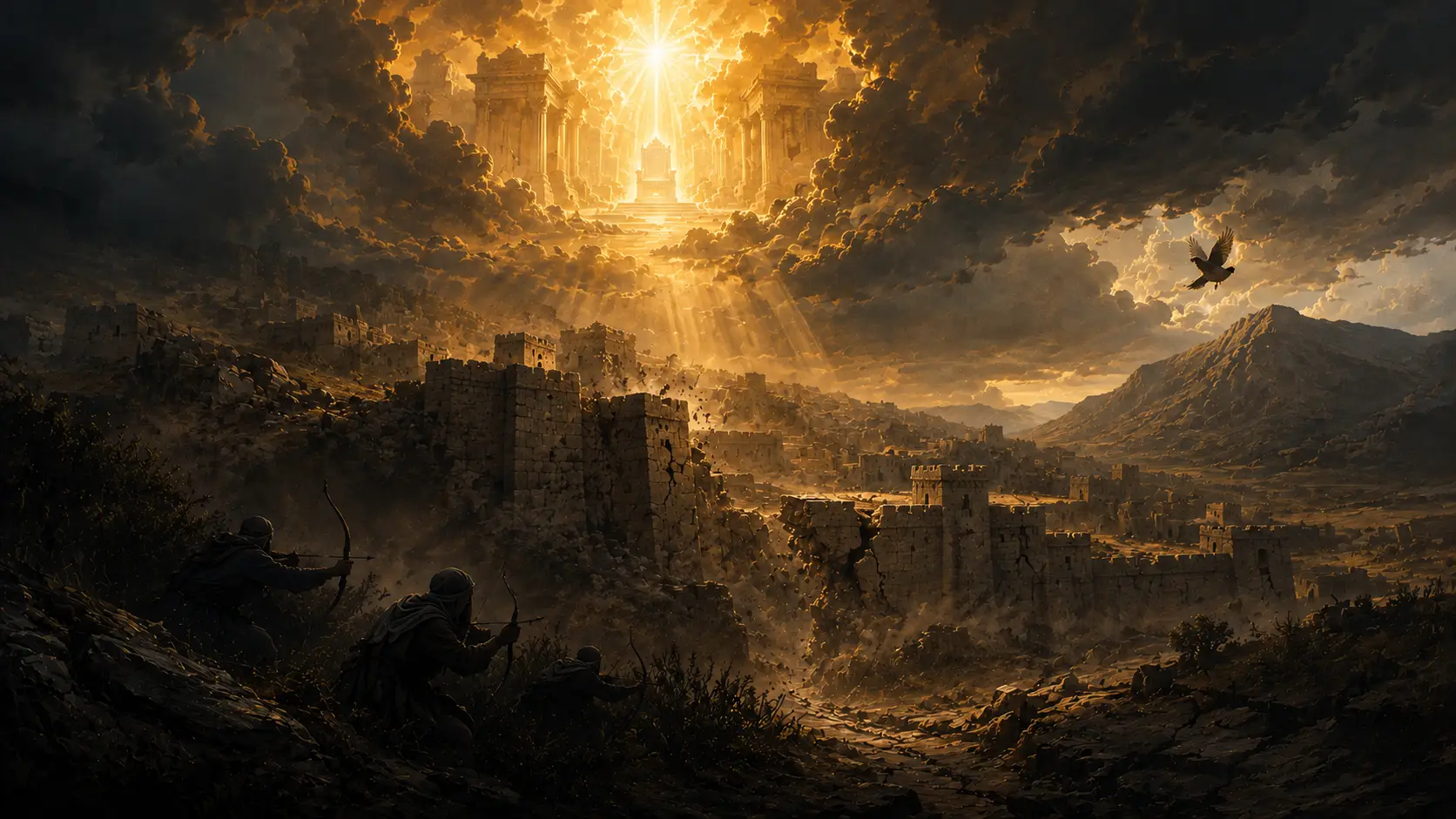
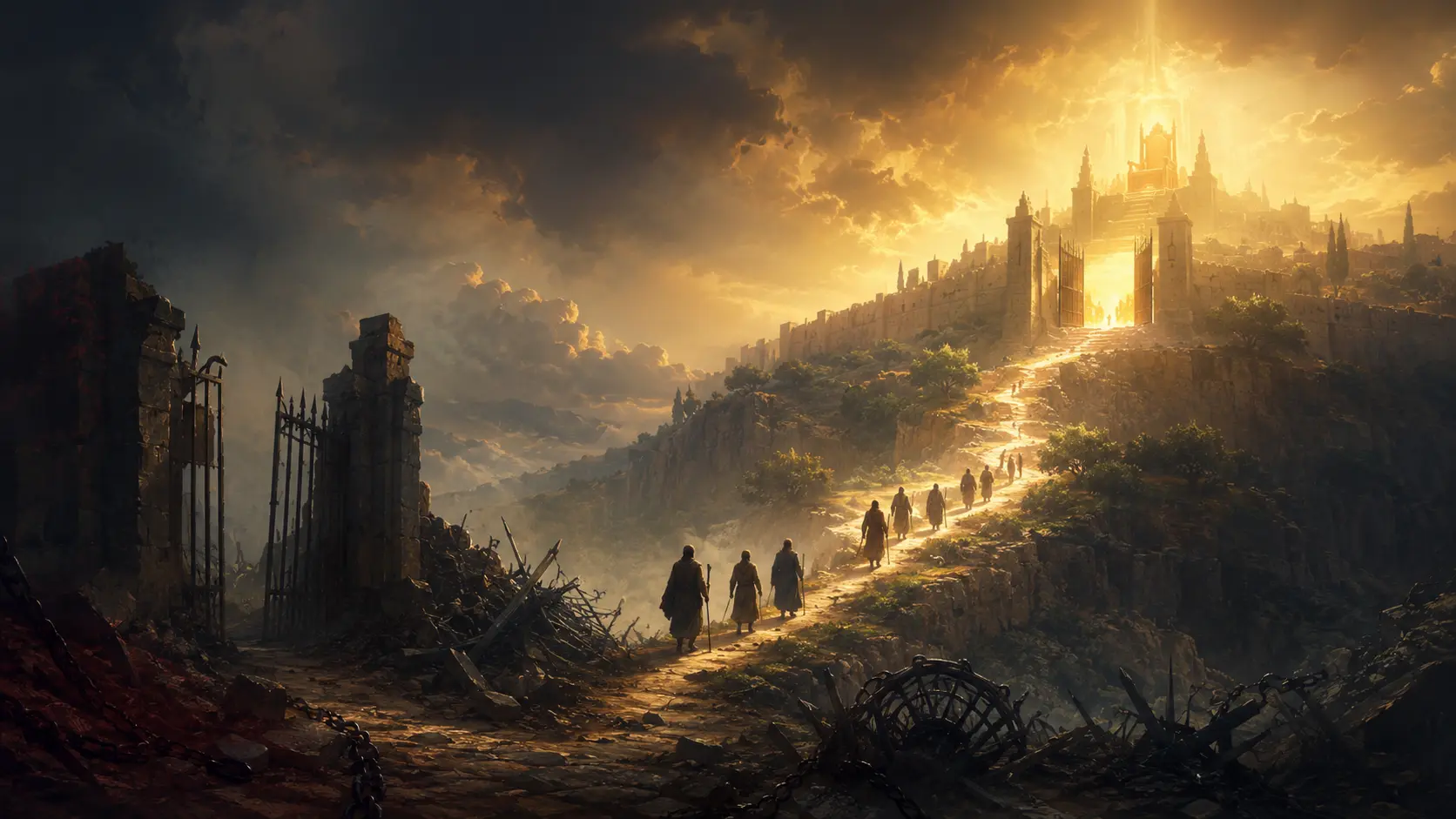
When Fear Says Flee and Faith Looks Up The bow is bent in the darkness. The foundations crack beneath our feet. Yet above the shaking ground, the throne has not moved. Faith learns where to look when fear says, “Run.”
01
1.0 Introduction: What Do We Do When Everything Feels Unstable?
There are moments when danger does more than threaten safety; it rearranges imagination. Public violence, betrayal, institutional failure, or family crisis can make the whole world feel structurally unsound. Psalm 11 gives that experience a memorable question: “If the foundations are destroyed, what can the righteous do?” Arrows are already fitted to the bow, darkness is cover, and someone urges the faithful person to flee like a bird to the mountains.
The psalm does not mock fear, nor teach that believers must remain physically in every dangerous place. Scripture contains wise flight as well as courageous staying. Psalm 11 addresses something deeper: the moment when fear begins to function as theology, when visible danger becomes more real than God’s invisible reign.
This text is about panic becoming perspective, because faith does not deny the shaking foundations; it looks beyond them to the King whose throne has not moved.
02
2.0 Historical and Literary Context: Refuge in Psalms 9–14
Psalm 11 bears the heading “Of David” and belongs to Book 1. BibleProject places Psalms 9–14 among poems where David is joined by the poor and afflicted, people threatened by wickedness yet learning to seek refuge in Yahweh. Psalm 10 ended by confessing that Yahweh is King forever after asking why God seemed far away. Psalm 11 tests that confession. What does “Yahweh is King” mean when the foundations appear to collapse? On earth, bows are bent and foundations tremble; in heaven, Yahweh is in his holy temple and his throne remains established.
Verses 1–3 present fearful counsel: flee, because violence hides in darkness and foundations are being destroyed. Verses 4–7 relocate attention: Yahweh sees, tests, judges violence, loves righteousness, and promises that the upright will behold his face.
03
3.0 Walking Through the Text
04
3.1 Psalm 11:1–3 — When Fear Gives Reasonable Advice
The psalm begins, “In Yahweh I take refuge.” Refuge is a recurring theme in these opening Psalms. Psalm 2 blesses those who take refuge in the Messiah; Psalms 5 and 7 describe refuge in Yahweh. Then another voice says, “Flee like a bird to your mountain.” The advice sounds sensible because the threat is real. “The wicked bend the bow; they fit their arrow to the string to shoot in the dark at the upright in heart.” Violence and secrecy combine. The righteous person cannot see when the arrow will come.
Verse 3 widens the crisis: “If the foundations are destroyed, what can the righteous do?” Foundations may evoke structures that make communal life possible—justice, truth, order, and trust. When courts corrupt, leaders prey on people, and violence becomes normal, the world itself can feel unlivable.
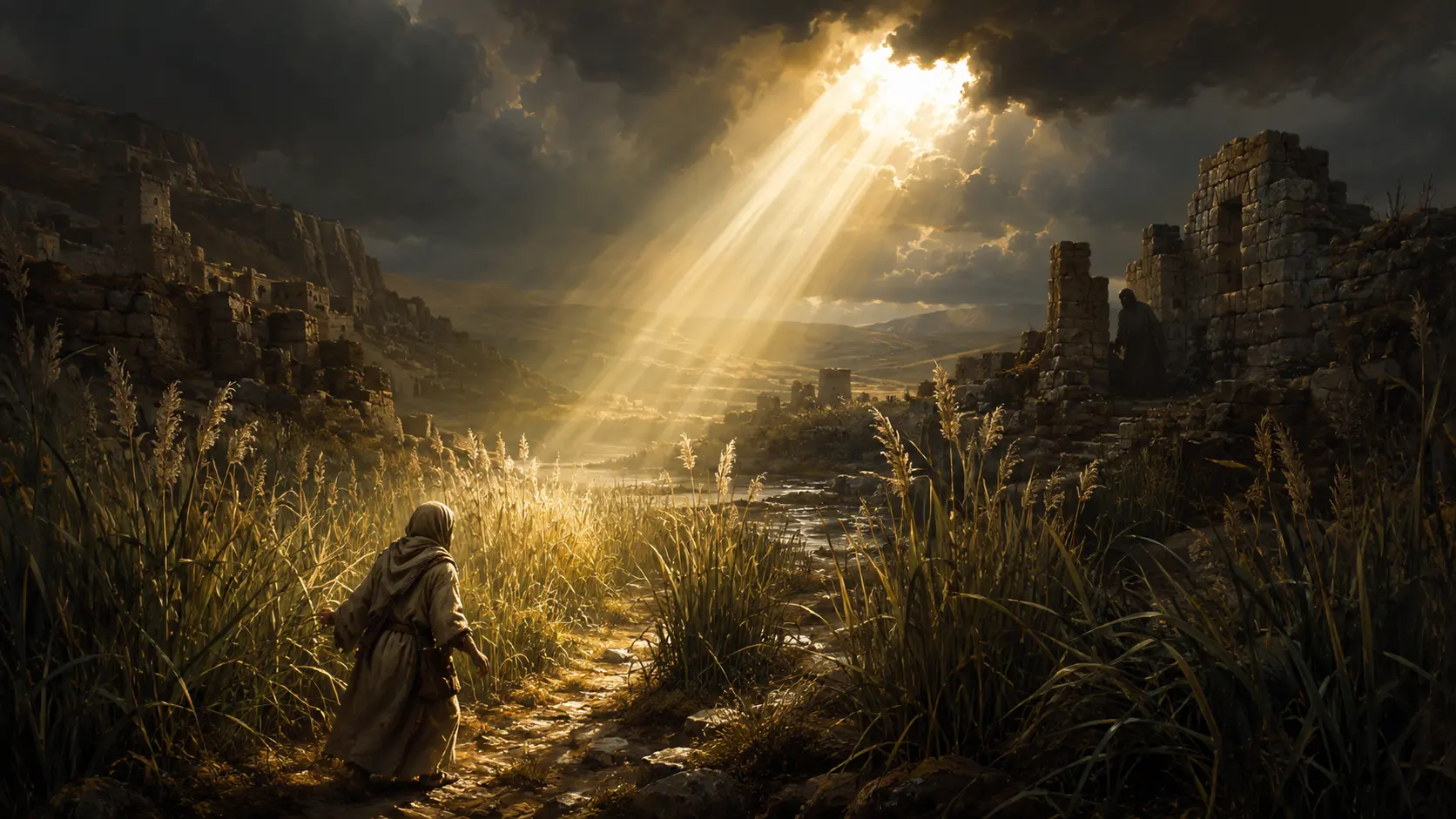
Yet collapse below does not mean abandonment above. Fear sees the arrow, darkness, and ruined foundation. Faith sees them too, but refuses to let them become the whole horizon.
05
3.2 Psalm 11:4 — When the Shaking Earth Is Seen from the Throne
The answer begins: “Yahweh is in his holy temple; Yahweh’s throne is in heaven.” Earthly foundations may tremble, but the heavenly throne does not.
Temple and throne belong together. The temple speaks of God’s presence; heaven speaks of the reach of his kingship. Psalm 11 is not escaping earth for a distant spiritual realm. It declares that the threatened world still lies beneath God’s government.
“His eyes see; his eyelids test the children of humanity.” Psalm 10 reported the wicked saying, “God has forgotten; he hides his face; he will never see.” Psalm 11 answers: God sees. Darkness may hide the archer from the victim, but not from Yahweh.
God’s seeing is discerning. He examines motives and deeds. That comforts the falsely accused and sobers the self-confident. Refuge is not exemption from examination; it is confidence that the Judge sees more truthfully than frightened crowds or manipulative enemies.
06
3.3 Psalm 11:5–6 — When God Refuses Neutrality About Violence
“Yahweh tests the righteous, but his soul hates the wicked and the one who loves violence.” The emphasis falls not only on violent acts but on a love of violence—a cherished way of exercising power.
God is not neutral about this. Divine love is not moral indifference. A God who loves the vulnerable must oppose what destroys them. Psalm 11 therefore uses severe judgment imagery: fire, sulfur, and scorching wind become the portion of the wicked, recalling Sodom and prophetic images of reckoning.
But the psalm gives no permission for personal revenge. The worshiper does not take up the bow. Judgment is left with Yahweh. Because God judges, the faithful need not become mirror images of their enemies. They can pursue justice and protection without learning to love destruction.
07
3.4 Psalm 11:7 — When the Final Hope Is a Face
The psalm ends with God: “For Yahweh is righteous; he loves righteous deeds; the upright shall behold his face.” This is the deepest refuge in the poem.
The upright keep living truthfully under God’s reign while history shakes. Then comes the promise: “They shall behold his face.” In Scripture, God’s face signifies presence, favor, and nearness. The psalm begins with advice to flee to a mountain; it ends with the worshiper facing God. Final safety is not merely escape. It is communion.
So what can the righteous do? Take refuge, refuse the theology of panic, live uprightly under God’s gaze, entrust judgment to him, and orient life toward his face. Wise protection or relocation may still be necessary. Fear simply no longer gets to define reality.
08
4.0 Theological Reflection
First, God’s kingship matters most when earthly foundations fail. God’s rule becomes the deeper ground when human structures prove fragile.
Second, refuge is not denial. The psalm names weapons, hidden violence, broken foundations, and judgment. Trust does not mean everything is safe; it means danger is not ultimate.
Third, God sees both victim and aggressor. Hidden arrows are not hidden from heaven. This dignifies people whose suffering is unseen and holds accountable those who rely on secrecy or intimidation.
Fourth, the final hope is presence. Psalm 11 climaxes not merely in surviving danger but in beholding God’s face. Salvation is ultimately relational.
09
5.0 Canonical and Christological Horizon
Psalm 11 belongs to Scripture’s wider language of refuge. Israel is sheltered at Passover, brought through the sea, and taught in the wilderness that security cannot be reduced to visible resources. The Psalms turn that story into prayer: Yahweh is refuge.
The temple-throne image also echoes Isaiah 6, where Yahweh remains enthroned while earthly kingdoms tremble. The issue is not whether God has lost his throne, but whether his people can perceive and embody his reign amid collapsing systems.
Jesus enters this story as the faithful righteous one. He faces plots, false accusations, violent authorities, and apparent collapse. Yet he entrusts himself to the Father rather than answering violence with violence. The Gospels also show Jesus withdrawing from hostile places, so Psalm 11 is not a command for reckless exposure. It is refusal to let fear or violence become lord.
At the cross the righteous one appears defeated; resurrection declares that violent powers do not possess the final word. The risen Jesus forms a people who resist both panic and retaliation. Revelation 22:4 deepens Psalm 11’s promise: God’s servants “will see his face.” Refuge becomes presence in renewed creation.
10
6.0 Life Application
1. Name what is shaking. Precision keeps fear from becoming limitless.
2. Do not confuse courage with refusing help. Refuge in God can include leaving danger, reporting abuse, counseling, or communal protection.
3. Refuse hidden violence. Secrecy, intimidation, gossip, digital attacks, and manipulative speech can become arrows fired “in the dark.”
4. Let God’s gaze free you from the crowd’s verdict. Pursue truth and accountability, but remember that human judgment is not the final court.
5. Entrust vengeance to God. Work for justice and boundaries without becoming devoted to an enemy’s destruction.
6. Practice righteousness while foundations shake. Keep telling truth, protecting the vulnerable, honoring commitments, praying, and doing good.
7. Seek God’s face, not merely relief. Ask, “How can I remain faithful and near to God?”
11
7.0 Reflection Questions
1. What “foundation” in my life currently feels unstable, and how is that shaping my imagination?
2. Where might wise protection be necessary, and where might fear be trying to become my master?
3. Have I used secrecy, words, position, or influence like an arrow fired in the dark?
4. What righteous action remains possible even if I cannot control the larger crisis?
5. How does the promise of beholding God’s face reshape what I consider true safety?
12
8.0 Response Prayer
Yahweh, when the foundations tremble and fear tells me that only visible danger is real, lift my eyes to your throne. Be refuge for the threatened, light for what is hidden, and Judge over violence. Search my heart and remove the desire to wound in return. Give me wisdom to seek safety when needed, courage to remain faithful, and grace to love what is right. Keep my life turned toward your face until your peace fills the earth. Amen.
13
9.0 Window into What Comes Next
Psalm 11 ends with the upright beholding God’s face. Psalm 12 asks what happens when faithfulness seems to disappear and speech itself is corrupted by lies and flattering lips. The throne remains secure—but now the crisis moves into the mouth. The foundations of truth will be tested by words.
14
10.0 Bibliography
BibleProject. The Book of Psalms: Study Notes. Portland, OR: BibleProject, 2020.
Goldingay, John. Psalms, Volume 1: Psalms 1–41. Grand Rapids: Baker Academic, 2006.
Kidner, Derek. Psalms 1–72. Downers Grove, IL: IVP Academic, 2008.
Wright, N. T. How God Became King. New York: HarperOne, 2012.
Be the first to leave a comment.