

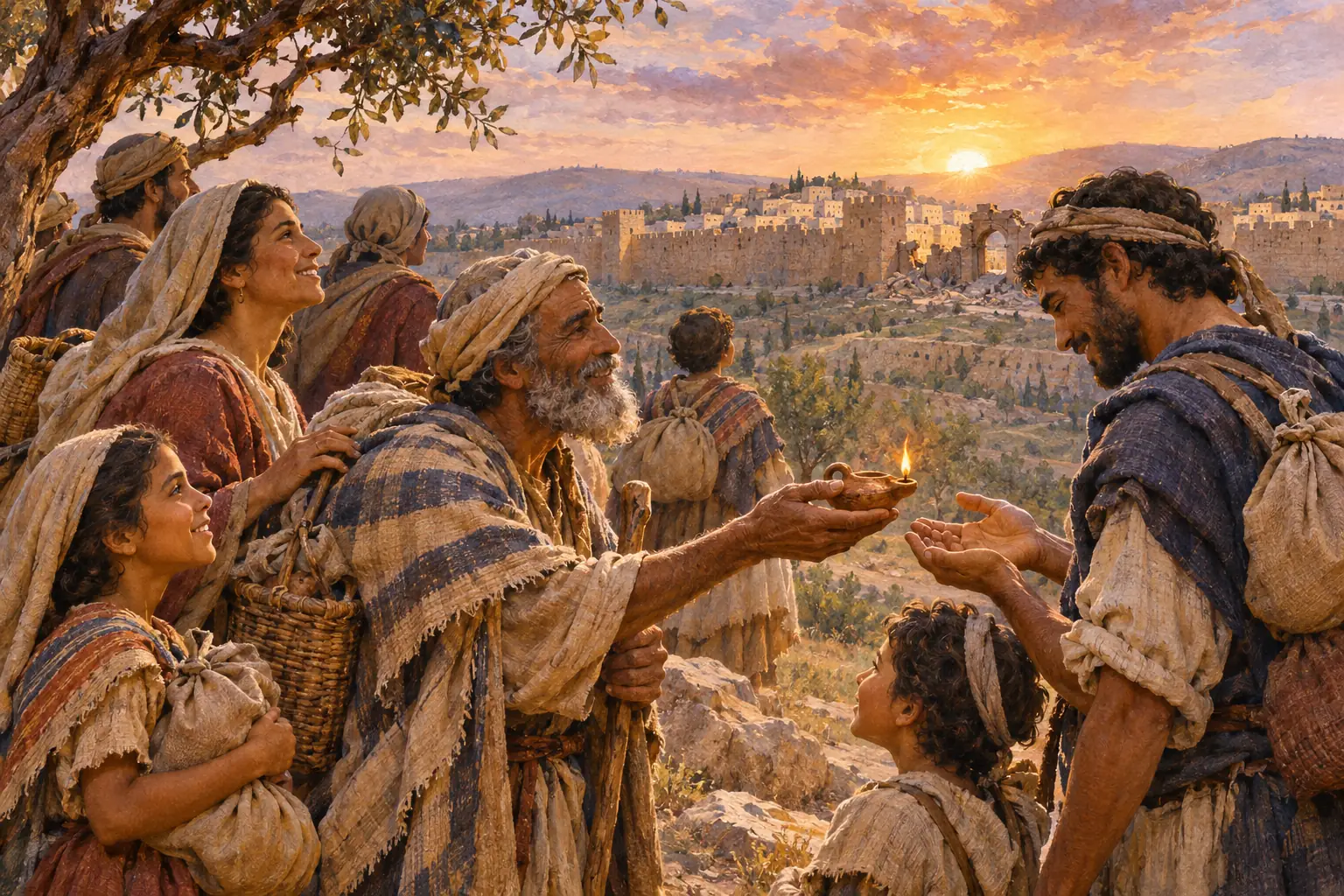
How can the invitation to rebuild after exile nurture truthful, accountable hope?
Study overview
Conclusion: a fallen house and an invitation to begin again
Key passages: 2 Chronicles 6:18–21; 33:10–17; 36:15–23.
Conclusion: The Door Does Not End in Ashes
The temple doors once opened amid song. Later the doors closed through rebellion, reopened through repentance, and finally gave way to a burned house. Second Chronicles carries the weight of the entire journey. Beautiful stones could not secure covenant life while hearts refused to listen.
Yet ashes do not fill the final scene. Cyrus issues a proclamation opening the possibility of going to Jerusalem and building. The narrative does not deny the damage. The ending announces God’s continuing capacity to open a future after judgment.
House and Crown Tested through the Heart
Solomon builds the sanctuary, but the dedication prayer acknowledges God beyond even the heavens (6:18). A worship building is a gift rather than ownership of divine presence. God’s promise to hear prayer stands alongside warnings against abandoning covenant (7:12–22).
Successive reigns repeat the question of allegiance. Asa can trust during danger and later imprison a messenger. Joash can restore the house and order a prophet’s death in the courtyard. Uzziah can receive extraordinary help and then reject sacred limits. Honored office and yesterday’s achievements cannot replace present obedience.
Mercy also crosses boundaries. Northerners seek faithful worship, Ephraimite leaders care for captives, and Passover gathers distant households. Truthful memory needs the palace’s wrongdoing and the courage of ordinary servants within the same account.
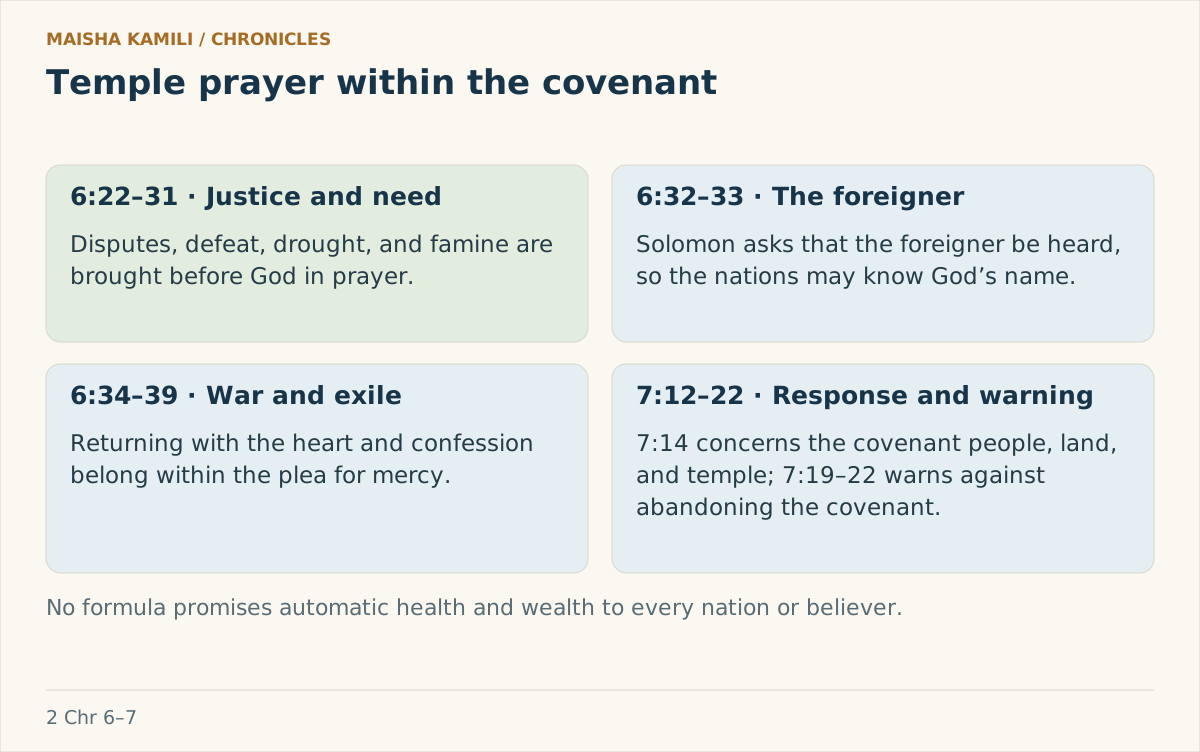
Visual reflection: How can prayer connect repentance, justice, and welcome for the foreigner?
Reading the Final Movement: Chapters 31–35
Chapter 31: joy needs sustained provision. After Passover, priests and Levites require continuing support. Contributions, storehouses, and oversight place renewal within ordinary life. A festival cannot sustain ministry without stewardship and accountable workers.
Chapter 32: faithfulness does not remove testing. Sennacherib invades after Hezekiah’s recorded faithfulness. Hezekiah and Isaiah pray while practical preparations strengthen the city. After deliverance, pride requires acknowledgment. Victory does not grant immunity from another test.
Chapter 33: repentance remains possible after grave evil. Manasseh has promoted destructive worship. In distress, Manasseh humbles the royal heart, prays, and returns. Removing corrupt worship makes change visible. Mercy does not erase previous harm or cancel victims’ claims to justice. Amon continues wrongdoing and refuses humility.
Chapters 34–35: Scripture awakens reform, but listening must continue. Josiah responds to the Book of the Law, Huldah’s message, and covenant responsibility. Passover receives careful preparation. Later Josiah rejects Neco’s words, identified within the narrative as coming from God (35:20–24). A reformer’s reputation cannot replace humble assessment of a new decision.
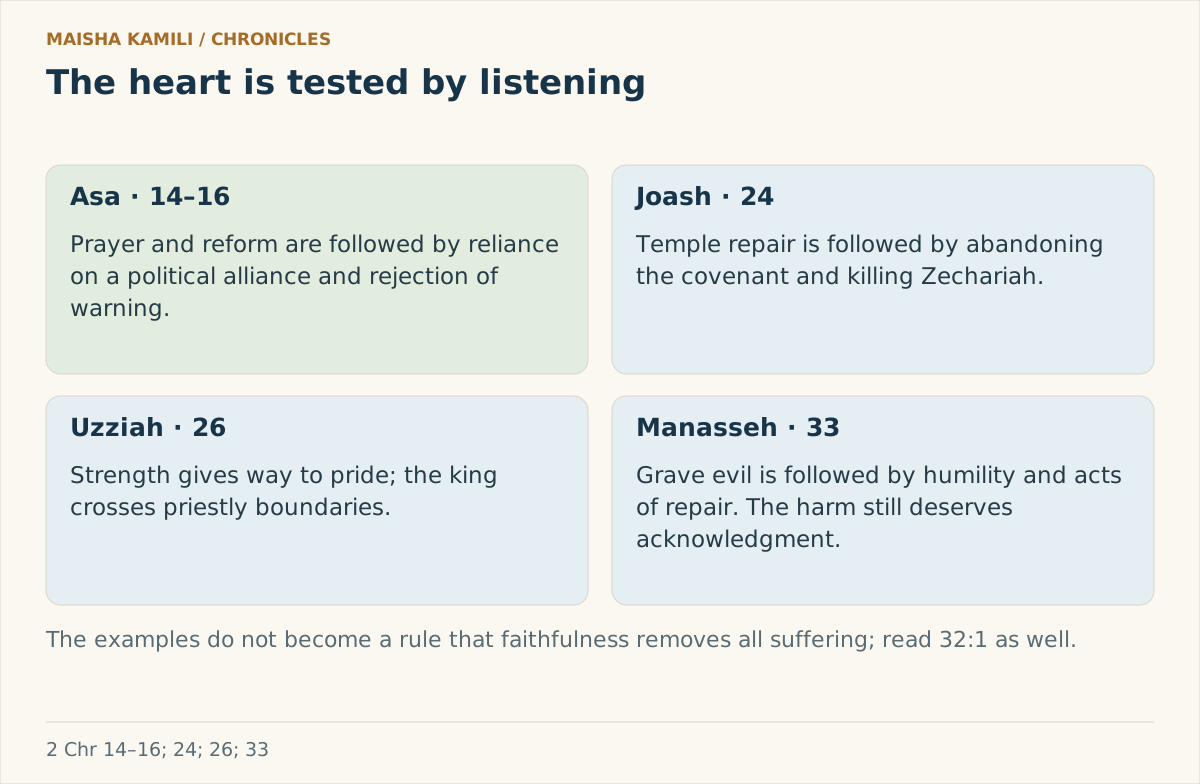
Visual reflection: What practice of accountability can help leaders receive truth?
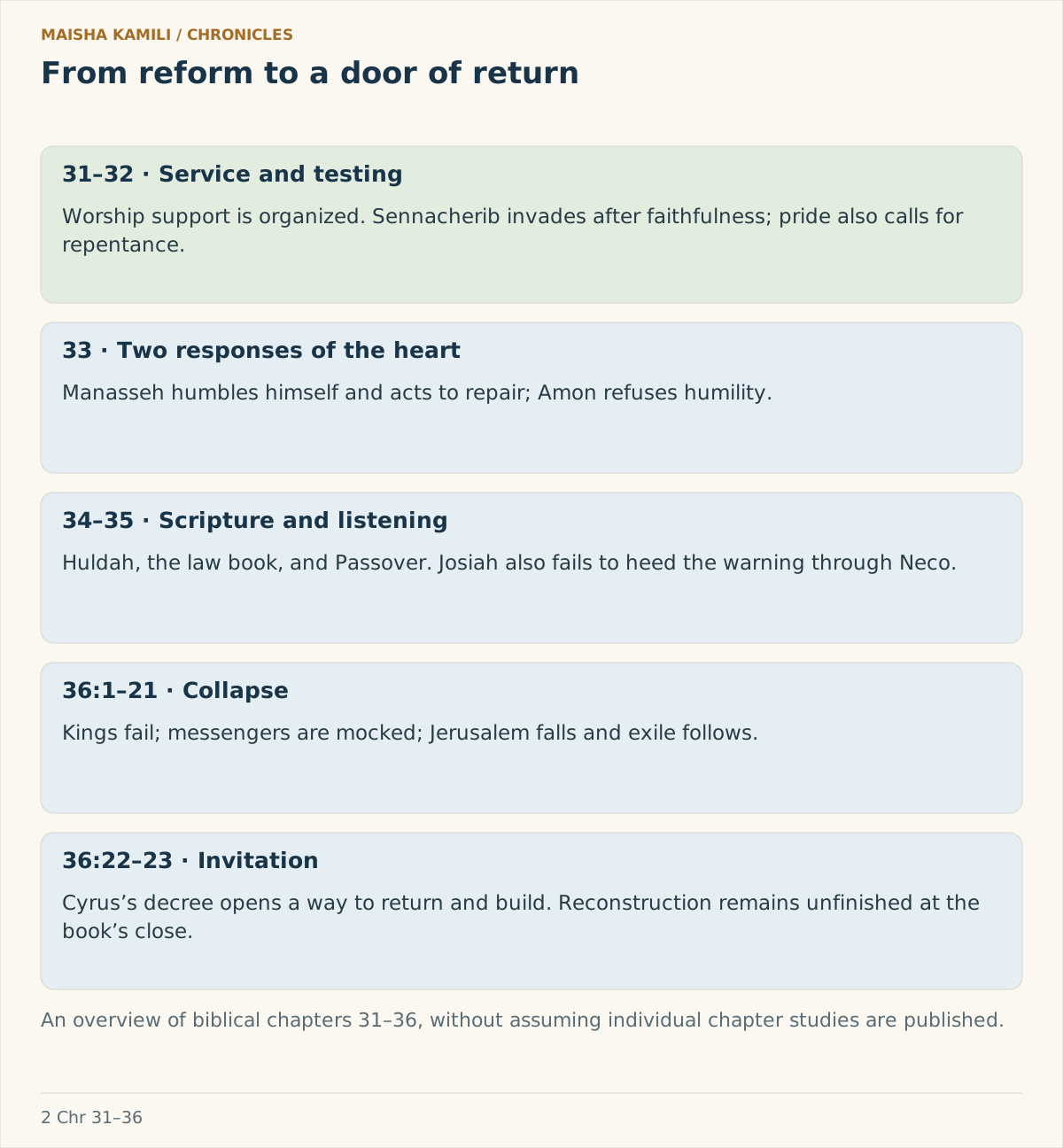
Visual reflection: How can hope acknowledge a history of failure and still begin rebuilding?
Judgment without Concealing Compassion
Chapter 36 accelerates the kingdom’s collapse. Leaders and people pollute God’s house. Divine messengers arrive because God has compassion, but the messengers are mocked and the word rejected (36:15–16). Resistance to correction develops into communal catastrophe.
Jerusalem’s fall includes death, ruined homes, and captivity. Human pain cannot become ornamental material for an uplifting speech. The Chronicler offers a covenant interpretation of a particular disaster. The account does not authorize attributing every displaced household or patient’s suffering to private guilt.
The land receives Sabbath rest during desolation (36:21; compare Lev 26:34–35). Creation belongs within covenant stewardship. The seventy years are connected with Jeremiah’s word; a teaching chart should not invent chronological precision beyond the available evidence.
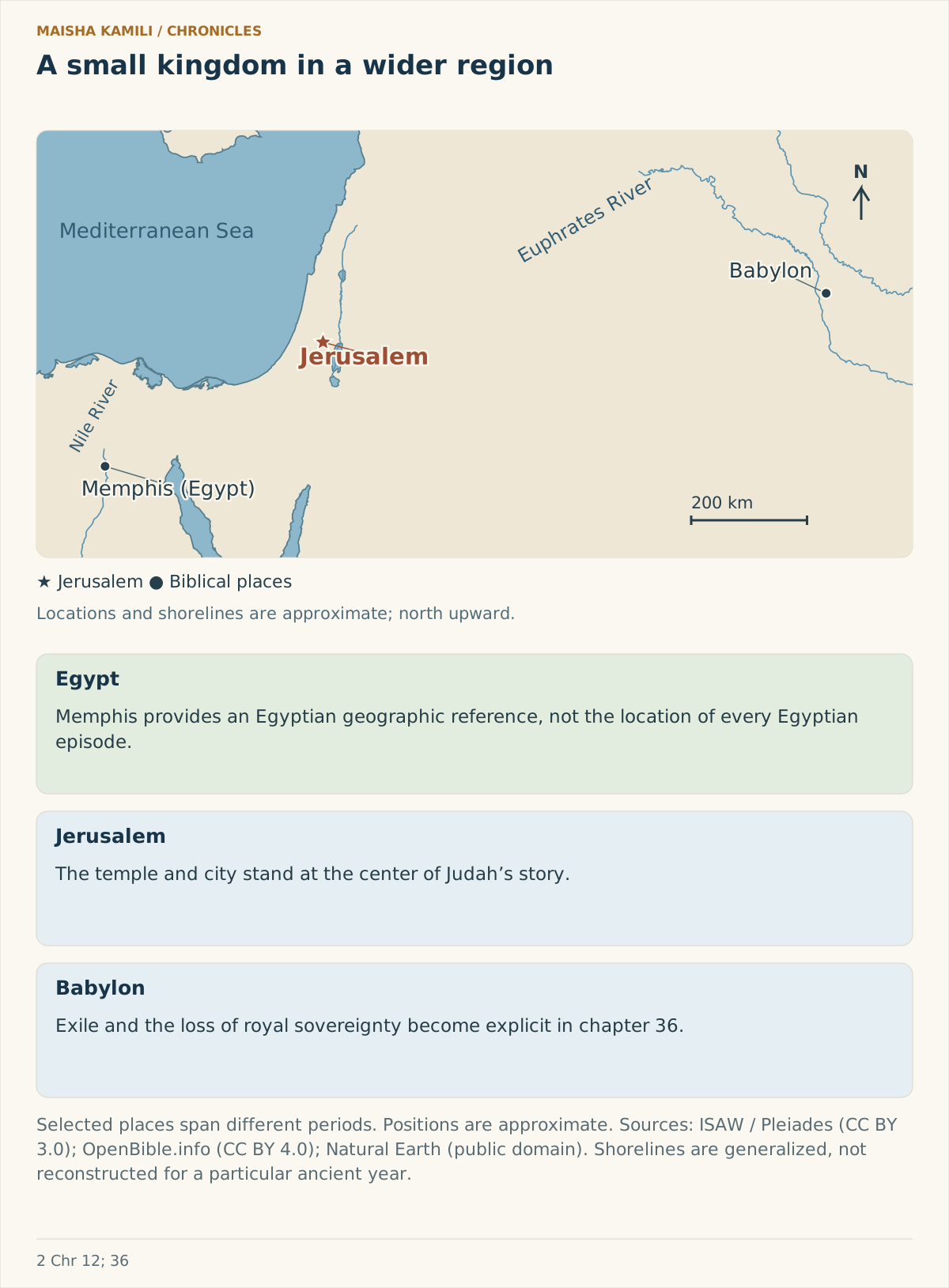
Visual reflection: How do the locations clarify the narrative without inventing boundaries or routes?
Cyrus and an Ending Opening a Journey
In 36:22–23, God stirs Cyrus of Persia. The proclamation to build a house in Jerusalem connects the ending of Chronicles with Ezra’s opening (Ezra 1:1–4). A foreign ruler participates in the opportunity for restoration. God’s future is not imprisoned within the resources of a failed royal institution.
The proclamation does not announce a completed building or a fully healed community. People still need to travel, labor, and practice faithfulness. The ending supplies an open road rather than the disappearance of every problem. Honest hope accepts rebuilding after naming devastation truthfully.
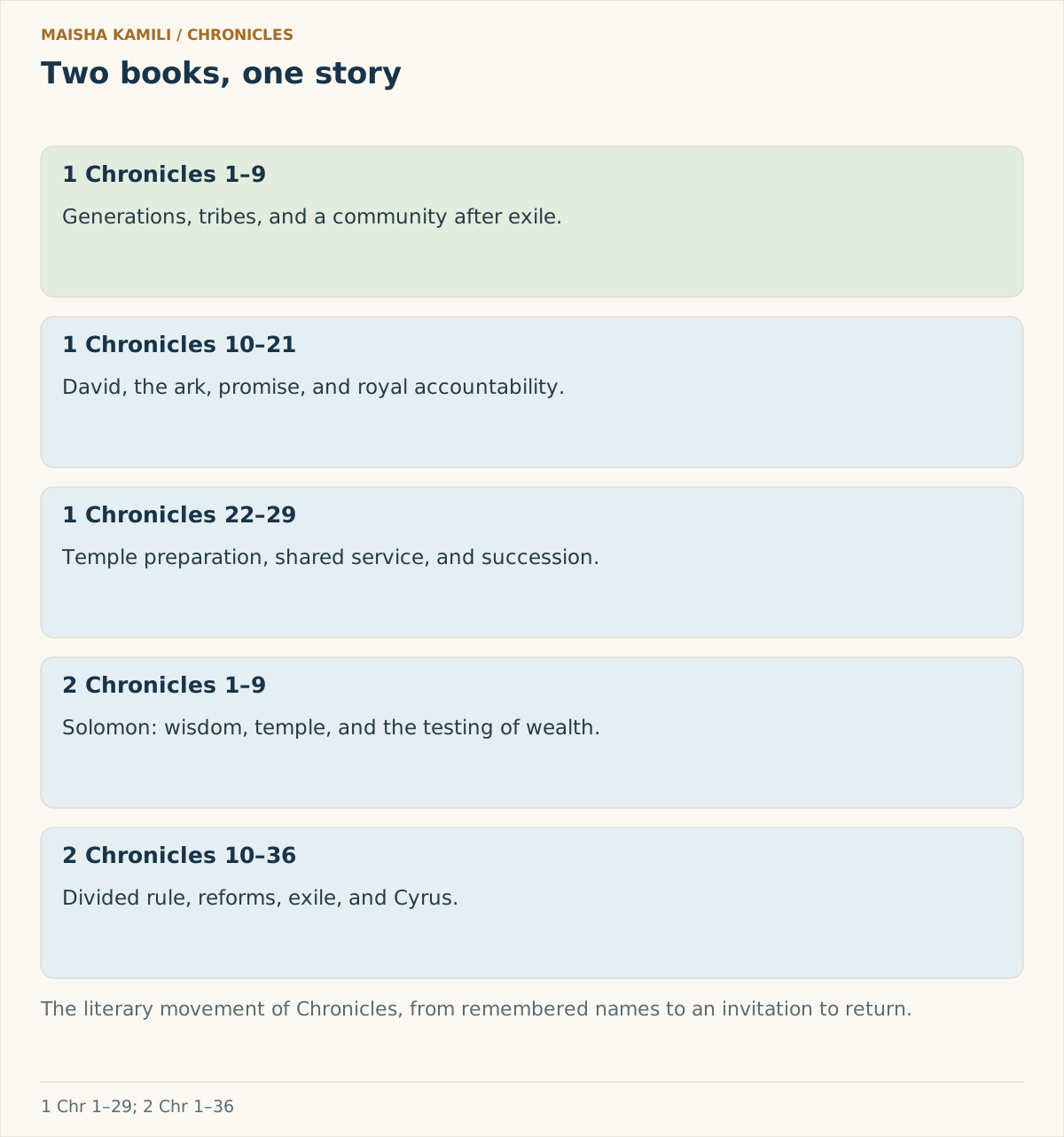
Visual reflection: How does covenant memory change the reading of ruins?
Christ and God’s Dwelling
Christians recognize Jesus Christ as the faithful Son of David and access to God (Luke 1:32–33; Heb 10:19–22). Jesus connects the temple sign with death and resurrection (John 2:19–22). Restoration exceeds renewed institutional splendor: people are gathered into God’s dwelling through the Spirit (Eph 2:19–22).
New creation brings the horizon of God dwelling with humanity and tears wiped away (Rev 21:1–4). Expectant communities are called to embody truth, justice, and compassion now. After the songs and after the ruins, the invitation remains: seek God wholeheartedly and build communal life protecting people.
Life Application
- Follow the fruit after a gathering. Establish teaching, stewardship, and care beyond a season of celebration.
- Protect correction. Receive evidence and maintain safe reporting before harm deepens.
- Join repentance with restitution. Restore unjustly taken resources, repair systems, and support injured people.
- Serve suffering without invented blame. Offer protection, food, pastoral listening, and competent medical support.
- Care for land and labor. Assess projects through fair work, rest, and stewardship of creation.
- Begin again accountably. Plan practical rebuilding after acknowledging loss and seeking appropriate help.
Reflection Questions
- How can worship’s joy become responsible daily service?
- How has past achievement concealed the need for fresh correction?
- How can genuine repentance produce visible, accountable restitution?
- How can a community keep victims’ voices within the story of restoration?
- How does hope for God’s dwelling guide practical rebuilding now?
Response Prayer
God of mercy, hear cries rising from ruined places. Restrain stubbornness dismissing truthful messengers. Awaken repentance joined to justice and hands ready for repair. Give wounded people dignity, room to speak, and appropriate help. Through Jesus Christ, open a faithful beginning and form a community of compassion, integrity, and hope. Amen.
Annotated Bibliography
- Bible. 2 Chronicles 1–36, especially chapters 31–36. The conclusion concerns the whole book and the changing directions of faithfulness, repentance, and abandonment.
- World English Bible. 2 Chronicles 32, 33, 35, and 36. Primary passages on testing, repentance, listening, and Cyrus’s proclamation.
- Bible. Leviticus 26:34–35; Ezra 1:1–4; John 2:19–22; Ephesians 2:19–22; Revelation 21:1–4. References for the land’s rest, continuing return, and the Christian canonical horizon.
- BibleProject. “Books of 1 & 2 Chronicles.” A reading aid for the ending’s forward invitation.
- Crossway. “Introduction to 1–2 Chronicles.” Order of the final movements and postexilic communal concerns.
- Institute for the Study of the Ancient World. Pliny–Pleiades location dataset. Approximate reference positions for regional maps, without asserting exact travel routes or imperial boundaries.
Be the first to leave a comment.