

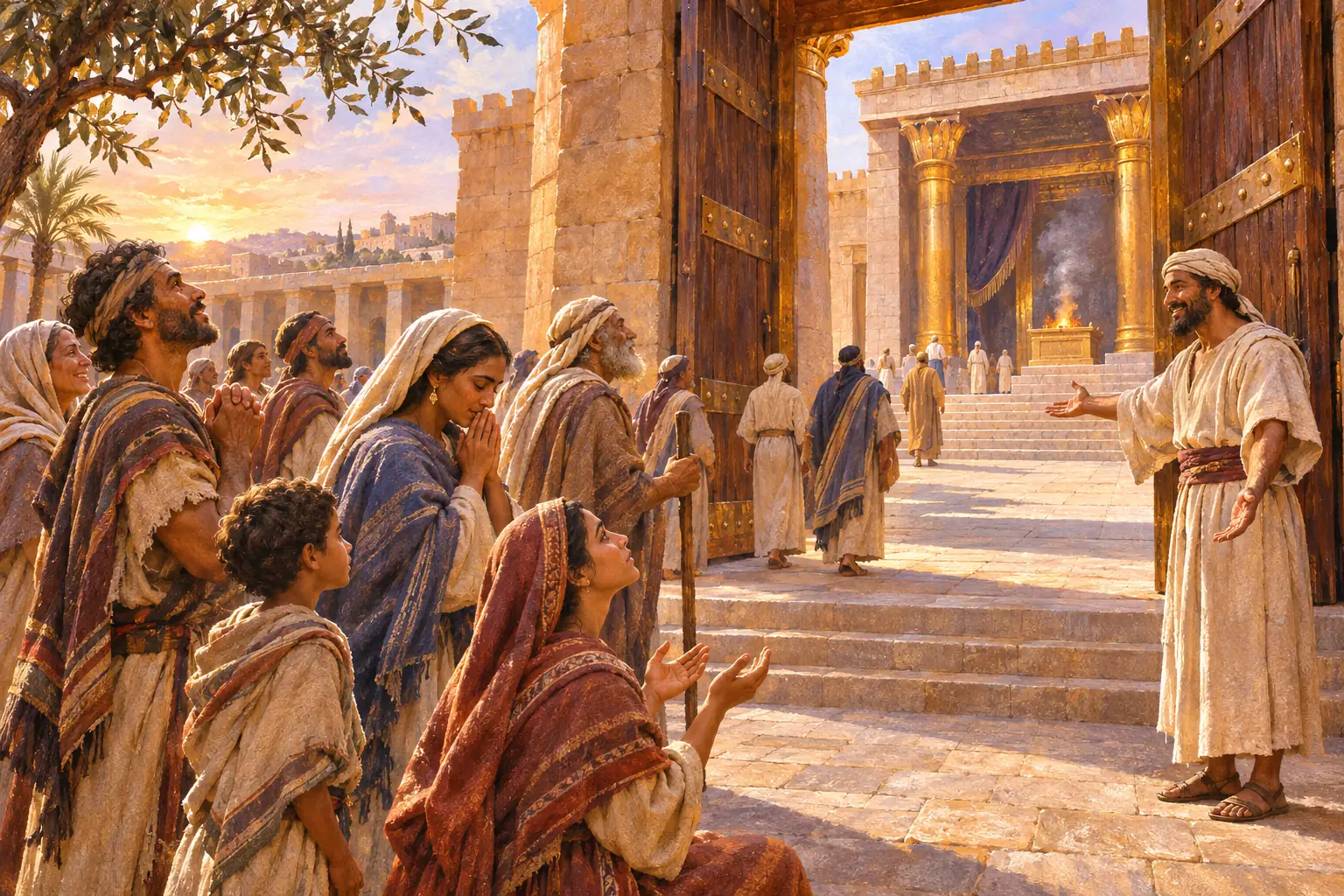
How are temple and crown tested through faithful hearts and justice for people?
Study overview
Introduction: seeking God through splendor, division, and ruins
Key passages: 2 Chronicles 6:18–33; 7:12–22; 20:12; 36:15–23.
Introduction: A Beautiful House Needs a Faithful Heart
A doorway can shine while conversations inside remain full of fear. A congregation can sing loudly while justice waits outside the gate. Second Chronicles asks a question reaching beyond decoration: does worship embody faithfulness to God and dignity for people?
The book begins with Solomon seeking wisdom and building the temple. The narrative ends with God’s house burned, yet an opportunity for return opens under Cyrus. Between dedication and devastation, rulers and communities are tested through the direction of the heart, attention to God’s word, and continued seeking of the Lord.
Context: Reading Kingship after Exile
The volume continues First Chronicles. The author remains unnamed, and the precise date of composition is debated. The closing reference to Cyrus and the concerns of a community marked by exile illuminate the reading context. Remembered history addresses present questions about faithfulness, damaged communal life, and the possibility of restoration.
David’s house and Judah receive the main focus, but northern Israel remains within covenant concern. Worshipers crossing borders, mercy toward captives, and the Passover invitation resist a reading built on regional superiority (11:13–17; 28:9–15; 30:1–12).
Kings and Chronicles belong beside each other. Shared history appears through differing selections and emphases. Chronicles is not merely an abbreviated copy of Kings. Comparison should help readers hear the guiding concerns without inventing precise itineraries to erase narrative differences.
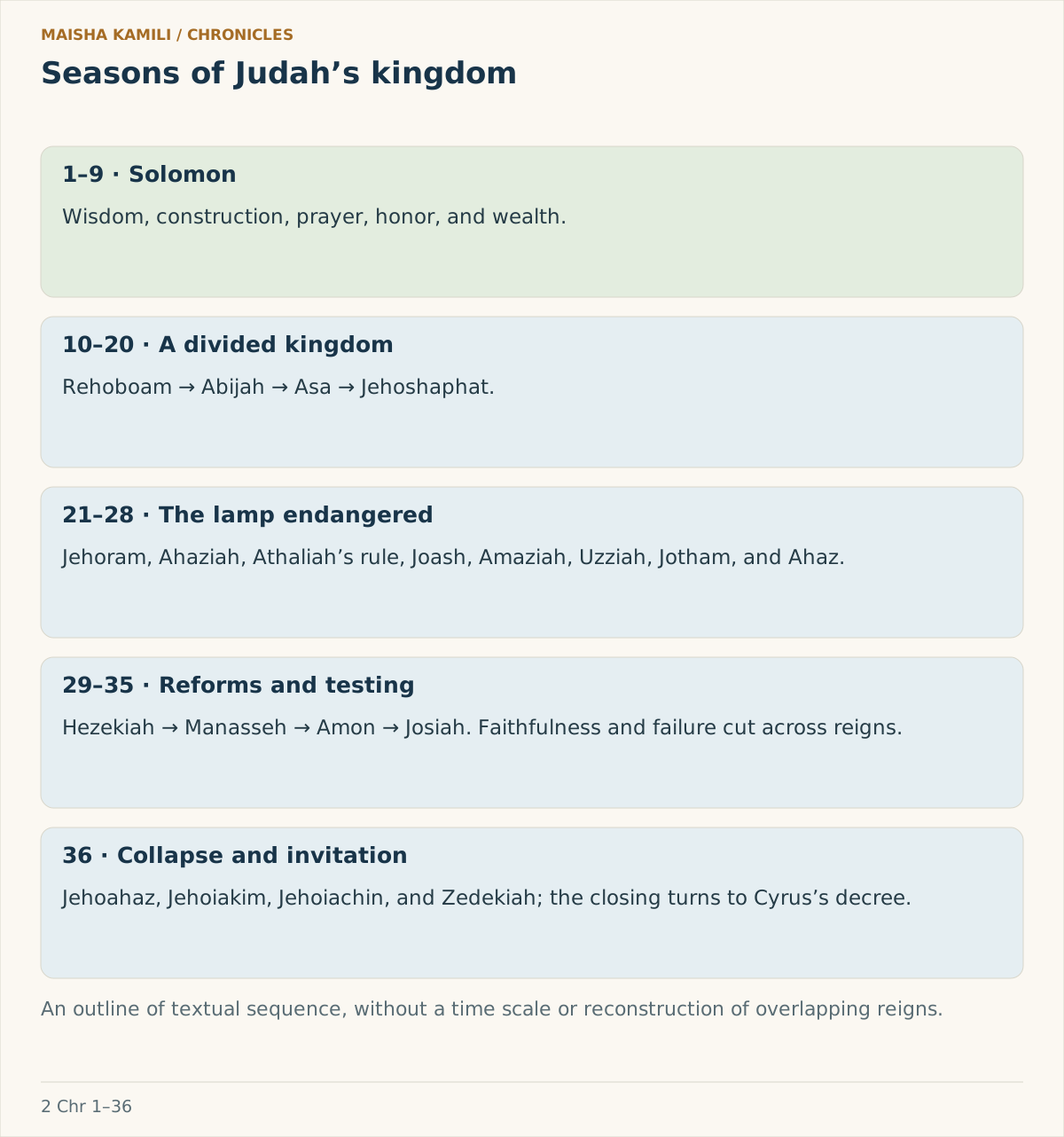
Visual reflection: What changes of heart recur in the history of the kings?
A Reading Map
Chapters 1–9: wisdom and a dedicated house. Solomon receives responsibility, the temple rises, and prayer reaches toward God beyond any building. Royal splendor must answer the purposes of worship and justice.
Chapters 10–20: division and dependence. Rehoboam’s harshness fractures the kingdom. Asa and Jehoshaphat display seasons of seeking alongside decisions requiring correction. Yesterday’s deliverance cannot replace continuing obedience.
Chapters 21–28: an endangered lamp. Cruelty, destructive counsel, idolatry, and pride wound Judah. Joash survives royal violence as a child but later silences a prophet. Under Ahaz, northern leaders embody mercy absent from Judah’s palace.
Chapters 29–35: reopened doors and tested reforms. Hezekiah restores worship and invites scattered people. Manasseh repents after grave wrongdoing. Josiah hears the Book of the Law, renews covenant, and celebrates Passover. Even accomplished reformers remain responsible for listening.
Chapter 36: judgment and invitation. God’s messengers are rejected; Jerusalem and the temple fall. Exile does not supply the final word. Cyrus’s proclamation opens an opportunity to go and build. The ending invites a renewed journey of faithfulness.
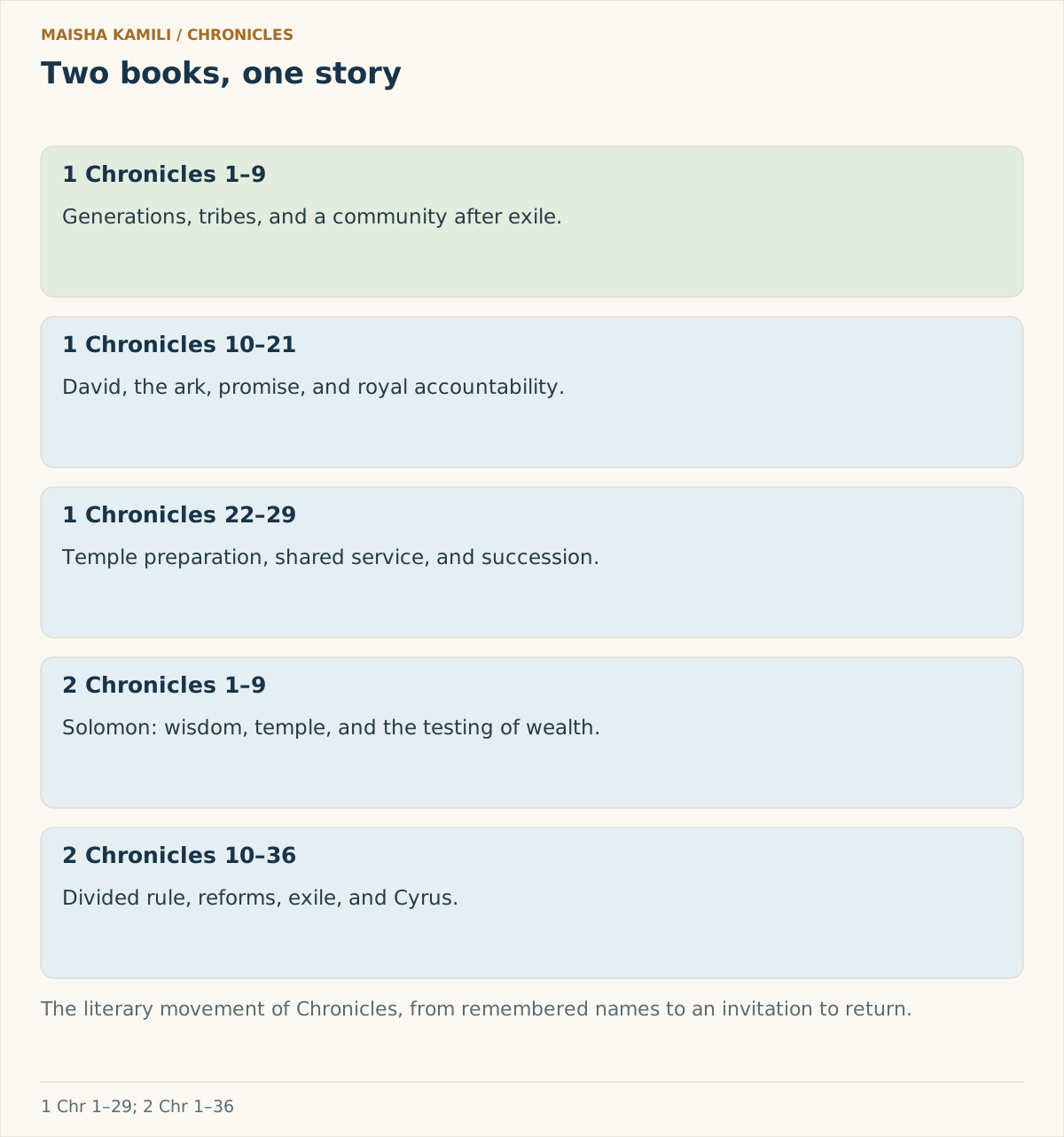
Visual reflection: How does covenant memory change the reading of ruins?
Reading Rulers beyond Simple Labels
Asa listens early and later resists correction (chapters 14–16). Uzziah receives extraordinary help and then violates sacred responsibility (26). Manasseh commits grave evil and later turns in humility (33). A single good-or-bad label cannot adequately describe the narrative movement. The book examines changing allegiance, responsibility for decisions, and the possibility of repentance.
Prophets and ordinary servants matter beside kings. God’s message can confront the throne through an unwelcome voice. Authority claiming success as exemption from scrutiny contradicts the narrative’s repeated pattern of correction.
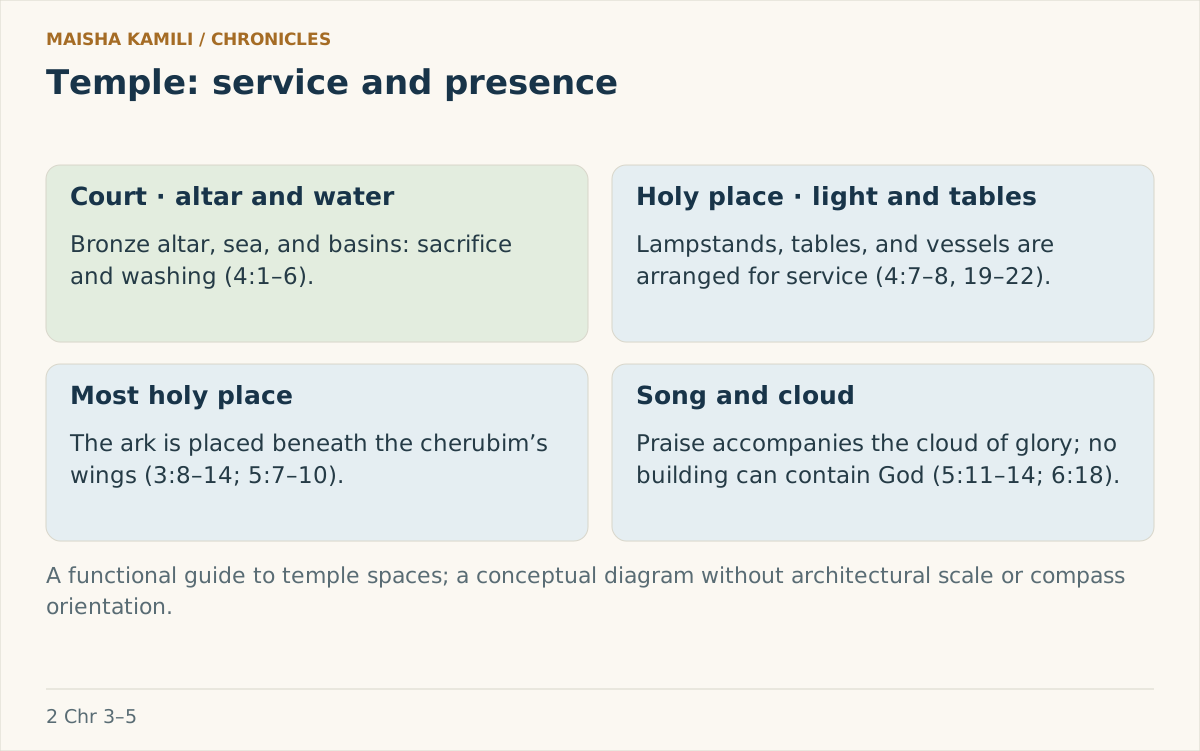
Visual reflection: How do furnishings and spaces direct attention toward worship rather than splendor alone?
Temple, Mercy, and Responsible Interpretation
Solomon acknowledges that even the heavens cannot contain God (6:18). The temple directs prayer without granting ownership of divine presence. Foreigners also enter the prayer’s concern (6:32–33). Faithful worship opens toward mercy and attention to distant people.
The promise of 7:14 belongs within Israel’s covenant, land, and sanctuary, alongside the warning in 7:19–22. Humility and turning from evil matter. The passage does not establish an automatic prosperity formula for any modern nation after a prayer ceremony. Davidic descent cannot grant rulers immunity from injustice.
War, illness, and judgment require compassionate interpretation. Particular narratives do not justify blaming present-day patients, treating every military success as divine approval, or advancing religion through coercion. Restored worship requires truth, safeguarding, and justice.
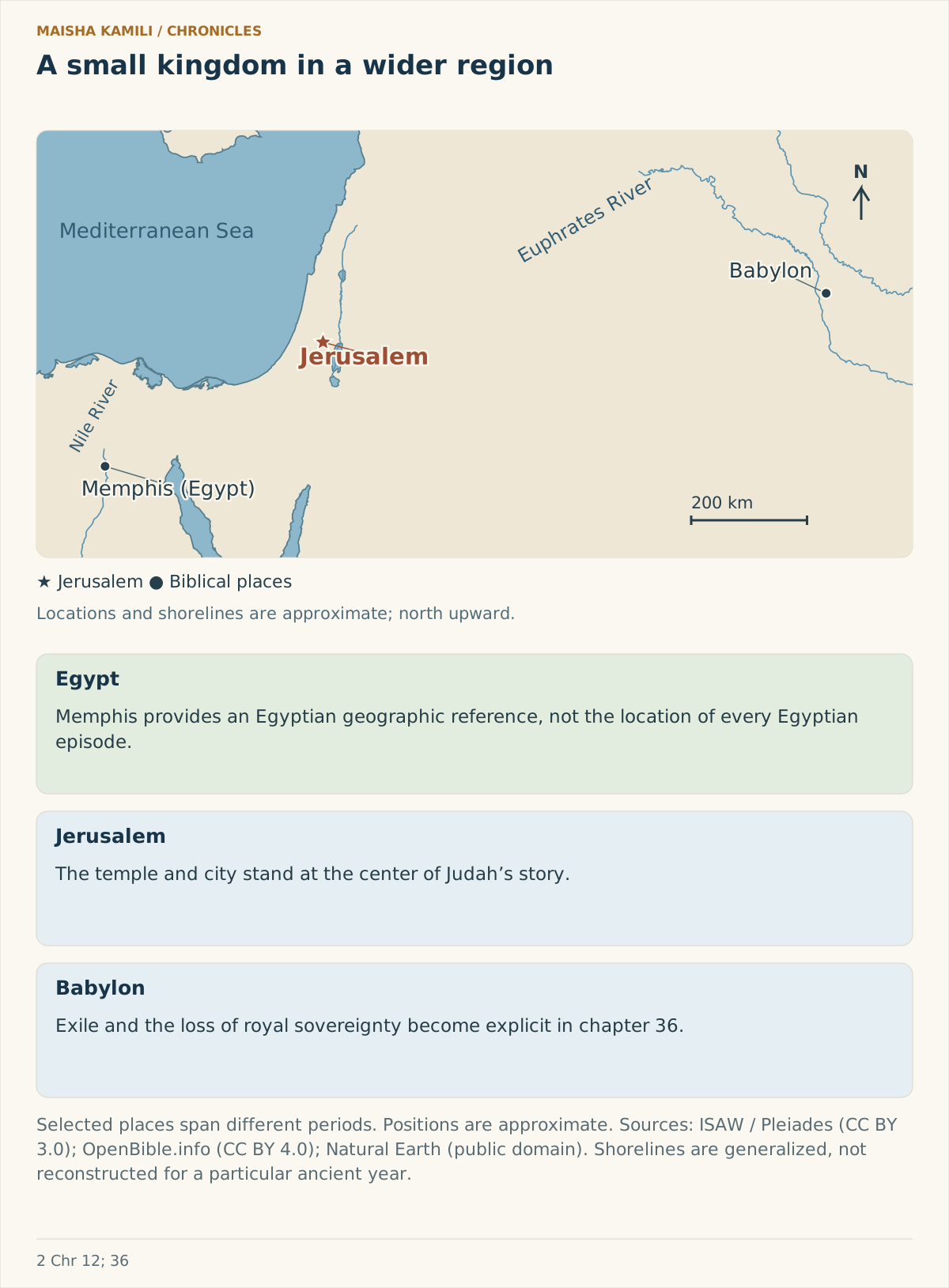
Visual reflection: How do the locations clarify the narrative without inventing boundaries or routes?
Christ and Hope for an Open House
Christian reading understands Davidic expectation through Jesus Christ, the faithful king (Luke 1:32–33). Jesus associates the temple sign with death and resurrection (John 2:19–22). Believers are built together into God’s dwelling through the Spirit (Eph 2:19–22).
The connection respects Israel’s history and deepens the call to service. Hope in Christ does not require disguising royal failure. Faithful kingship is known through grace producing obedience, mercy protecting vulnerable people, and renewed beginnings grounded in truth.
Life Application
- Trace the heart’s direction. Notice changes within a reign rather than using a single reputation to erase a complicated history.
- Read promises beside warnings. Connect 7:14 with 7:12–22 and Solomon’s prayer in chapter 6.
- Test worship through justice. Examine children’s safety, financial oversight, and the treatment of truthful witnesses.
- Welcome correction. Create room for evidence and Scripture to challenge respected authority.
- Read to the ending. Connect Passover joy with chapters 31–36 on continuing service, testing, repentance, and exile.
Reflection Questions
- How can institutional or architectural splendor conceal an unresolved communal problem?
- How does past success affect willingness to receive present correction?
- How does Solomon’s prayer make room for distant people?
- How does chapter 28’s care for captives reshape the reading of enemies?
- How can the closing invitation to build cultivate accountable hope?
Response Prayer
Lord of covenant and mercy, open the doors of listening. Remove pride celebrating buildings while neglecting justice. Strengthen courage for correction, protection of children, and care across old boundaries. Through Jesus Christ, form truthful worship and hearts prepared for faithful beginnings. Amen.
Annotated Bibliography
- Bible. 2 Chronicles 1–36. Primary narrative; the reading maps follow the book’s literary movement.
- World English Bible. 2 Chronicles 6 and 2 Chronicles 7. Context for prayer, promise, and sanctuary warnings.
- BibleProject. “Books of 1 & 2 Chronicles.” A reading aid relating royal expectation and hope for divine presence.
- Crossway. “Introduction to 1–2 Chronicles.” Order of reigns and postexilic concerns; historical dates in teaching graphics remain approximate.
- Institute for the Study of the Ancient World. Pliny–Pleiades location dataset. Reference positions without asserting unverified political boundaries or military routes.
- OpenBible.info. Bible Geocoding. Location data licensed CC BY 4.0, with identification confidence described.
Be the first to leave a comment.