

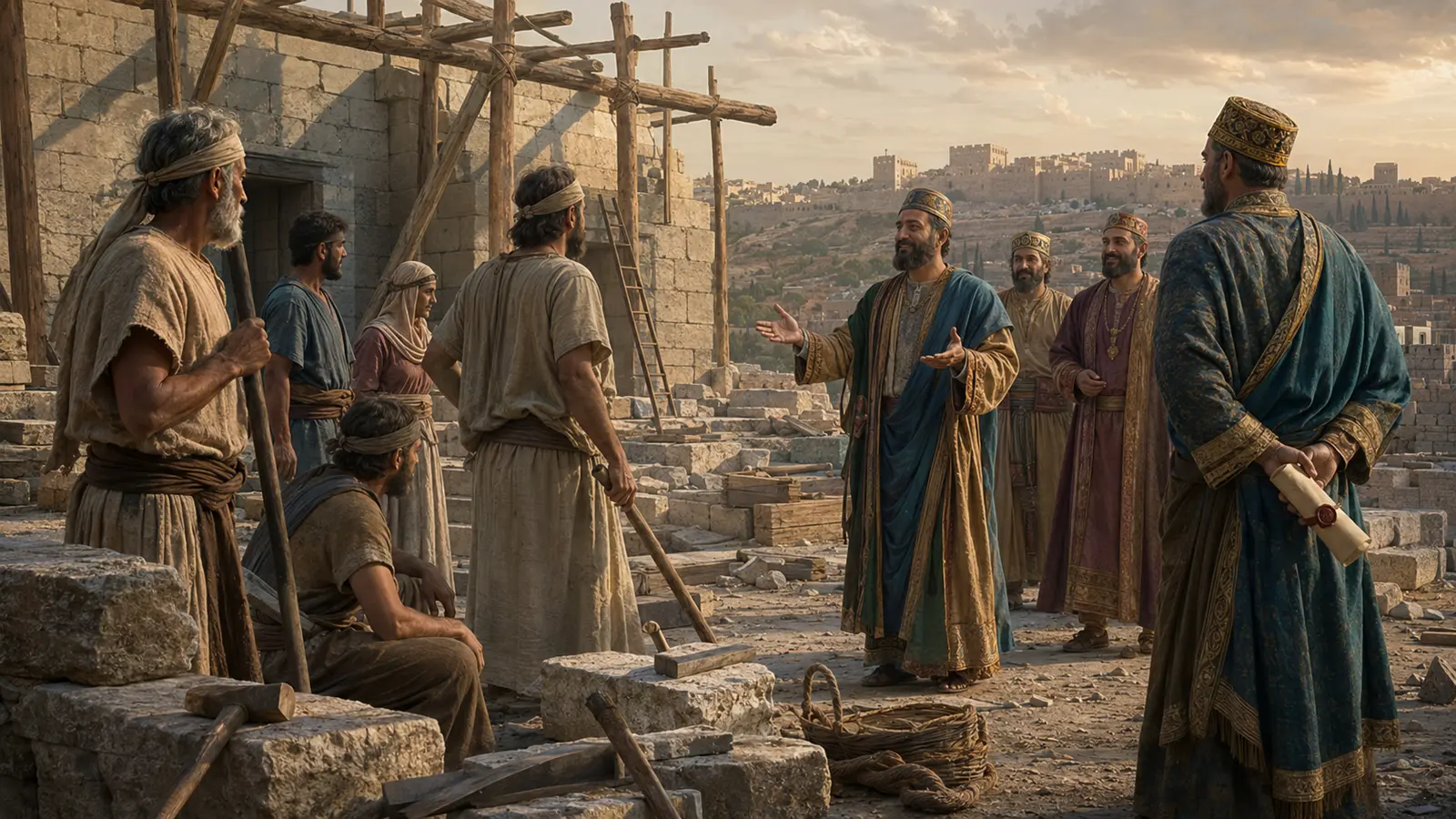
The altar has risen. The foundation has received a song. But no holy rebuilding remains hidden for long. Opposition comes first with open hands, then with discouraging words, then with official letters sealed by empire. The work of God is tested not only by enemies with swords, but by offers that blur identity, accusations that twist motives, and delays that make hope tired.
01
Introduction: When the Work Is Tested After the Worship Begins
There is a strange pattern in the life of faith: the moment rebuilding begins, resistance often wakes up.
A person returns to prayer, and distractions multiply. A family begins healing, and old wounds speak louder. A church recovers worship, and conflicts surface. A community starts repairing what exile has broken, and suddenly the air thickens with misunderstanding, suspicion, pressure, and fear.
Ezra 4 stands in that difficult space. Ezra 3 ended with the altar restored, the foundation laid, and the people singing, shouting, and weeping over the beginning of the temple. But now the music meets resistance. The work of restoration is no longer only about courage to begin; it becomes about endurance when the work is opposed.
The chapter is not simple. The first opposition comes in the form of an offer: “Let us build with you” [Ezra 4:2]. Zerubbabel and the leaders refuse [Ezra 4:3]. The surrounding peoples then discourage the builders, frighten them, and hire counselors against them [Ezra 4:4–5]. The chapter then widens its lens, collecting later examples of opposition during the reigns of Ahasuerus and Artaxerxes [Ezra 4:6–23], before returning to the temple work in the reign of Darius [Ezra 4:24].
Ezra 4 is therefore not merely a report of one conflict. It is a portrait of a pattern: whenever God’s people rebuild worship and communal identity, opposition may come through confusion, intimidation, accusation, bureaucracy, and delay.
This text is about rebuilding becoming tested, because worship that rises from the ruins must learn both discernment and perseverance.
02
Historical and Literary Context: A Chapter of Opposition Across Time
Ezra 4 belongs to the first major movement of Ezra–Nehemiah, where Zerubbabel leads the first return and the temple is rebuilt [Ezra 1–6]. But the chapter itself has a layered structure. It begins in the time of Cyrus and Darius, with opposition to the temple [Ezra 4:1–5, 24]. In between, it includes later opposition during the reigns of Ahasuerus and Artaxerxes, focused especially on Jerusalem and its walls [Ezra 4:6–23].
This means the chapter is not arranged as a simple timeline. It is arranged theologically and literarily. The narrator gathers opposition from different moments to show that the struggle against restoration did not happen once and disappear. It became a recurring pattern in the life of the post-exilic community.
The chapter also introduces a deep tension in Ezra–Nehemiah: the people must preserve covenant faithfulness, but they must not forget the larger promise that Israel’s restoration was always meant to bless the nations [Gen. 12:1–3; Isa. 2:2–4; Zech. 8:20–23]. The offer of help in Ezra 4 is therefore complex. On one hand, the leaders fear syncretism and compromised worship. On the other hand, the prophets had imagined a future in which nations would come to worship the Lord. Ezra wants us to feel the difficulty, not rush past it.
Ezra 4 unfolds in four main scenes:
1. The adversaries offer to help build the temple [4:1–3].
2. The peoples of the land discourage and frighten the builders [4:4–5].
3. Later accusations are sent against Jerusalem [4:6–23].
4. The work stops until the reign of Darius [4:24].
The chapter asks a painful question: How do God’s people rebuild faithfully when every path carries risk—compromise on one side, fear and hostility on the other?
03
Walking Through the Text
When Help Is Not Always Help [Ezra 4:1–3]
The chapter begins with “the adversaries of Judah and Benjamin” hearing that the returned exiles are building a temple for the Lord [Ezra 4:1]. The word “adversaries” already prepares the reader, but their first words sound cooperative: “Let us build with you, for we worship your God as you do” [Ezra 4:2].
This is the first test of discernment.
Their claim is religiously serious. They say they have been sacrificing to the God of Israel since the days of Esarhaddon king of Assyria [Ezra 4:2]. This likely points to the complex history after Assyria resettled populations in the former northern kingdom [2 Kgs. 17:24–41]. The result was a mixed religious landscape—some knowledge of the Lord, but mingled with other loyalties and practices.
Zerubbabel, Jeshua, and the heads of fathers’ houses refuse the offer: “You have nothing to do with us in building a house to our God” [Ezra 4:3]. They appeal to Cyrus’ decree, saying they alone will build as commanded by the Persian king.
Their refusal is understandable. The rebuilt temple must not repeat the spiritual confusions that helped lead Israel and Judah into ruin. The exile had taught a severe lesson: worship cannot be blended with competing allegiances [Deut. 12:29–32; 2 Kgs. 17:33–41]. Holiness matters.
Yet the moment is still uneasy. The prophetic hope had imagined nations streaming to Zion and joining themselves to the Lord [Isa. 56:6–8; Zech. 8:20–23]. So Ezra 4 leaves us with tension: the leaders may be guarding covenant worship, but the path of separation also carries the danger of hardening into exclusion. The question is not simple, because rebuilding after judgment requires both purity and humility.
When Discouragement Becomes a Weapon [Ezra 4:4–5]
After the refusal, the offer of partnership turns into active opposition. “The people of the land discouraged the people of Judah and made them afraid to build” [Ezra 4:4]. They also hired counselors against them to frustrate their purpose through the reigns of Cyrus and Darius [Ezra 4:5].
The mask comes off. What first sounded like cooperation becomes intimidation.
Notice the methods: discouragement, fear, and political manipulation. The opponents do not need to destroy every stone. They only need to weaken the hands of the builders. They do not need to defeat the people in battle. They only need to make obedience feel impossible.
This is one of the most common weapons against spiritual rebuilding. Discouragement whispers, “It is too hard.” Fear says, “You are too exposed.” Manipulation says, “The system is against you.” Together they create delay, fatigue, and hesitation.
Ezra 4 names these tactics because the work of God often stops not only through open persecution, but through a slow erosion of courage.
When Accusation Rewrites the Story [Ezra 4:6–16]
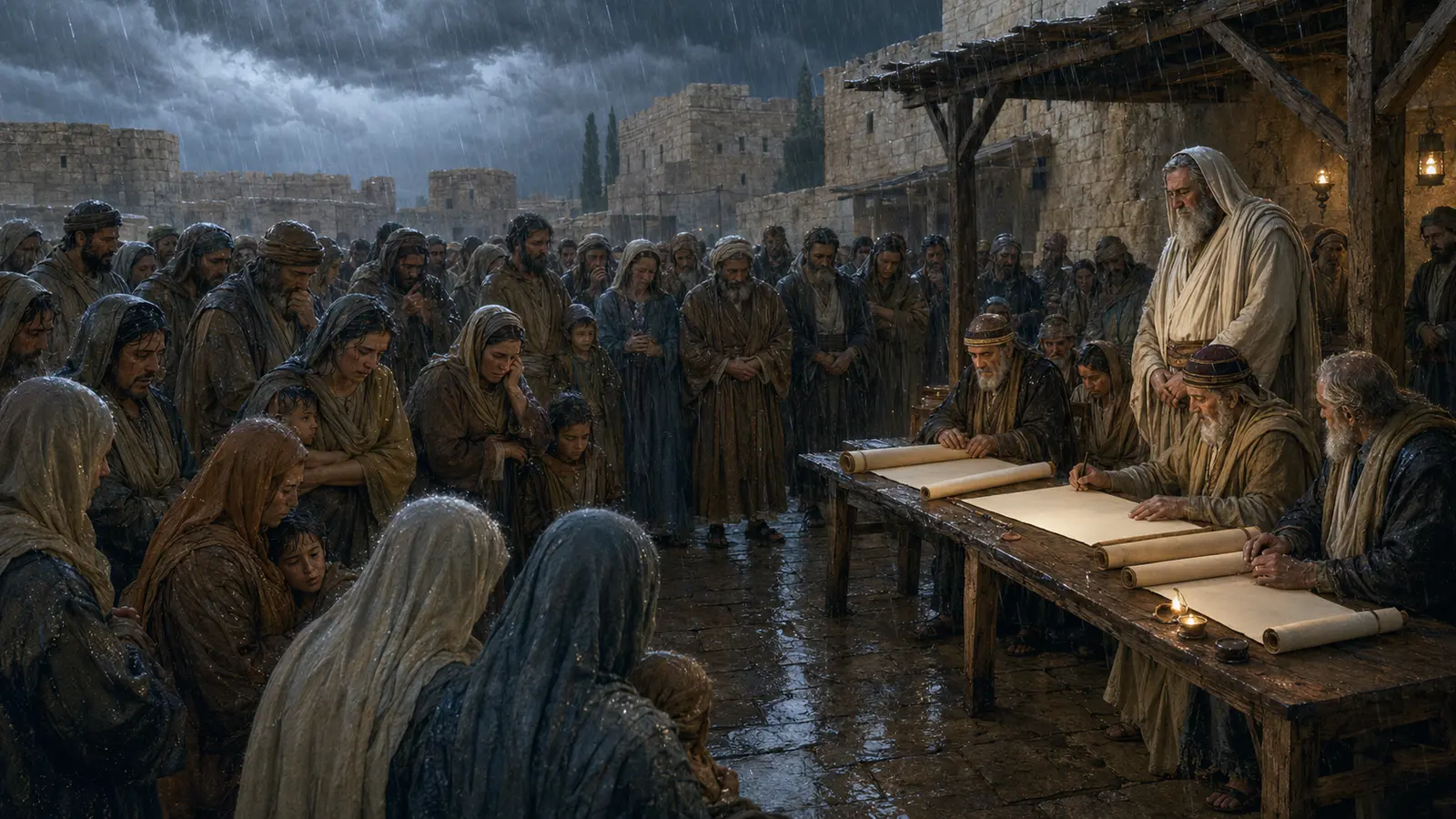
The chapter then moves forward into later reigns. During Ahasuerus’ reign, an accusation is written against the inhabitants of Judah and Jerusalem [Ezra 4:6]. During Artaxerxes’ reign, officials write a more detailed letter accusing Jerusalem of being rebellious and dangerous [Ezra 4:7–16].
The letter is clever. It does not say, “We hate these people.” It says, “We are loyal to the king.” It frames opposition as concern for imperial stability. Jerusalem is called “that rebellious and wicked city” [Ezra 4:12]. The officials warn that if the city is rebuilt, it will stop paying tribute, custom, and toll, and the king’s revenue will suffer [Ezra 4:13].
This is accusation as story-control.
The enemies of restoration reinterpret rebuilding as rebellion. They take a wounded people trying to restore communal life and portray them as a political threat. They appeal to the archives, reminding the king that Jerusalem has indeed had powerful kings and a history of revolt [Ezra 4:15–16]. There is enough truth in the accusation to make the lie persuasive.
This is how accusation often works. It takes fragments of history and arranges them without mercy. It names past failures but refuses present repentance. It remembers sin but ignores covenant purpose. It turns rebuilding into suspicion.
When Empire Stops the Work [Ezra 4:17–23]
Artaxerxes responds by ordering a search of the records. The archives confirm that Jerusalem had once been powerful and rebellious [Ezra 4:19–20]. The king then commands that the rebuilding of the city stop until he gives further decree [Ezra 4:21].
The opponents act quickly. They go in haste to Jerusalem and stop the work by force and power [Ezra 4:23].
Here we see the vulnerability of the returned community. They are back in the land, but they are not politically free. They are dependent on imperial permission. The same empire that can open a door can also close one. Ezra–Nehemiah repeatedly shows this paradox: God can work through kings, but kings are not saviors.
Theologically, this scene humbles triumphalism. The decree of Cyrus in Ezra 1 was real mercy, but imperial favor remains unstable. God’s people must be thankful for political openings without placing ultimate hope in them.
When the Work Stops, But the Story Does Not [Ezra 4:24]
The chapter ends by returning to the temple work: “Then the work on the house of God that is in Jerusalem stopped, and it ceased until the second year of the reign of Darius king of Persia” [Ezra 4:24].
This verse resumes the earlier temple storyline after the broad digression about later opposition. The effect is sobering. The work stops. The foundation has been laid, but the house is not yet built. The people who sang in Ezra 3 now face delay.
But the story does not end here.
Ezra 4:24 is a pause, not a conclusion. The next chapter will bring the prophetic voices of Haggai and Zechariah, calling the people back to courage and obedience [Ezra 5:1–2; Hag. 1:1–15; Zech. 4:6–10]. The work can be delayed, but God’s word is not chained. Fear can interrupt the building, but it cannot cancel the promise.
04
Theological Reflection
Discernment Is Necessary in Rebuilding
Ezra 4 teaches that not every offer of help strengthens the work of God. Some partnerships may blur identity, confuse worship, or redirect the mission. The leaders’ refusal is rooted in concern for the holiness of the temple and loyalty to the commission given for rebuilding [Ezra 4:3].
Yet discernment must remain humble. The same Scriptures that command holiness also anticipate the nations coming to worship the Lord [Isa. 2:2–4; 56:6–8]. Faithful separation is not hatred. Covenant identity is not pride. The people of God must learn to guard worship without forgetting mission.
Opposition Often Begins by Weakening the Hands
The opponents “discouraged” the people and made them afraid [Ezra 4:4]. This is spiritual warfare through emotional exhaustion. The builders are not first defeated by armies but by atmosphere.
Many works of renewal fail because hands grow weak. Leaders become tired. Communities become suspicious. Fear becomes normal. Ezra 4 calls us to recognize discouragement as a serious threat, not merely a passing mood.
Accusation Can Weaponize True History
The letter to Artaxerxes contains elements of truth: Jerusalem had indeed been a powerful city, and its kings had resisted foreign powers [Ezra 4:19–20]. But truth without covenant mercy becomes a weapon.
The gospel teaches us to tell the truth about sin without making sin the final word. God remembers judgment, but he also remembers promise. Accusation says, “You are only your worst history.” Grace says, “Your history is real, but God’s mercy is deeper.”
Delay Is Not Defeat
Ezra 4 ends with the work stopped [Ezra 4:24]. That is painful. But in the larger story, the delay becomes the setting for prophetic renewal. Haggai and Zechariah will speak into the stalled work, and the builders will rise again [Ezra 5:1–2].
The pause does not mean God has abandoned the project. Sometimes delay exposes fear, purifies motives, and prepares the people to receive the Word again.
05
Life Application: Rebuilding Under Pressure
Test every offer of help by worship and mission. Ask whether a partnership strengthens obedience to God or quietly redirects the work.
Guard against pride in separation. Discernment is necessary, but it must not become contempt. Holiness must remain married to humility.
Name discouragement honestly. When your hands grow weak, do not pretend nothing is wrong. Bring fear and fatigue into prayer and community.
Do not let accusation define your future. Past failure may be real, but God’s mercy can write a truer ending than your critics imagine.
Expect opposition after obedience begins. Resistance does not always mean you are outside God’s will. Sometimes it confirms that rebuilding matters.
Stay faithful during delays. A stopped project is not always an abandoned calling. Wait for God’s Word, and be ready to rise again.
Trust God more than permission systems. Human authority can open or close doors, but covenant faithfulness rests in the Lord.
06
Reflection Questions
1. Where do you need discernment between genuine help and subtle compromise?
2. What discouragement has weakened your hands in the work God called you to do?
3. Are you tempted to turn holiness into pride or mission into carelessness?
4. What accusation from your past still tries to define your present obedience?
5. How can you remain faithful in a season where the work feels delayed or stopped?
07
Response Prayer
Lord God of the unfinished temple,
teach us to rebuild with clean hands and humble hearts. Give us discernment when help is not truly help, courage when fear presses against our obedience, and patience when the work moves slower than our hope.
Guard us from compromise, but also guard us from pride. Keep us holy without making us harsh. Keep us open to your mission without making us careless with your worship.
When accusation rises against us, remind us that you know the whole story. When our past is used without mercy, speak your covenant word over us again. When our hands grow weak, strengthen us by your Spirit.
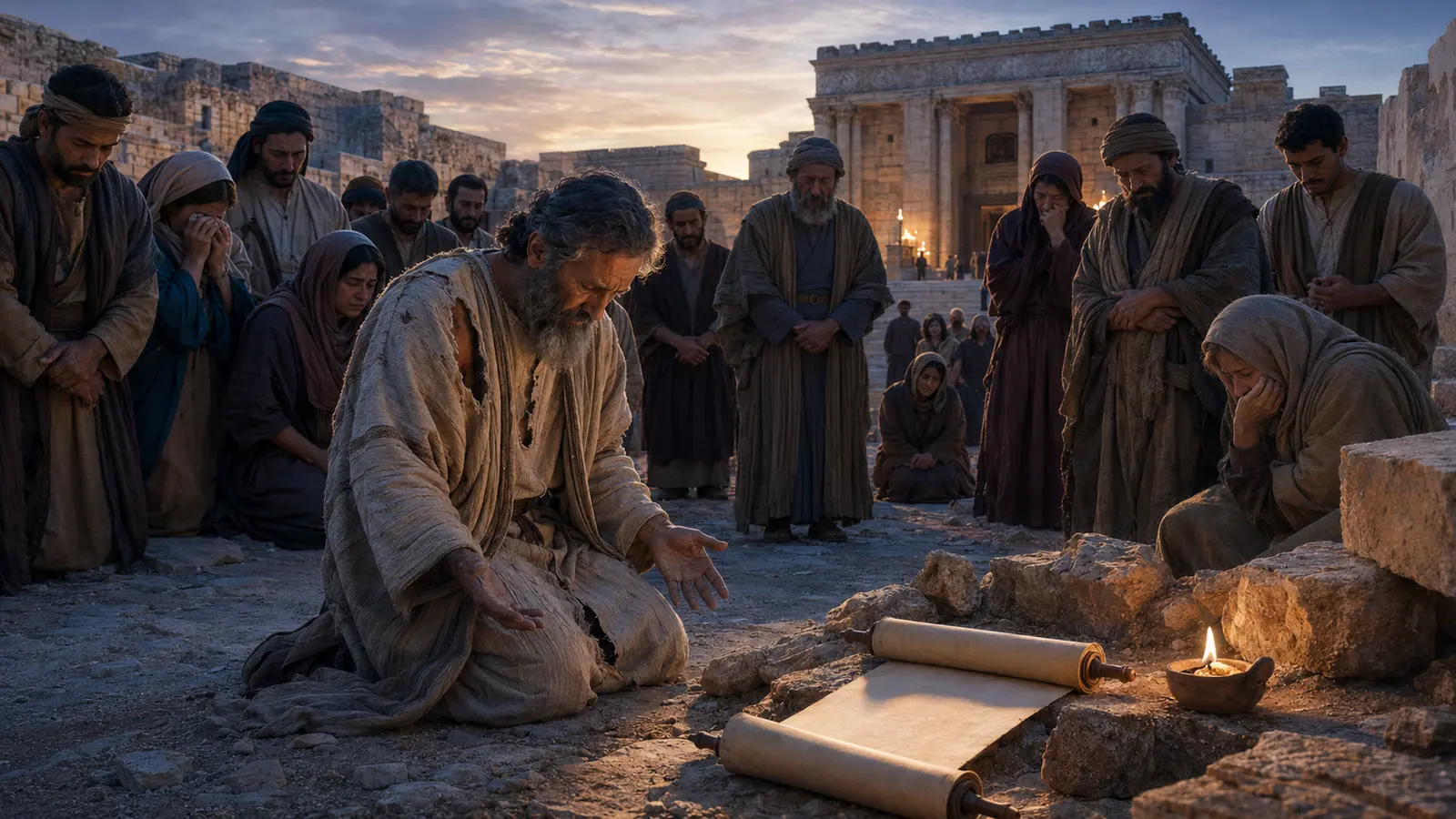
And when the work stops, do not let our faith stop with it. Send your Word into our delay. Raise prophetic courage in tired places. Teach us to wait without surrendering, to rest without quitting, and to rise when you call.
For you are the God who begins restoration, sustains it under pressure, and brings your promises to completion.
Amen.
08
Window into What Comes Next: When the Word Reawakens the Work
Ezra 4 ends with a painful sentence: the work stopped. The foundation lies unfinished. The people are discouraged. The pressure has worked, at least for a season.
But silence is not the final sound over the temple mount.
Ezra 5 will introduce the prophets Haggai and Zechariah. Their words will cut through fear, delay, and spiritual fatigue. The builders will rise again, not because opposition disappears, but because the Word of God becomes stronger than the atmosphere of intimidation.
The work has stopped.
Now the prophets will speak.
09
Bibliography
Williamson, H. G. M. Ezra, Nehemiah. Word Biblical Commentary 16. Waco: Word Books, 1985.
Williamson, H. G. M. Ezra and Nehemiah. Old Testament Guides. Sheffield: JSOT Press, 1987.
Kidner, Derek. Ezra and Nehemiah. Tyndale Old Testament Commentaries. Downers Grove: InterVarsity Press, 1979.
Clines, David J. A. Ezra, Nehemiah, Esther. New Century Bible Commentary. Grand Rapids: Eerdmans, 1984.
Fensham, F. Charles. The Books of Ezra and Nehemiah. New International Commentary on the Old Testament. Grand Rapids: Eerdmans, 1982.
Blenkinsopp, Joseph. Ezra–Nehemiah: A Commentary. Old Testament Library. Philadelphia: Westminster, 1988.
BibleProject. “The Book of Ezra-Nehemiah.” Old Testament Overview Guide.
Be the first to leave a comment.