

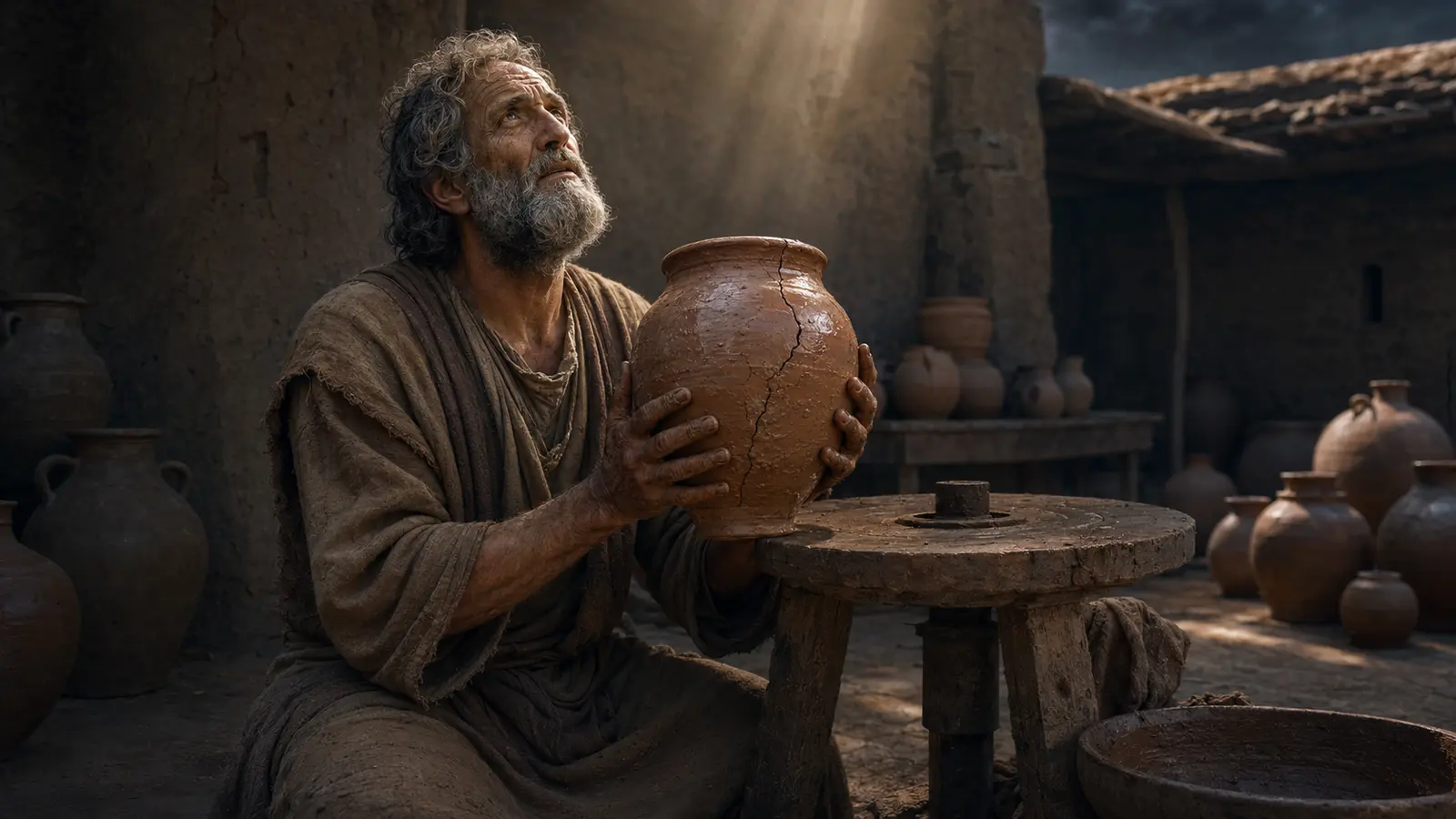
There are times when suffering does more than hurt the body. It questions the very meaning of being alive.
01
1.0 Introduction: When Creation Itself is in Question
There are times when suffering does more than hurt the body. It questions the very meaning of being alive.
Job 10 is one of those times. Job has already cursed the day he was born. He has asked for his pain to be measured on a scale. He has accused his friends of being like dry streams. He has turned to God and asked why God's eyes feel like a wound. In Job 9, he looked into the courtroom and found no mediator—no one to lay his hand on God and man.
Now, in Job 10, the courtroom turns into a workshop of creation.
Job does not speak of God as a distant power. He speaks of God as the Creator who created him personally. God's hands molded him. God made him like clay. God poured him like milk and froze him like cheese. God clothed him with skin and flesh and connected him with bones and sinews. God gave him life and unchanging love. God's care protected his soul.
These are very vivid images. They sound almost identical to Psalm 139, where the psalmist praises God for knitting him together in his mother's womb. But in Job's mouth, the memory of creation turns into an accusation. If God created him so carefully, why destroy him now? If God gave him life and covenant kindness, why is he now hunting him like a lion? If God knows that Job is innocent, why does he continue to look for sin as if Job is a criminal hiding evidence?
This is the wound of Job 10: the hands that created Job are now felt as the hands that destroy him.
This scripture is about creation turning into a complaint, because Job teaches us that a wounded faith can even bring the mystery of our existence before the God who created us.
Job 10 is not a comforting prayer. It is not a spiritual smile placed over a broken bone. It is the statement of a creature who knows he is dust, he remembers that God created him from dust, and now he fears that God has chosen to crush the work of his own hands.
02
2.0 Historical and Literary Context: The Second Half of Job's Answer to Bildad
Job 10 continues Job's response to Bildad, which began in Job 9. Bildad had defended God's justice and emphasized that God does not satisfy what is right. Job didn't just deny this. Instead, he showed how divine justice is so frightening when a suffering human being cannot get a fair hearing. God is wise and powerful; Job is dust and breath. God orders creation; Job cannot call God to court. The chapter ended with Job longing for a mediator, someone to stand between them.
Job 10 now goes directly to the lamentation addressed to God. The legal language remains: Job asks not to be judged, he wants to know why God is competing with him, he insists that God knows he is innocent, and he imagines God sending new witnesses against him. But the legal image is connected to the image of creation. Job's complaint turns into a court case and mourning over his creation.
This chapter goes into four main steps:
1. Job demands to know why God considers him guilty (vv. 1-7).
2. Job remembers God as the careful Creator of his body and his life (v. 8-12).
3. Job accuses God of hidden hatred and endless accusations (vv. 13-17).
4. Job asks why he was born and begs him to rest a little before he dies (v. 18-22).
Theologically, Job 10 deepens the tension between creation and suffering. In Genesis, God creates man from dust and breathes into him the breath of life. In Psalm 139, creation in the womb is a cause for wonder. In Job 10, such language is used from the side of pain and suffering. Job did not deny that God created him. He uses the same confession to ask why God is now destroying what he created.
Here is one of the rarest truths of the book of Job. The truth is that biblical faith has ample room for creationist attributes and creationist demonstrations. Sometimes the same teaching that gives comfort in one season turns out to be a place where questions gather in another season. God created me—therefore I am precious. God made me—so why do I suffer like this?
03
3.1 "Tell me why you contend with me" (Job 10:1-7)
Job begins with a serious confession: "My soul hates my life."
This is not a theoretical statement. It comes from a long accumulation of loss, illness, shame, failed friendships, and God's silence. Job is not only tired of pain; tired of being under pain. His life has become a burden he cannot bear.
For this reason, he says he will give freedom to his complaints. He will speak in the pain of his soul. This refers to Job 7:11, where he refused to restrain his mouth. Job is not trying to be unruly on purpose. He says that the pain in him must be turned into words. To remain silent would be an illusion.
Then he speaks directly to God: "Don't blame me; let me know why you fight with me."
The statutory language is clear. Job feels guilty, even though he is not shown his guilt. He's not just asking for help to ease the pain; he asks for an explanation. Why has God entered into conflict with him? Why is Job accused? What suspicions stand on his life?
Then come the burning questions: Is it good for God to oppress, despise the work of his hands, and smile at the counsel of the wicked? Does God have physical eyes? Does God see as humans do? Are God's days like the days of men, that he must quickly seek out Job's sin before time runs out?
Job pushes God's own identity back to Him. God is not a weak human judge with limited vision, limited time, and limited knowledge. God does not need to investigate like a skeptical judge. God already knows. So why does he treat Job as if the hidden guilt had to be pulled from him by force?
Verse 7 sharpens the pain: "Though you know that I am innocent, and no one can deliver from your hand."
Job is trapped! If God did not know Job's heart, Job could have appealed to God's ignorance. If God had made a mistake, Job could have asked for correction. But Job believes God knows he is innocent—and yet no one can save him from God's power.
Injury is no longer just "I suffer." It's, "You know the truth, and I'm still suffering."
04
3.2 The Hands That Made Me (Job 10:8–12)
Job now leaves the court and goes to creation. "Your hands molded me and created me," he says. "And now you turn around and destroy me."
This difference is very sad. God's hands had carefully shaped Job. Now those same hands seem to be crushing him. The creator has been, in Job's experience, the destroyer of his own work.
Job asks God to remember: "You created me like dust; will you return me to dust?" This goes back to Genesis, where humanity is created from the ground. Job knows he is dust. But he asks why the return to dust must be so forceful, so swift, and so full of shame.
Job then uses a series of dramatic physical images. God poured him like milk and froze him like cheese. God clothed him with skin and flesh. God connected him with bones and sinews. These images reflect ancient ways of thinking about creation in the womb, but they also carry a deep theological intimacy. A job is not a connected machine from far away. He is God's handiwork.
This language is soft, almost motherly, or like a skilled craftsman. God is the potter, the midwife, the weaver, the giver of structure and covering. Every part of Job's bodily life is traced to divine care.
Then Job says, "You have given me life and unchanging love, and your care has preserved my soul." This is one of the best verses in this chapter. Job remembers that his life has been a gift, not an accident. God's covenant kindness—his unchanging love—has been there. God's protective care has preserved his breath.
And yet this memory does not comfort Job easily. It makes the current suffering all the more confusing. If God gave life and love, why does God now seem to take them both away? If God saved his soul, why is he now hunting it?
This is the amazing power of memory in times of grief. Remembered kindness can be an anchor or more pain. Job knows God has been good. That is why to some extent the current situation feels unbearable.
05
3.3 Hidden Motives of the New Witnesses (Job 10:13–17)
Job now turns the memory of creation into doubt: "But you hid these things in your heart; I know that this was your purpose."
This is a heavy sentence. Job thinks that beneath God's original goodness there was a hidden plan of hostility. The blessings of creation and preservation now appear, in Job's pain, as part of a greater trap. God only created him to have something to accuse. God only cared for him to make his present suffering more complete.
This is not the final truth about God. But it is true for Job's experience. Suffering can distort memories. It can make the kindness of the past seem like a preparation for the cruelty of the present. The sufferer begins to ask: Was I ever really loved, or was I just being prepared for this fall?
Job continues with the legal vocabulary. If he committed a sin, God would watch over him and would not let him go free. If he was guilty, woe to him. Even if he was innocent, he could not raise his head because he is full of shame and suffering.
This is important. Job says that all possibilities feel impossible. If he is guilty, he is doomed. If he is innocent, he is still shamed. In the public world, suffering has already marked him. He can't lift his head. The trial court has already ruled against it.
Then the scene changes from the court to the battlefield and the hunt. God hunts him like a lion. God works wonders against him. God is re-creating witnesses against him. God increases anger. God is sending new armies against him.
The word "wonder" is very painful. In Scripture, God's miracles often mean deliverance: the plagues against Egypt, the parting of the sea, manna in the wilderness, great saving deeds. But Job feels that God's wonders are being turned against him. The God of miracles has made Job a field of pain.
The line about new witnesses continues the legal mystery. Job feels as if the evidence is being piled up against him, not because he is guilty, but because God is determined to build a case. The image of the armies increases the pressure: wave after wave of suffering, soldier after soldier, grief after grief.
This is what accumulated suffering feels like. One blow could be tolerated. But when loss, sickness, shame, sleeplessness, failed friendships, and God's silence arrive together, the soul feels besieged.
06
3.4 "Why did you take me out of the womb?" (Job 10:18–19)
Job returns to the question of birth. "Why did you bring me out of the womb?"
This refers to Job 3, but now this question is addressed more directly to God. In Job 3, Job cursed the day of his birth. In Job 10, he asks the Creator why he allowed him to be born there at all. If life was like this, why wouldn't he let her die without being seen? Why should he not let him go from the womb to the grave as if he had never existed?
The image is heartbreaking. Job wishes he could be carried from the womb to the grave without being seen. He thinks of a life erased before it can be seen, a sorrow prevented before it takes shape on earth.
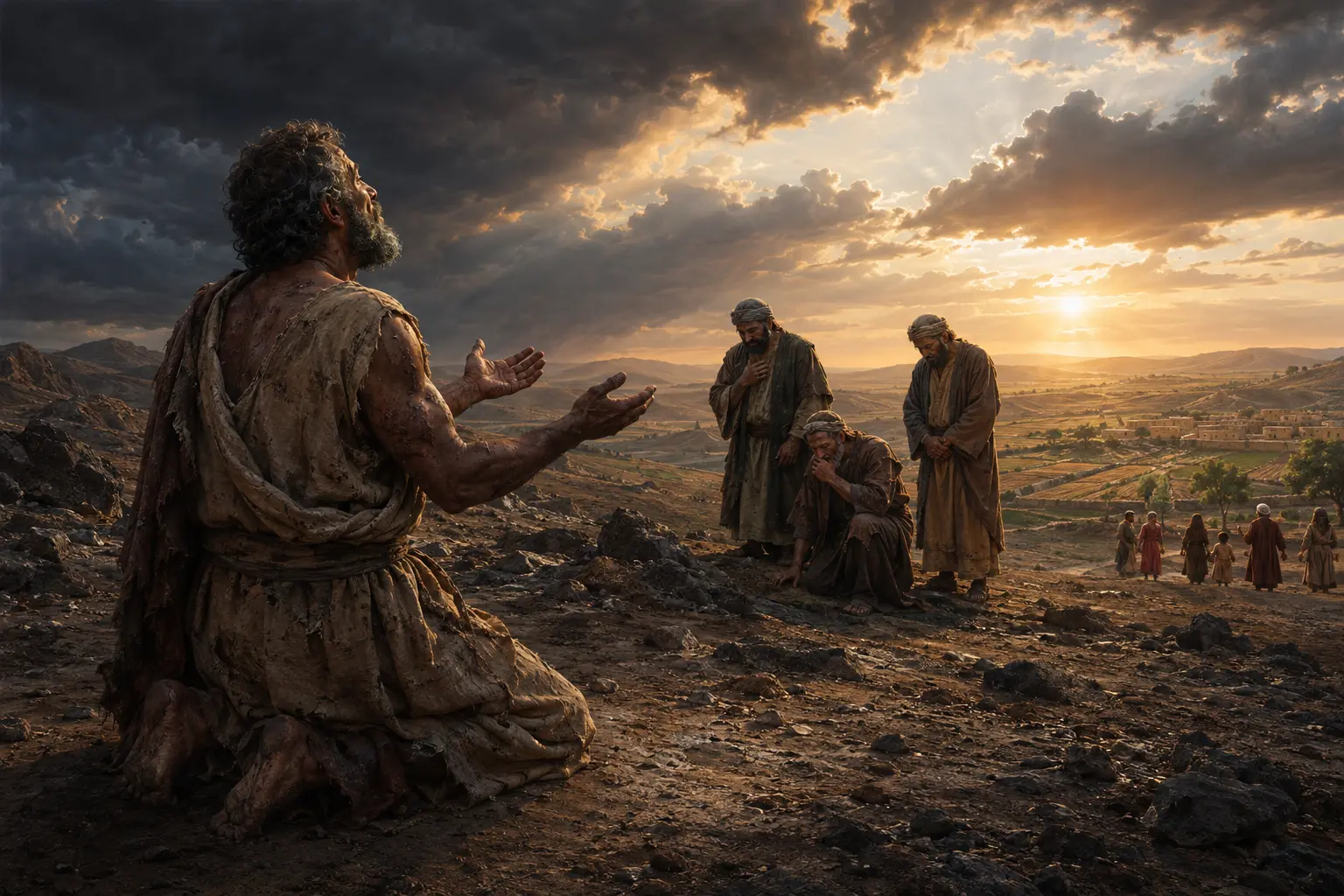
This is not a philosophical conclusion that life is worthless. It is the cry of the oppressed that his life has become unbearably heavy. We must hear this with compassion. The Bible includes this prayer not to justify despair as the ultimate truth, but to show that despair can be brought before God without being erased from the sacred story.
Job's question also reveals something about human nature. Visibility is part of being accepted in human society. Job now wishes he hadn't been seen because being seen has become a shame. His public identity has collapsed. Honor has turned to shame. The former great man of the East now wishes he had remained hidden.
07
3.5 Request for a Little Light Before Darkness (Job 10:20–22)
Job ends by asking for relief. "Are not my days few? Leave me alone, that I may find a little comfort before I go—and shall not return—to the land of darkness and heavy shadow."
This is similar to Job 7, where he asked God to look away just long enough for him to swallow. Here again, Job is not asking for full restoration, but for a little relief from the pain. A little comfort. A small breath before the final descent.
He then describes death as a land of darkness, heavy shadow, violence, and darkness. The language is very heavy. Death has not yet been described as the hope of resurrection. It is a land of no return, where light is like darkness.
The chapter ends there—in the dark.
No answer comes. No mediator appears. No hand forbids going down there. Job's complaint hangs in the air: Why did you create me carefully if you were determined to bring me back to the dust in shame?
Job 10 is one of the Bible's boldest invitations to reject shallow words. It allows the creature to bring the mystery of creation back to the Creator. It allows the molded dust to ask the Potter why the vessel is broken.
08
4.1 Creation is Personal Before It is Theoretical
Job does not speak of creation as a doctrine on paper. He is talking about his own body: skin, flesh, bones, nerves, breath, spirit. God created him. God created this life.
This is important pastorally. When people suffer, they are not theological models. They are physical beings created out of love by God. Caring for the tortured must respect their bodies, their histories, their memories, and their dignity.
09
4.2 Remembered Kindness Can Hurt When Present Pain Seems Like Betrayal
Job remembers that God gave him life and unchanging love. But the memory does not immediately calm his heart. It adds to the confusion. If God has been good, why this hostility now?
An honest service allows people to voice that tension. We don't need to force a memory into comfort before it goes through mourning.
10
4.3 Suffering Can Turn God's Protection into Intelligence
Job says that God's care protected his soul, but later he fears that God is watching him to catch him in every sin. The very idea—God sees—can sound like a defense or an accusation, depending on the victim's experience.
This requires gentleness in how we talk about God's care. For some, "God sees everything" is a comfort. For others, with shame or trauma, it can sound scary. The Gospel should reveal that God's vision is not cold intelligence but holy, healing, and true love.
11
4.4 Job's Accusation Is Not The Last Truth, But It Is A Statement Of Faith From The Wound
Job accuses God of hidden hostility, stalking him like a lion, and relentless accusations. As the book progresses it will correct Job's limited vision. But God does not erase Job's words from the Scriptures.
This means that the Bible values honest prayer more than a beautifully worded denial. Job's accusation is not the last word about God, but it is part of the faithful process where Job rejects false comfort and continues to talk to God.
12
4.5 Christ Is The Creator Who Enters The Broken Vessel
Job asks why the Creator destroys the work of his hands. The Gospel answers not by explaining every wound, but by revealing the Creator who wears flesh. In Jesus, the Creator becomes a creature. He through whom all things were created receives skin, bones, blood, breath, and wounds.
On the cross, the hands that made man are pierced by man's violence. The potter becomes a broken vessel, not because creation is worthless, but because God is determined to heal it from within.
In the resurrection, God's answer to the dust is not abandonment but new creation.
13
5.1 Bring to God the Question Under the Question
Sometimes under the question "Why do I suffer?" sleeps a deeper cry: "Why was I created, if life were to be this painful?" Job shows that even that question can be brought before God.
14
5.2 Respect the Body in Spiritual Services
Job's mourning is physical. Skin, flesh, bones, breath, sleeplessness, shame, pain. Don't give spiritual advice that ignores the body. Encourage prayer, but also rest, medical care, counseling, nutrition, and fellowship with friends.
15
5.3 Don't Rush People From Complaints To Praise
Job remembers God's goodness, but still complains. Let the memories and the mourning stay together. Some hearts need time before gratitude sings again.
16
5.4 Talk about God's Care as Healing Love
For traumatized people, the idea of being watched can feel like a threat. Speak carefully. The attitude of God in Christ is not the attitude of a prosecutor who seeks to fail, but the attitude of a physician who sees the truth in order to deeply heal.
17
5.5 Reject the Lie That Shame Defines You
Job cannot raise his head because he feels full of shame and suffering. Suffering often makes people feel guilty even when they are innocent. The cross tells us that shame has no right to name those whom God loves.
18
5.6 Ask for Small Mercies When Big Answers Don't Come
Job asks for a little comfort before the darkness. In difficult times, it is not a lack of faith to pray for small mercies: one night of sleep, one faithful friend, one meal, one faithful prayer, one hour without fear.
19
5.7 Look at the Incarnate Creator
When your body feels like a burden and your life feels like a question, look to Jesus. He does not despise the flesh. He entered into it, suffered in it, rose with them, and promises his newness.
20
6.0 Reflection Questions
1. Where suffering has made me question not only my environment, but the meaning of my life?
2. Do I think of my body as part of God's handiwork, even when it is weak or injured?
3. How do I hear the idea that God is looking at me—as a comfort, a threat, or something mixed?
4. What past evidence of God's goodness do you now feel confused by the current pain?
5. Where do I need to ask God for a small mercy instead of pretending I can handle everything?
6. How does the incarnation of Christ reshape the way I look at my weaknesses?
21
7.0 Answered Prayer
Creator of dust and breath,
You created us with hands we cannot see. You clothed us with skin and flesh. You connected bone to vein, breathed into lungs, and put life into us as a gift. We admit that we do not always understand this gift. Sometimes life hurts so much that we ask why we were created at all.
Receive our questions without crushing us.
When your hands are heavy on us, let us remind you that they are the hands of the Creator, not the hands of the enemy. When shame keeps our heads down, lift them up with mercy. When pain makes your care feel like espionage, teach us to see your face in Jesus Christ.
Forgive us when we speak harshly from the wound, but do not banish us for speaking there. Meet us in the pain of our souls. Give us the courage to bring our complaints before you instead of hiding them in silence.
Take care of the bodies you have created. Give rest to the sleepless, healing to the sick, strength to the weary, friends to the lonely, and small mercies to those who cannot yet imagine the great.
Lead us to Jesus, the Creator in the flesh, the wounded healer, the broken vessel resurrected in glory. Let his pierced hands answer our fear that the Potter despises the clay. Let his resurrection teach our dust to hope again.
Until the darkness leaves, hold on to what you created.
Amen.
22
8.0 The Next Window: When Wisdom Is Too Certain Again
Job 10 ends in darkness. Job has asked why God created him, why God is looking for sin, why God is hunting him, why God is letting him live only to suffer, and why he cannot find a little comfort before he descends into the land of heavy shadow.
The next voice will be that of Zophar.
In Job 11, the third friend enters with more confidence than the first two. He will accuse Job with empty words, insist that God's wisdom is deeper than Job knows, and suggest that Job actually deserves worse than what he received. He will speak about the mystery of God, but using the mystery as a weapon instead of a refuge.
Job has asked the Creator why he is being destroyed. Zophar will respond by telling the victim that he doesn't know enough—and that may be true, but it still wouldn't be mercy.
The conversation becomes more intense. Friends are no longer just comforters for the wronged. Their theology becomes complicated, and Job's wound is pushed further down the line.
23
9.0 References / List of Books
Alter, Robert. The Wisdom Books: Job, Proverbs, and Ecclesiastes: A Translation with Commentary. New York: W. W. Norton, 2010.
BibleProject. "The Book of Job." Old Testament Overview Guide.
Clines, David J. A. Job 1–20. Word Biblical Commentary 17. Dallas: Word Books, 1989.
Crenshaw, James L. Old Testament Wisdom: An Introduction. Louisville: Westminster John Knox, 2010.
Hartley, John E. The Book of Job. New International Commentary on the Old Testament. Grand Rapids: Eerdmans, 1988.
Walton, John H., and Tremper Longman III. How to Read Job. Downers Grove, IL: IVP Academic, 2015.
Wright, N. T. The New Testament and the People of God. Minneapolis: Fortress, 1992.

Be the first to leave a comment.