

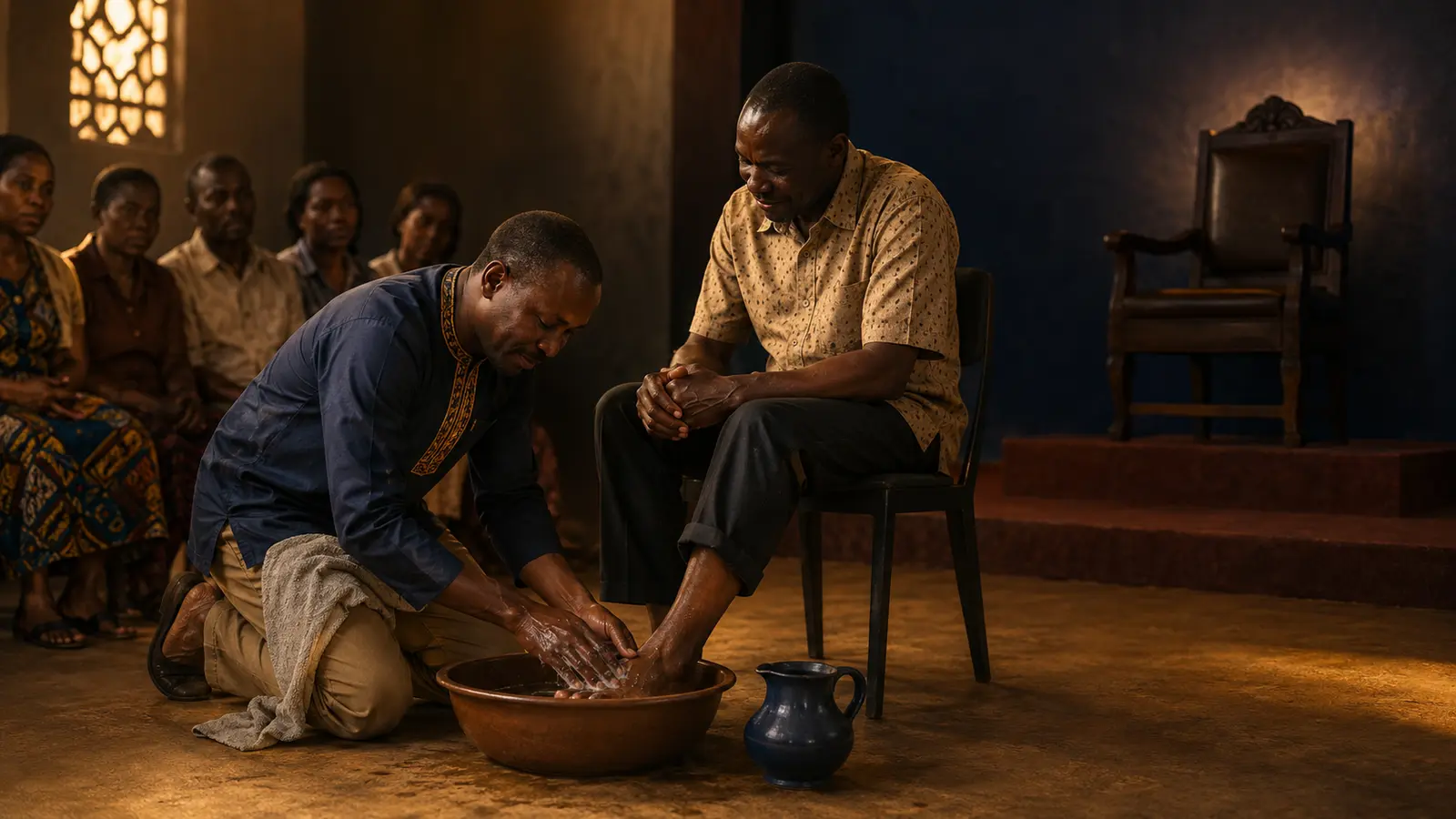
Does your position help people grow in Christ, or make them increasingly dependent on you?
Opening question: Are people growing, or becoming more dependent on you?
Imagine this situation. A church meeting has ended. Chairs are being stacked, books collected, and the leader is left holding a folder of plans. Everything has reached the same desk: visitors, young people, finances, pastoral visits, and the timetable. People praise the leader’s dedication. Yet the leader leaves exhausted, while members leave unsure what they can contribute without first asking permission.
A question about leadership can hide behind all that activity: are we helping people mature, or creating a community that cannot act without us? Love for ministry can become entangled with fear of losing our importance. We hold every key and then wonder why so many doors remain closed.
This article opens A Good Leader: From Calling to Becoming a Blessing. Our journey begins with Jesus and his calling, then moves into pastoral care, character, listening, accountability, money, conflict, and developing others. The guiding question is practical: how does our responsibility help people live under Jesus’ reign and participate in his mission?
Listening to Scripture: Greatness takes a different road
In Matthew 20:20–28, a request for places of honour in the kingdom provokes anger among the disciples. Jesus addresses their understanding of greatness. They are looking forward to God’s work, yet they still imagine authority as a ladder someone climbs by standing above other people.
Jesus compares this with rulers who use power to dominate. He then directs his community toward service. The foundation is the Son of Man, who comes to serve and give his life. Leadership is being explained within his journey toward the cross. His life reveals a kingdom in which authority is exercised for the sake of others.
John 13:1–17 brings that picture close enough to touch. Jesus washes his disciples’ feet knowing that he has come from the Father and is returning to the Father. Security in his identity makes room for him to kneel. Peter resists, but he must first receive Jesus’ service. Before Christian leaders learn to care for others, they too must receive salvation and care as gifts of grace.
Ephesians 4:11–16 adds the responsibility to equip others. The ascended Christ gives gifts for building his body. Leaders prepare God’s people for service so that the body grows toward maturity and love. Every part contributes to this growth. Its fulfilment is not one person becoming capable of doing everything.
A position is a trust that requires accountability
An office may authorise you to call a meeting, approve spending, or organise a rota. These are real responsibilities. But authority to decide does not remove the responsibility to explain decisions, listen to those affected, and accept scrutiny.
John Maxwell distinguishes reliance on position from leadership strengthened through relationships and developing others (Maxwell Leadership, “The 5 Levels of Leadership”). This helps us ask whether people can participate willingly and understand the direction of the work. Christian influence must still be tested against Jesus’ character.
Someone can have many followers and lead them astray. A popular leader can conceal financial misconduct. Influence alone therefore cannot establish good leadership. We must ask where it takes people, which methods it uses, and what happens to those who question it.
Within the church, an office is a responsibility within a body belonging to Christ. In a school, business, or community organisation, the same concern can help connect authority with accountability. The name on the door should not become a wall that keeps the truth outside.
We listen for our purpose before announcing it
A leader may explain what we do without explaining why we do it. Meetings multiply, buildings expand, and calendars fill up. We can still fail to ask whether these activities help people become disciples of Jesus and love their neighbours.
Simon Sinek’s WHY, HOW, and WHAT distinguish purpose, its expression, and visible activity (Sinek, “The Golden Circle”). The framework can clarify discussion. The church, however, receives its calling from God; it does not invent a purpose to justify a leader’s ambition.
We can therefore ask: why are we offering this ministry in the light of the gospel? What love and justice are expressed in the way we do it? Which activities serve that purpose? If we say young people matter but never listen to them or give them meaningful responsibility, our methods contradict our words.
Habakkuk 2:2–3 does not promise that every organisational dream will succeed. The vision there concerns God’s message within a setting of judgment, faithfulness, and waiting. We can learn to communicate direction clearly without turning our plans into prophecies nobody is permitted to examine.
This also changes how we discuss a disappointing result. A programme may need to be revised or stopped without implying that God has failed. Leaders who can distinguish the mission from a particular method make room for honest learning. They can ask what people actually need, rather than defending an activity because their name is attached to it.
The church is gathered to live Christ’s mission
Ephesians 2:11–22 describes Jewish and Gentile people being brought together through Christ. His reconciling work confronts hostility, and the community becomes God’s dwelling by the Spirit. Before discussing an efficient committee, we encounter the question of what kind of people the gospel is creating.
N. T. Wright connects the church’s life with announcing Jesus’ lordship and embodying God’s restoring love (Wright, “Believing and Belonging”). Applied to leadership, this directs us to ask whether our community lives the message it announces.
We proclaim Jesus, invite people to faith and repentance, teach them to follow him, and learn to express that love in relationships and responsibilities. Worship and daily witness need to nourish each other. A teacher refusing a bribe, a parent listening attentively, and a congregation welcoming people pushed aside can embody discipleship in different settings.
The church is not identical with God’s kingdom. The expansion of a building or denomination cannot establish that all our decisions have divine approval. Jesus is King; leaders and institutions remain accountable to his judgment and mercy. We serve in hope, knowing that God brings the final renewal of creation.
This hope keeps ordinary work from becoming either trivial or ultimate. Visiting a lonely neighbour matters. So does teaching Scripture faithfully or making a decision that protects someone vulnerable. Yet no achievement makes us the saviours of the community. We can work wholeheartedly while admitting that the world’s healing exceeds our ability and awaits God’s completion.
Equipping others belongs within the work itself
A capable leader may begin to believe that quality depends on doing everything personally. Ephesians 4 directs us instead toward a growing body. Teaching another person requires time that today’s schedule may appear unable to spare. Continually postponing it leaves people without opportunities to learn.
Begin with a real responsibility. Explain its purpose, the limits of authority, available resources, and when advice should be sought. Allow the learner to make decisions appropriate to their readiness. Then review the experience together. Delegating without support abandons someone; providing support without room to act keeps hold of them.
In 2 Timothy 2:2, teaching is entrusted to faithful people who will be able to teach others. This protects us from making ministry a monument to our names. As we equip people for everyday witness, we can stop treating them as assistants to our plans and honour them as participants in Christ’s work.
Not everyone must become a pastor or hold an office. Gifts and responsibilities differ. The body needs each part to serve faithfully, and those with leadership responsibilities must nurture conditions in which other people can grow.
Consider the difference between asking someone to fill a slot and asking what they are learning, what gifts others recognise in them, and what support they need. Both may lead to a practical assignment. The second approach also takes the person’s development seriously. It treats preparation, patient feedback, and encouragement as ministry rather than interruptions to ministry.
“If I give people room, won’t I lose control?”
There is a genuine concern here: mistakes can happen. But preventing every independent step does not develop wise people. The answer is to connect appropriate freedom with training, boundaries, and accountability.
A leader can establish procedures for finances, child protection, confidential information, and complaints. Some decisions should not be made by one person alone. These limits must be clear and apply to leaders too. Trust must never become a word used to stop people asking questions.
When somebody else does well, thank God without searching for a reason to bring everything back into your hands. The greatness Jesus teaches gives us room to delight in people’s growth. Ministry can move forward even when we do not appear in every photograph.
Equally, delegation does not release the leader from responsibility. Review agreed work, make resources accessible, and address harmful conduct promptly. A healthy team is neither a community controlled by one anxious person nor a collection of people left without guidance. It learns to carry responsibility together under Christ.
Life Application
- Write the purpose of your responsibility. Explain in two sentences how it serves people and participates in Christ’s mission. Examine it with Scripture and the people you serve.
- Notice unhealthy dependence. Identify three decisions that stop when you are absent. Ask which need training, a clear procedure, or delegation.
- Offer supported responsibility. Entrust one task together with information, resources, boundaries, and a review date.
- Make room for correction. Ask what helps people in your leadership and what holds them back. Do not retaliate against an unwelcome answer.
- Connect ministry with ordinary life. At the next meeting, invite someone to describe following Jesus at work, at school, or at home.
- Measure more than activity. Consider learning, willing participation, accountability, and care. Use numbers to inform decisions without making them a measure of anyone’s worth before God.
Weekly Practice: From holding every key to opening space
Goal: Help one person grow in a clear responsibility while learning to lead without controlling every step.
- Read Matthew 20:20–28 and Ephesians 4:11–16. Identify one habit to relinquish and one to learn.
- Choose a small responsibility involving low risk. Discuss it with a willing person and listen before assigning the task.
- Agree on its purpose, authority, boundaries, support, and a review date. Do not deliberately withhold information needed for the work.
- At the end of the week, discuss what each of you learned. Evaluate understanding and accountability rather than whether the person copied your style.
Learning partner: A fellow leader or wise member who can offer honest feedback. Never place a learner in a responsibility beyond their safety or readiness.
Reflection and Discussion Questions
- What did the disciples need to learn about greatness in Matthew 20:20–28?
- Why does receiving Jesus’ service precede serving others in John 13?
- Where have I confused my calling with a need to remain indispensable?
- Does my influence make people free to speak honestly, or anxious to please me?
- Is our stated purpose reflected in the way we use time, money, and authority?
- Whom could my ministry help to grow without becoming more dependent on me?
- What one change will I make this week to help others participate more faithfully?
Conclusion and Prayer
Return to the meeting room. Chairs still need stacking and much work remains. But the picture can change: people understand the purpose, know what they can contribute, and have permission to learn. The leader remains accountable while rejoicing that the community’s life does not revolve around one name.
Believe. Become. Bless. We believe in Christ who served us; we learn to become like him; we use what we have received to bless others. Position becomes a doorway into service, and calling becomes a shared journey.
Lord Jesus, you welcomed me by grace before I had anything to boast about. Teach me to exercise responsibility faithfully. Free me from fear of being surpassed and the desire to control everything. Give me wisdom to equip others, courage to be accountable, and joy in seeing you work through many people. By your Spirit, form us into a community that speaks and lives your good news. Amen.
Next in the Series
Position and calling need a heart that knows how to care for people. Continue with A Good Leader — A Shepherd’s Heart and the Ministry of Love, the second article. We will explore how compassion, truth, protection, and equipping others belong together in pastoral ministry.
Bibliography
- Scripture: Matthew 20:20–28; John 13:1–17; Ephesians 2:11–22; 4:11–16; 2 Timothy 2:2; Habakkuk 2:1–4. Biblical passages are summarised rather than quoted from a particular translation.
- Maxwell Leadership. “The 5 Levels of Leadership.” August 31, 2016. Official account of John C. Maxwell’s framework.
- Sinek, Simon. “The Golden Circle.” The Optimism Company. Official explanation of WHY, HOW, and WHAT.
- Wright, N. T. “Believing and Belonging.” Excerpt from Simply Christian, reproduced online by permission. NTWrightPage.


Be the first to leave a comment.