


Before a single stone is lifted, a servant weeps. Before gates are rehung, a heart is broken open. Jerusalem’s walls are down, but Nehemiah’s first work is not strategy, fundraising, or travel. His first work is to kneel in the winter palace and carry the city’s rubble into the presence of God.
01
Introduction
There are ruins we can see and ruins we learn about from a distance. Sometimes the broken wall is not outside our window; it comes to us in a report, a message, a phone call, a whispered testimony. Someone tells us the family is wounded, the church is tired, the city is ashamed, the young people are drifting, the altar is neglected, the gates are burned—and suddenly the distance collapses. The news becomes a wound.
Nehemiah 1 begins not in Jerusalem but in Susa, the citadel of Persian power. Nehemiah is not standing among the stones. He is serving in the royal court. He has access, security, position, and proximity to empire. Yet when he hears of Jerusalem’s disgrace, he does not hide behind comfort. He lets the sorrow enter him. He sits down. He weeps. He mourns. He fasts. He prays.
This chapter asks a searching question: What do faithful people do when they hear that God’s people are still living among ruins?
This text is about information becoming intercession, because the work of rebuilding begins when the pain of God’s people becomes prayer in the heart of a servant.
Nehemiah 1 teaches us that true renewal does not begin with public action but with hidden communion. The wall will rise later. The gates will be repaired later. The workers will gather later. But first, a cupbearer must become a mourner; a court official must become an intercessor; a man with access to the king must remember that the true throne is higher than Persia.
02
Historical and Literary Context
Nehemiah 1 opens the final major leadership movement in Ezra–Nehemiah. Zerubbabel has already led the first return and the temple has been rebuilt. Ezra has come as a priest and scribe to teach the Torah and confront covenant compromise. Now Nehemiah enters the story, not as priest or scribe, but as a Jewish official within the Persian imperial system.
The setting is “the month of Chislev, in the twentieth year,” while Nehemiah is in Susa the citadel [Neh. 1:1]. This places him inside the world of imperial administration, probably under Artaxerxes I. Susa was one of the Persian royal centers, a place of political privilege and bureaucratic power. Nehemiah’s later identification as “cupbearer to the king” [Neh. 1:11] indicates a trusted position near the monarch. He is close enough to speak, yet vulnerable enough that sadness before the king could be dangerous [Neh. 2:1–2].
Theologically, the chapter stands at a crucial point in the Ezra–Nehemiah story. The people have returned, but restoration remains incomplete. The temple stands, but the city remains exposed. Worship has resumed, but Jerusalem is still under reproach. The return from Babylon was mercy, but mercy has not yet become wholeness.
Literarily, Nehemiah 1 introduces the first-person memoir style that shapes much of Nehemiah’s account. The chapter moves from report, to grief, to prayer, to vocation. It is brief, but deeply structured: news from Jerusalem [1:1–3], lament and fasting [1:4], covenant confession [1:5–10], and a request for favor before the king [1:11]. The whole chapter teaches us that Nehemiah’s public leadership grows out of private prayer.
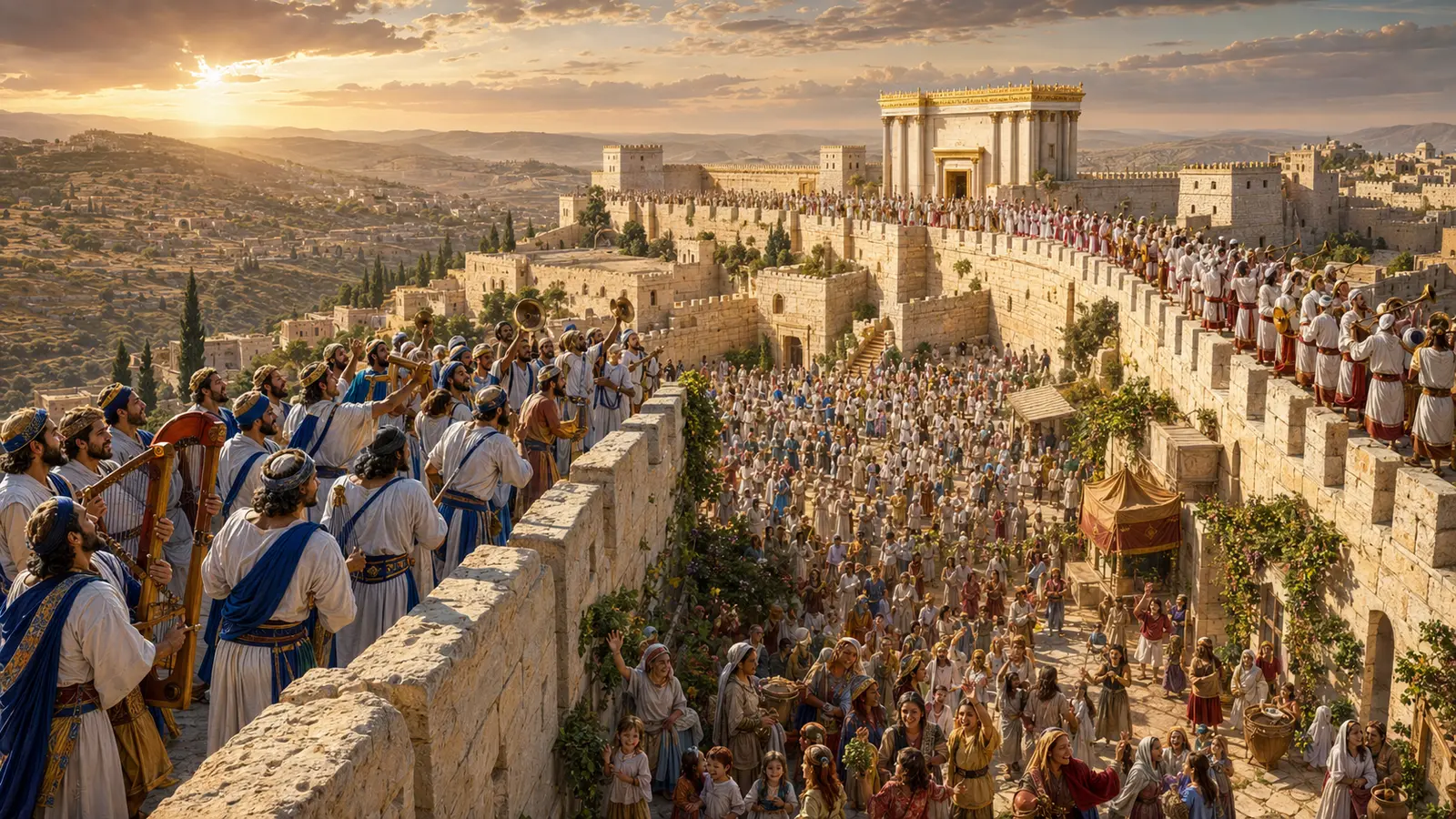
The larger biblical background is also important. Jerusalem’s broken walls are not merely civic inconvenience. In the ancient world, walls represented protection, dignity, order, and identity. Burned gates meant vulnerability and shame. In covenant terms, the ruined city embodied the long shadow of Israel’s exile, the curse of covenant unfaithfulness described in Deuteronomy, and the lingering question of whether return to the land had truly healed the people.
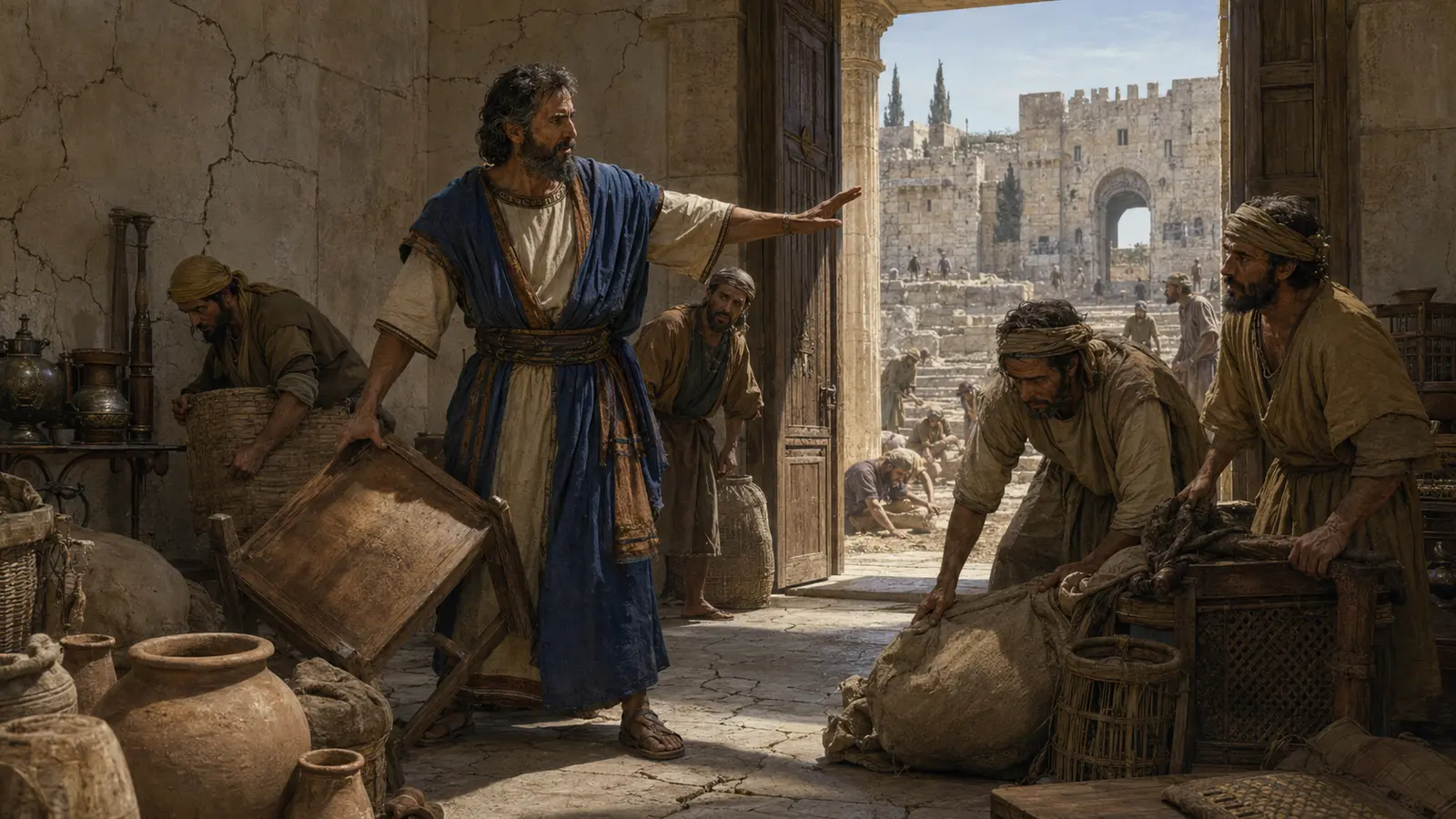
Nehemiah hears that the survivors are “in great trouble and shame,” and that “the wall of Jerusalem is broken down, and its gates are destroyed by fire” [Neh. 1:3]. The city is back on the map, but still bleeding. The people are home, but not yet healed.
03
Walking Through the Text
When News Becomes a Wound [Nehemiah 1:1–3]
The chapter begins with a question. Hanani, one of Nehemiah’s brothers, arrives with certain men from Judah, and Nehemiah asks about “the Jews who escaped, who had survived the exile, and about Jerusalem” [Neh. 1:2]. This question matters. Nehemiah has not forgotten Jerusalem from the palace. His body is in Susa, but his covenant imagination still belongs to the city of God.
The answer is painful. The remnant is in “great trouble and shame.” Jerusalem’s wall is broken down. Its gates are burned. The words carry more than architectural meaning. They describe a people living exposed, dishonored, and fragile. The city that once held the temple, the throne of David, and the memory of God’s name now stands like a house with no doors in a dangerous neighborhood.
The report exposes the incompleteness of restoration. The people have returned, but the city still looks like exile. This is one of the great tensions of Ezra–Nehemiah: God has opened the door of return, but the scars of judgment remain visible. Mercy has begun the work, but the work is not finished.
Nehemiah’s first act is not denial. He does not say, “At least the temple is standing.” He does not spiritualize the pain away. He lets the truth become grief. That is where faithful rebuilding begins—not in shallow optimism, but in holy honesty.
When the Servant Sits Down to Weep [Nehemiah 1:4]
“As soon as I heard these words,” Nehemiah says, “I sat down and wept and mourned for days, and I continued fasting and praying before the God of heaven” [Neh. 1:4]. The sequence is slow and sacred: he sits, weeps, mourns, fasts, and prays.
Nehemiah’s grief is not emotional weakness. It is covenant sensitivity. His tears reveal that Jerusalem’s shame has become his own. He refuses to remain untouched by the suffering of the remnant. He carries the news into his body before he carries it into his plans.
The phrase “God of heaven” is significant in the Persian context. It acknowledges that above the throne of Artaxerxes stands the throne of the Lord. Nehemiah serves in an imperial court, but he prays to the King above kings. He knows Persia may grant permission, but only God can grant restoration.
Fasting, too, is a bodily form of prayer. Nehemiah’s hunger becomes an altar. He does not rush to fix before he has learned how to lament. His empty stomach says what his mouth is praying: “Lord, unless you act, we remain needy.”
When Prayer Begins with God’s Covenant Love [Nehemiah 1:5]
Nehemiah’s prayer begins not with the wall, but with God: “O LORD God of heaven, the great and awesome God who keeps covenant and steadfast love with those who love him and keep his commandments” [Neh. 1:5].
This opening is rich with Scripture. It echoes the covenant language of Deuteronomy and the confession of God’s steadfast love revealed throughout Israel’s story [Deut. 7:9; Exod. 34:6–7]. Nehemiah begins where true prayer must begin: not with the size of the problem, but with the character of God.
He names God as great and awesome. He names God as covenant-keeper. He names God as the one whose love is not sentimental but faithful, binding, enduring, and morally serious. This matters because the broken wall is not only a construction issue; it is a covenant issue. The city’s shame is tied to Israel’s history of unfaithfulness. Therefore, restoration must be sought from the God who judges sin and keeps mercy.
Nehemiah does not manipulate God. He remembers God. Prayer is the act of bringing present ruins under the light of God’s revealed character.
When Confession Says “We,” Not “They” [Nehemiah 1:6–7]
Nehemiah then asks God to hear “the prayer of your servant” and confesses “the sins of the people of Israel, which we have sinned against you” [Neh. 1:6]. The language is striking. Nehemiah is not in Jerusalem. He did not personally burn the gates. He did not lead the nation into exile. Yet he says, “we have sinned.”
This is covenant solidarity. He does not stand above the broken community as an expert diagnosing failure from a distance. He enters the wound as a brother. He confesses both corporate and personal sin: “Even I and my father’s house have sinned” [Neh. 1:6].
There is pastoral wisdom here. Some people see ruins and only blame others. Nehemiah sees ruins and begins with repentance. He knows that walls can be rebuilt with stone, but covenant life must be rebuilt with truth. He does not reduce the problem to politics, engineering, or opposition. He names the deeper disorder: “We have acted very corruptly against you and have not kept the commandments, the statutes, and the rules” [Neh. 1:7].
The work of repair begins when the leader stops saying “What have they done?” and begins asking, “Lord, where have we sinned? Where have I failed? Where must obedience begin again?”
When Memory Becomes Hope [Nehemiah 1:8–10]
Nehemiah’s confession turns into covenant appeal: “Remember the word that you commanded your servant Moses” [Neh. 1:8]. He recalls the covenant warning and promise. If Israel is unfaithful, they will be scattered. But if they return to God and keep his commandments, he will gather them again, even from the farthest horizon [Neh. 1:8–9; Deut. 30:1–5].
This is not wishful thinking. It is Scripture-shaped hope. Nehemiah prays the Bible back to God—not because God forgets, but because God’s promises become the grammar of faithful prayer.
The key word is “return.” Israel has physically returned from exile, but Nehemiah knows the deeper return must be covenantal. Geography alone cannot heal rebellion. Coming back to the land is not the same as coming back to the Lord. The people need more than relocation; they need renewed allegiance.
Nehemiah also reminds God that Israel is his redeemed people: “They are your servants and your people, whom you have redeemed by your great power and by your strong hand” [Neh. 1:10]. This phrase reaches back to the Exodus. The God who brought slaves out of Egypt can bring exiles out of shame. The strong hand that broke Pharaoh’s pride can strengthen a servant standing before Persia’s king.
When Prayer Moves Toward Costly Action [Nehemiah 1:11]
The prayer ends with a specific request: “Give success to your servant today, and grant him mercy in the sight of this man” [Neh. 1:11]. Only at the end do we learn Nehemiah’s office: “Now I was cupbearer to the king.”
This final line changes everything. Nehemiah is not merely grieving. He is preparing to act. His prayer is moving toward a dangerous conversation. “This man” is Artaxerxes, the Persian king, and Nehemiah will need royal permission to go to Jerusalem.
Yet notice the order. He does not first lobby the king and then ask God to bless his plan. He first seeks the God of heaven and then prepares to stand before the king of Persia. Prayer does not replace action; it purifies and directs action. Faith does not make Nehemiah passive. It makes him courageous.
Nehemiah 1 ends before the public moment begins. The chapter leaves us in the quiet space between prayer and risk. The servant has wept. The servant has confessed. The servant has remembered the covenant. Now the servant must wait for the open door.
04
Theological Reflection
Rebuilding Begins with Lament
Nehemiah teaches us that lament is not the enemy of leadership. It is often the birthplace of faithful leadership. The wall will not be rebuilt by a man who is untouched by the ruins. Holy grief is the soil where holy courage grows.
In Scripture, God’s servants often begin with tears before they move with strength. Moses hears Israel’s groaning before confronting Pharaoh [Exod. 2:23–25; 3:7–10]. Jeremiah weeps over Judah’s wounds [Jer. 9:1]. Jesus weeps over Jerusalem and at the tomb of Lazarus [Luke 19:41; John 11:35]. Nehemiah belongs to this line of servants whose compassion is not soft sentiment but covenant fire.
Prayer Must Be Shaped by Scripture
Nehemiah’s prayer is saturated with the Torah. He does not invent his theology in crisis. He prays from the covenant story. He remembers God’s warnings, God’s promises, God’s redemption, and God’s name.
This is a crucial lesson for renewal. Prayer that rebuilds is not merely emotional release; it is Scripture becoming speech. The word of God forms the imagination so that even our sorrow learns how to hope.
Corporate Sin Requires Corporate Confession
Nehemiah does not separate himself from the sins of his people. He confesses as a member of the covenant community. In an individualistic age, this sounds strange, but Scripture often trains God’s people to say “we” before God [Dan. 9:4–19; Ezra 9:6–15; Neh. 9:16–37].
This does not erase personal responsibility. Rather, it deepens communal responsibility. The health of God’s people is never someone else’s problem only. We belong to one another. When the wall is broken, the whole community must ask what faithfulness requires.
The Wall Reveals a Deeper Need
The ruined wall matters. Security, dignity, and public witness matter. But Nehemiah’s prayer shows that stones are not the deepest issue. The real question is covenant faithfulness. The people need protection, but they also need repentance. They need gates, but they also need obedience. They need public repair, but they also need inward return.
This prepares us for the whole book. Nehemiah will help rebuild the walls, but the book will later show that walls cannot rebuild the heart. Jerusalem may become enclosed, but the people still need a deeper work of grace. The story keeps pointing forward to the God who will write his law not merely on tablets, scrolls, or city gates, but on human hearts [Jer. 31:31–34; Ezek. 36:26–27].
05
Life Application
Let painful news become prayer, not gossip. When you hear of brokenness in the church, family, or community, resist the temptation to talk more than you pray.
Do not rush past grief. Some rebuilding begins only after we have honestly sat with the ruins and allowed God to soften our hearts.
Begin repair with confession. Before asking what others must fix, ask where you must repent, return, and obey.
Pray with Scripture open. Let God’s promises, warnings, and covenant mercy shape the language of your prayers.
Use your position for restoration. Nehemiah’s access to power became a doorway for service. Ask how your influence, skills, job, education, or relationships can help repair what is broken.
Seek courage before opportunity comes. Nehemiah prayed before he stood before the king. Prepare your heart before the door opens.
Remember that visible repair is not enough. Build walls where walls are needed, but never confuse outward order with inward renewal.
06
Reflection Questions
1. What broken wall has God brought to your attention that you have been tempted to ignore?
2. When you hear painful news about God’s people, do you move first toward prayer, blame, fear, or indifference?
3. Where do you need to say “we have sinned” instead of standing at a safe distance from communal failure?
4. What promise or warning from Scripture should shape your prayers in this season?
5. What access, position, or opportunity has God placed in your hands for the sake of repairing what is broken?
07
Response Prayer
Lord God of heaven, great and awesome, keeper of covenant love, look upon your people with mercy.
Teach us to hear the news of broken walls without hardening our hearts. Teach us to sit before you before we stand before kings. Teach us to weep without despair, confess without hiding, and hope without pretending.
Where our gates are burned, give us courage. Where our worship is thin, return us to your presence. Where our obedience has cracked, restore truth in the inward place. Where our communities carry shame, raise servants who pray before they build.
Do not let us be satisfied with walls that stand while hearts remain far from you. Bring us home again—not only to place, but to covenant faithfulness, to humble obedience, to love that bears burdens, and to the deeper renewal only your Spirit can give.
Through Jesus Christ, the faithful Son, the true temple, the gatherer of exiles, and the builder of a people made new, Amen.
08
Window into What Comes Next
Nehemiah 1 ends in prayer, but prayer is already leaning toward action. The servant who has wept in secret will soon stand before the king in public. The sorrow hidden in Susa will become a request that could cost him his life. In Nehemiah 2, lament steps into courage, and courage walks through an imperial doorway toward Jerusalem’s broken stones.
The movement is clear: news becomes grief, grief becomes prayer, prayer becomes courage, and courage becomes rebuilding.
But the question will remain: Can a wall be rebuilt without the heart being rebuilt too?
09
Bibliography
Boda, Mark J. Praying the Tradition: The Origin and Use of Tradition in Nehemiah 9. Berlin: de Gruyter, 1999.
Clines, David J. A. Ezra, Nehemiah, Esther. New Century Bible Commentary. Grand Rapids: Eerdmans, 1984.
Kidner, Derek. Ezra and Nehemiah. Tyndale Old Testament Commentaries. Downers Grove: InterVarsity Press, 1979.
Throntveit, Mark A. Ezra-Nehemiah. Interpretation. Louisville: John Knox Press, 1992.
Williamson, H. G. M. Ezra, Nehemiah. Word Biblical Commentary 16. Waco: Word Books, 1985.
Williamson, H. G. M. Ezra and Nehemiah. Old Testament Guides. Sheffield: JSOT Press, 1987.
Yamauchi, Edwin M. “Ezra-Nehemiah.” In The Expositor’s Bible Commentary, revised edition. Grand Rapids: Zondervan, 2010.
Be the first to leave a comment.