


When Tears Become Prayer and Prayer Becomes Courage
01
1.0 Introduction: What Do We Pray When Pain Has Taken Our Strength?
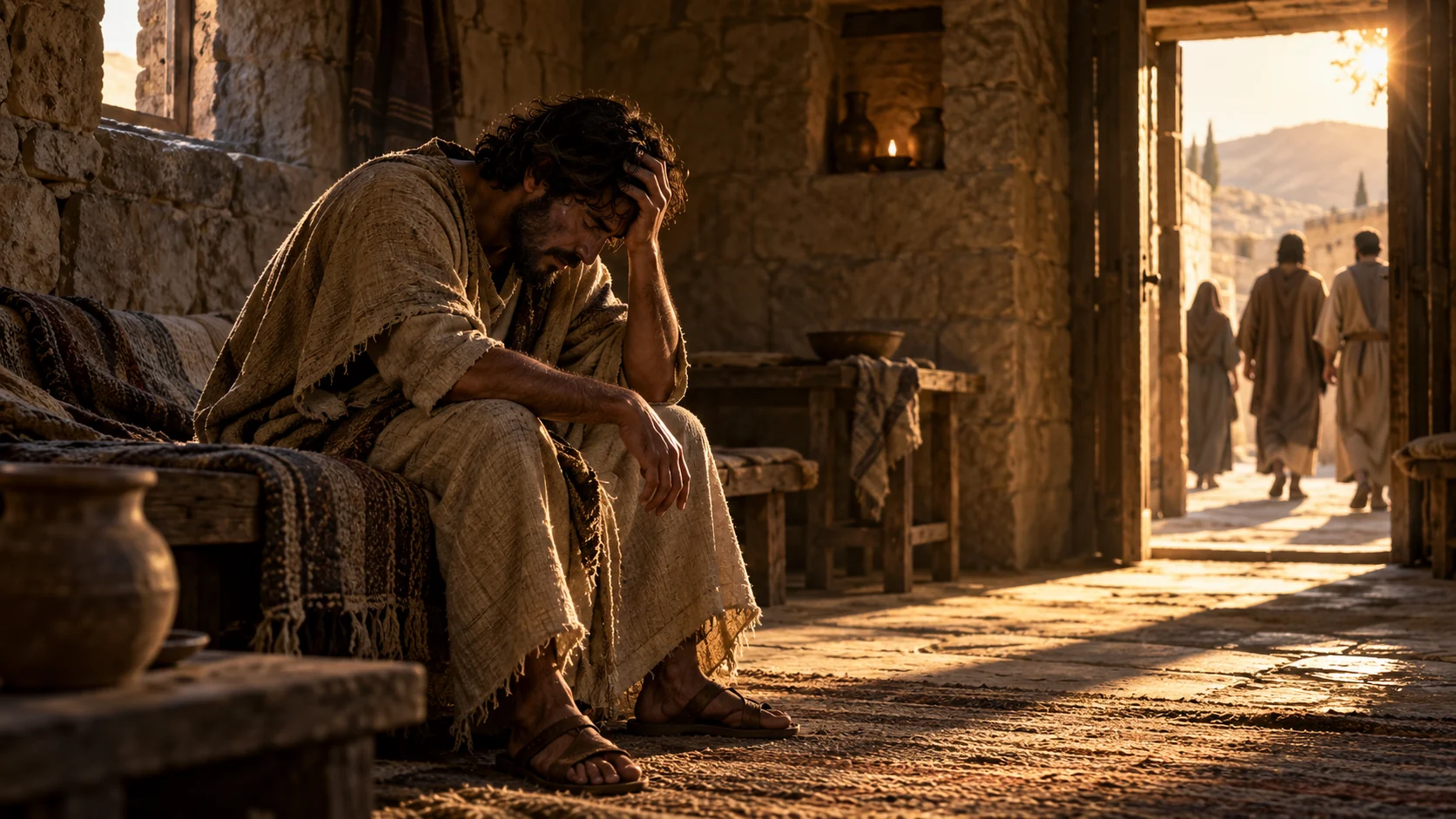
Some prayers are whispered from a bed when sleep will not come. Psalm 6 belongs to that kind. The worshiper is faint, shaken, frightened by death, exhausted by crying, and surrounded by hostility. He does not approach God as a calm observer. His whole life has become the prayer.
The psalm is traditionally counted among the seven “penitential psalms,” partly because it opens with fear of God’s anger. Yet it never confesses a particular sin. Goldingay therefore cautions against assuming that illness proves guilt. Pain can awaken conscience, but it is not reliable evidence that God is punishing a specific offense.
The heart-question is: Can I still pray when pain makes God feel frightening, distant, and slow?
This text is about tears becoming testimony, because lament brings the whole suffering self before God until fear is no longer the only voice in the room.
02
2.0 Historical and Literary Context: A Lament inside the Conflict of Book One
Psalms 1–2 introduce the Psalter with Torah, the righteous way, and God’s anointed king. Psalms 3–14 then place those ideals inside a world of opposition. BibleProject observes that Psalms 3–7 portray the afflicted Davidic figure crying to Yahweh while enemies rise around him. Psalm 6 belongs to this cluster, but it brings the conflict unusually close to the body.
The heading associates the poem with David and musical performance, but names no historical event. Its openness lets sick, accused, traumatized, or pressured worshipers recognize their own voices in it.
Literarily, the psalm moves in three movements. Verses 1–3 plead for mercy as body and inner life tremble. Verses 4–7 deepen the plea through death and tears. Verses 8–10 suddenly turn outward: the worshiper addresses evildoers because Yahweh has heard. Kidner aptly calls it “Prayers and tears.” No visible rescue is narrated between tears and confidence; the decisive change is that prayer has been received.
03
3.0 Walking Through the Text
04
3.1 Psalm 6:1–3 — When the Body Trembles before God
The psalm begins with two negatives: “Do not rebuke me in your anger” and “do not discipline me in your wrath.” The worshiper is not rejecting correction; he pleads that divine anger not consume him. Then come two positives: “Be gracious to me” and “heal me.” Fear drives him toward mercy.
“My bones are troubled” and “my soul also is greatly troubled” describe the whole person. Hebrew poetry does not neatly divide physical from spiritual here. Suffering has invaded body, inner life, and future.
Then the sentence breaks: “And you, Yahweh—how long?” The prayer is almost grammatically unfinished because distress is unfinished. “How long?” is not unbelief masquerading as reverence. It is covenant speech. The sufferer asks because he believes God can act and because delay matters.
05
3.2 Psalm 6:4–5 — When Mortality Becomes an Argument for Mercy
“Turn, Yahweh, deliver my life; save me because of your steadfast love.” The center of the appeal is not the psalmist’s deserving but God’s covenant commitment. When the worshiper cannot build a case from strength, he builds it from God’s character.
Verse 5 speaks from the Old Testament’s stark experience of death: “In death there is no remembrance of you; in Sheol who will give you thanks?” It is not a complete doctrine of the afterlife. The immediate point is concrete: death ends the worshiper’s active testimony among the living.
The prayer is bold: “Keep me alive so that my life may bear witness to your faithfulness.” Biblical salvation is not private survival; the rescued person becomes a storyteller of grace.
06
3.3 Psalm 6:6–7 — When the Bed Becomes an Ocean
Now prayer almost disappears beneath tears. “I am weary with my groaning; every night I flood my bed with tears.” The language is deliberate hyperbole. The mattress does not literally float, but grief feels large enough to drown the room.
The Bible does not edit these tears out. There is no quick command to cheer up or accusation that prolonged grief proves weak faith. Kidner notes that such exhaustion lies beyond simplistic advice. The psalm gives dignity to a body that cannot perform strength.
The eyes grow weak because of grief and enemies. Suffering is personal and social. Illness or emotional collapse can be worsened by people who accuse, mock, withdraw, or exploit weakness.
07
3.4 Psalm 6:8–10 — When Weeping Becomes a Heard Prayer
Without warning, the voice changes: “Depart from me, all you workers of evil, for Yahweh has heard the sound of my weeping.” Nothing in the poem tells us that the fever has broken or the enemies have fled. The decisive fact is that God has heard.
Three times the final movement names Yahweh’s response: he has heard the weeping, heard the plea for mercy, and received the prayer. Repeated hearing answers repeated trembling. The sufferer may still be weak, but he is no longer alone.
The enemies will be ashamed and troubled. The trembling that described the psalmist now returns upon those who tormented him. This is not permission for private vengeance. The worshiper hands the conflict to the God who hears.
08
4.0 Theological Reflection
First, lament is faithful speech when ordinary speech fails. Psalm 6 admits groans, questions, weakness, and tears into prayer.
Second, suffering must not be simplistically equated with punishment. The psalm fears God’s anger yet names no offense. Scripture leaves room for discipline, sickness, persecution, trauma, and mystery. The church should be slow to tell wounded people why they hurt.
Third, God’s steadfast love is stronger ground than self-defense. The psalmist does not bargain with a record of religious performance. He appeals to Yahweh’s covenant love. Grace is not a reward for emotional composure.
Fourth, being heard is itself a form of deliverance. Circumstances may not change immediately, but received prayer changes how pain is inhabited.
09
5.0 Canonical and Christological Horizon
Psalm 6 belongs to a long biblical chorus of “How long?” Job protests, Psalm 13 repeats the question, Psalm 88 ends in darkness, and Revelation 6:10 gives the same cry to faithful witnesses awaiting justice. Biblical hope is fidelity within unanswered time.
The psalm’s fear of death belongs to the Bible’s developing resurrection hope. Isaiah 26:19 and Daniel 12:2 look more clearly toward resurrection; the New Testament announces that in Jesus, death itself has been defeated.
Jesus enters Psalm 6’s world of trembling. In Gethsemane his soul is overwhelmed with sorrow to the point of death (Mark 14:34), and Hebrews remembers his prayers with cries and tears (Heb. 5:7). He saves not by floating above anguish but by entering it faithfully.
The cross takes Jesus into the silence Psalm 6 fears; resurrection answers it with new creation. Christians need not mock the ancient fear of Sheol or pretend resurrection makes tears unnecessary. Because Christ is risen, tears can be honest without being final.
10
6.0 Life Application
1. Give God the unedited prayer. When polished language is impossible, bring the groan, fear, fatigue, and unfinished sentence.
2. Do not diagnose another person’s suffering from a distance. Ask what hurts before announcing why it hurts.
3. Let the body belong in discipleship. Rest, medical care, food, sleep, counseling, and appropriate treatment can accompany prayer rather than compete with it.
4. Make room for “How long?” Faithful waiting includes protest. Do not shame yourself for asking God about delay.
5. Anchor prayer in God’s character. When you cannot argue from strength, return to mercy and steadfast love.
6. Protect sufferers from secondary wounds. Refuse gossip, spiritual blame, manipulation, and the use of another person’s weakness for advantage.
7. Notice the first signs of being heard. Deliverance may begin as courage for tomorrow, strength to ask for help, a needed boundary, or peace before circumstances change.
11
7.0 Reflection Questions
1. What pain have I been trying to make spiritually respectable before bringing it to God?
2. Where have I confused suffering with proof that God is angry with me—or with someone else?
3. What does my own “How long?” reveal about what I most need God to do?
4. Who around me needs presence and protection more than explanation?
5. If I truly believed Yahweh had heard my weeping, what faithful step could I take next?
12
8.0 Response Prayer
Yahweh, when my strength is thin and my nights are long, do not let fear become the only voice I hear. Be gracious to me. Heal what is wounded in body, mind, memory, and relationship. Receive the prayer I can speak and the tears I cannot translate. Keep me from blaming myself or others with explanations you have not given. Turn toward me in steadfast love. Let the bed of tears become a place where I discover that you have heard. Through Jesus, who prayed with tears and passed through death into resurrection, give me courage for the next morning. Amen.
13
9.0 Window into What Comes Next
Psalm 6 ends with enemies turning back because the sufferer knows he has been heard. Psalm 7 will bring the conflict into a courtroom and battlefield, where David asks God to judge between accusation and innocence. The tears have found a voice; next, the voice will ask for justice.
14
10.0 Bibliography
BibleProject. The Book of Psalms: Study Notes. BibleProject.
BibleProject. Visual Commentary: Psalm 8 Study Notes. BibleProject.
Goldingay, John. Psalms, Volume 1: Psalms 1–41. Baker Commentary on the Old Testament Wisdom and Psalms. Grand Rapids: Baker Academic, 2006.
Kidner, Derek. Psalms 1–72. Kidner Classic Commentaries. Downers Grove, IL: IVP Academic, 2008.
Wright, N. T. The Resurrection of the Son of God. Minneapolis: Fortress, 2003.

Be the first to leave a comment.