


Has the Creator Abandoned the World, or Is He Still Involved in Its Story?
01
Introduction
Part I — God, Creation, and the Human Question
Faith Built on Truth — Through Christ, Through Scripture, for Life
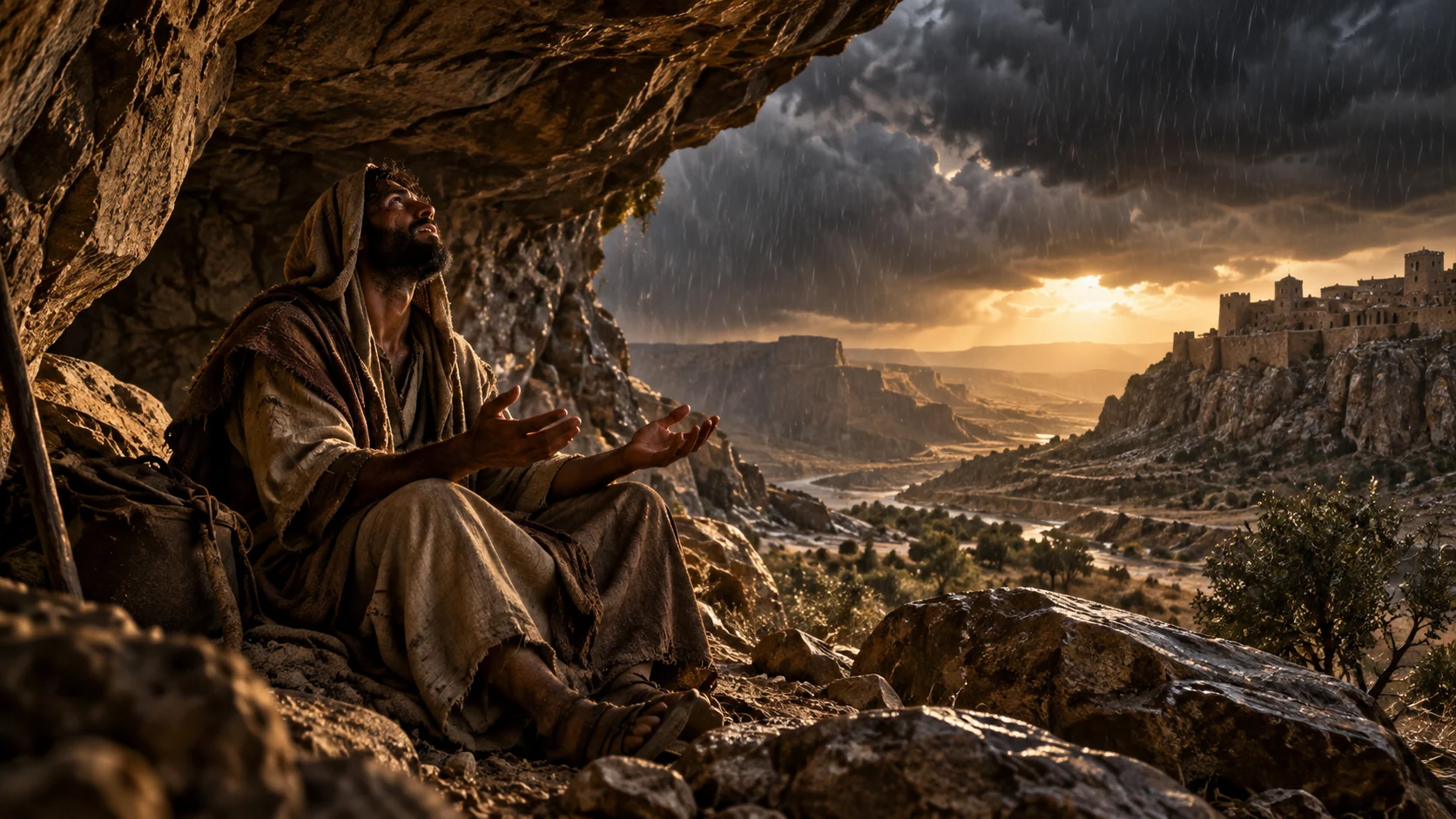
If God created the world, did he simply set it in motion and step away?
Or does the biblical story reveal a Creator who continues to sustain, guide, enter, and renew the world he loves?
A clockmaker can build a clock, wind it, place it on a shelf, and walk away. Some people imagine God in much the same way: perhaps a Creator was needed at the beginning, but the universe now runs on its own. Natural laws govern matter, human history unfolds through ordinary causes, prayers rise into silence, and God—if he exists at all—remains somewhere beyond the stars.
The Bible tells a different story.
Its God does not merely light the first spark and then retreat. He gives breath, sends rain, calls Abraham, hears slaves, confronts Pharaoh, speaks through prophets, becomes flesh in Jesus, raises the crucified Messiah, gives the Spirit, and promises to dwell with humanity in a renewed creation [Genesis 12:1–3; Exodus 3:7–10; John 1:14; Acts 2:32–33; Revelation 21:1–5]. The biblical world is not a machine abandoned by its Maker. It is a creation upheld by God, wounded by rebellion, visited by grace, and moving toward renewal.
This does not mean every event should be explained by saying, “God directly caused it.” Scripture takes human freedom, natural processes, injustice, chance from our limited perspective, and the mystery of suffering seriously. Nor does divine involvement require us to treat science as an enemy. The question is deeper: Is ordinary reality self-sufficient, or does it remain dependent upon a faithful Creator who acts through, within, and sometimes beyond the patterns we observe?
Here are ten reasons to believe God is not distant from his creation.
02
1. God Is Not Distant Because Creation Continues to Depend on Him
Genesis begins with God creating, but Scripture does not speak as though creation became independent once the first week ended. Psalm 104 portrays God continually giving food, water, breath, and life. When he hides his face, creatures are troubled; when he sends his Spirit, they are created and the face of the ground is renewed [Psalm 104:27–30]. Paul tells the Athenians that God “gives everyone life and breath and everything else” and that “in him we live and move and have our being” [Acts 17:24–28].
The New Testament says something even stronger about Christ: “in him all things hold together” [Colossians 1:15–17], and the Son sustains all things by his powerful word [Hebrews 1:2–3]. Creation is therefore not like a stone thrown from God’s hand and left to travel alone. Its continuing existence is gift.
This claim does not compete with scientific explanations of gravity, biology, chemistry, or weather. Science can describe patterns by which creation operates. Theology asks why there is a world with stable patterns at all and what continually grounds its existence. A musician may explain how strings vibrate while still acknowledging the player whose breath, hands, and intention make music possible. Mechanism and dependence are not enemies.
Takeaway: The world does not merely remember a Creator in the distant past; every breath and every moment of existence remain gifts sustained by God.
03
2. God Is Not Distant Because His Providence Often Works Through Ordinary Processes
We sometimes look for God only in the spectacular. If no sea parts and no fire falls from heaven, we assume nothing divine is happening. Yet Scripture repeatedly finds God’s care in ordinary realities: rain falling, crops growing, animals being fed, rulers making decisions, families surviving famine, and strangers arriving at the right moment [Psalm 147:7–9; Matthew 5:45; Ruth 2:3–12].
Joseph’s story is a powerful example. His brothers act with real malice. Traders make commercial choices. Potiphar’s household operates by ordinary social structures. A prison official makes administrative decisions. Pharaoh has dreams. A famine follows natural conditions. Yet at the end Joseph can say that what his brothers intended for evil, God intended for good, “to accomplish what is now being done, the saving of many lives” [Genesis 50:20].
Providence is not the claim that every event is good. Betrayal remains betrayal. Famine remains suffering. Human beings remain accountable for what they choose. Providence means evil, accident, political power, and ordinary causation do not finally place history outside God’s ability to redeem and guide.
Takeaway: God’s involvement is often quieter than spectacle; providence can move through ordinary events without turning evil into good or human beings into puppets.
04
3. God Is Not Distant Because He Enters Covenant with Real People in Real History
The Bible’s God does not remain an abstract principle. He calls Abraham to leave home and promises that through his family all nations will be blessed [Genesis 12:1–3]. He binds himself to people through covenant, gives promises, remembers them, corrects his people, and remains faithful even when they fail [Genesis 15:1–18; Exodus 6:2–8; Deuteronomy 7:7–9].
Covenant is remarkable because it means the Creator chooses relationship. The One who made the stars attaches his name to a wandering family. He becomes known as “the God of Abraham, Isaac, and Jacob” [Exodus 3:6]. Biblical faith is therefore not merely belief in a supreme being. It is trust in the God who commits himself to a story.
That story is often messy. Abraham doubts. Israel rebels. Kings fail. Exile comes. Yet God does not discard creation and begin somewhere else. He works within the broken human story, patiently carrying his promises toward their purpose.
Takeaway: The biblical God is not a distant idea but a covenant God who binds his faithfulness to people, places, promises, and history.
05
4. God Is Not Distant Because He Hears the Cry of the Oppressed
One of the clearest biblical pictures of divine involvement comes from slaves crying under Egyptian oppression. God says, “I have indeed seen the misery of my people... I have heard them crying... and I am concerned about their suffering. So I have come down to rescue them” [Exodus 3:7–8].
This does not mean every oppressed person experiences immediate rescue. Scripture itself contains long seasons of waiting, unanswered lament, exile, martyrdom, and grief. Psalmists ask, “How long?” because God’s presence is not always obvious [Psalm 13:1–2; Psalm 44:23–26]. The Bible does not hide divine silence behind religious slogans.
Yet the exodus establishes something about God’s character: suffering matters to him. He is not morally neutral toward Pharaoh and slave, oppressor and victim. His involvement creates a calling for his people as well. Israel must remember slavery and therefore protect the stranger, widow, orphan, laborer, and poor [Deuteronomy 10:17–19; 24:17–22].
Takeaway: God’s concern for the world is revealed not only in miracles but in his attention to cries that powerful people would rather ignore—and in his call for us to act justly.
06
5. God Is Not Distant Because the Word Became Flesh
Christian faith makes a claim more daring than saying God occasionally intervenes from heaven. It says, “The Word became flesh and made his dwelling among us” [John 1:14]. The Creator did not merely send information. He came.
In Jesus, God’s presence takes human form. He grows in a womb, is born into a family, learns, works, becomes hungry, grows tired, touches diseased bodies, eats with outsiders, weeps at a grave, and sleeps in a boat [Luke 2:6–7, 40; Mark 6:3; John 4:6; Mark 1:40–42; Luke 15:1–2; John 11:35; Mark 4:38]. Christianity therefore cannot picture matter as beneath God’s concern. The Word enters material creation without ceasing to be who he is.
Matthew calls Jesus “Immanuel”—“God with us” [Matthew 1:22–23]. That phrase is not decoration around Christmas. It is a summary of the gospel. The Creator has not abandoned the house; he has crossed its threshold.
Takeaway: Jesus is Christianity’s strongest answer to the idea of a distant God: the Creator has entered creaturely life and shared our world from the inside.
07
6. God Is Not Distant Because Jesus’ Ministry Reveals Creation Being Reclaimed
Jesus does not only speak about heaven. He heals bodies, restores excluded people to community, feeds hungry crowds, forgives sinners, calms a storm, welcomes children, confronts spiritual evil, and announces that God’s kingdom has drawn near [Mark 1:14–15, 29–34; 2:1–12; 4:35–41; 6:34–44; 10:13–16].
These signs matter because they show what God’s reign looks like. Blind eyes opening and broken bodies being restored are not escapes from creation; they are signs of creation being put right. When Jesus raises Jairus’s daughter or Lazarus, he does not say embodied life was a mistake. He returns people to life [Mark 5:35–43; John 11:38–44].
The miracles are not a promise that every illness will be healed immediately in the present age. Even the New Testament knows sickness, suffering, and death among faithful believers. But Jesus’ works function like windows opened toward the future. They show the direction of God’s kingdom: toward wholeness, forgiveness, liberation, communion, and life.
Takeaway: Jesus’ ministry reveals a God who does not despise the world’s wounds but moves toward them with healing and restorative power.
08
7. God Is Not Distant Because the Cross Places God Inside the World’s Suffering
The hardest challenge to belief in divine involvement is often not the order of nature but the weight of pain. Where is God when violence wins, prayers seem unanswered, and innocent people suffer?
Christianity does not answer by pointing to a God untouched by pain. It points to a cross.
Jesus is betrayed, falsely accused, mocked, tortured, abandoned, and executed by imperial power [Mark 14:43–50; 15:1–39]. He cries the opening line of Psalm 22: “My God, my God, why have you forsaken me?” [Mark 15:34; Psalm 22:1]. Whatever else Christians say about suffering must pass through this scene. God’s involvement does not always look like prevention. Sometimes it looks like costly presence, solidarity, judgment upon evil, forgiveness, and love that refuses to surrender.
The cross does not explain why every tragedy is permitted. It does reveal what Christians believe God is doing in a tragic world: not watching from a safe balcony, but entering the violence humans create and bearing it toward redemption.
Takeaway: The cross means God’s apparent hiddenness cannot be equated with indifference; in Jesus, God enters suffering deeply enough to carry scars.
09
8. God Is Not Distant Because the Resurrection Begins the Renewal of Creation
If the cross were the end, Christians would have a moving story of divine solidarity but not a victory over death. The resurrection changes the claim. God raises Jesus bodily from the dead, vindicating him and launching the promised new creation [Luke 24:36–43; Acts 2:22–36].
Paul calls the risen Christ the “firstfruits” of those who have died [1 Corinthians 15:20–23]. Firstfruits are not the entire harvest, but they are the beginning of it. Jesus’ resurrection is therefore not an isolated miracle performed to prove divine power. It is the opening movement of the future God intends for creation.
This is why Paul connects resurrection with the liberation of the whole created order. Creation groans, but it groans in hope, awaiting freedom from decay and the revealing of God’s renewed humanity [Romans 8:18–25]. God has not abandoned the material world. He has begun its restoration in the risen body of Jesus.
Takeaway: The empty tomb announces that God’s answer to a dying world is not abandonment but resurrection—the first light of new creation.
10
9. God Is Not Distant Because He Gives His Spirit to Dwell with His People
After Jesus’ resurrection and ascension, the story does not return to divine distance. At Pentecost, the Spirit is poured out upon women and men, young and old, fulfilling the prophetic hope that God would dwell among his people in a new way [Joel 2:28–32; Acts 2:1–21].
Paul describes believers together as God’s temple because God’s Spirit dwells among them [1 Corinthians 3:16; Ephesians 2:19–22]. The Spirit helps in weakness, produces transformed character, gives gifts for service, and forms communities in which barriers of status and ethnicity are challenged by belonging to one body [Romans 8:26–27; Galatians 5:22–25; 1 Corinthians 12:4–27].
Christians should speak carefully here. Not every strong feeling is the Spirit, and not every religious claim should be accepted without discernment [1 John 4:1]. The Spirit’s presence is recognized not by spectacle alone but by Christlike fruit—love, truth, holiness, courage, service, reconciliation, and hope.
Takeaway: God’s nearness is not confined to ancient Bible stories; the Spirit forms a living people through whom the life of Jesus is meant to become visible in the world.
11
10. God Is Not Distant Because the Biblical Story Ends with God Dwelling with Creation
Many people imagine the Christian ending as humanity leaving earth forever to live somewhere far away. Revelation’s final vision moves in the opposite direction: the holy city comes down, creation is renewed, and a loud voice declares, “Look! God’s dwelling place is now among the people” [Revelation 21:1–3].
The story that begins with a garden ends with a garden-city, a river of life, the tree of life, healed nations, and servants seeing God’s face [Revelation 22:1–5]. Isaiah had already imagined new heavens and a new earth marked by joy, justice, fruitful labor, and peace [Isaiah 65:17–25]. Peter likewise speaks of a renewed world “where righteousness dwells” [2 Peter 3:13].
The final Christian hope is therefore not escape from God’s creation but God’s presence filling it. The Creator’s purpose has always been communion: heaven and earth united under his wise and loving reign.
Takeaway: The Bible ends not with God abandoning the world, but with God making his home with humanity in a creation healed from death, grief, and evil.
12
Truth and Your Decision: If God Is Not Distant from His Creation
God can feel distant. There are hospital rooms where heaven seems silent, gravesides where prayer feels thin, wars that continue despite generations of pleading, and ordinary days when nothing appears sacred. Biblical faith does not deny this experience. The Psalms preserve it. Job wrestles with it. Jesus himself prays from its darkness.
But felt absence is not the whole story.
From creation’s continuing dependence to covenant history, from the exodus to the prophets, from Bethlehem to Golgotha, from the empty tomb to Pentecost, Scripture tells one long story of a God who refuses to abandon what he has made. His involvement is not always loud. Sometimes it is providence hidden inside ordinary faithfulness. Sometimes it is judgment against oppression. Sometimes it is a wounded Messiah on a cross. Sometimes it is the Spirit giving strength to love when hatred would be easier. And sometimes it is hope planted like seed in ground that still looks bare.
Christian faith does not ask us to believe that every event is secretly good. It asks us to trust that the God revealed in Jesus is faithful enough to remain with his creation, wise enough to work within history, strong enough to defeat death, and loving enough to bring the story to renewal.
If the Creator has not abandoned the world, then our lives matter within his story. Prayer matters. Justice matters. Work matters. Bodies matter. Creation care matters. Small acts of faithfulness matter. We are not polishing furniture in a house destined for demolition. We are learning to live as signs of the home God intends to renew.
Will you live as though the world has been left alone, or will you entrust yourself to the God who has come near in Jesus and promises, at the end of all things, to make his dwelling with us?
13
Closing Prayer
Faithful Creator, there are times when you seem near and times when I struggle to see your hand at all. Keep me from easy answers that make light of suffering, but also keep me from mistaking silence for abandonment.
Open my eyes to your sustaining goodness in ordinary life. Teach me to recognize your character in Jesus, your victory in his resurrection, and your presence through the Holy Spirit. Make me attentive to the cries of the wounded, faithful in prayer, courageous in justice, gentle in service, and hopeful when the ground still looks barren.
Hold me inside your story until faith becomes sight and the prayer of the ages is fulfilled: your dwelling with humanity, every tear wiped away, and creation made new. Amen.
14
Join the Conversation
When have you found God’s presence hardest to recognize? Which part of the biblical story most strongly challenges the idea that God has abandoned the world?
Share your reflection, question, or testimony as we continue the Reasons to Believe series—Faith Built on Truth, Through Christ, Through Scripture, for Life.
Previous lesson: Suffering Does Not Disprove God’s Love: Ten Reasons to Believe
Next lesson: Jesus Truly Lived in History: Ten Reasons to Believe

Be the first to leave a comment.