


Was It Written by Mistaken Human Beings Alone?
01
Introduction
Part III — Scripture, Gospel, and the Trustworthiness of God’s Story
Faith Built on Truth — Through Christ, Through Scripture, for Life
Can a library written by human hands truly carry the voice of God? And if its writers belonged to ancient cultures, why should their words guide a modern world?
The Bible did not fall from heaven bound in leather, untouched by human fingerprints. Shepherds and kings, prophets and poets, priests and prisoners wrote across generations. They wrote in Hebrew, Aramaic, and Greek. They remembered wars, sang grief, collected wisdom, wrote letters, argued with God, told stories around tables, and testified to Jesus.
Their humanity is visible everywhere.
That is sometimes treated as a problem. If Moses, David, Isaiah, Luke, Paul, and the other biblical writers were genuine human beings shaped by particular languages, places, struggles, memories, and cultures, how can Christians call their writings the Word of God? Does a human voice automatically rule out a divine one?
The Bible itself does not force us to choose between the two.
Again and again, God works through human beings without turning them into machines. He calls prophets who speak in their own accents. He gives songs to poets. He works through memory, testimony, history, wisdom, letters, lament, and story. At the center of Christian faith stands Jesus himself—the Word made flesh [John 1:14]. God’s way is not normally to erase the human. He enters it, works through it, and makes it serve his purpose.
Christian faith therefore does not require us to pretend that the Bible contains no difficult passages, no interpretive puzzles, or no textual questions. It asks a more careful question: Can God faithfully reveal himself through fully human words?
Here are ten reasons to believe the answer is yes.
02
1. The Bible Is God’s Word Because It Tells One Unfolding Story Through Many Voices
The Bible is not one book in the ordinary sense. It is a library. Its writings come from different centuries, settings, authors, and literary forms. Yet its many roads keep returning to one landscape: God creates a good world; humanity rebels; God calls a covenant people; Israel waits for restoration; the Messiah comes; the Spirit is given; and creation moves toward renewal.
Genesis begins with God dwelling with humanity in a garden. Revelation ends with God dwelling with humanity in a garden-city [Genesis 1–2; Revelation 21–22]. Between them flow recurring themes—image, covenant, exodus, kingdom, temple, exile, Messiah, Spirit, resurrection, and new creation.
This unity is not flat uniformity. Isaiah does not sound like Proverbs. Ecclesiastes wrestles differently from Romans. Mark moves quickly; John lingers. The Psalms sing what Leviticus legislates and what the prophets sometimes shout.
The Bible is less like one instrument playing one note and more like an orchestra. The violin remains a violin; the drum remains a drum. Yet together they carry a larger composition.
Takeaway: The Bible’s many voices need not weaken its claim to divine inspiration; their remarkable convergence can be part of the way God tells one long story.
03
2. The Bible Is God’s Word Because It Refuses to Protect Its Heroes
Human propaganda usually polishes its founders. Scripture often does the opposite.
Noah gets drunk. Abraham acts out of fear. Jacob deceives. Moses fails. David abuses power and destroys a family. Solomon’s wisdom does not prevent compromise. Elijah collapses in fear. Peter denies Jesus. Paul remembers his own persecution of the church. Early congregations quarrel, compete, and sometimes behave shamefully.
The Bible does not airbrush its family album.
Yet it also refuses to say human beings are worthless. We are made in God’s image and capable of extraordinary beauty, loyalty, creativity, courage, and love [Genesis 1:26–28]. At the same time, sin bends our desires and fractures our relationships [Genesis 3; Romans 3:23].
That double vision still feels painfully recognizable. The same species that builds hospitals builds prisons for the innocent. We can sing of love in the morning and wound someone we love before sunset. We demand justice from others while quietly asking for exceptions for ourselves.
Scripture knows the human heart too well to flatter it.
Takeaway: The Bible’s moral honesty gives us room to confess what is broken without surrendering the dignity God intends to restore.
04
3. The Bible Is God’s Word Because Its Faith Is Rooted in Public History
Biblical faith is not merely a collection of timeless sayings. It is tied to events.
Israel remembers slavery, exodus, covenant, kings, exile, and return. The Gospels place Jesus among villages, governors, festivals, roads, religious leaders, and witnesses. Luke says he investigated earlier testimony carefully so his reader could know the certainty of what had been taught [Luke 1:1–4]. Paul names witnesses to the risen Jesus, some of whom were still alive when he wrote [1 Corinthians 15:3–8].
This matters because Christianity makes historical claims. Its central announcement is not simply, “Be kind,” or, “Find peace within.” It says the Creator acted within the history of Israel and decisively in Jesus of Nazareth.
Historical investigation cannot by itself prove every theological claim. Archaeology cannot excavate forgiveness, and a manuscript fragment cannot demonstrate resurrection on its own. But the Bible repeatedly places faith in the dust of real places and real human memory.
It expects questions.
Takeaway: A faith rooted in creation, covenant, cross, and resurrection does not need to fear honest historical investigation.
05
4. The Bible Is God’s Word Because Its Long Story Finds Its Center in Jesus
The Old Testament leaves many doors open.
Humanity needs a faithful image-bearer. Israel needs a faithful representative. Abraham’s family is meant to bless the nations. David’s house awaits a righteous king. Exile longs for homecoming. Sin cries for forgiveness. The temple points toward God dwelling with his people. Death itself still waits to be defeated.
Then Jesus steps into the story announcing God’s kingdom.
He relives Israel’s story, gathers twelve disciples, forgives sins, confronts evil, welcomes outsiders, gives himself at Passover, dies under the power of empire, and rises from the dead [Matthew 4:1–17; Luke 4:16–21; 22:14–20; 24:1–49].
This is deeper than collecting isolated predictions and matching them to later events. It is more like hearing musical themes introduced quietly in the early movements and then hearing them return, transformed and gathered, in the finale.
Jesus does not merely appear somewhere inside the Bible. He reveals where its covenant, kingdom, temple, sacrifice, vocation, and hope were going.
Takeaway: To read Scripture well is to follow its many paths until they open upon Jesus, the crucified and risen Messiah.
06
5. The Bible Is God’s Word Because Jesus Himself Received Israel’s Scriptures as God’s Authoritative Witness
For Christians, Jesus’ attitude toward Scripture matters.
When tempted, he answers from Deuteronomy [Matthew 4:1–11]. In Nazareth, he reads Isaiah and announces that the Scripture is being fulfilled [Luke 4:16–21]. In debate, he returns again and again to Torah, Prophets, and Psalms. After his resurrection, he teaches his followers to understand his suffering and glory within the larger scriptural story [Luke 24:25–27, 44–47].
Jesus also challenges bad readings of Scripture. He confronts interpretations that defend hardness of heart, hide injustice beneath religious performance, or allow tradition to swallow mercy [Mark 7:6–13; Matthew 23:23].
So Jesus does not teach us to worship verses. Nor does he teach us to discard Scripture when it becomes uncomfortable.
He teaches us to read it faithfully—inside the whole story, with God’s kingdom in view, with love of God and neighbor at the center, and with his own death and resurrection as the decisive turning point.
Takeaway: Christian confidence in Scripture is finally tied to confidence in Jesus, the One to whom Scripture bears witness and the One who teaches us how to read it.
07
6. The Bible Is God’s Word Because Divine Inspiration Does Not Erase Human Personality
Some people imagine inspiration as though God dictated every sentence while biblical writers became passive pens.
The Bible itself gives us a richer picture.
Isaiah writes like Isaiah. Amos reaches for fields, cattle, and harvests. Luke investigates sources. Paul reasons, argues, remembers, appeals, and sometimes dictates through a secretary. The Psalmists pray from joy, fear, anger, shame, gratitude, and grief.
Yet Scripture can still say that people spoke from God as they were carried by the Holy Spirit and that Scripture is “God-breathed” and useful for forming God’s people [2 Timothy 3:14–17; 2 Peter 1:20–21].
The human fingerprints are not evidence that God is absent. They may be part of how God chose to speak.
The pattern fits the heart of Christian faith. In Jesus, the eternal Word became flesh [John 1:1–14]. His humanity did not cancel God’s presence. It became the place where God was revealed.
The analogy is not exact, but it is illuminating: grace does not need to destroy the human instrument in order to use it.
Takeaway: Inspiration can be fully divine without making Scripture less genuinely human.
08
7. The Bible Is God’s Word Because Its Text Has Been Preserved in a Way That Invites Examination
We do not possess the original handwritten copy of Isaiah, Romans, or the Gospel of John. What we do possess is a large manuscript tradition, ancient translations, quotations, and textual evidence that scholars compare carefully.
Copyists sometimes made mistakes. A word could be repeated, skipped, spelled differently, or clarified. That should not surprise us in texts copied by hand over centuries.
What matters is that these differences can be studied rather than hidden.
The biblical text was also not guarded by one secret institution or preserved by one isolated individual. It was read publicly, copied across communities, translated, taught, discussed, and passed from generation to generation [Deuteronomy 31:24–26; Nehemiah 8:1–8; Colossians 4:16].
Faith does not become weaker because manuscripts are examined. If anything, careful comparison allows us to see how the text traveled through history.
Takeaway: Honest textual study is not the enemy of faith; it is one way of listening carefully to the words that have been handed down.
09
8. The Bible Is God’s Word Because It Continues to Expose, Comfort, and Transform Human Lives
The Bible has never been merely an information storehouse.
It has comforted people beside graves, confronted rulers, inspired songs in prisons, taught forgiveness in families, exposed greed in churches, given language to lament, and called communities toward justice.
The prophets insist that worship without mercy is hollow [Isaiah 1:11–17; Amos 5:21–24]. Jesus commands enemy-love [Matthew 5:43–48]. Paul imagines communities in which inherited barriers of ethnicity, status, and social worth are no longer allowed to define who belongs at the table [Galatians 3:28; Ephesians 2:11–22].
Of course, Scripture has also been misused. People have quoted it while defending oppression, racism, slavery, violence, manipulation, and spiritual pride. Those abuses should be named plainly.
But misuse does not settle meaning.
A knife can be used by a surgeon or an attacker. The question is whether Scripture is being read in the direction its story moves—toward Jesus, toward love of God and neighbor, toward holiness, justice, mercy, reconciliation, and new creation.
Takeaway: The strongest evidence that we have heard Scripture rightly is not that we can quote more verses, but that our lives begin to look more like Jesus.
10
9. The Bible Is God’s Word Because It Speaks Across Cultures Without Becoming the Property of Any One Culture
The Bible is ancient. That distance creates work.
We must learn something about languages, customs, empires, family structures, geography, poetry, law, wisdom, prophecy, letters, and apocalyptic imagery. Responsible reading does not pretend that a first-century letter was written yesterday in our neighborhood.
Yet the deepest human questions have not grown old.
Who are we? What is power for? Why does desire so easily turn into domination? What do we do with guilt? Can enemies become neighbors? Where is God in suffering? Can death be defeated? Is there a future beyond violence and decay?
Job refuses cheap explanations. Ecclesiastes names our weariness. The Psalms teach us to praise and protest. The prophets expose injustice. The Gospels announce the kingdom. The letters teach fractured communities how to live as one body.
Scripture belongs neither to the ancient world alone nor to any modern tribe. It can challenge African traditions, Western individualism, political ideologies, religious institutions, wealthy cultures, poor communities, conservative habits, progressive assumptions—and the reader holding the page.
Takeaway: Scripture is most alive when we let it question us, not merely when we recruit it to agree with us.
11
10. The Bible Is God’s Word Because the Holy Spirit Still Uses It to Lead People Toward the Living God
The final reason is not a private feeling cut loose from history, reason, and community. It is the continuing work of the Spirit through Scripture.
Jesus promises that the Spirit will teach, remind, and guide his followers into truth [John 14:26; 16:13–15]. Paul speaks of the Spirit enabling believers to understand what God has freely given [1 Corinthians 2:10–16]. Revelation repeatedly says, “Let anyone who has an ear listen to what the Spirit is saying to the churches” [Revelation 2–3].
This does not mean every interpretation is inspired.
Christians can read badly. We can rush. We can import our prejudices into the page. We can make a favorite verse carry a weight its context never intended. That is why Scripture must be read prayerfully, carefully, communally, and with Jesus at the center.
The Spirit does not free us to make the Bible say whatever we want. He frees us from ourselves so that we may hear.
The page becomes a doorway—not because ink is magical, but because the living God still meets people through the testimony he has given.
Takeaway: Open Scripture with both mind and heart awake: “Speak, Lord; your servant is listening.”
12
Truth and Your Decision: If the Bible Is the Word of God
The case for Scripture does not rest on one dazzling proof.
It is cumulative.
A many-voiced library tells one unfolding story. Its heroes are not protected from the truth. Its claims stand in history. Its long narrative gathers around Jesus. Jesus himself receives Israel’s Scriptures as authoritative. Divine inspiration works through genuine human authors. The text has traveled through a public history open to examination. Its words continue to expose sin, console sufferers, challenge cultures, and form communities. And generation after generation, Christians testify that the Spirit has met them through these pages and led them toward the living Christ.
None of this means every question disappears.
Some passages remain difficult. Interpretations differ. Historical and textual questions deserve patience. Faith does not grow stronger by pretending those questions do not exist.
But perhaps the better question is not, “Does the Bible look sufficiently unlike a human book to be divine?”
Perhaps it is this:
What if God has always loved to speak through human voices?
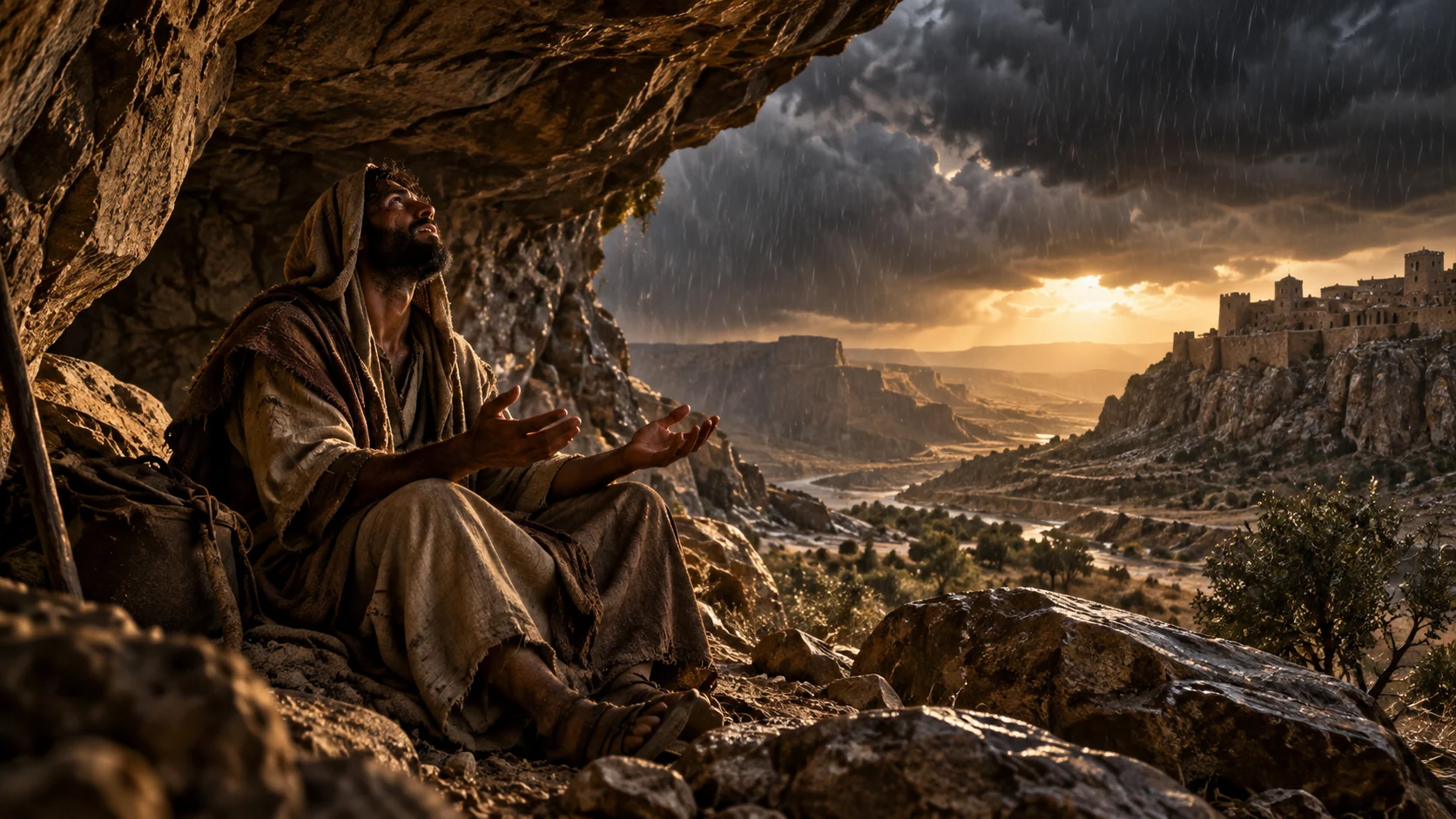
Through prophets with dust on their sandals. Through poets crying in the night. Through apostles writing from prison. Through witnesses remembering a Galilean who was crucified—and whom they said they met alive again.
You do not need to silence every question before opening the Bible. Bring the questions with you. Read slowly. Follow the whole story. Keep Jesus at the center. Test the fruit.
Then ask whether you are holding only an ancient library—or whether, through these very human words, the living God is still calling your name.
13
Closing Prayer
God of truth and mercy, thank you for speaking through prophets and poets, apostles and witnesses.
Forgive me where I have rejected your voice too quickly, and forgive me where I have used Scripture to defend my pride rather than to surrender it.
Open my mind to understand, my heart to trust, and my hands to obey. Teach me to read patiently, humbly, and honestly. Lead me through these words to Jesus Christ, the living Word.
By your Spirit, let Scripture become more than information in my hands. Let it expose what must change, heal what has been wounded, deepen what is true, and shape my life into a sign of your coming new creation.
Amen.
14
Join the Conversation
Which reason most strengthens your confidence that the Bible can truly carry God’s word? Which question about Scripture remains hardest for you?
Share your reflection, question, or testimony as we continue the Reasons to Believe series—Faith Built on Truth, Through Christ, Through Scripture, for Life.
Previous lesson: Jesus Ascended and Reigns as Lord: Ten Reasons to Believe
Next lesson: The Biblical Story Bears a Remarkable Unity: Ten Reasons to Believe

Be the first to leave a comment.