

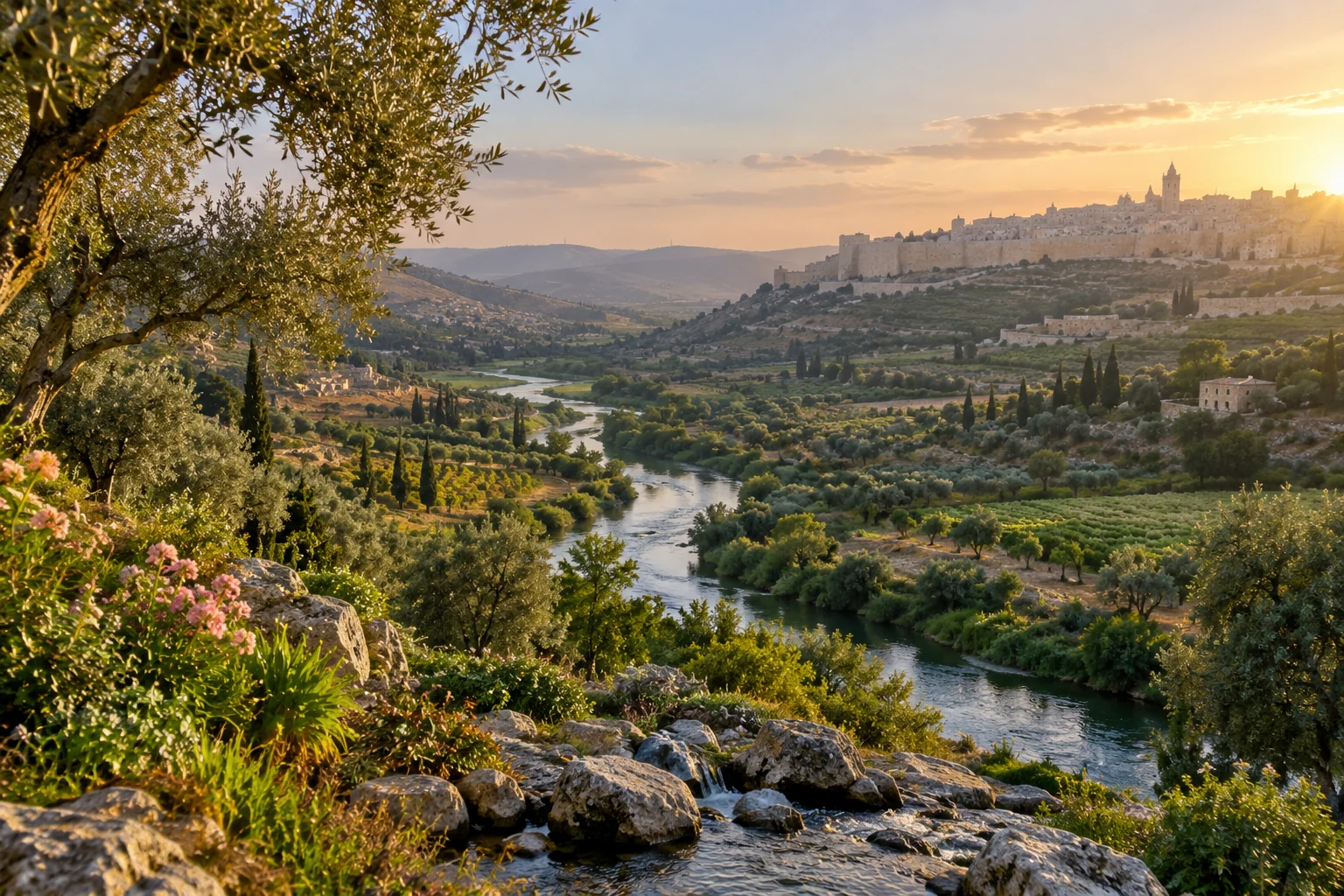
How Can Many Books Written Across Centuries Speak with One Unfolding Voice?
01
Introduction
Part III — Scripture, Gospel, and the Trustworthiness of God’s Story
Faith Built on Truth — Through Christ, Through Scripture, for Life
How can law, poetry, prophecy, biography, wisdom, letters, and visions belong to one story? And why do themes planted in Genesis keep flowering all the way to Revelation?
Walk into the Bible anywhere and the scenery changes quickly.
Genesis gives us gardens, families, floods, and promises. Exodus moves through slavery, plagues, sea, wilderness, and covenant. Kings rise and fall. Poets sing. Prophets accuse and console. Wisdom teachers ponder suffering, work, desire, and death. The Gospels bring us dusty roads around Galilee and Jerusalem. Letters travel between young churches. Revelation ends with beasts, cities, rivers, trees, and a world made new.
At first glance, this can feel less like one book than an entire library—which, in fact, it is.
Yet something remarkable happens when we stop reading the Bible only as isolated verses and begin following its larger movements. Images return. Promises deepen. Problems introduced in one book remain unresolved until much later. The garden points toward a city. Abraham’s blessing widens toward the nations. Exodus becomes a pattern of salvation. The tabernacle grows into temple imagery and then reaches toward God dwelling in Christ and his people. David’s throne creates a hope no ordinary king can finally satisfy. Exile becomes both a historical wound and a picture of humanity’s deeper estrangement. The prophets announce restoration. Jesus gathers the threads. The Spirit extends the story. Revelation does not abandon Genesis; it completes its hope.
The Bible’s unity is not the sameness of one voice speaking in one century. It is more like a long symphony. Themes appear, disappear beneath the surface, and return changed by what has happened in between.
Here are ten reasons to believe the Bible tells one unified story.
02
1. The Story Begins and Ends with God Dwelling with Humanity in a Good Creation
The Bible opens with creation, not escape.
God forms a world he repeatedly calls good and places human beings within it as his image-bearers [Genesis 1:1–31]. In Genesis 2, garden, river, trees, human vocation, and divine presence belong together. Humanity’s home is God’s world, and humanity’s calling is to cultivate it under God’s wise rule [Genesis 2:8–15].
Then rebellion fractures the communion. The humans hide. The ground is cursed. Exile begins east of Eden [Genesis 3:8–24].
If the Bible were a collection of unrelated religious reflections, that lost garden might simply disappear. Instead, its imagery keeps returning. The tabernacle and temple echo Eden. Prophets imagine creation renewed. Jesus announces God’s kingdom. Paul speaks of creation groaning for liberation [Romans 8:18–25]. Revelation closes with a city where the river of life flows, the tree of life bears fruit, the curse is removed, and God dwells with humanity [Revelation 21:1–5; 22:1–5].
The Bible travels far, but it does not forget where it began.
Takeaway: The Bible’s final hope completes its opening vision: God dwelling with renewed humanity in a healed creation.
03
2. The Image of God Becomes a Human Vocation That the Whole Story Seeks to Restore
Genesis says humanity is made in God’s image and commissioned to rule over creation [Genesis 1:26–28]. In the ancient world, an image represented a ruler’s authority. The biblical vision gives that royal dignity not merely to kings but to male and female humanity.
The tragedy of Genesis 3 is therefore larger than breaking a rule. Human beings corrupt their vocation. Those called to reflect God’s wise rule begin grasping, blaming, dominating, and shedding blood.
From that point forward, the Bible keeps asking: what does true humanity look like?
Israel is called to become a kingdom of priests, representing God among the nations [Exodus 19:4–6]. Israel’s kings are meant to rule under God’s justice, yet many become predators. The Psalms long for a righteous ruler. The prophets imagine a servant who embodies faithful obedience.
The New Testament presents Jesus as the image of the invisible God and the truly human one who exercises authority through service, self-giving love, and obedience [Colossians 1:15; Mark 10:42–45; Philippians 2:5–11]. Those joined to him are renewed according to that image [Colossians 3:9–11].
What begins as vocation in Genesis becomes restoration in Christ.
Takeaway: The Bible’s story is not only about saving humans from danger; it is about restoring humans to their calling to reflect God’s character within creation.
04
3. God’s Covenant with Abraham Carries the Promise of Blessing Toward All Nations
After Genesis 1–11, the human story looks increasingly fractured. Violence multiplies. Nations scatter. Pride builds towers but not communion.
Then God calls one man.
To Abraham he promises land, descendants, a great name, and—most importantly—a vocation: “all peoples on earth will be blessed through you” [Genesis 12:1–3].
That promise becomes one of the Bible’s great rivers.
Isaac inherits it. Jacob becomes Israel. Israel is delivered from Egypt and called to become a priestly people. The prophets refuse to let Israel’s election shrink into tribal privilege; they imagine nations streaming toward God’s light [Isaiah 2:1–4; 49:5–6].
Then the New Testament identifies Jesus as Abraham’s descendant through whom blessing comes to the nations [Matthew 1:1; Galatians 3:8, 14–16]. Pentecost gathers many languages around the good news [Acts 2:5–11]. Revelation sees a redeemed multitude from every nation, tribe, people, and language [Revelation 7:9–10].
The family called in Genesis never loses its global purpose.
Takeaway: Election in Scripture moves outward: God blesses a people so that his healing blessing may reach the world.
05
4. The Exodus Becomes a Pattern for How God Rescues and Forms a People
Exodus is not simply one dramatic episode in Israel’s past. It becomes a pattern that echoes through the rest of Scripture.
God hears enslaved people, confronts oppressive power, brings them through waters, gives covenant, dwells among them, and leads them toward inheritance [Exodus 2:23–25; 6:6–8; 14:21–31; 19:3–6; 40:34–38].
Later generations keep returning to this story. The Psalms sing it. The prophets use it to imagine a new rescue after exile. Isaiah describes a renewed exodus in which God again makes a way through the wilderness [Isaiah 40:3–5; 43:16–21].
The Gospels then present Jesus in exodus-shaped ways. Matthew brings him out of Egypt, through water, into wilderness, and up a mountain to teach [Matthew 2:15; 3:13–17; 4:1–11; 5:1–2]. At the Last Supper, Jesus interprets his approaching death during Passover [Luke 22:14–20]. Paul can even call Christ “our Passover lamb” [1 Corinthians 5:7].
The story of liberation from Pharaoh widens into liberation from sin, death, and enslaving powers.
Takeaway: Exodus becomes biblical grammar for salvation: God rescues from bondage so that a liberated people may belong to him and embody his ways.
06
5. Tabernacle and Temple Carry the Theme of God’s Presence Toward Jesus and the Church
A central biblical question is simple: how can the holy God dwell among flawed human beings?
Eden is lost, but God does not give up the desire to dwell with his people.
At Sinai, Israel builds the tabernacle, and God’s glory fills it [Exodus 25:8; 40:34–38]. Later Solomon builds the temple, and again divine glory fills the house [1 Kings 8:10–13]. Temple becomes a sign that heaven and earth belong together under God’s presence.
Yet the prophets also insist that no building can contain God and that corrupt worship can turn the temple into a lie [Isaiah 66:1–2; Jeremiah 7:1–15].
Then John uses tabernacle language about Jesus: “The Word became flesh and made his dwelling among us” [John 1:14]. Jesus speaks of his own body as the true temple [John 2:19–21]. Paul describes the church as God’s temple by the Spirit [1 Corinthians 3:16; Ephesians 2:19–22].
Finally, Revelation sees no temple building in the new Jerusalem because God and the Lamb are its temple [Revelation 21:22].
The movement is breathtaking: garden → tabernacle → temple → Jesus → Spirit-filled people → creation filled with God’s presence.
Takeaway: The temple theme reveals the Bible’s deepest destination: not humanity escaping to God, but God dwelling fully with humanity.
07
6. The Story of Kingship Creates a Hope That Only the Messiah Can Carry
Israel eventually asks for a king. The request is complicated, but God works within it.
David becomes the central royal figure, and God promises that his house and throne will have an enduring future [2 Samuel 7:12–16]. The Psalms then celebrate the king while also stretching royal hope beyond ordinary rulers [Psalm 2; 72; 89].
But Israel’s kings repeatedly fail. Some are weak. Others are violent, idolatrous, or unjust. The monarchy collapses and exile seems to bury David’s throne.
Yet the prophets keep the promise alive. Isaiah speaks of a child whose government will bring justice and peace [Isaiah 9:6–7]. Jeremiah promises a righteous branch from David’s line [Jeremiah 23:5–6]. Ezekiel imagines one shepherd ruling God’s restored people [Ezekiel 34:23–24].
The New Testament introduces Jesus as “son of David” and announces the kingdom of God through him [Matthew 1:1; Mark 1:14–15]. But his kingship overturns normal expectations: he rules through service, enters Jerusalem on a donkey, wears a crown of thorns, and is enthroned on a cross before being raised and declared Lord [Mark 10:42–45; 11:1–10; 15:16–39; Acts 2:32–36].
The failed history of kings becomes the road toward a different kind of King.
Takeaway: The Bible’s royal story gathers in Jesus, whose authority is revealed not as domination but as faithful, self-giving rule.
08
7. Exile and Return Become a Deeper Story About Humanity’s Estrangement and Homecoming
Exile is one of the Bible’s great wounds.
Israel loses land, temple, king, and political freedom. Jerusalem falls. People are carried to Babylon. The catastrophe confirms the prophets’ warnings that covenant unfaithfulness has consequences [2 Kings 24–25; Jeremiah 25:8–12].
Yet exile is also strangely familiar because humanity’s story began with another expulsion—from Eden.
The prophets therefore describe return from Babylon in language larger than geography. Isaiah speaks of deserts blooming, sins forgiven, glory returning, and good news announced [Isaiah 35:1–10; 40:1–11; 52:7–10]. Ezekiel speaks of new hearts, a new spirit, resurrection-like restoration, and God dwelling among his people [Ezekiel 36:24–28; 37:1–28].
When Jesus announces forgiveness, welcomes exiles of every kind, and proclaims God’s kingdom, he acts as though Israel’s deepest return is arriving through him. His parable of the lost son is a homecoming story in miniature [Luke 15:11–32].
The New Testament then describes humanity itself as alienated and brought near through Christ [Ephesians 2:11–22].
Takeaway: Exile becomes more than a date in Israel’s history; it becomes a biblical picture of life far from God and of the homecoming God brings through the Messiah.
09
8. The Prophets Keep Expanding the Promise Toward a New Covenant, New Heart, and New Creation
Israel’s repeated failures raise a difficult question: if people keep breaking covenant, what will finally change?
The prophets answer not by abandoning God’s purposes but by deepening them.
Jeremiah promises a new covenant in which God’s instruction is written on the heart and sins are forgiven [Jeremiah 31:31–34]. Ezekiel promises cleansing, a new heart, and God’s Spirit within his people [Ezekiel 36:25–27]. Isaiah speaks of a servant who bears sin, a Spirit-anointed herald of good news, and eventually new heavens and a new earth [Isaiah 52:13–53:12; 61:1–4; 65:17–25].
These are not disconnected predictions. They address the unresolved tensions of the earlier story: external law without transformed hearts, kings without lasting justice, temple without enduring faithfulness, return from Babylon without complete renewal.
At the Last Supper Jesus speaks of “the new covenant” in his blood [Luke 22:20]. The Spirit is poured out at Pentecost [Acts 2:1–21]. The church understands itself as living between the resurrection of Jesus and the full renewal still to come.
Takeaway: The prophets do not start a new story; they carry the old story forward toward inward renewal, forgiveness, the Spirit, and new creation.
10
9. Jesus Does Not Replace Israel’s Story—He Brings Its Themes to Their Climax
Jesus makes the most sense when the Old Testament story is still in the room.
He is called Abraham’s son and David’s son [Matthew 1:1]. He passes through water, wilderness, mountain, and Passover. He speaks of kingdom, temple, covenant, shepherd, vine, Sabbath, Son of Man, and servant. His death occurs at Passover. His resurrection is proclaimed as both Israel’s hope fulfilled and the beginning of a new world.
This is why Luke 24 is so important. The risen Jesus does not tell his disciples to forget Moses and the prophets. He teaches them to reread those Scriptures around the Messiah’s suffering, resurrection, forgiveness, and mission to the nations [Luke 24:25–27, 44–49].
The cross, then, is not a strange interruption in the biblical plot. It is where covenant faithfulness, sacrifice, kingship, Passover, prophetic suffering, forgiveness, and victory over evil converge.
The resurrection is likewise not merely a happy ending for Jesus. It is the firstfruits of the promised renewal [1 Corinthians 15:20–28].
Takeaway: Jesus is not an appendix added to Israel’s Scriptures; he is the place where their central roads meet and then open outward toward the world.
11
10. Revelation Completes the Bible by Returning to Its First Themes and Healing Them
The Bible’s final chapters deliberately sound like its first chapters.
Genesis had a garden, a river, the tree of life, human vocation, divine presence, and a curse that entered through rebellion. Revelation has a city shaped like a garden, a river of life, the tree of life, servants reigning, God’s face seen, and “no more curse” [Genesis 2–3; Revelation 21–22].
The nations that fractured in Genesis become nations healed in Revelation [Genesis 11:1–9; Revelation 22:2]. Human violence gives way to a city where God’s glory provides light. Death, introduced into the human tragedy, is finally removed [Revelation 21:4].
And the Bible’s central prayer is fulfilled: “God’s dwelling place is now among the people” [Revelation 21:3].
The ending does not throw away creation, covenant, Israel, humanity, or embodied life. It gathers and heals them.
The last page therefore tells us something about every page before it. Scripture has been moving toward communion all along—the Creator dwelling with a redeemed humanity in a renewed world.
Takeaway: Revelation closes the Bible by healing Genesis: the lost garden becomes a garden-city, the curse is removed, and God’s presence fills the future.
12
Truth and Your Decision: If the Bible Tells One Unified Story
The Bible’s unity does not mean every book says the same thing in the same way.
Job argues with easy answers that Proverbs might appear to offer. Ecclesiastes asks questions other books answer differently. The prophets challenge kings, priests, and ordinary people from different historical moments. Paul writes to Rome differently than he writes to Corinth. Revelation speaks in visions rather than courtroom argument.
The diversity is real.
But beneath that diversity, the same great movements keep surfacing: creation and vocation, rebellion and exile, covenant and blessing, exodus and liberation, presence and temple, kingship and Messiah, judgment and restoration, Spirit and renewed people, resurrection and new creation.
The threads do not run in straight lines. They cross. They disappear. They return. Sometimes they are knotted by failure. Sometimes they are brightened by promise. But in Jesus they gather, and in new creation they reach their destination.
That does not prove inspiration by itself. Yet it gives us something worth taking seriously: a library formed across centuries speaks with an astonishing narrative coherence because its books keep returning to the same God, the same human problem, the same covenant purpose, and the same hope of renewed creation.
Perhaps the Bible is not a pile of religious stones.
Perhaps it is a road.
Genesis lays the first stones. Abraham walks it. Israel wanders it. David tries to rule upon it. Prophets call people back to it. Jesus walks it toward the cross and out through the empty tomb. The Spirit gathers people from the nations onto it. Revelation shows where the road finally arrives.
The road is long, but it is one road.
Will you read the Bible as scattered religious fragments—or step into its unfolding story and discover where your own life stands within God’s purpose to renew all things?
13
Closing Prayer
God of Abraham, Israel, the prophets, and the apostles, thank you for the long story of your faithfulness.
Teach me not to tear your Word into isolated fragments. Give me eyes to see the great story—from creation to covenant, from exodus to kingdom, from exile to Messiah, from cross to resurrection, from Spirit to new creation.
When I lose the thread, lead me back to Jesus. When I use Scripture only to defend my own opinions, humble me beneath its larger story. When my own life feels like disconnected chapters, remind me that you are able to carry unfinished stories toward redemption.
By your Spirit, teach me to live now as part of the world you are making new.
Amen.
14
Join the Conversation
Which biblical theme most helps you see the Bible as one unfolding story—covenant, exodus, temple, kingdom, exile, Messiah, resurrection, or new creation? Where do you still find the Bible’s unity difficult to see?
Share your reflection, question, or testimony as we continue the Reasons to Believe series—Faith Built on Truth, Through Christ, Through Scripture, for Life.
Previous lesson: The Bible Is the Word of God: Ten Reasons to Believe
Next lesson: The Bible’s Promises Reveal God’s Faithfulness: Ten Reasons to Believe
Be the first to leave a comment.