

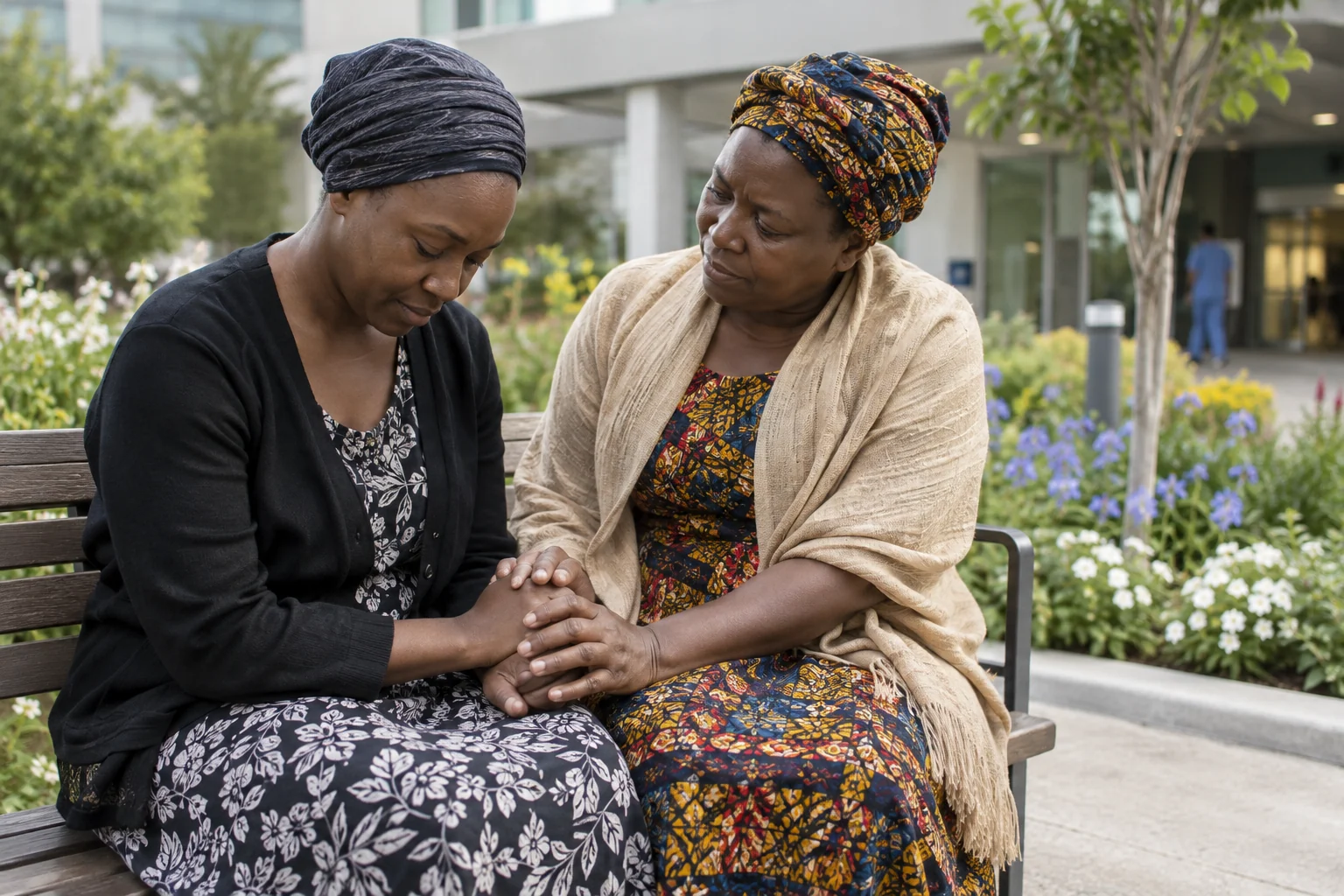
Where is God when the innocent suffer?
01
Introduction
Reasons to Believe — God, Creation, and the Human Question
What can faith say beside a hospital bed when every answer sounds too small?
If God is powerful and loving, why does he not stop the blow before it falls?
Few questions reach the heart as quickly as suffering. A child dies. A faithful mother receives a frightening diagnosis. A village wakes beneath floodwater. A family flees violence it did not begin. In such moments, “Where is God?” is not a classroom exercise. It may be a cry breathed through clenched teeth. Any Christian answer that rushes past the wound to defend a theory has already failed the person standing in front of it.
The claim of this article is deliberately modest: suffering does not disprove God’s love. That is not the same as saying we can explain every tragedy, that pain is secretly pleasant, or that believers should never doubt. Philosophers distinguish the logical problem—whether God and evil can possibly coexist—from the evidential and personal problems—whether this much suffering makes God seem unlikely or untrustworthy. A defense may answer the first and still leave tears on the floor. Christian faith must therefore offer more than a syllogism. It must show us the God revealed in Israel’s cries, Jesus’ tears, the cross, the resurrection, and the promised renewal of creation.
These ten reasons form a cumulative case. None unlocks every dark room. Together, however, they show that biblical faith neither denies suffering nor worships it. It names evil as an intruder, locates God beside its victims, calls his people to resist it, and looks toward the day when love will have the final word.
02
1. Our protest against suffering reveals that we know the world is not as it should be
When we call the suffering of an innocent person wrong, we are doing more than reporting dislike. We are saying that the event violates a real claim upon us: children should be protected, bodies should not be tortured, truth should not be crushed by power. The cry “This ought not to happen” reaches beyond taste, tribe, and convenience. It treats justice as something we discover and owe, not merely something the strongest group invents.
This moral protest does not by itself prove the Christian God. An atheist can recognize evil, grieve honestly, and act with costly compassion. The narrower point is that suffering raises a question for every worldview. If human beings are only accidental arrangements of matter and moral value is finally a human projection, why does the universe owe the vulnerable anything? Biblical faith offers a coherent answer: creation comes from a good God, and human beings bear his image. We protest evil because, even through our tears, we remember the grammar of goodness.
Takeaway: Your cry that suffering is wrong is not an embarrassment to faith; it may be the echo of a world made for goodness.
03
2. The Bible does not hide innocent suffering; it gives the wounded a voice
Scripture is remarkably unwilling to protect God with polished publicity. Job loses children, health, livelihood, and social standing, yet the book refuses his friends’ neat claim that pain always reveals private guilt. The psalmists ask how long God will seem absent. Lamentations walks through the ruins of Jerusalem from A to Z, giving form to grief that threatens to become shapeless. Biblical lament is protest spoken to God, not pain edited out of the record (Job 3; Psalms 13; 22; 44; Lamentations 3).
That honesty matters. A fabricated faith usually silences awkward witnesses; the Bible seats them near the front. It does not call every question rebellion. Sometimes trust sounds like, “Wake up. Why do you hide your face?” (Psalm 44:23–24). Lament assumes that God’s character and the world’s condition are out of alignment, then asks God to act according to his justice. Faith can therefore include bewilderment. The wounded person need not smile to remain within the covenant.
Takeaway: God is not threatened by your truthful prayer. Bring him the wound as it is, not as religious politeness says it should be.
04
3. Much suffering comes from freedom abused, not love withdrawn
Love capable of being given must also be capable of being refused. A world of persons rather than puppets contains the possibility of betrayal, violence, greed, and cowardice. The parent who grants an adult child real agency cannot control every choice without abolishing the very relationship in which love and responsibility grow. In a similar but greater way, God’s gift of morally significant freedom helps explain why he does not prevent every human act before it occurs.
This “free-will defense” has genuine force against the claim that a loving God and evil are logically incompatible. Yet it must not be stretched beyond its reach. It does not by itself explain cancer, earthquakes, genetic disorders, or why one victim receives no rescue. Nor does freedom excuse the offender. Scripture places blame on Pharaoh’s oppression, David’s abuse, imperial violence, and our own hard hearts. God’s patience with human agency is not approval of what we do with it; judgment means our choices carry terrible weight.
Takeaway: Do not call cruelty “God’s plan” when Scripture calls people to repent, protect the vulnerable, and answer for what they have done.
05
4. A dependable creation makes life possible, yet it also leaves us vulnerable
We live through the regularity of creation. Fire warms food because it behaves consistently; gravity lets us walk; cells divide; rain follows physical processes. If natural laws changed whenever danger approached, meaningful action, science, agriculture, and responsibility would become almost impossible. The same dependable order that allows a surgeon to heal can also allow a knife to wound. The same moving earth that sustains a dynamic planet can shake beneath a city.
This does not explain why God permits every natural disaster, and it should never be used to lecture a bereaved family. It simply shows that a habitable, intelligible world is not the same thing as a risk-free world. The Bible portrays creation as good, fruitful, unfinished, and now groaning as it awaits liberation (Genesis 1:28; Psalm 104; Romans 8:18–25). Its wildness is not proof that God hates it. Yet Christian hope also refuses to treat disease, decay, and death as permanent features of God’s final future.
Takeaway: Receive creation’s order as a gift, study its dangers wisely, and never confuse what presently happens in nature with everything God ultimately desires.
06
5. Scripture rejects the easy equation: suffering equals personal punishment
When disaster strikes, people often search for someone to blame. Job’s friends turn theology into an interrogation lamp: if Job suffers, they reason, he must deserve it. God finally rebukes them. Jesus likewise refuses to treat a man’s blindness as proof of his sin or his parents’ sin (John 9:1–3). When a tower falls and kills eighteen people, Jesus does not say its victims were worse than their neighbors (Luke 13:1–5).
Actions do have consequences, and Scripture takes sin seriously. But a broken world does not distribute pain according to a simple moral ledger. The righteous may suffer, the wicked may prosper, and hidden causes may remain hidden. This protects sufferers from spiritual cruelty. We are not authorized to invent secret sins to make tragedy feel orderly. Sometimes the faithful answer is not “Here is why this happened,” but “I do not know; I will not leave you alone in it.”
Takeaway: Before offering an explanation, offer presence. A chair beside the bed may tell the truth more faithfully than a hurried sermon.
07
6. In Jesus, God is found beside the sufferer, not at a safe distance
At Lazarus’s tomb, Jesus knows resurrection is coming, yet he weeps (John 11:33–36). He does not scold Mary and Martha for grieving. He allows their sorrow to enter his own body. Throughout the Gospels he touches those others avoid, feeds hungry crowds, welcomes the shamed, and is moved by people who resemble sheep without a shepherd. His compassion is not a public-relations gesture; it is the character of Israel’s God arriving in human flesh.
The incarnation changes the question “Where is God?” Christianity points not to a deity watching pain through palace windows but to Jesus among mourners, the sick, the excluded, and the condemned. This does not explain why one prayer for healing seems unanswered. It does mean divine love cannot be dismissed as ignorance of bodily anguish. God has known exhaustion, rejection, fear, bereavement, injustice, and the approach of death from inside our human story (Hebrews 4:14–16).
Takeaway: When pain makes God seem distant, look toward Jesus: the face wet with tears is also the face of God’s faithful love.
08
7. The cross shows that God absorbs evil rather than merely observing it
Christian faith reaches its most daring claim at the cross. Jesus is betrayed by a friend, abandoned by disciples, condemned through political calculation, mocked, tortured, and executed. The innocent Messiah enters the place where human cruelty and apparent divine absence meet. His cry from Psalm 22 is not theatre. The Son carries Israel’s lament and the world’s violence into the heart of God (Mark 15:33–39).
The cross must never be used to tell victims to remain under abuse. Jesus confronts evil, exposes the powers, forgives without calling wickedness good, and gives himself freely; an abuser has no right to demand another person’s suffering. At Calvary, God does not explain pain from afar. He bears its cost and defeats its claim through self-giving love. The crucified God does not answer every “why,” but he prevents us from saying that God’s love is cheap or untouched.
Takeaway: The cross is not God asking sufferers to endure what he avoids; it is God entering the wound and carrying evil toward its defeat.
09
8. Resurrection declares that suffering and death will not write the final chapter
If the story ended on Good Friday, the cross could be remembered only as another victory of empire over an innocent body. Easter is God’s verdict against that verdict. Jesus is raised bodily, not merely preserved as an inspiring memory. His resurrection announces that death is an enemy to be overcome and that God’s love is stronger than the grave (1 Corinthians 15:20–28, 54–57).
Resurrection hope is not a way of minimizing present loss. A mother does not stop missing her child because someone mentions heaven. The New Testament allows grief, but it refuses despair’s claim that love has been permanently erased (1 Thessalonians 4:13–18). God’s future is not the abandonment of creation; it is its renewal. The body matters, the earth matters, and every act of faithful love can be offered in hope because our labor in the Lord is not wasted (1 Corinthians 15:58).
Takeaway: Christian hope does not say the wound was small. It says the wound will not be sovereign forever.
10
9. Final judgment means that victims are remembered and evil is answered
People sometimes imagine divine judgment as the opposite of love. Ask a victim of trafficking, torture, corruption, or war. A universe in which no one finally answers for destroyed lives would not be loving; it would be morally indifferent. The biblical promise that God will judge the world means hidden deeds will be brought into the light, lies will lose their shelter, and those treated as disposable will be publicly vindicated (Psalm 96:10–13; Acts 17:31; Revelation 20:11–15).
Judgment also turns the question toward us. We cannot demand justice for distant villains while excusing the harm hidden in our homes, churches, businesses, and systems. The Judge is the crucified and risen Jesus, whose justice is neither corrupt nor careless. His mercy invites repentance now; his judgment assures the wounded that forgiveness will never require calling evil harmless. Love opposes whatever destroys the beloved.
Takeaway: Because God loves, evil matters, victims matter, repentance matters, and justice will not remain forever unfinished.
11
10. God’s love is already at work through people who resist suffering
“Where is God?” may receive part of its answer through a nurse changing a dressing at dawn, a neighbor carrying food through rain, a church reporting abuse rather than hiding it, a scientist searching for treatment, or a citizen defending those whose names carry little influence. None of these actions proves that every tragedy had to occur. They show what love does when suffering arrives: it moves toward the wounded.
Jesus announced God’s kingdom by forgiving sins, healing bodies, feeding people, confronting oppressive powers, and forming a community of costly mercy (Luke 4:16–21; 10:25–37). The church betrays that gospel whenever it spiritualizes pain it could help relieve. Prayer and action belong together. We ask God for daily bread, then share ours. We pray for deliverance, then open the door. God’s future casts its first light into the present through communities that become signs of the world he has promised.
Takeaway: Do not use God’s mystery as permission for passivity. Become part of the answer your suffering neighbor is pleading to see.
12
Conclusion: Love in the Place of Tears
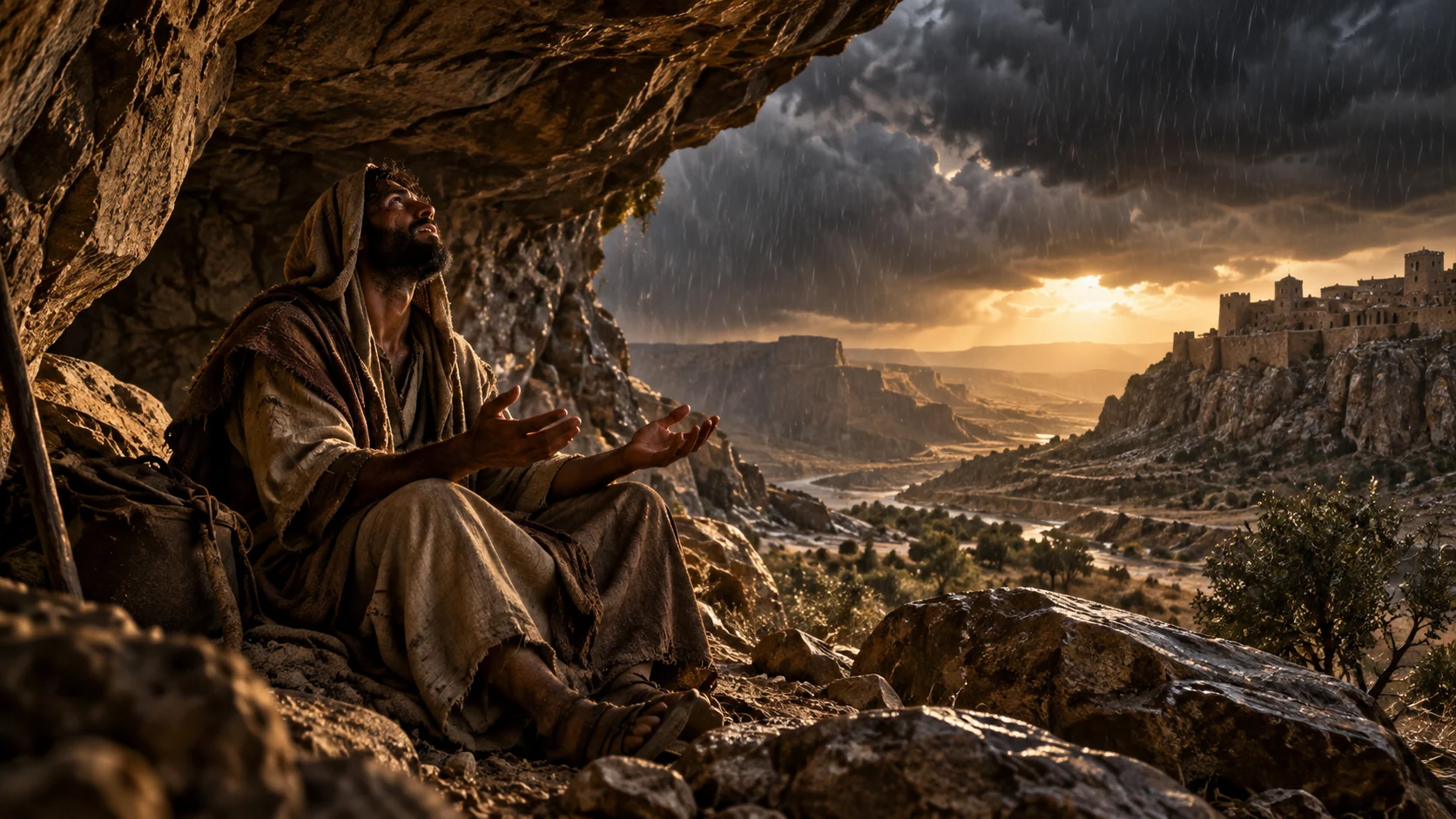
Suffering remains a formidable challenge to faith. Some events are so brutal that every tidy sentence breaks against them. Christianity does not ask us to pretend otherwise. It gives us Job scratching his wounds, psalmists asking how long, Rachel refusing easy comfort, Jesus weeping at a grave, and a crucified Messiah praying from the darkness. The Bible’s God is not protected from lament. He receives it.
The Christian answer is therefore not a hidden chart explaining every disaster. It is a story and a presence. Creation was made good. Human freedom is real and frequently abused. The world is ordered yet groaning. Innocent suffering cannot be reduced to personal punishment. In Jesus, God comes near, bears evil at the cross, defeats death in resurrection, promises judgment, and begins his new creation through a people called to heal rather than abandon.
Does this remove every question? No. It gives us reason to keep asking the questions in God’s direction. Suffering can make God’s love difficult to see; it does not prove that love is absent. At the center of Christian faith stands not an untouched explanation but the wounded and risen Jesus. The scars remain visible. Death does not.
13
An Invitation to Respond
If you are suffering now, you do not need to manufacture certainty. Tell God the truth. Borrow the words of Psalm 13 or Psalm 22. Ask a trustworthy person to sit with you. Seek medical, legal, pastoral, or safeguarding help where it is needed. Faith is not refusing help; help may be one of the ways God reaches you.
If you are standing beside someone in pain, resist the urge to explain what you do not know. Listen. Protect. Bring food. Make the call. Report danger. Pray without performing. Let your presence become a small lamp until morning comes.
14
Prayer
God of the crucified and risen Jesus, hear the cries that have no polished words. Stay near to the wounded, defend the vulnerable, expose evil, strengthen those who care, and keep our hearts from easy answers. Teach us to lament with honesty, to serve with courage, and to hope for the day when you will wipe away every tear and make all things new. Amen.
If this article has raised a question, awakened a memory, or helped you name a struggle, you are welcome to share your question or testimony. Honest conversation can become one more place where no sufferer has to stand alone.
Previous article: Moral Truth Points to a Moral Creator: Ten Reasons to Believe
Next article: God Is Not Distant: Ten Reasons to Believe
15
Sources and Further Reading
- Internet Encyclopedia of Philosophy, “Logical Problem of Evil” - BibleProject, “Job” - BibleProject, “Book of Psalms” - BibleProject, “Book of Lamentations” - N. T. Wright Online, “Five Things to Know About Lament”

Be the first to leave a comment.