

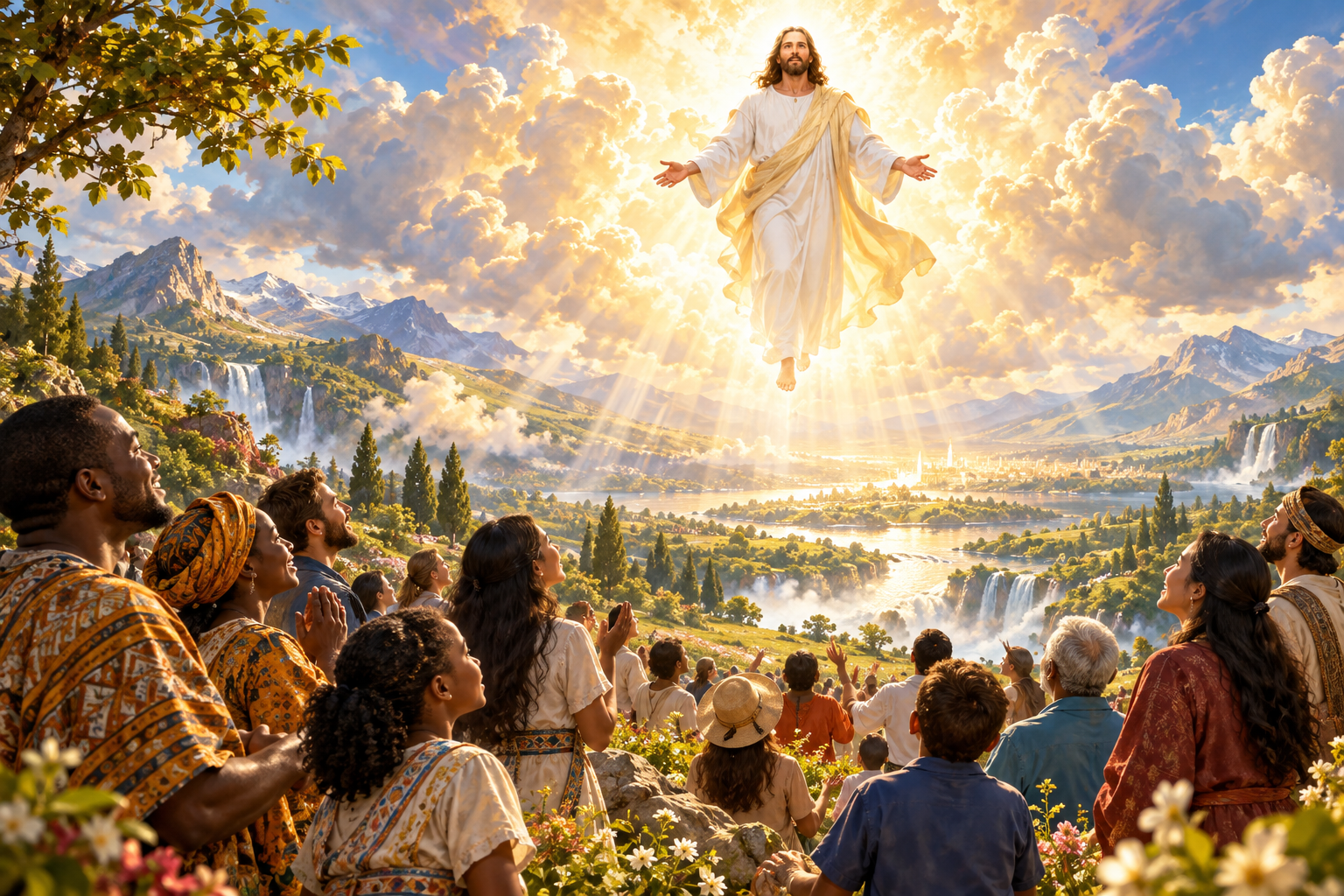
Is the Second Coming a genuine hope or a religious dream?
01
Introduction
Faith Built on Truth — In Christ, Through Scripture, for Life
For many people, talk about the Second Coming sounds distant, dramatic, or even unreal. Some have heard predictions that failed. Others have seen fear used to control people. Still others wonder whether modern Christians should quietly leave such language in the ancient world.
But the New Testament does not treat the return of Jesus as a decorative belief. It is woven into the heart of Christian hope. The same Jesus who lived, died, and rose is the Jesus whom the apostles expected to appear again—not to abandon creation, but to complete what God began in his resurrection.
The Second Coming is therefore not mainly about charts, dates, or speculation. It is about the public triumph of Jesus, the resurrection of the dead, the judgment of evil, the vindication of the faithful, and the renewal of creation.
Here are ten reasons to believe that Jesus will return.
02
1. Jesus himself promised to come again
On the night before his death, Jesus told his disciples that he would go and prepare a place for them and then “come again” and take them to be with him (John 14:1–3).
This promise was spoken to frightened disciples whose world was about to collapse. Jesus did not give them a timetable. He gave them himself.
Christian hope begins here: the future is not finally an event on a calendar. It is the arrival of a Person.
Takeaway: The Second Coming rests first on the promise of Jesus himself.
03
2. The ascension points forward to his return
After Jesus was taken up, the disciples stood looking into the sky. Two heavenly messengers told them that “this same Jesus” would come in the same way they had seen him go (Acts 1:9–11).
The emphasis matters: this same Jesus. The risen Lord is not replaced by an abstract spiritual idea. The one who was crucified, raised, and exalted remains the center of Christian hope.
The story that began in Galilee is moving toward a public completion.
Takeaway: The ascension is not the disappearance of Jesus from history; it points toward his return to complete it.
04
3. The resurrection of Jesus guarantees a future resurrection
Paul calls Christ “the firstfruits” of those who have fallen asleep (1 Corinthians 15:20–23). Firstfruits are the beginning of a harvest.
Jesus’ resurrection is therefore not an isolated miracle. It is the first installment of what God intends to do for his people and, ultimately, for creation.
If Easter is true, the Second Coming is not a foreign addition to Christian faith. It is the horizon toward which Easter already points.
Takeaway: The risen Jesus is the beginning of the future God has promised.
05
4. The apostles consistently expected Christ to appear again
The expectation of Jesus’ return runs through the New Testament. Paul writes of believers waiting for God’s Son from heaven (1 Thessalonians 1:9–10). Peter speaks of the “revelation of Jesus Christ” (1 Peter 1:7, 13). John closes Revelation with the prayer, “Come, Lord Jesus” (Revelation 22:20).
This is not one obscure text carrying the whole idea. It is a repeated note across early Christian witness.
Like a melody heard in different instruments, the same hope sounds through the apostolic writings.
Takeaway: The Second Coming belongs to the shared faith of the earliest Christian communities.
06
5. Jesus’ return is public, not secret in the biblical sense
The New Testament uses vivid, public language for Christ’s return. Paul speaks of a commanding shout, the voice of an archangel, the trumpet of God, and the resurrection of the dead (1 Thessalonians 4:16–17). Revelation says, “Every eye will see him” (Revelation 1:7).
Biblical imagery should be read carefully, but its direction is unmistakable: Christ’s final appearing is not a private religious experience known only to a hidden few.
The king who was mocked publicly will be vindicated publicly.
Takeaway: Christian hope looks toward the open revelation of Jesus’ lordship.
07
6. The return of Jesus brings justice to history
The world contains wounds that human courts never repair, crimes never confessed, victims never vindicated, and tyrannies that seem to die peacefully in their beds.
The New Testament ties Christ’s appearing to judgment and justice (Matthew 25:31–46; 2 Timothy 4:1). This is not a contradiction of divine love. Love that never confronts cruelty would finally abandon the victims.
The return of Jesus means history is accountable.
Takeaway: Christ’s return is good news because evil will not be allowed to write the final verdict.
08
7. The Second Coming comforts those who grieve
Paul’s teaching in 1 Thessalonians 4 arises from grief. Some believers feared that those who had died would miss the coming kingdom. Paul answers with resurrection hope: the dead in Christ will rise, and God’s people will be together with the Lord (1 Thessalonians 4:13–18).
Christian hope does not tell mourners not to cry. It tells them that death is not the end of the story.
At a graveside, resurrection hope does not remove the ache. It gives the ache a horizon.
Takeaway: The return of Jesus means death is real, but it is not final.
09
8. The return of Jesus completes God’s plan for creation
The Bible’s final hope is not the permanent abandonment of earth. Peter speaks of new heavens and a new earth where righteousness dwells (2 Peter 3:13). Revelation sees God dwelling with humanity and making all things new (Revelation 21:1–5).
Christ returns because the Creator has not given up on creation.
The world we know will not simply continue forever in its present brokenness, nor will God discard it like a failed project. He will judge, cleanse, renew, and dwell with his people.
Takeaway: The Second Coming is the doorway into new creation.
10
9. The hope of Christ’s return changes how believers live now
Biblical hope is never an excuse for laziness. John says that everyone who has this hope purifies himself (1 John 3:2–3). Peter asks what kind of people believers ought to be as they await God’s future (2 Peter 3:11–14).
If Jesus is coming, then faithfulness matters. Love matters. Justice matters. Holiness matters. The work of the kingdom matters.
A farmer who knows harvest is coming does not abandon the field. He works it with greater purpose.
Takeaway: Expecting Jesus should produce faithful living, not passive waiting.
11
10. The Church has preserved this hope because it belongs to the gospel itself
Across centuries, Christians in many cultures have confessed that Christ “will come again” and that his kingdom will have no end. The language has been expressed differently, and Christians have disagreed about details, but the central hope has endured because it is deeply rooted in Scripture.
This does not prove the doctrine by itself. But it shows that the Second Coming is not a recent obsession invented by a fringe movement. It belongs to the historic core of Christian expectation.
Generation after generation has buried its dead, faced persecution, resisted injustice, and prayed the same ancient prayer: Come, Lord Jesus.
Takeaway: The enduring Christian hope of Christ’s return rests on the apostolic story, not on modern speculation.
12
Truth and Your Decision
The Second Coming is not meant to make us obsessed with dates. Jesus warned against pretending to know what the Father has not revealed (Matthew 24:36; Acts 1:7).
Nor is it meant to make us afraid of the world, careless about creation, or indifferent to suffering.
The biblical hope is richer.
The Jesus who was crucified will be vindicated. The dead will be raised. Evil will be judged. The faithful will be gathered. Creation will be renewed. God will dwell with humanity.
That is why the early Christians could face prisons, graves, empires, and uncertainty without surrendering hope. They did not believe history was circling endlessly in the dark. They believed history was moving toward Jesus.
So the question is not merely, “Can I explain every detail of the Second Coming?”
The deeper question is this: If Jesus really is Lord, am I living in a way that welcomes his appearing?
The Christian prayer is not escape.
It is expectation.
Not “Take us away from your world forever,” but:
“Your kingdom come.”
And at the end of Scripture, the Church still answers:
“Amen. Come, Lord Jesus.”
13
A Prayer of Hope
Lord Jesus Christ, you died, you rose, and you reign. Keep us from fear, speculation, and spiritual sleep. Teach us to live faithfully while we wait for you. Comfort those who grieve, strengthen those who suffer, awaken those who have grown careless, and make your Church a sign of your coming kingdom. Until the day when faith becomes sight and creation is made new, keep this prayer alive within us: Come, Lord Jesus. Amen.
14
Continue the Journey
If Jesus were to appear in glory, what part of your life would you most want to have lived faithfully before him? What can you begin to change now?

Be the first to leave a comment.