

Is death truly the end?
01
Introduction
Faith Built on Truth — In Christ, Through Scripture, for Life
Death feels final because it takes away what we can see, touch, hear, and love.
A familiar voice falls silent.
A chair becomes empty.
A name that once filled ordinary conversation moves into memory.
For many people, the grave seems to be the final boundary—the point beyond which certainty disappears.
Christian faith does not minimize that darkness.
The Bible calls death an enemy. Jesus weeps at a tomb. Paul describes creation itself as groaning. The gospel never asks us to pretend that death is harmless.
But neither does it allow death to have the final word.
At the center of Christian hope is not merely the survival of some vague spiritual part of us. It is the resurrection of the dead.
God raised Jesus bodily from the dead, and his resurrection is the firstfruits of what God intends to do for those who belong to him.
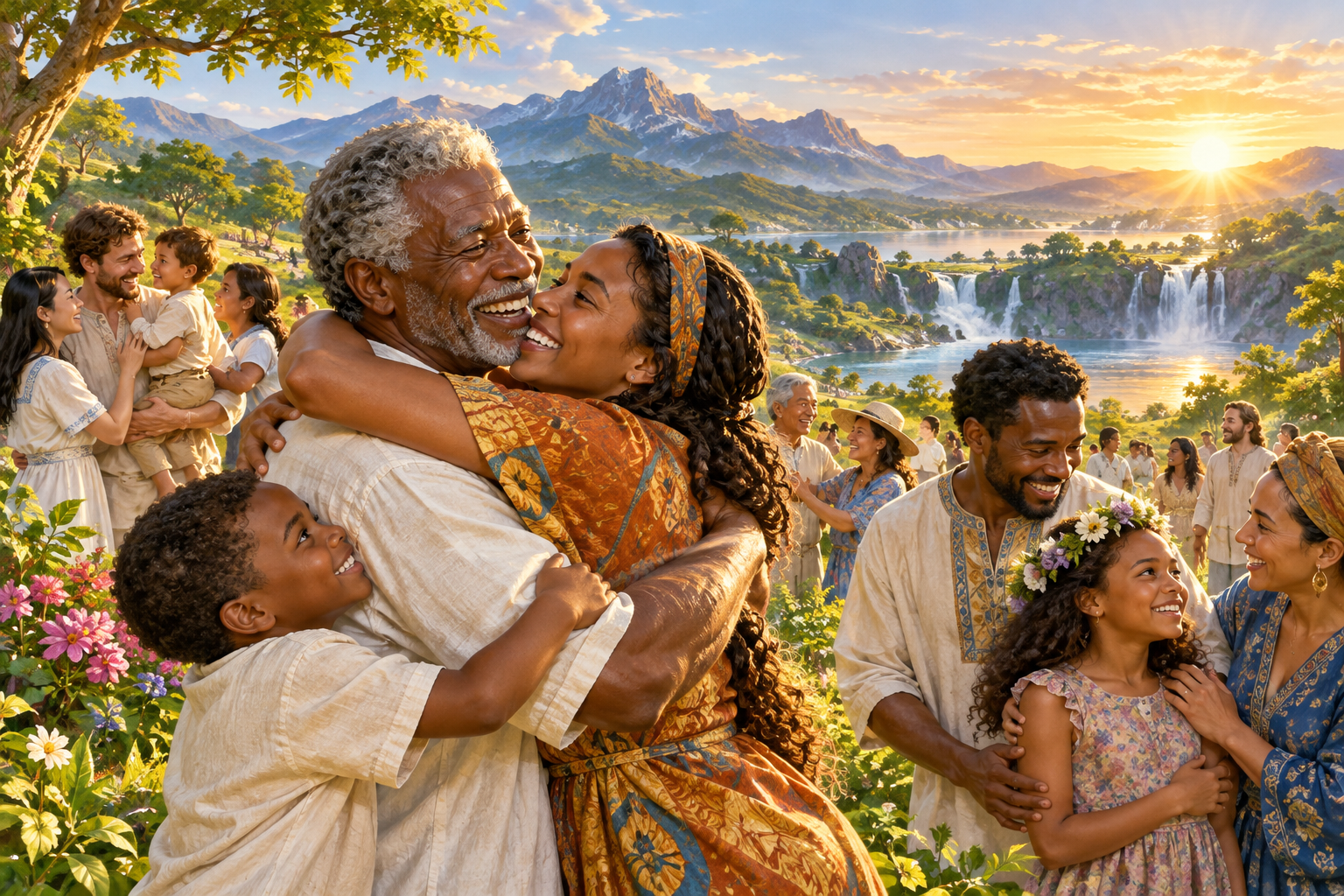
In the biblical vision, eternal life is not an escape from creation. It is restored life with God in the renewed world he has promised.
Here are ten reasons to believe that the resurrection of the dead and eternal life are real.
02
1. The Biblical Story Moves Toward Resurrection, Not Permanent Death
The Old Testament gradually opens a horizon beyond the grave.
Daniel speaks of many who “sleep in the dust” awakening, some to everlasting life (Daniel 12:2).
Isaiah pictures an even greater victory: death itself swallowed up and tears wiped away (Isaiah 25:6–9).
These promises grow from Israel’s confidence in the faithfulness of the Creator.
If God created human beings for life and covenant relationship, then death cannot finally cancel his purposes.
A seed buried in the ground may look finished.
But burial is not always the same as ending.
Takeaway: Biblical hope grows from confidence that the Creator’s purposes are stronger than the grave.
03
2. Jesus Taught That the Dead Will Rise
Jesus spoke directly about resurrection.
He said that a time is coming when those in the graves will hear his voice and come out (John 5:28–29).
When Martha grieved the death of her brother Lazarus, Jesus told her:
“I am the resurrection and the life” (John 11:25–26).
Jesus did not treat resurrection merely as an idea for theological discussion.
He located the hope of resurrection in himself.
Christian hope is therefore personal before it is abstract.
We do not simply believe in resurrection as a future event. We trust the One who says that resurrection life is found in him.
Takeaway: Jesus did not merely teach resurrection; he presented himself as its source.
04
3. Jesus’ Own Resurrection Is the Foundation of Christian Hope
Paul is uncompromising on this point: if Christ has not been raised, Christian faith is empty (1 Corinthians 15:14–19).
Everything depends on Easter.
But if Christ really has been raised, then death has already been broken from within.
The resurrection of Jesus is not presented in the New Testament as a metaphor for hope surviving disappointment. The earliest Christian proclamation was much stronger:
The Jesus who had been crucified was truly raised from the dead (Acts 2:22–32; 1 Corinthians 15:3–8).
Christian hope about the future therefore stands or falls with what happened to Jesus.
Takeaway: We believe in our future resurrection because Christianity begins with the claim that Jesus has already risen.
05
4. Jesus Is the “Firstfruits” of the Coming Resurrection
Paul calls the risen Christ “the firstfruits of those who have fallen asleep” (1 Corinthians 15:20–23).
Firstfruits are not the whole harvest.
They are the beginning of it—and the promise that more is coming.
Jesus’ resurrection is therefore both unique and representative.
What happened to him is not simply an astonishing exception. It is the beginning of what God intends to do for his people.
The first light on the horizon does not mean sunrise is complete.
It means the night has begun to lose.
Takeaway: The resurrection of Jesus is the beginning of the resurrection future God has promised.
06
5. Christian Resurrection Means Embodied Life, Not Escape from the Body
Paul anticipates the question:
“With what kind of body will the dead be raised?”
His answer is transformation (1 Corinthians 15:35–44).
The resurrection body is connected to our present embodied life, yet radically renewed—imperishable, glorious, and empowered by God’s Spirit.
Resurrection is therefore not simply a return to our present frailty.
But neither is it the abandonment of the body.
God does not save us from being human.
He heals human life from corruption and death.
The Christian hope is not less embodied life, but embodied life made new.
Takeaway: Resurrection is the renewal of embodied human life, not its cancellation.
07
6. Eternal Life Begins in Relationship with God and Reaches Its Fullness in Resurrection
In John’s Gospel, eternal life means more than endless duration.
Jesus says that eternal life is to know the Father and the Son (John 17:3).
Those who trust him already begin to participate in this life (John 5:24).
Eternal life therefore begins now.
But the New Testament does not stop there.
The life believers receive in Christ now moves toward its full expression in resurrection and new creation.
Eternal life is both present gift and future fulfillment—life with God beginning now and reaching its fullness when death is finally defeated.
Takeaway: Eternal life begins now in communion with God and reaches its fullness in resurrection.
08
7. Resurrection Means Death Is an Enemy to Be Defeated
Paul calls death “the last enemy” (1 Corinthians 15:26).
That description matters.
Christianity does not ask us to romanticize death, call it harmless, or pretend that separation and loss are somehow good.
Death is an enemy within God’s good creation.
That is precisely why resurrection is such powerful good news.
Christian hope does not deny the tragedy of death.
It looks directly at death, names it as an enemy, and then announces that God will defeat it.
Takeaway: Christian hope faces death honestly while refusing to surrender to it.
09
8. Resurrection Promises Reunion Without Erasing Grief
Paul writes to believers who were grieving people they loved.
He does not tell them, “Do not grieve.”
Instead, he tells them not to grieve “as others do who have no hope” (1 Thessalonians 4:13–18).
That distinction matters.
Christian hope does not cancel grief.
It changes its horizon.
The dead in Christ will rise. God’s people will be gathered. And they will be together with the Lord.
At a funeral, resurrection hope does not remove tears.
It changes what those tears mean.
Love still mourns.
But it does not mourn as though the grave owns the future.
Takeaway: Resurrection hope gives grief a future.
10
9. Eternal Life Belongs Within God’s Renewed Creation
The Bible does not end with human beings abandoning the earth forever.
It ends with “a new heaven and a new earth,” with God dwelling among humanity, tears wiped away, and death no more (Revelation 21:1–5).
Then the vision expands.
The river of life flows.
The tree of life bears fruit.
The nations are healed.
God’s servants live in his presence (Revelation 22:1–5).
This is eternal life in full biblical color:
creation restored,
humanity healed,
death defeated,
and God present with his people.
The final Christian hope is therefore not endless escape from creation.
It is life with God in creation made new.
Takeaway: Eternal life is life with God in the renewed creation, not endless escape from it.
11
10. Resurrection Gives Us Courage to Live Faithfully Now
Paul ends his great chapter on resurrection with a surprisingly practical conclusion:
“Therefore… be steadfast… knowing that in the Lord your labor is not in vain” (1 Corinthians 15:58).
Because resurrection is coming, what we do now matters.
Faithfulness matters.
Love is not wasted.
Justice is not pointless.
Service is not forgotten.
Bodies matter.
Creation matters.
What is done faithfully in Christ is not swallowed up by death and meaninglessness.
Resurrection means that God does not abandon his work.
A builder works differently when he knows the house will stand.
Takeaway: Resurrection hope makes present faithfulness meaningful because God will not abandon his work.
12
Truth and Your Decision
Death is real.
It separates.
It silences.
It wounds.
Christianity does not ask us to look at a grave and call it good.
It asks us to look through the grave toward Easter.
Jesus has been raised.
That is why Christian hope is larger than the idea that “something of us” survives after death.
The promise is far greater:
The dead will be raised. Creation will be renewed. And God will dwell with his people.
Eternal life is not an endless extension of our present brokenness.
It is life healed of corruption, fear, violence, disease, and death.
The final Christian image is not a soul drifting farther and farther away from the earth.
It is God declaring:
“I am making all things new.”
So the deepest question is not only:
“What happens when I die?”
It is this:
If death is not the end, what kind of life should I live now?
If resurrection is real, love is never wasted.
If resurrection is real, faithfulness is never foolish.
If resurrection is real, the grave is not a full stop.
It is a place from which God can still speak the word:
Rise.
13
A Prayer of Resurrection Hope
God of life,
you raised Jesus from the dead and have promised life beyond the grave.
Meet us in our fear of death and in the ache of every loss.
Keep us from shallow answers, but also keep us from despair.
Teach us to live now as people of resurrection—faithful in love, courageous in suffering, generous in service, and confident that nothing entrusted to you is finally lost.
Through Jesus Christ, the firstfruits of the coming resurrection, lead us into the life of the world to come.
Amen.
14
Continue the Journey
Where does the fear of death most shape your choices?
What might change if you truly believed that resurrection—not death—has the final word?
Be the first to leave a comment.