


From the Courtroom of Complaint to the Altar of Joy
01
1.0 Introduction: What Do You Ask for When the Way Back Is Hidden?
The worshiper begins in a courtroom, walks by light he cannot manufacture, and ends facing an altar he cannot yet see. Hope becomes a road home.
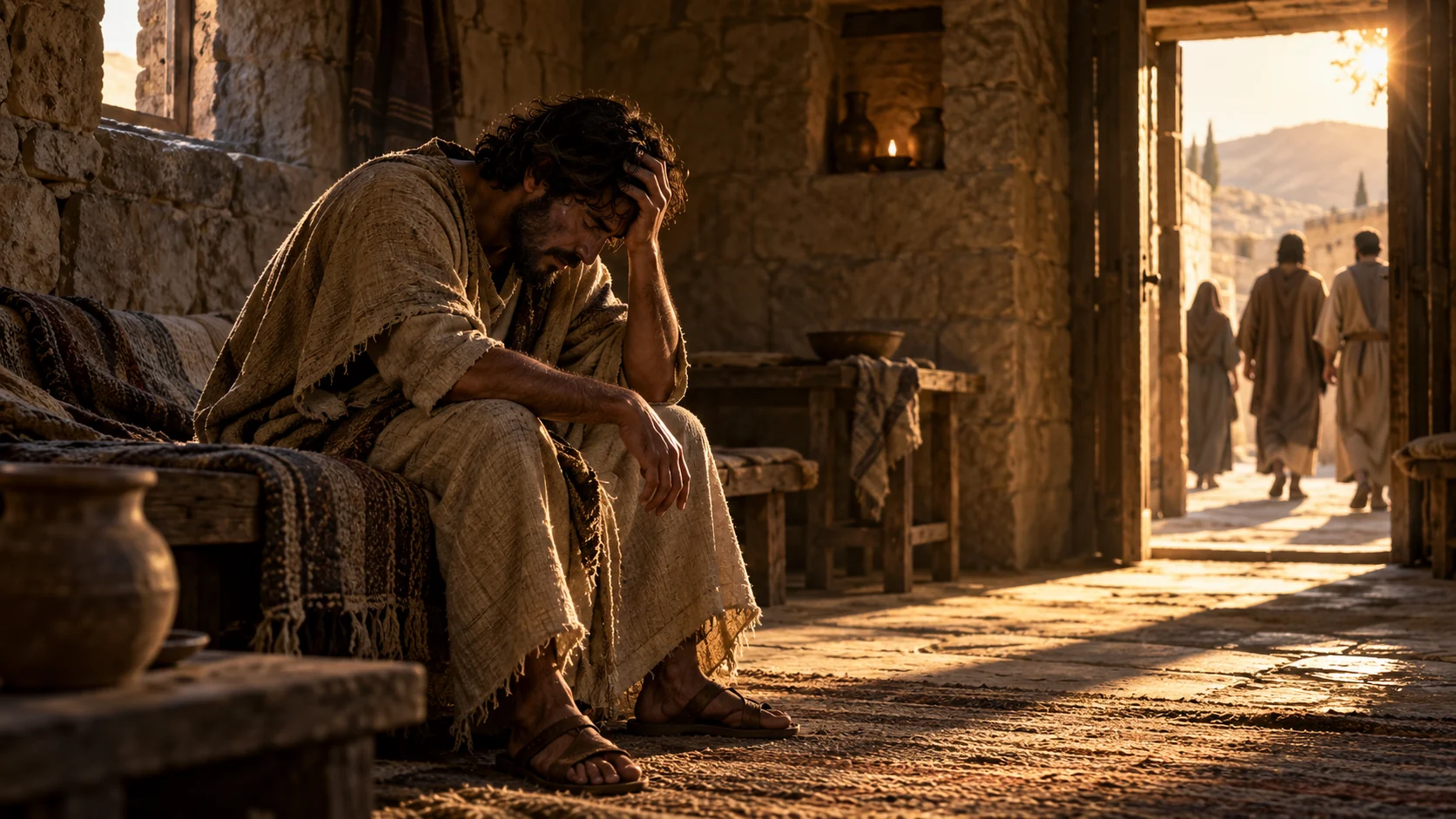
There are seasons when the deepest problem is not simply pain but disorientation. You know what you long for, but you do not know how to get there. You know where home is, but the road is dark. You know God is your refuge, yet the people around you seem to control the story.
Psalm 43 begins with a plea for vindication: “Vindicate me, O God, and plead my cause” (43:1). But the prayer does not stay in the courtroom. Within five short verses it moves from accusation to guidance, from guidance to worship, and from worship back to the familiar question spoken to the soul: “Why are you downcast?”
Psalm 42 ended with the worshiper still thirsting for God. Psalm 43 now asks God to send what the traveler cannot create—light and faithfulness—to lead him back to the holy mountain and the altar.
The heart-question is: What does faith do when we know where we belong but cannot yet see the road home?
This text is about disorientation becoming pilgrimage, because biblical hope asks God not only to defend us from falsehood but to lead us by his own light and faithfulness into his presence.
02
2.0 Historical and Literary Context: The Third Movement of One Long Lament
Psalm 43 has no superscription in the Hebrew text, and its language is tightly joined to Psalm 42. The same refrain appears in Psalm 42:5, 42:11, and 43:5: “Why are you downcast, O my soul? … Hope in God.” This repeated line creates a three-part movement and strongly suggests that Psalms 42–43 should be heard together.
Psalm 42 begins with thirst for God and memory of former worship. Psalm 43 narrows the prayer into two requests: first, for justice against deceitful opposition (43:1–2); second, for divine guidance back to God’s dwelling (43:3–4). The final refrain (43:5) does not merely repeat earlier words; it now stands beside a concrete destination—the altar, the holy mountain, and renewed praise.
The opening of Book Two of the Psalter therefore begins not simply with private sadness but with hope for return to Zion. BibleProject notes that Psalms 42–43 open Book Two with longing for a future return to the temple, while Psalm 72 closes the book with hope for the righteous reign of the messianic king. Personal exile is placed inside the wider hope of God’s kingdom.
Goldingay reads Psalms 42–43 as a unified prayer about separation from God’s presence. In Psalm 43:3, “light” and “truthfulness” are pictured almost like divine messengers sent to guide the worshiper. What the exile needs is not merely a map but God’s own character reaching toward him.
03
3.0 Walking Through the Text
04
3.1 Psalm 43:1–2 — When the Wounded Worshiper Appeals to a Higher Court
“Vindicate me, O God, and plead my cause against an ungodly nation; rescue me from those who are deceitful and wicked.”
The language is judicial. The worshiper does not seize the judge’s seat; he appeals to God to take it. He names real opposition—deceit and injustice—but he places the case in God’s hands.
This matters because suffering often creates pressure to become our own prosecutor, jury, and executioner. Psalm 43 chooses another way. The worshiper asks God to judge what he cannot safely control.
Yet verse 2 immediately introduces tension: “You are God my stronghold. Why have you rejected me?”
“My stronghold” and “Why?” live in the same sentence. The psalm refuses to tidy up faith. God is still the place of refuge even when the worshiper experiences him as distant.
The question is not unbelief pretending to pray. It is covenant faith refusing to stop praying.
05
3.2 Psalm 43:3 — When God’s Light Becomes a Road
“Send me your light and your faithful care; let them lead me.”
The prayer changes direction. The worshiper has asked for vindication; now he asks for guidance.
Light in Scripture often signals God’s life-giving presence, favor, truth, and saving action (Num. 6:24–26; Ps. 27:1; Isa. 60:1–3). Here it is paired with God’s “truth” or “faithfulness.” The worshiper is not asking for secret information about the future. He is asking God to act according to his own reliable character.
Goldingay notices how these qualities are personified: God’s light and truthfulness are sent out to guide the exile. The image is deeply relational. The road home begins because God sends something of himself toward the lost traveler.
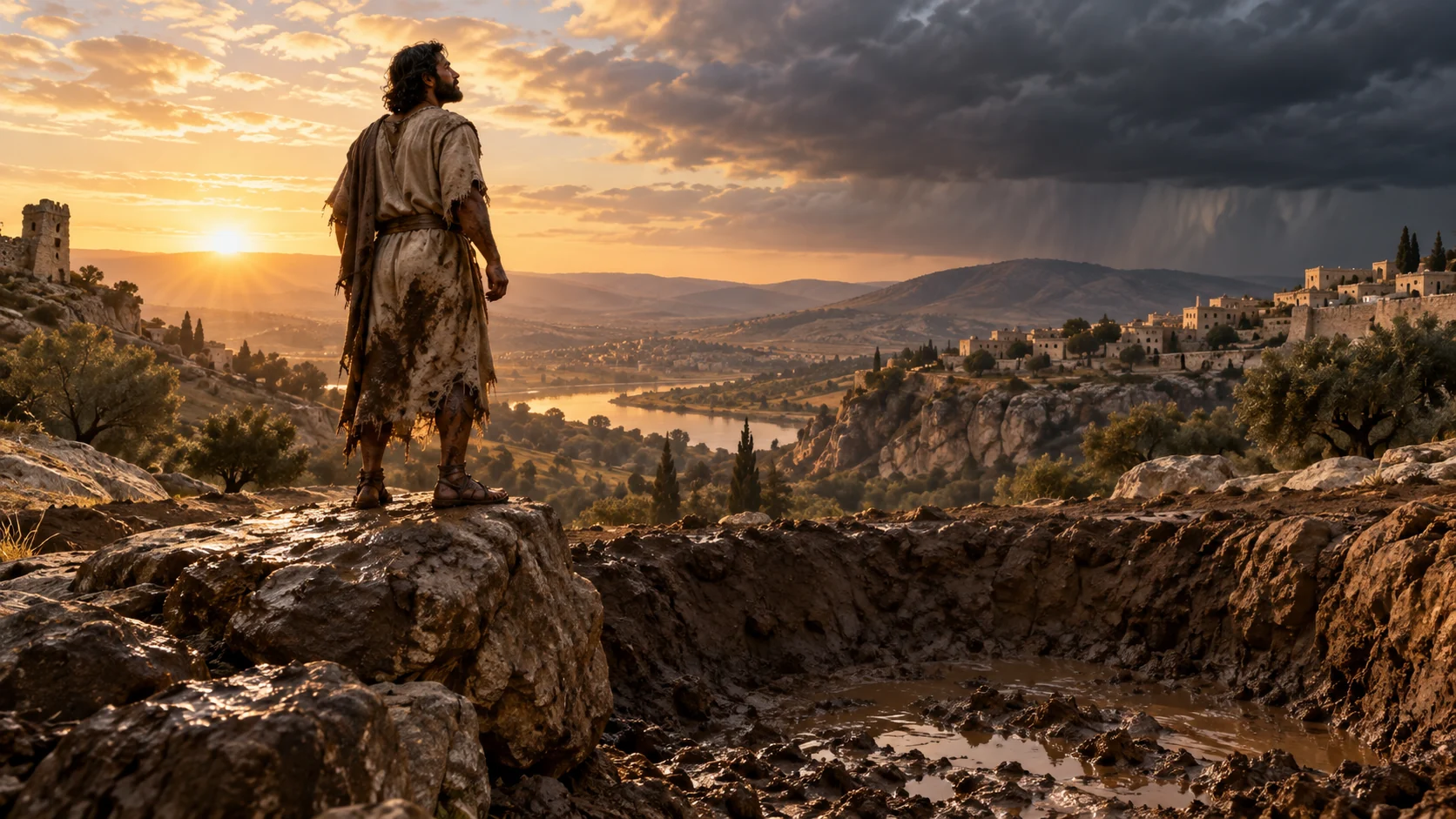
The destination is specific: “your holy mountain” and “the place where you dwell.” The prayer is not merely, “Make me feel better.” It is, “Bring me into your presence.”
06
3.3 Psalm 43:4 — When the Destination Is Not the Temple but God
“Then I will go to the altar of God, to God, my joy and my delight.”
The line moves closer and closer: holy mountain, dwelling, altar, God.
The geography becomes theology. Zion matters, the temple matters, the altar matters—but the true center is God himself.
The psalmist calls God “my exceeding joy.” This is stronger than saying God gives joy. God is named as the joy toward which the whole pilgrimage moves.
Then the instrument returns: “I will praise you with the lyre, O God, my God.”
Psalm 42 remembered music from the past. Psalm 43 imagines music in the future. Memory has become anticipation.
The exile is still outside, but praise is already rehearsing the homecoming.
07
3.4 Psalm 43:5 — When Hope Speaks for the Third Time
“Why are you downcast, O my soul? Why so disturbed within me? Put your hope in God.”
The refrain returns one final time. But now it carries the weight of the entire journey.
In Psalm 42:5 the worshiper remembers the lost procession. In 42:11 he stands beneath overwhelming waves. Here, in 43:5, he has just prayed for light, direction, altar, and praise.
The refrain is therefore not circular repetition. It is spiraling hope. The words are the same, but the soul has traveled.
“I will yet praise him, my Savior and my God.”
Hope is not certainty that the road will be easy. It is the refusal to believe that exile is the final address.
08
4.0 Theological Reflection
09
4.1 God’s Justice and God’s Presence Belong Together
Psalm 43 begins with vindication and ends with worship. The God who judges deceit is the same God whose presence the worshiper seeks. Biblical justice is not an abstract verdict; it clears the road toward restored communion.
10
4.2 Divine Guidance Is an Expression of Divine Character
The psalmist asks for God’s “light” and “faithfulness.” Guidance is not merely receiving directions. It is being led by who God is. His truthfulness becomes a path.
11
4.3 The Goal of Salvation Is God Himself
The movement from mountain to dwelling to altar finally reaches “God, my joy.” The gifts of worship lead to the Giver. Salvation is not complete merely because danger ends; its deepest fulfillment is restored fellowship with God.
12
4.4 Hope Often Grows Through Repetition
The same refrain appears three times across Psalms 42–43. Spiritual maturity is not always discovering a new sentence. Sometimes it is learning to say the old confession with deeper truth after another wave has passed.
13
5.0 Canonical and Christological Horizon
Psalm 43’s request, “Send your light and your truth,” belongs to a larger biblical pattern.
The priestly blessing asks Yahweh to make his face shine upon his people (Num. 6:24–26). Psalm 27 names Yahweh as “my light and my salvation.” Isaiah imagines Zion’s restoration as the arrival of divine light over a people who have lived in darkness (Isa. 60:1–3).
The desire to be led to God’s holy dwelling also echoes Israel’s exodus story. After deliverance from Egypt, Moses sings that Yahweh will guide his redeemed people and bring them to his holy dwelling (Exod. 15:13, 17). Psalm 43 turns that national memory into personal prayer: lead me home again.
In the Gospel of John, Jesus is presented as the light of the world (John 8:12), and he speaks of himself as the way to the Father (John 14:6). Christians need not turn Psalm 43:3 into a direct prediction to hear the canonical resonance. The psalm longs for God’s own light and faithfulness to come toward the exile; the Gospel announces that God’s saving presence has come near in Jesus.
The New Testament also shifts temple hope around Jesus. He speaks of his body as the temple (John 2:19–21), and through him believers are brought near to God (Eph. 2:13, 18–22). The final biblical vision is not merely people returning to an old sanctuary but God dwelling with renewed humanity in a restored creation (Rev. 21:1–4, 22–23).
Psalm 43’s road home therefore opens into the Bible’s larger hope: God does not abandon exiles to darkness. He comes near, leads, restores, and finally makes his dwelling with his people.
14
6.0 Life Application
1. Take injustice to God before it turns into revenge. Name deception and harm honestly, but resist the temptation to become the highest court in your own case.
2. Ask for guidance that reflects God’s character. Do not pray only, “Show me what to do.” Pray also, “Lead me in your light and faithfulness.”
3. Identify your true destination. Ask whether you mainly want relief, success, reputation, or restored communion with God.
4. Let worship become future tense. When you cannot yet sing from arrival, begin rehearsing the praise you hope to offer when God brings you through.
5. Expect the road home to be communal. God’s holy mountain and altar point toward gathered worship; isolation is rarely the final form of biblical restoration.
6. Repeat hope when necessary. If your soul becomes downcast again, do not treat repetition as failure. Return to the truth again.
7. Allow God’s presence to redefine “home.” A place may matter deeply, but the deepest homecoming is to God himself.
15
7.0 Reflection Questions
1. Where am I tempted to take judgment into my own hands rather than place my case before God?
2. What would it mean for God’s light and faithfulness—not fear or urgency—to lead my next decision?
3. Am I seeking God himself, or mainly the benefits I hope he will give?
4. What future praise can I begin rehearsing even before my circumstances change?
5. Which sentence of hope do I need to repeat to my own soul this week?
16
8.0 Response Prayer
God of light and faithfulness, plead my cause where truth has been twisted, and guard my heart from becoming what I fear. When the road is hidden, send your light before me. When I do not know how to return, let your faithful love lead me. Bring me beyond relief to communion, beyond survival to worship, beyond the road to the altar, and beyond the altar to you, my deepest joy. When my soul bends low again, teach me to speak hope: I will yet praise you, my Savior and my God. Through Jesus, the light who leads us home. Amen.
17
9.0 Window into What Comes Next
Psalms 42–43 have carried us from thirst to light, from distant memory to hoped-for worship. Psalm 44 now changes the voice. The lonely worshiper gives way to a wounded community that remembers God’s past victories yet cannot understand its present defeat. The question will become larger: What happens when a whole people feel that the God who once led them has now allowed them to be crushed?
18
10.0 Bibliography
BibleProject. The Book of Psalms: Guide with Key Information and Resources.
BibleProject. The Book of Psalms: Study Notes.
Goldingay, John. Psalms, Volume 2: Psalms 42–89. Baker Commentary on the Old Testament Wisdom and Psalms. Grand Rapids: Baker Academic, 2007.
Kidner, Derek. Psalms 1–72. Kidner Classic Commentaries. Downers Grove, IL: IVP Academic, 2008.
Be the first to leave a comment.