


Betrayal, danger, and the God who sustains life
01
1.0 Introduction: When Your Hiding Place Is Reported
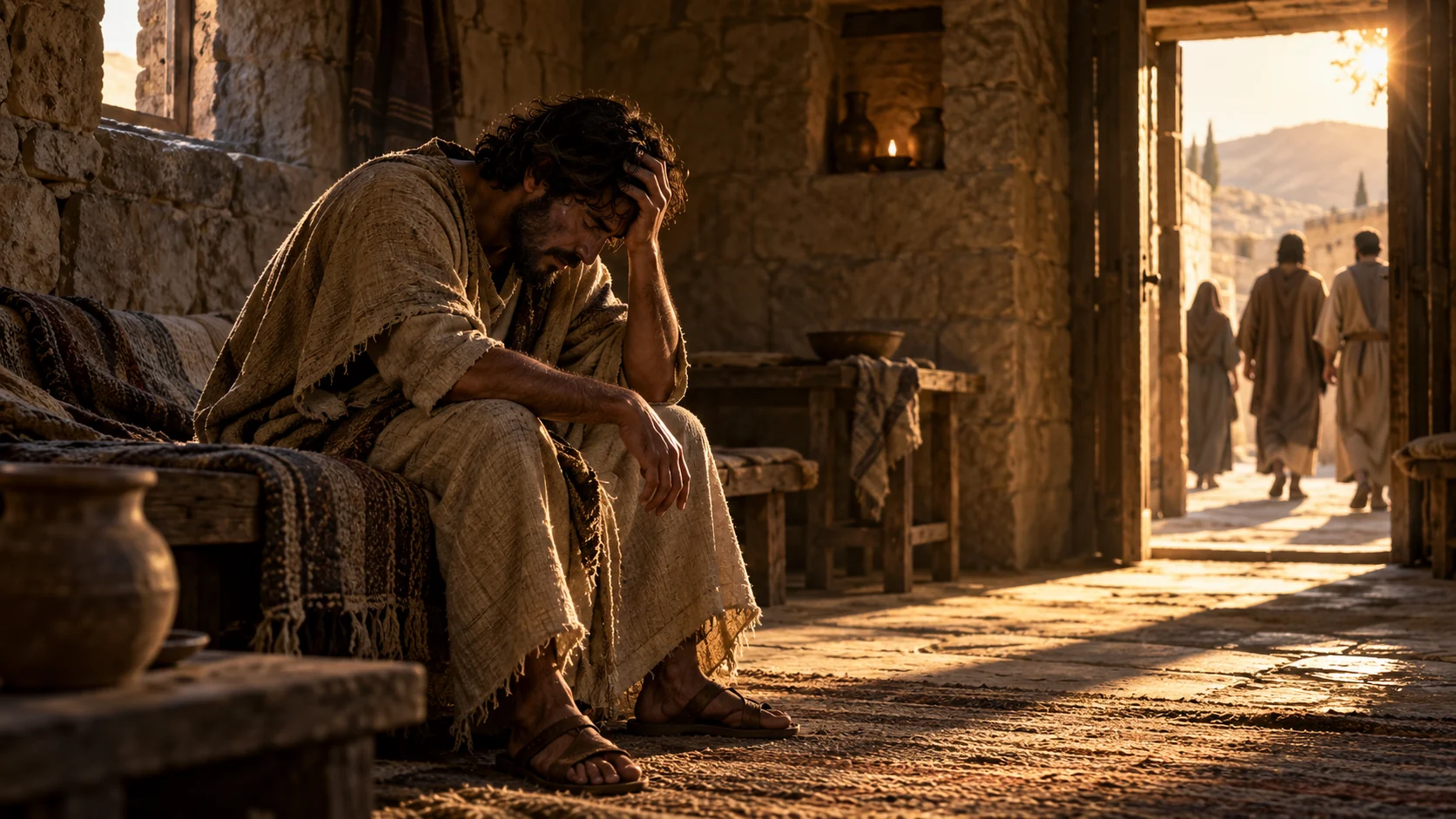
Sometimes the danger is not far away. It knows your hiding place. Psalm 54 teaches us what to pray when human loyalty fails but God does not.
Psalm 54 is brief, but it carries the tension of a hunted life.
Its heading places the prayer in the days when David was fleeing Saul and the Ziphites went to the king with news of his location: “Is not David hiding among us?” (1 Sam. 23:19; see also 26:1).
That detail changes the emotional temperature of the psalm.
David is not facing an abstract danger. People who know where he is have decided to expose him. A hiding place is only a hiding place while someone keeps silent.
So the prayer begins without delay:
“Save me, O God, by your name, and vindicate me by your might” (Ps. 54:1).
David does not have enough leverage to secure himself. His name has been handed to Saul. His location has been exposed. So he appeals to another name.
The name of God.
Psalm 54 is about what faith does when people become unsafe: it calls on the character of God, entrusts justice to him, and discovers that the threatened life is still being held.
02
2.0 Historical and Literary Context
Psalm 54 belongs to Book Two of the Psalter (Pss. 42–72). It follows Psalm 53, where people live as though God is absent and fail to call upon him. Psalm 54 immediately gives us the opposite picture: a threatened person doing exactly what Psalm 53 said the wicked do not do.
He calls on God.
The superscription connects the poem to the Ziphites, people from the region where David was hiding. Twice in 1 Samuel they report David’s whereabouts to Saul (1 Sam. 23:19; 26:1). The psalm itself does not retell the whole story. Instead, it gives the prayer that such a situation creates.
Goldingay describes its movement clearly. Verses 1–2 plead for God to hear and act. Verse 3 explains the danger. Verse 4 becomes the center of trust: “God is my helper.” Verse 5 places judgment in God’s hands. Verses 6–7 turn toward sacrifice and thanksgiving in anticipation of rescue.
The structure is simple because the need is simple.
Help me.
Hear me.
Hold me.
03
3.0 Walking Through the Text
04
3.1 “Save Me by Your Name” — Calling on Who God Is (vv. 1–2)
“Save me, O God, by your name.”
In the Bible, a name is more than a label.
God’s name gathers up his revealed character: his faithfulness, power, mercy, justice, and covenant commitment. To appeal to God’s name is to appeal to God himself as he has made himself known.
That is why the next line pairs name with might:
“Vindicate me by your power.”
David is not using a sacred formula. He is asking the God whose name means something to act consistently with that name.
Then comes the simplest prayer in the psalm:
“O God, hear my prayer; give ear to the words of my mouth.”
There are seasons when prayer becomes almost entirely this.
Hear me.
Not because we have found beautiful language. Not because we have arranged our thoughts neatly. But because danger has reduced life to one need: God must listen.
05
3.2 “They Have Risen Against Me” — The Threat Is Real (v. 3)
“For strangers have risen against me; ruthless men seek my life; they do not set God before themselves.”
The wording “strangers” has textual questions behind it, but the force of the verse is clear: hostile people are seeking David’s life.
The final phrase matters most:
“They do not set God before themselves.”
This links Psalm 54 back to Psalm 53.
The problem is not merely that these people are dangerous to David. They live and act without taking God into account.
That is often the hidden theology of violence.
The aggressor assumes that power is enough.
That secrecy is enough.
That speed is enough.
That no one higher will ask what happened.
Psalm 54 rejects that assumption by turning immediately toward the God they have ignored.
06
3.3 “God Is My Helper” — The Center of the Psalm (v. 4)
“Behold, God is my helper; the Lord is the sustainer of my life.”
This is the turning point.
Nothing in the external situation has necessarily changed yet. Saul may still be searching. The Ziphites may still have spoken. David may still be exposed.
But the prayer has reached a different ground.
“God is my helper.”
The sentence is not complicated.
It does not need to be.
Sometimes faith becomes strongest when it stops trying to sound impressive.
The next line deepens the image: God is the one who sustains David’s life.
The life others are trying to take is still being held by God.
That does not make danger imaginary. It makes danger secondary.
07
3.4 Justice Without Personal Vengeance (v. 5)
“He will return the evil to my enemies; in your faithfulness put an end to them.”
Modern readers may feel the sharpness of this prayer.
David does not ask merely to feel peaceful while his enemies continue unchecked. He asks God to act against those seeking his life.
Yet there is an important moral boundary here.
David is not taking final vengeance into his own hands. He is placing judgment before God.
Goldingay notes that this kind of prayer can actually restrain revenge. If the victim believes God sees and judges, the victim does not have to become executioner.
The psalm gives anger somewhere to go.
Not into denial.
Not into retaliation.
Into prayer.
08
3.5 “I Will Sacrifice Freely” — Gratitude Before the Rescue Is Visible (vv. 6–7)
“With a freewill offering I will sacrifice to you; I will give thanks to your name, O Yahweh, for it is good.”
The name appears again.
The psalm began with the name as the basis of rescue. It now returns to the name as the object of praise.
That creates a beautiful frame around the prayer.
At the beginning: “Save me by your name.”
At the end: “I will praise your name, for it is good.”
The psalmist has moved from appeal to anticipation.
Verse 7 speaks as though rescue is already secure: “For he has delivered me from every trouble.”
This is the language of trust looking forward so confidently that future praise is already forming on the lips.
Faith begins rehearsing thanksgiving before the door has fully opened.
09
4.0 Theological Reflection
10
God’s Name Means God’s Character
Psalm 54 does not treat God’s name as a magical sound.
The name matters because God’s character matters.
When the psalmist appeals to the name, he appeals to the God who has shown himself faithful.
This gives prayer substance.
We do not pray into emptiness.
We pray toward Someone whose ways have been revealed.
11
Threat Does Not Cancel God’s Presence
David is endangered, but not abandoned.
That distinction matters.
Faith does not require us to deny how exposed we feel. Psalm 54 names the threat honestly and still says, “God is my helper.”
Both things can be true at once.
Danger can be real.
God can be nearer still.
12
God Sustains Before He Delivers
Verse 4 does not first say that God removes the enemy.
It says God sustains life.
Sometimes rescue comes as removal from danger.
Sometimes it begins as strength to remain alive, sane, faithful, and prayerful while the danger is still present.
The sustaining presence of God is itself a form of rescue.
13
Justice Belongs to God
The psalm gives the victim permission to want evil stopped.
It also gives the victim a boundary: final judgment belongs to God.
This keeps biblical justice from collapsing into private revenge.
The wrong can be named.
The enemy can be opposed.
But the soul does not have to become the courtroom, judge, and executioner all at once.
14
5.0 Canonical and Christological Horizon
Psalm 54 belongs to the larger biblical pattern of the righteous sufferer surrounded by enemies yet trusting God.
That pattern reaches its fullest expression in Jesus.
He too is betrayed by people who know where to find him. Judas leads the arresting party to the place where Jesus is praying (Matt. 26:47–50). Like David, Jesus is not threatened by distant strangers only. Betrayal comes through someone who knows the path.
Yet Jesus entrusts himself to the Father.
The New Testament later describes him as the one who, while suffering unjustly, “continued entrusting himself to him who judges justly” (1 Pet. 2:23).
That is the moral world of Psalm 54.
Trust does not mean evil is harmless.
It means God remains judge.
The cross also gives the psalm’s prayer for justice a deeper horizon. In Jesus, God confronts evil without becoming evil. Judgment and mercy meet in the same story.
And resurrection answers the deepest fear beneath the psalm: even when enemies seek life itself, they do not own the last word over life.
15
6.0 Life Application
1. Pray plainly when you are under pressure. You do not need elaborate language. “Hear me. Help me. Sustain me.” is real prayer.
2. Anchor prayer in who God is. When circumstances are unstable, return to God’s character rather than trying to predict every outcome.
3. Name betrayal honestly. Faith does not require calling unsafe people safe. Psalm 54 tells the truth about those seeking harm.
4. Do not confuse being threatened with being abandoned. The presence of enemies is not proof of the absence of God.
5. Let God carry the burden of final judgment. You may ask for justice without making revenge your vocation.
6. Look for sustaining grace, not only dramatic escape. Sometimes the first answer is the strength to endure another day without losing faith.
7. Practice thanksgiving before everything is resolved. Praise can become a way of remembering that the story is larger than the present threat.
16
7.0 Reflection Questions
1. What situation currently makes me feel exposed or unsafe?
2. When pressure rises, what does my instinct tell me to trust first?
3. What part of God’s character do I most need to remember right now?
4. Am I carrying a burden of vengeance that belongs in God’s hands?
5. Where have I already seen God sustaining me, even before the problem was removed?
17
8.0 Response Prayer
God whose name is good, hear the words of my mouth.
When people fail me, keep me from believing that you have failed me too.
Be my helper. Sustain my life.
Where I am threatened, give me courage. Where I am angry, keep my heart from becoming cruel. Where justice is needed, act in truth.
Teach me to leave judgment with you and to keep my hands clean.
And before the whole story is resolved, put thanksgiving back on my lips.
I trust your name. I trust your strength. I trust your faithfulness.
Amen.
18
9.0 Window into What Comes Next
Psalm 54 is short and direct: enemies rise, David calls, God helps.
Psalm 55 will be more complicated.
There the wound comes from someone close, and the prayer stretches under the weight of betrayal, fear, and the desire to escape.
Psalm 54 says, “God is my helper.”
Psalm 55 asks what that trust looks like when the person who wounded you once walked beside you.
19
10.0 Bibliography
Goldingay, John. Psalms, Volume 2: Psalms 42–89. Baker Commentary on the Old Testament Wisdom and Psalms. Grand Rapids: Baker Academic, 2007.
Kidner, Derek. Psalms 1–72. Kidner Classic Commentaries. Downers Grove, IL: IVP Academic, 2008.
BibleProject. The Book of Psalms: Study Notes.
BibleProject. “The Book of Psalms.” Old Testament Overview Guide.

Be the first to leave a comment.