


“Come and see what God has done: he is awesome in his deeds toward the children of man.”
01
A Study in Praise, Exodus, Testing, Deliverance, and Personal Testimony
Key Verse “Come and see what God has done: he is awesome in his deeds toward the children of man.” — Psalm 66:5
02
Big Idea
Psalm 66 begins with the whole earth shouting to God and ends with one person telling what God has done for him.
Between those two voices lies Israel’s story.
The psalm remembers the sea turned into dry land, celebrates the God who watches the nations, recalls a season of severe testing, and rejoices that God brought his people through “fire and water” into a place of abundance. Then the camera moves closer. One worshiper enters God’s house, fulfills vows made in trouble, and says:
“Come and hear … what he has done for me.”
That movement is the heart of Psalm 66:
God of all → God of a people → God of one person.
The God whose saving acts shape history is also the God who hears an individual prayer.
Psalm 66 teaches us that worship needs both memory and testimony. We remember what God has done for his people, and we tell what his faithfulness has meant in our own lives.
03
1. Psalm 66 in Book Two of the Psalms
Psalm 66 belongs to Book Two of the Psalms (Psalms 42–72).
It follows naturally after Psalm 65. Psalm 65 called the ends of the earth to recognize the God who forgives, rules creation, stills the nations, and gives harvest. Psalm 66 continues that worldwide horizon:
“Shout for joy to God, all the earth.”
But Psalm 66 adds another movement. It begins globally, narrows to Israel’s story, and finally reaches one worshiper’s testimony.
Derek Kidner describes the psalm as moving from God of all, to God of many, to God of one. John Goldingay similarly highlights the way the psalm joins praise and thanksgiving, community and individual, Israel and the world.
That structure matters.
Biblical faith is never merely private.
But neither does the individual disappear inside the crowd.
The God of the exodus is also the God who heard my prayer.
04
2. The Movement of the Psalm
Psalm 66 unfolds in five movements.
Verses 1–4 — All the Earth Is Called to Praise
The whole world is summoned to honor God’s name and acknowledge his awesome deeds.
Verses 5–7 — “Come and See”: Remember the Great Deliverance
The psalm looks back to the sea crossing and God’s rule over the nations.
Verses 8–12 — A People Tested and Brought Through
Israel remembers pressure, defeat, fire, and water—but also the God who kept them alive and brought them into abundance.
Verses 13–15 — Worship That Keeps Its Word
One worshiper comes to God’s house to fulfill the vows made during trouble.
Verses 16–20 — “Come and Hear”: Personal Testimony
The psalm ends with one person telling the worshiping community how God heard his prayer.
The movement is therefore:
all the earth → Israel’s story → communal testing → personal gratitude → testimony
05
WALKING THROUGH THE PSALM
06
3. “Shout for Joy to God, All the Earth”
Psalm 66:1–4
The psalm does not begin quietly.
It begins with a shout.
The whole earth is summoned to sing the glory of God’s name and make his praise glorious.
This is more than an invitation to sing loudly. The praise is meant to match the greatness of the One being praised.
God’s deeds are described as awesome—acts that make people stop, look, and recognize that they are dealing with power beyond themselves.
The psalm sees a future in which the whole earth bows before God.
That is not yet the visible reality.
But worship learns to see beyond the present moment.
It sings toward the world God intends.
07
4. “Come and See” — Faith Remembers Public Acts
Psalm 66:5
The first great invitation is:
“Come and see what God has done.”
Biblical faith does not begin only with private feelings.
It points to acts.
Israel’s worship repeatedly tells stories of what God did in history: calling, rescuing, judging oppression, making a people, sustaining them, and bringing them through impossible places.
This is one reason memory matters so much in Scripture.
Faith is not asked to invent confidence from nothing.
It is invited to look back.
Come and see.
The present generation is strengthened by remembering a story older than itself.
08
5. “He Turned the Sea Into Dry Land” — The Exodus Becomes Our Story
Psalm 66:6
The psalm remembers Israel crossing through the waters.
The language may evoke the Red Sea and perhaps also the Jordan crossing into the land. In either case, the point is clear:
God made a way where there was no way.
Then comes a striking line:
“There we rejoiced in him.”
The worshipers were not literally standing beside Moses at the sea.
Yet they speak as though they were there.
Why?
Because the exodus is not merely the story of distant ancestors.
It is the story that created the people who are now worshiping.
Biblical worship makes past salvation present through memory.
The people say, in effect:
“What God did for them made us who we are.”
09
6. The God Who Watches the Nations
Psalm 66:7
The God of the exodus still reigns.
His power did not end when Israel reached the other side of the sea.
He rules forever.
His eyes watch the nations.
That means empires are never beyond his sight.
Pharaoh looked unbeatable until he was not.
The same warning extends to every power that exalts itself as though no one can call it to account.
Psalm 66 does not deny the real strength of nations.
It denies that their strength is ultimate.
The God who saw Egypt still watches history.
10
7. “Bless Our God, O Peoples” — Israel’s Rescue Is Good News Beyond Israel
Psalm 66:8–9
Now the nations themselves are invited to praise Israel’s God.
Why?
Because God has kept his people alive and has not allowed their feet finally to slip.
Israel’s survival is not meant to become a reason for national pride.
It is meant to become testimony.
The world is invited to look at what God has done and ask what kind of God this is.
The biblical calling of Israel was never simply to be blessed in isolation.
God’s work among his people was meant to reveal his character to the nations.
Psalm 66 therefore turns rescue into mission.
11
8. “You Tested Us … You Refined Us Like Silver”
Psalm 66:10
The psalm now says something uncomfortable.
The God who preserved the people also tested them.
The image is of silver in a furnace.
Heat reveals what is genuine.
Goldingay notes that the point is not simply that suffering removes impurity, though refining imagery can include that idea. Testing also reveals what is actually there.
Pressure exposes the depth of trust.
It shows what survives when easier supports are removed.
Psalm 66 therefore refuses a shallow story in which God’s presence means his people never suffer.
Their history included severe testing.
But testing was not the end of the story.
12
9. Net, Burden, Fire, and Water
Psalm 66:11–12
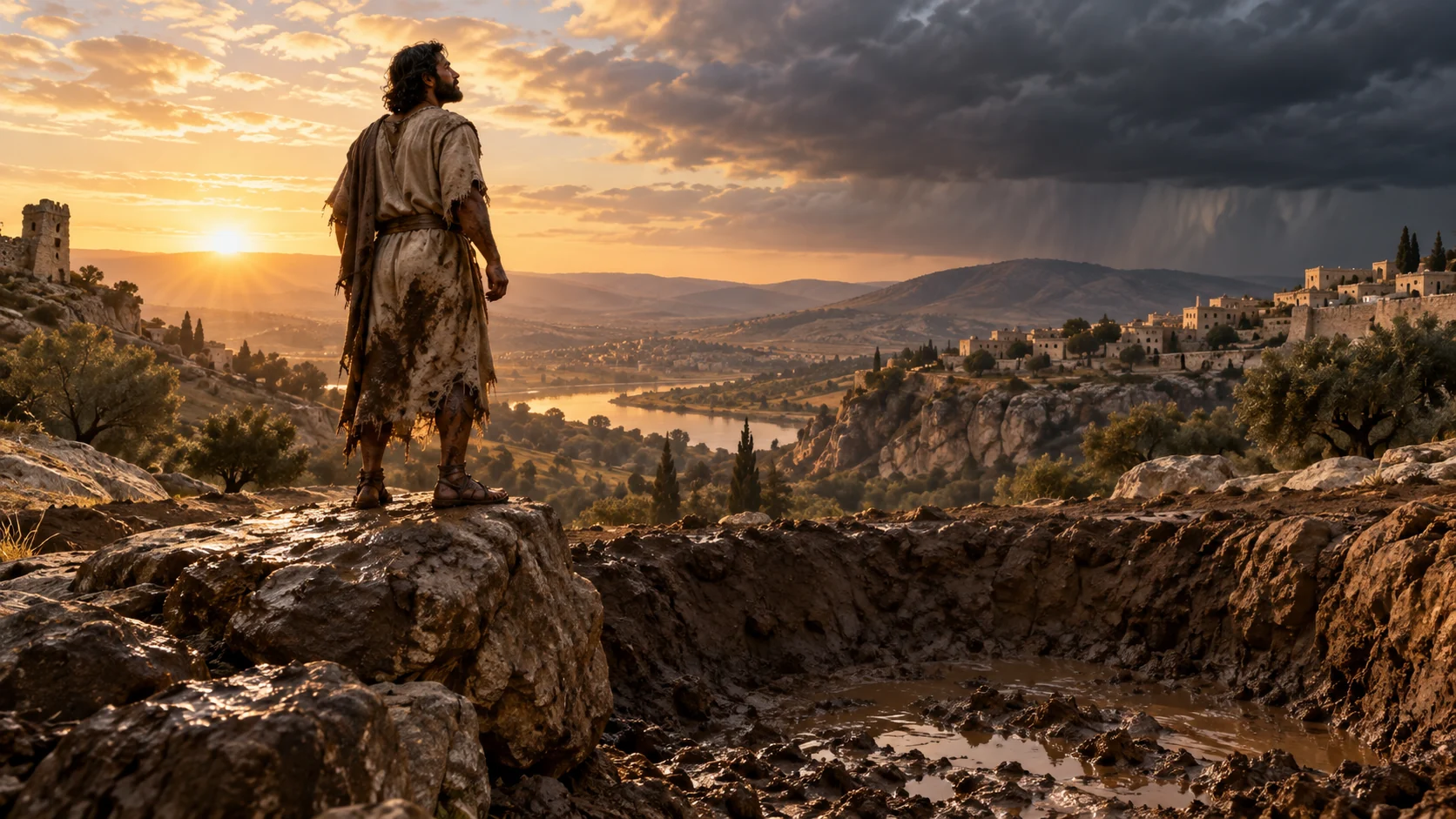
The psalm piles up images of distress.
A net closes.
A heavy burden is placed on the back.
Other people ride over them.
They pass through fire and water.
The language can fit national defeat, oppression, exile-like suffering, or other periods when Israel found itself crushed beneath forces stronger than itself.
The psalm speaks boldly of these experiences under God’s sovereignty.
That should not be flattened into a formula that every tragedy can be easily explained as something God directly sent.
The psalm is doing something more specific: Israel is looking back at its covenant history and confessing that even its darkest seasons did not place it outside God’s rule or beyond his ability to bring it through.
The God who led through the sea is still able to lead through fire and water.
13
10. “But You Brought Us Out Into Abundance”
Psalm 66:12
Six lines describe pressure.
Then one line changes everything:
“But you brought us out…”
This is exodus language again.
God brings out.
Egypt was not the only place from which Israel needed an exodus.
Across its history, the people repeatedly needed God to bring them out of confinement, defeat, danger, and despair.
The destination is described with a word that can suggest abundance, spaciousness, or rich fullness.
The movement is not merely:
trouble → survival
but:
trouble → deliverance → room to breathe again
God’s rescue is pictured as movement from constriction to spaciousness.
14
11. “I Will Come to Your House” — Gratitude Keeps Its Promises
Psalm 66:13–15
At verse 13 the voice changes.
“We” becomes “I.”
One worshiper steps forward.
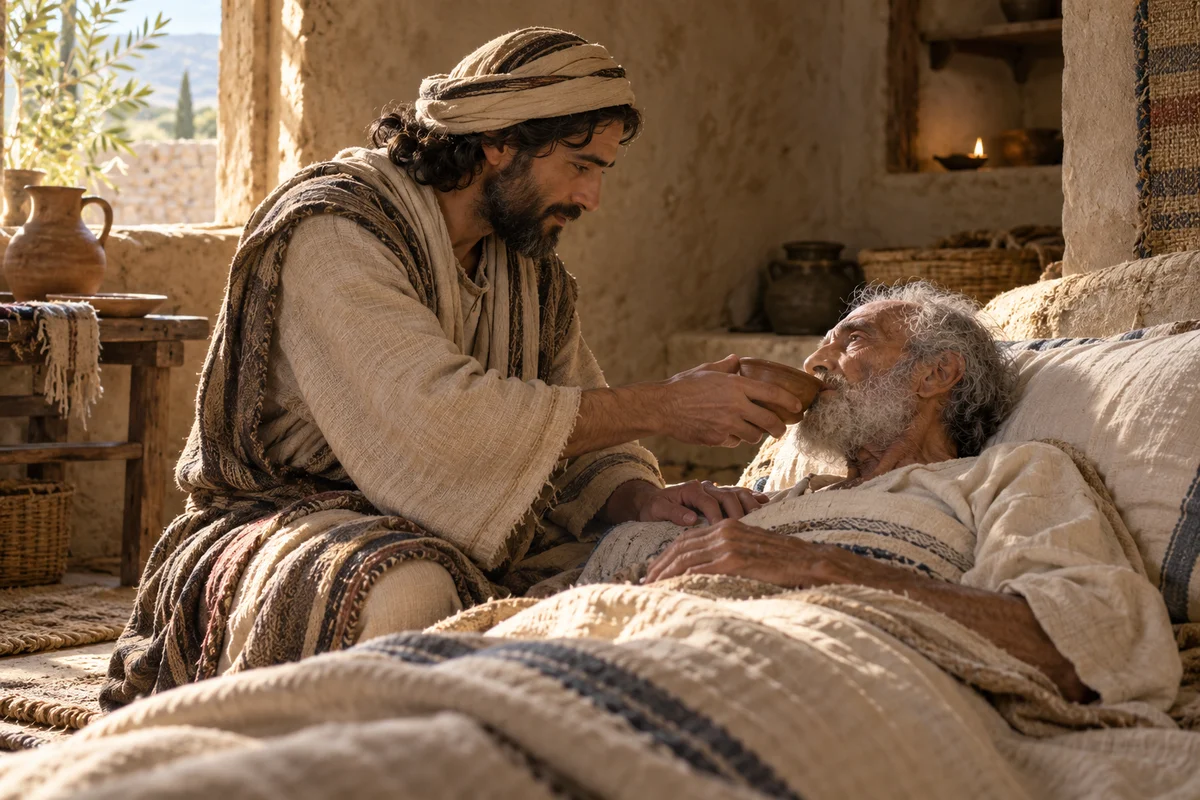
During trouble, this person had prayed and made vows. Now that God has answered, he returns to fulfill them.
This is important because gratitude is more than emotion.
The worshiper remembers what he said when he was desperate.
He does not forget God when the crisis has passed.
The costly offerings emphasize the seriousness of his gratitude.
The point for us is not to reproduce Israel’s sacrificial system.
It is to hear the principle:
Do not let deliverance make you forget the God you called upon in distress.
15
12. “Come and Hear” — Testimony Completes Thanksgiving
Psalm 66:16
Earlier the world was told:
“Come and see.”
Now those who fear God are told:
“Come and hear.”
That is a beautiful movement.
First, look at the great deeds of God.
Then listen to the story of one person.
Public redemption and personal testimony belong together.
The worshiper does not say:
“Come and hear how strong I was.”
He says:
“Come and hear what God has done for me.”
A healthy testimony keeps God as the subject.
16
13. “I Cried to Him With My Mouth” — Prayer Is Already an Act of Trust
Psalm 66:17
The worshiper remembers his prayer.
He cried to God.
And even in that cry, praise was present.
Why?
Because calling on God in trouble already says something about God.
It says:
“You are the One I believe can help.”
Prayer therefore honors God even before the answer comes.
The cry itself is a confession of trust.
We do not have to wait until the story is resolved before worship begins.
Sometimes worship sounds like:
“Help me.”
17
14. “If I Had Cherished Wrong in My Heart…”
Psalm 66:18
This verse can be misunderstood.
It does not teach that God listens only to morally perfect people.
If that were true, no one could pray.
The issue is integrity.
The worshiper is saying that he cannot deliberately nurture wrongdoing in his heart while demanding that God endorse him.
Prayer is relational.
We cannot knowingly cling to evil and at the same time treat God as a tool for getting what we want.
The verse therefore calls for sincerity, not sinless perfection.
It asks:
“Am I coming to God honestly, willing for him to search me as well as rescue me?”
18
15. “But God Has Surely Listened”
Psalm 66:19–20
The psalm closes where the personal story reaches its deepest point.
God listened.
God paid attention.
God did not reject the prayer.
And God did not withdraw his steadfast love.
The final gratitude is therefore larger than:
“I got the answer I wanted.”
The deeper gift is:
“God did not turn away from me.”
Answered prayer becomes evidence of relationship.
The psalm began with the whole earth praising God.
It ends with one person praising the God who listened.
The God of nations hears a single voice.
19
MAJOR THEOLOGICAL THEMES
20
1. Worship Needs Both Memory and Testimony
Psalm 66 says:
“Come and see what God has done.”
Then:
“Come and hear what he has done for me.”
Faith remembers the great story and tells the personal story.
We need both.
21
2. God’s Saving Acts Create a People
The exodus is not merely an old miracle.
It becomes Israel’s identity.
What God did in the past creates a community in the present.
22
3. The God of Israel Is Good News for the Nations
The whole earth is called to praise because God’s acts for his people reveal who he is.
Election is not meant to end in privilege.
It opens toward witness.
23
4. God’s Presence Does Not Mean the Absence of Testing
Psalm 66 speaks honestly of nets, burdens, fire, and water.
Faith is not proof against suffering.
The testimony is that suffering did not have the last word.
24
5. Testing Can Reveal What Is Genuine
Silver is tested by heat.
Human trust is often exposed under pressure.
Trials do not automatically improve us, but they can reveal what we truly rely on and where deeper faith is needed.
25
6. Deliverance Should Become Gratitude
The worshiper returns to fulfill what he promised in trouble.
Grace received becomes worship offered.
Rescue should not end in forgetfulness.
26
7. Prayer Requires Integrity
Psalm 66 does not demand perfection.
It does reject double-minded manipulation of God.
Prayer flourishes where the heart is open to both rescue and correction.
27
8. The God of History Is Also the God of the Individual
The psalm moves from the whole earth to one person.
The scale changes.
God does not.
The One who rules nations hears a single prayer.
28
CONNECTIONS ACROSS SCRIPTURE
29
The Exodus as the Foundational Story of Rescue
Psalm 66 looks back to the crossing of the sea, one of Israel’s defining memories (Exodus 14–15). Later generations repeatedly returned to that event because it revealed the character of God as the One who liberates slaves, defeats oppressive power, and makes a path through chaos.
The prophets could therefore describe later deliverance in exodus-like language (Isaiah 43:16–19).
For Christians, the exodus becomes part of the larger biblical pattern that reaches a decisive climax in Jesus’ death and resurrection: God brings people through bondage and death into freedom and life.
Psalm 66 is not a direct prediction of the cross. It gives us the grammar of salvation that the gospel brings to its fullest expression.
30
Through Fire and Water
Psalm 66 says, “We went through fire and water.”
Isaiah 43:2 uses similar imagery to promise God’s presence with his people through waters and fire.
The promise is not that faithful people never enter dangerous places.
It is that danger does not cancel God’s covenant commitment.
The biblical hope is not always escape from the fire.
Sometimes it is God bringing us through it.
31
Testing and Refining
The image of refining metal appears elsewhere in Scripture as a picture of testing and purification (Proverbs 17:3; Isaiah 48:10; Malachi 3:2–3).
The New Testament also speaks of faith tested like precious metal (1 Peter 1:6–7).
These texts should not be used to minimize suffering.
They invite believers to ask a different question inside suffering:
What is being revealed about my trust, and how might God form faithfulness here?
32
“Come and Hear What God Has Done for Me”
Personal testimony appears throughout Scripture.
After Jesus restores the man among the tombs, he tells him to go home and tell what the Lord has done for him and how he has shown mercy (Mark 5:19).
The pattern is close to Psalm 66:
deliverance → gratitude → testimony
Christian witness is not merely explaining ideas.
It also includes telling truthfully what God’s mercy has done.
33
The Whole Earth Called to Worship
Psalm 66 begins with all the earth.
That universal summons runs through the Psalms (Psalms 67; 96; 98; 100) and reaches toward the biblical vision of people from every nation worshiping God.
The New Testament pictures that hope around the throne of God and the Lamb (Revelation 7:9–10).
The God who heard one worshiper’s prayer is the God whose praise is meant to fill the earth.
34
DISCUSSION QUESTIONS
1. Why does Psalm 66 move from the whole earth to one individual? 2. What is the difference between “come and see” and “come and hear” in the psalm? 3. Why does Israel continue to speak of the exodus as though later generations had participated in it? 4. What does Psalm 66 teach about the relationship between suffering and God’s presence? 5. How can testing reveal what we really trust? 6. What does “you brought us out into abundance” add to the idea of mere survival? 7. Why is it important to remember commitments made to God during times of trouble? 8. How can personal testimony point to God rather than to ourselves? 9. What does verse 18 teach about integrity in prayer without teaching sinless perfection? 10. What would you say if someone asked, “What has God done for you?”
35
PERSONAL PRACTICE: PRAY PSALM 66 IN FIVE MOVEMENTS
1. Remember the Great Story
“God, I praise you for what you have done for your people…”
2. Name the Testing
“The fire, water, pressure, or uncertainty I am walking through is…”
3. Remember the Way Through
“You have brought me through before when…”
4. Search the Heart
“Show me anything I am clinging to that is working against your will.”
5. Turn Rescue Into Testimony
“What I want others to know about your faithfulness is…”
Then finish with the words:
“Come and hear what God has done for me.”
36
CLOSING PRAYER
God of the sea and the dry land, God of nations and of one listening heart,
teach us to remember.
When the present feels uncertain, bring your saving acts back into view.
When we pass through pressure, through fire and water, do not let us mistake the furnace for the end of the story.
Test what is true in us. Correct what is false. Hold our feet so that we do not finally fall.
Bring us out into spaciousness again.
Keep us faithful to the words we speak to you in trouble. Do not let answered prayer produce forgetfulness.
Search our hearts. Make our prayers honest.
And when you have carried us, open our mouths.
Teach us to say to the world, “Come and see what God has done,” and to one another, “Come and hear what he has done for me.”
Through Jesus, in whose death and resurrection your saving purpose reaches its decisive victory, make our lives part of the praise that will one day fill the whole earth.
Amen.
37
Sources Consulted
John Goldingay, Psalms, Volume 2: Psalms 42–89, especially “Psalm 66: Praise and Thanksgiving, Community and Individual, Israel and the World.”
Derek Kidner, Psalms 1–72, especially “Psalm 66: God of All — of Many — of One.”
The biblical text of Psalm 66 and related Scripture passages cited in the study.
Be the first to leave a comment.