


“Blessed be the Lord, who daily bears us up; God is our salvation.”
01
A Study in Divine Victory, Care for the Vulnerable, the Journey to Zion, and the King Who Carries His People
Key Verse “Blessed be the Lord, who daily bears us up; God is our salvation.” — Psalm 68:19
02
Big Idea
Psalm 68 is one of the most energetic—and one of the most difficult—poems in the Psalter.
It moves like a procession. God rises. Enemies scatter. The righteous rejoice. The One who rides through the heavens is also Father to the fatherless and Defender of widows. He marches before his people through the wilderness, sends rain on a weary land, defeats oppressive powers, chooses Zion as his dwelling, ascends in victory, carries his people day by day, receives the worship of Israel, and finally summons the kingdoms of the earth to sing.
The details of several verses are difficult to interpret, and scholars differ about the precise historical setting. The psalm may preserve memories from Israel’s long story—from Sinai and the wilderness to Canaan, Zion, and later victories—rather than describing only one event.
Yet its central claim is clear:
The God who acted for his people in the past is the God who still acts now.
And his power is not displayed merely in defeating enemies. It is also revealed in caring for people with little social power: the orphan, the widow, the lonely, the captive, and the burdened.
Psalm 68 therefore holds together two truths we often separate:
God is the mighty King who rises against evil, and God is the compassionate Father who makes a home for the vulnerable.
03
1. Psalm 68 in Book Two of the Psalms
Psalm 68 belongs to Book Two of the Psalms (Psalms 42–72).
Psalms 65–67 have steadily widened the horizon.
Psalm 65 moved from Zion to the whole creation.
Psalm 66 moved from the whole earth to Israel’s story and one person’s testimony.
Psalm 67 prayed that God would bless his people so that all nations might know him.
Psalm 68 now gathers many of those themes into a great song of divine kingship.
God acts for Israel.
God cares for the weak.
God reigns from his holy dwelling.
God defeats oppressive powers.
God comes to Zion.
And at the end, the kingdoms of the earth are called to sing to him.
John Goldingay describes Psalm 68 as a celebration of “God then and now.” The psalm repeatedly moves between remembered acts of God and confidence that the same God continues to act.
Derek Kidner describes it as a poem of divine majesty and royal progress, moving toward Zion and then outward toward the nations.
The psalm therefore asks every generation:
Can the God whose faithfulness shaped the past be trusted in the present?
Its answer is yes.
04
2. A Difficult but Powerful Psalm
Psalm 68 contains some of the most difficult Hebrew in the Psalter. Several phrases occur nowhere else in the Old Testament, and interpreters disagree about the meaning of a number of lines.
Its precise historical setting is also uncertain.
Some have connected it with David bringing the ark to Jerusalem (2 Samuel 6). Others have heard echoes of the exodus, Sinai, the conquest, the victory celebrated in Judges 5, or later deliverances.
We do not need to force the whole psalm into one event.
Its power may lie precisely in the way it gathers Israel’s memories into one sweeping portrait:
God rises. God marches. God delivers. God provides. God comes to dwell with his people. God continues to carry them.
The poem is less like a photograph of one day and more like a mural of God’s long faithfulness.
05
3. The Movement of the Psalm
Psalm 68 can be followed in six broad movements.
Verses 1–3 — God Rises
God’s enemies scatter, while the righteous rejoice before him.
Verses 4–6 — The Heavenly King Defends the Vulnerable
The One who rides through the heavens is Father to the fatherless, Defender of widows, Giver of homes, and Liberator of captives.
Verses 7–18 — From the Wilderness to God’s Mountain
The psalm remembers God marching before his people, sending rain, defeating kings, and establishing his dwelling.
Verses 19–23 — The God Who Carries and Saves
Victory becomes daily care: God bears his people and remains the God of deliverance.
Verses 24–31 — The Procession and the Nations
Israel celebrates God’s royal presence, while surrounding powers are summoned to recognize his rule.
Verses 32–35 — Let the Kingdoms Sing
The psalm ends with a universal call to worship the God of Israel, whose strength fills the heavens and strengthens his people.
The movement is therefore:
rising → rescue → journey → enthronement → daily care → procession → worldwide praise
06
WALKING THROUGH THE PSALM
07
4. “God Rises” — When Evil Loses Its Appearance of Permanence
Psalm 68:1–3
The opening words echo Numbers 10:35, where Moses called on Yahweh to arise as Israel moved forward.
Psalm 68 turns that ancient language into a declaration of God’s characteristic action:
When God rises, his enemies scatter.
They are compared to smoke blown away by the wind and wax melting before fire.
The images are important.
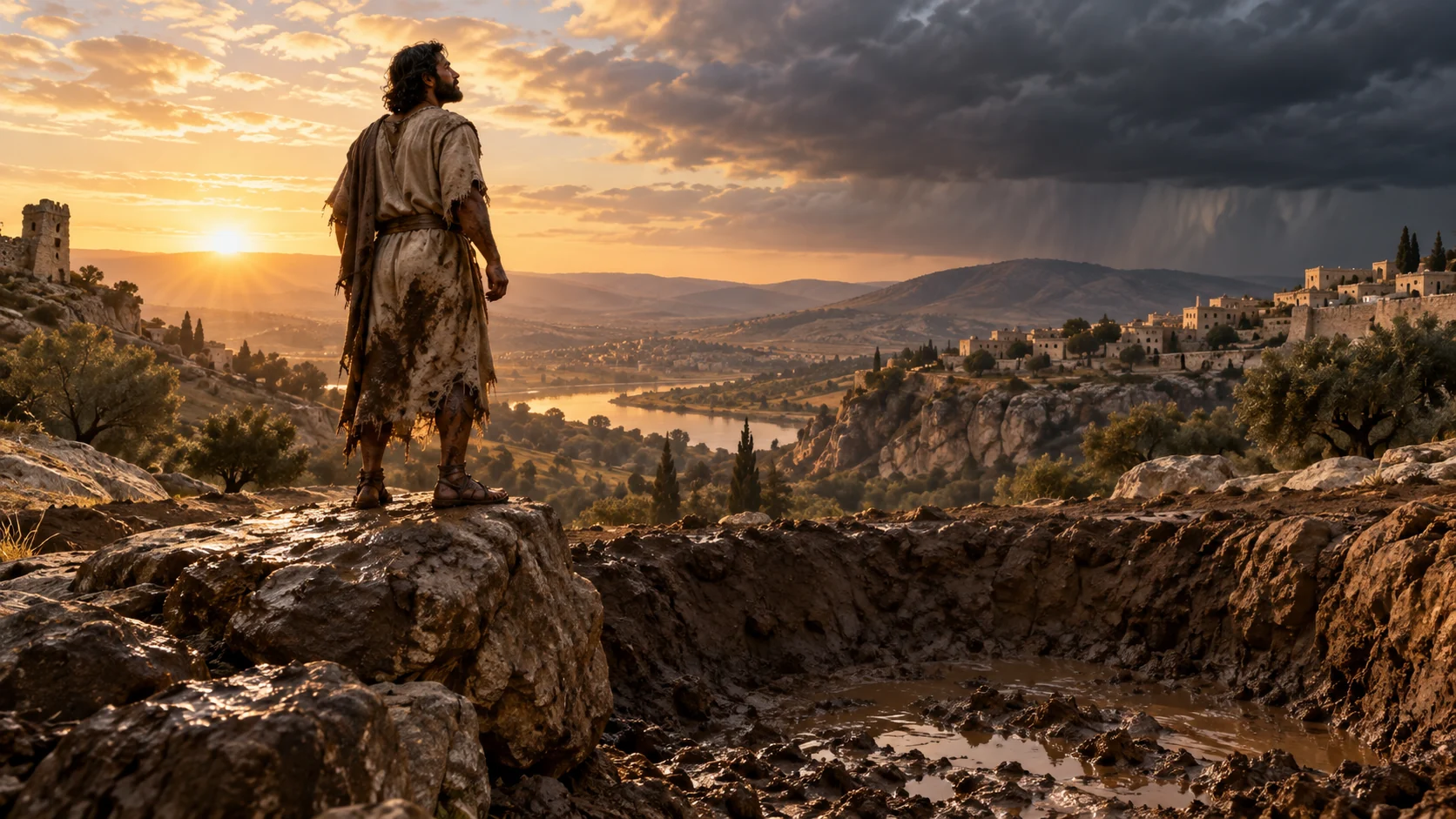
Oppressive power can look solid.
Smoke looks substantial until the wind takes it.
Wax looks firm until it comes near fire.
Psalm 68 tells threatened people not to confuse present visibility with ultimate permanence.
Evil may occupy space.
It does not possess the future.
The righteous therefore rejoice—not simply because an opponent loses, but because the presence of God means liberation from those who destroy.
08
5. Two Responses to the Presence of God
Psalm 68:2–3
The phrase “before God” carries two very different outcomes.
The wicked perish before God.
The righteous rejoice before God.
The same divine presence exposes what is opposed to life and becomes joy for those who seek refuge in him.
God’s presence is therefore not morally neutral.
It comforts, but it also confronts.
It shelters, but it also judges.
The God of biblical hope is not merely a stronger force who happens to be on our side. He is the Holy One whose rising reveals the truth about both oppressor and oppressed.
09
6. “Sing to God … His Name Is Yah”
Psalm 68:4
The psalm calls people to sing and make music to God.
One difficult phrase may describe God as the One who rides on the clouds or rides through the wilderness steppes. Both images fit the psalm: God is the heavenly King and the One who marches with his people.
The name Yah, a shortened form associated with Yahweh, makes the identity clear.
Israel is not praising an anonymous force of nature.
The One who commands storm, wilderness, history, and kings is the covenant God whom Israel knows by name.
And immediately, the psalm tells us what this heavenly King is like.
10
7. “Father to the Fatherless, Defender of Widows”
Psalm 68:5
This is one of the most beautiful reversals in the psalm.
The God who rides the heavens looks downward toward people whom society can easily overlook.
He is:
Father to the fatherless. Defender of widows.
In the ancient world, losing the male head of a household could mean losing economic security, legal protection, land, and social standing.
Psalm 68 says that such people are not invisible to God.
Divine kingship is measured partly by what happens to those who have the least power.
God’s majesty does not make him distant from vulnerability.
It moves him toward it.
The God of the skies becomes the defender of the people at risk on the ground.
11
8. “God Sets the Lonely in Families”
Psalm 68:6
The psalm continues:
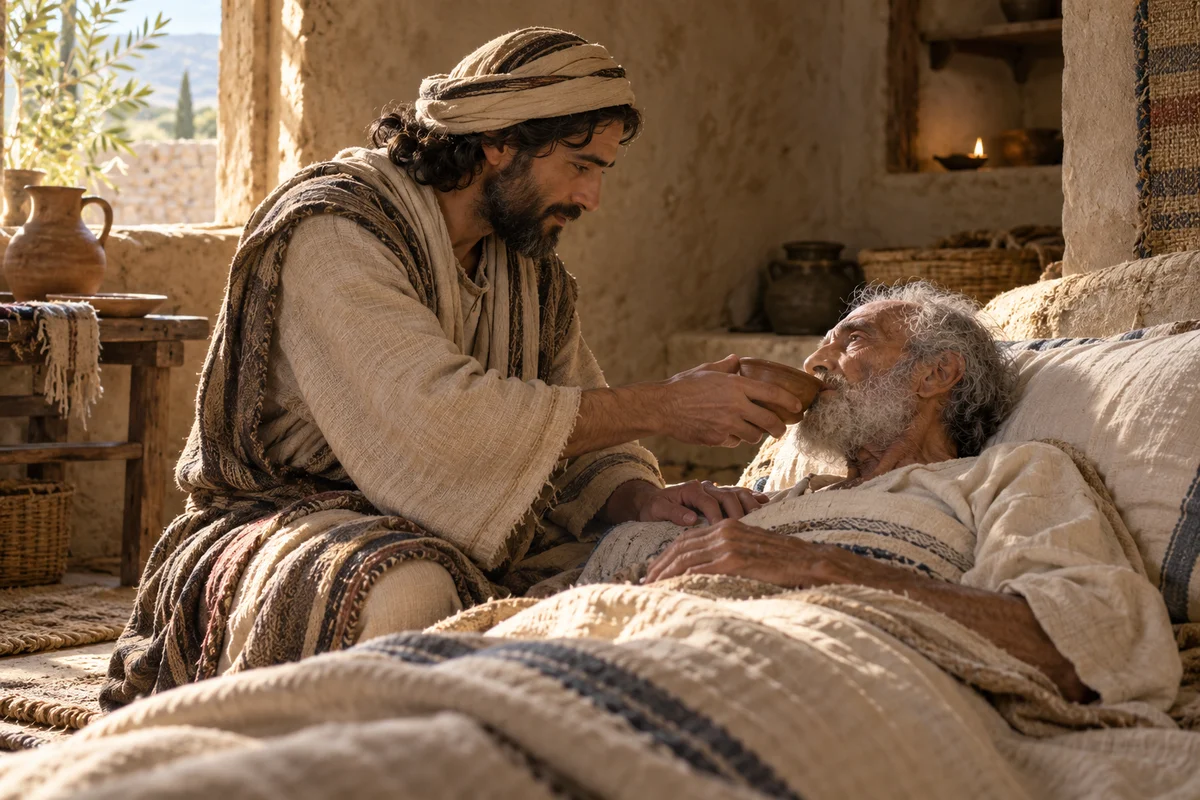
God gives the lonely or desolate a home.
He brings prisoners out.
This is salvation in social form.
The Bible does not reduce redemption to an invisible spiritual experience.
God restores belonging.
God breaks isolation.
God liberates people from conditions that deny life.
The phrase about setting the lonely in a home should not be turned into a simplistic promise that every person will receive one particular kind of family life. Its deeper point is that God opposes abandonment.
His kingdom moves people toward belonging.
A faithful community should therefore reflect this God by becoming a place where isolated people are seen, welcomed, protected, and given room to belong.
12
9. “When You Went Out Before Your People”
Psalm 68:7–8
The poem now reaches backward.
God marches before Israel through the wilderness.
The earth shakes.
The heavens pour rain.
Sinai appears.
The language echoes Israel’s old songs, especially the Song of Deborah in Judges 5.
God is pictured like a warrior-king going ahead of his people.
Israel’s story is not told as though the people marched alone and later asked God to bless what they had achieved.
God goes before them.
The people’s movement depends on the divine movement.
That is a recurring pattern in Scripture:
God acts first. God leads. The people follow.
13
10. The God of Sinai Is the God of Israel
Psalm 68:8–10
The psalm connects the awe of Sinai with the gift of rain.
The God whose presence makes the earth tremble is also the God who sends generous rain on exhausted land.
That combination matters.
Divine power does not exist only for spectacle.
The storm becomes provision.
The mighty God makes the land fruitful and provides for the needy.
This continues the theology of Psalms 65–67.
The God of dramatic salvation is also the God of ordinary sustenance.
He defeats oppressive powers.
He also waters fields.
He leads through wilderness.
He also provides a home.
Biblical theology refuses to separate the “great acts of God” from bread, rain, shelter, and daily survival.
14
11. God Gives the Word, and Victory Is Announced
Psalm 68:11–14
These verses are among the more difficult parts of the psalm, but the broad picture is vivid.
God gives the word.
Kings flee.
The news of victory spreads.
Spoils are distributed.
The imagery has echoes of Judges 5 and Israel’s older victory traditions.
One striking feature is the role of those who announce the news. The Hebrew form suggests a great company of women proclaiming the victory, recalling scenes such as Miriam after the sea crossing (Exodus 15:20–21) and the women who welcomed Saul and David with songs (1 Samuel 18:6–7).
Victory does not remain a private military report.
It becomes public testimony.
God’s act creates a song.
15
12. Why Zion? The God Who Chooses the Small
Psalm 68:15–16
The psalm turns toward the great mountains of Bashan.
They are majestic.
They appear more impressive than Zion.
Yet God chooses another mountain as his dwelling.
The imagery suggests that the great mountains look with envy or astonishment at the place God has chosen.
This fits a recurring biblical pattern.
God chooses Abraham rather than an empire.
Israel rather than Egypt.
David rather than his more impressive brothers.
Bethlehem rather than a famous capital.
And here, Zion rather than the most majestic mountain.
God’s choice is not controlled by human ideas of impressiveness.
The small can become significant because God chooses to dwell there.
16
13. “The Chariots of God Are Tens of Thousands”
Psalm 68:17
Earthly kings measure power by armies.
Pharaoh had chariots.
Sisera had chariots.
Psalm 68 imagines the invisible army of God as beyond counting.
The point is not military arithmetic.
It is theological perspective.
The powers we can see are not the only powers that matter.
Israel’s enemies may possess visible machinery of war.
But they do not possess ultimate sovereignty.
The unseen God is not absent simply because he cannot be counted among the visible armies.
17
14. “You Ascended on High” — Victory and the Dwelling of God
Psalm 68:18
The psalm pictures God ascending to the height after victory, taking captives and receiving tribute or gifts.
In its Old Testament setting, the verse belongs to the picture of the victorious divine King establishing his rule and dwelling among his people.
The movement may gather together several memories: entering the land, conquering opposition, and especially God’s royal presence becoming associated with Zion.
The important point is:
God’s ascent is the ascent of the victorious King.
He has overcome opposition and established his dwelling.
But the biblical story will take this image farther.
18
15. Psalm 68:18 and the Ascended Messiah
Paul draws on Psalm 68:18 in Ephesians 4:7–13.
The wording in Ephesians differs from the Hebrew form of the psalm. Psalm 68 speaks of the victorious one receiving gifts, while Paul speaks of Christ giving gifts to people.
Paul is not simply reproducing the line word for word. He is drawing out the victory pattern.
In Psalm 68, the divine King triumphs and the benefits of victory flow to his people.
In Ephesians, Jesus descends into the depths of human existence and death, rises, ascends, and distributes gifts for the building up of his body.
The connection is therefore not:
“Psalm 68 secretly predicted every detail of the ascension.”
It is richer and more biblical than that.
Paul sees the ancient picture of God’s victorious ascent reaching a new horizon in the risen and ascended Messiah.
The King has triumphed.
And his triumph becomes gift.
19
16. “Day by Day He Bears Us”
Psalm 68:19
After thunder, armies, mountains, and royal ascent, the psalm suddenly becomes tender:
“Day by day he bears us.”
This may be the pastoral heart of Psalm 68.
The God whose chariots are beyond counting carries ordinary people.
The One who ascends in victory bends down under human burdens.
Kidner connects this image with Isaiah 46, where idols have to be carried, but Israel’s God carries his people.
That is one of Scripture’s great reversals.
False gods become burdens.
The living God bears burdens.
Psalm 68 does not promise that believers will never carry anything heavy.
It promises something deeper:
we are not carrying alone.
20
17. “Our God Is a God Who Saves”
Psalm 68:20
The psalm repeats the truth because people need to hear it repeatedly.
God is the God of deliverance.
Life has many doors into trouble.
Danger appears in many forms.
Death itself seems to be the final closed room.
Yet the psalm refuses to surrender even death to a sovereignty independent of God.
The Lord holds authority over life and death.
For Israel, that was a confession of God’s saving power.
For Christians, the confession receives new depth through the resurrection of Jesus.
The God of Psalm 68 is not merely the God who helps people avoid danger.
He is the God whose saving purpose ultimately challenges death itself.
21
18. The Violent Images of Judgment
Psalm 68:21–23
These verses contain graphic victory language.
Enemies are struck down.
Blood and battlefield imagery appear.
Modern readers should not rush past this material, but neither should we turn it into permission for religious violence.
Psalm 68 is speaking from within Israel’s ancient world, where deliverance from oppressive armies meant the real defeat of violent enemies. Victory was not abstract. Battles left bodies.
The moral center of the psalm is that God judges forces that destroy life.
For Christian readers, these lines must be read within the larger canon.
Jesus teaches love of enemies (Matthew 5:44).
He refuses to establish God’s kingdom by the sword.
At the cross, he absorbs violence rather than reproducing it.
And the New Testament places final judgment in God’s hands.
Psalm 68 therefore does not authorize personal revenge.
It gives persecuted people permission to believe that evil matters to God and that oppressive power will not rule forever.
22
19. The Procession Comes Into View
Psalm 68:24–27
The psalm now sees a procession.
Singers lead.
Musicians follow.
Women play tambourines.
The tribes of Israel are represented.
The God who marched through the wilderness is now celebrated in the gathered community.
Past salvation becomes present worship.
This is what liturgy does at its best.
It does not merely remember old information.
It allows a new generation to step into the story.
The congregation sings because the God who acted then is still their King now.
23
20. From Israel to the Nations
Psalm 68:28–31
The prayer now turns outward again.
Kings are envisioned bringing tribute.
Egypt appears.
Cush—the region south of Egypt—is pictured stretching out hands toward God.
The ancient political imagery reflects a world in which victorious kings received tribute.
But the larger theological movement fits what Psalms 65–67 have already been saying:
Israel’s God intends to be acknowledged beyond Israel.
The nations that once represented threat and empire are imagined coming toward God.
Hostility moves toward homage.
The goal is not merely Israel’s safety.
The horizon is worldwide recognition of the true King.
24
21. “Kingdoms of the Earth, Sing to God”
Psalm 68:32–35
The closing summons is universal.
The kingdoms of the earth are called to sing.
The God who rides the highest heavens gives his mighty voice.
His majesty is over Israel.
His strength fills the skies.
Yet the final description returns to something wonderfully relational:
he gives strength to his people.
The psalm ends where its theology has been moving all along.
God possesses power.
God gives power.
God reigns in heaven.
God strengthens people on earth.
God is awesome in holiness.
God is also the God of Israel.
The transcendent God is not remote.
The mighty King shares strength with the weak.
25
MAJOR THEOLOGICAL THEMES
26
1. God’s Past Faithfulness Becomes Hope for the Present
Psalm 68 repeatedly moves between memory and expectation.
What God did becomes the basis for asking what God will do.
Biblical memory is therefore not nostalgia.
It is fuel for prayer.
27
2. Divine Majesty Is Revealed in Care for the Vulnerable
The One who rides the heavens is Father to the fatherless.
The King defends widows.
The Liberator brings out captives.
Power and compassion belong together in God.
28
3. God Leads Before His People
The wilderness march pictures God going ahead.
Faith is not asking God to bless a path we invented without him.
It is learning to follow where God leads.
29
4. God Chooses What the World May Overlook
Zion is not impressive beside the mountains of Bashan.
Yet God chooses it.
Divine calling is not based on outward greatness.
God’s presence creates significance.
30
5. Victory Becomes Provision
Psalm 68 does not stop at defeating enemies.
The victorious God sends rain, gives homes, frees captives, carries burdens, and gives strength.
Biblical victory is meant to produce life.
31
6. God Carries the People Who Cannot Carry Themselves
“Day by day he bears us” brings the cosmic theology of the psalm into ordinary life.
The God of armies is also the God of Tuesday morning burdens.
32
7. God’s Rule Moves Toward the Nations
The psalm begins with Israel’s enemies scattering and ends with kingdoms singing.
God’s victory aims beyond destruction.
It aims toward recognition of his kingship.
33
8. Judgment Belongs to God
The psalm is confident that evil will be confronted.
That confidence frees God’s people from taking ultimate vengeance into their own hands.
The biblical hope is not that violence wins.
It is that God’s justice does.
34
CONNECTIONS ACROSS SCRIPTURE
35
“Arise, O LORD” — The Wilderness Journey
Psalm 68 opens with language echoing Numbers 10:35, spoken when Israel moved through the wilderness.
The image is of God going ahead of his people.
That wilderness tradition also appears in Deuteronomy 33 and Judges 5, where God’s coming shakes the earth and displays his power.
Psalm 68 gathers these memories into praise:
the God who once marched before Israel is still the God who acts.
36
Father to the Fatherless
God’s concern for widows, orphans, immigrants, and the poor runs throughout the Torah and the Prophets (Deuteronomy 10:17–18; 24:17–22; Isaiah 1:17).
Psalm 68 gives that concern a striking theological center.
Care for vulnerable people is not a side project attached to God’s kingship.
It reveals what kind of King he is.
The New Testament continues this moral vision when James describes care for orphans and widows in distress as central to faithful religion (James 1:27).
37
Sinai, Zion, and the Presence of God
Psalm 68 moves from Sinai toward God’s dwelling among his people.
The journey reflects a larger biblical theme: the God who reveals himself in the wilderness chooses to dwell among Israel and eventually associates his royal presence with Zion.
Yet Scripture never allows Zion to imprison God.
Solomon himself admits that heaven cannot contain him (1 Kings 8:27).
The temple is a sign of presence, not a container for God.
Psalm 68’s heavenly imagery keeps both truths together:
God dwells with his people, and God fills the heavens.
38
The Ascended King and Ephesians 4
Ephesians 4:8 draws on Psalm 68:18 to describe the victory and ascension of Jesus.
Paul adapts the psalm’s triumph imagery to explain Christ’s gift-giving to the church.
The risen Christ ascends not to hoard the spoils of victory but to equip his people—apostles, prophets, evangelists, pastors, and teachers—for the building up of the body (Ephesians 4:11–13).
Psalm 68’s victorious ascent thus becomes, in Paul’s hands, a picture of victory turned into gifts for mission and maturity.
39
The God Who Carries
Psalm 68:19 says that God bears his people day by day.
Isaiah 46:1–4 develops the same contrast vividly: idols must be carried, but Israel is carried by God.
The gospel deepens this pattern.
Jesus calls the weary and burdened to come to him for rest (Matthew 11:28–30).
The biblical God is not another burden added to exhausted people.
He is the One who bears, sustains, and leads them.
40
The Kingdoms of the Earth Called to Worship
Psalm 68 ends by summoning the kingdoms of the earth to sing to God.
That worldwide horizon continues through the Psalms and Prophets and reaches the New Testament’s vision of the nations gathered before God.
Revelation portrays kingdoms and peoples finally acknowledging God and his Messiah (Revelation 11:15; 15:3–4).
The destination of God’s victory is not a small tribal triumph.
It is the worship of the true King by a renewed world.
41
DISCUSSION QUESTIONS
1. Why do you think Psalm 68 combines military victory with care for widows, orphans, and lonely people? 2. What does “God rises” mean for situations in which evil appears permanent? 3. How does God’s concern for vulnerable people reshape our understanding of divine power? 4. What does it mean in practice for God to “set the lonely in a home”? 5. How does remembering God’s past action become fuel for present prayer? 6. Why might God choose unimpressive Zion rather than the grander mountains of Bashan? 7. What is the significance of the statement “day by day he bears us” after so much royal and military imagery? 8. How should Christians read the violent judgment language of verses 21–23? 9. How does Paul use Psalm 68:18 in Ephesians 4 without simply repeating it word for word? 10. Where in your life do you need to trust the God who both rises in power and carries people in compassion?
42
PERSONAL PRACTICE: PRAY PSALM 68 IN FIVE MOVEMENTS
1. Name What Needs God to Arise
“God, this situation feels stronger than I am…”
2. Remember the Vulnerable
“Show me the lonely, grieving, displaced, or overlooked person you are calling me to see.”
3. Remember the Journey
“You have led me before when…”
4. Give God the Burden
“Today I am carrying…”
Then pray:
“Lord, carry me as you have promised to carry your people.”
5. Turn Strength Into Service
“The strength or gift you have given me can serve others by…”
Finish with the confession:
“Blessed be the Lord, who day by day bears us.”
43
CLOSING PRAYER
God who rises,
when evil looks permanent, remind us that smoke scatters and wax melts before your presence.
But when we speak of your power, do not let us forget what kind of King you are.
You are Father to the fatherless. Defender of widows. A home for the lonely. A liberator of captives.
Go before us in the wilderness.
Send rain on the exhausted ground.
Choose what the world overlooks, and make your presence more important than outward greatness.
When our burdens become heavy, carry us day by day.
When we are tempted to revenge, teach us to leave final judgment in your hands and to overcome evil without becoming evil ourselves.
Through Jesus, the risen and ascended King, turn victory into gifts, gifts into service, and service into the building up of your people.
Let the kingdoms of the earth learn your song.
Let the strong surrender their false sovereignty.
Let the weak receive strength.
And let your people say:
God be praised.
Amen.
44
Sources Consulted
John Goldingay, Psalms, Volume 2: Psalms 42–89, especially “Psalm 68: God Then and Now.”
Derek Kidner, Psalms 1–72, especially his discussion of Psalm 68 as a song of divine majesty and royal progress.
The biblical text of Psalm 68 and the related Scripture passages cited in the study.
Be the first to leave a comment.