


“Answer me, LORD, for your steadfast love is good; according to your abundant mercy, turn toward me.”
01
A Study in Suffering, Shame, Zeal for God, Imprecation, and the Hope of Vindication
Key Verse “Answer me, LORD, for your steadfast love is good; according to your abundant mercy, turn toward me.” — Psalm 69:16
02
Big Idea
Psalm 69 is the prayer of a faithful but deeply wounded worshiper who feels as though he is drowning.
The waters have risen. There is no firm place to stand. His throat is dry from crying out, his eyes are tired from waiting, enemies multiply, false accusations spread, relatives distance themselves, and his devotion to God has become a reason for mockery.
Yet the psalm does not remain inside despair.
Again and again the sufferer turns toward God:
You know. You see. You are faithful. Your steadfast love is good. Come near. Redeem me.
The psalm is also one of the most important Old Testament texts for understanding the suffering of Jesus. The New Testament hears echoes of Psalm 69 in Jesus’ zeal for God’s house, in the reproach he bears, in the hatred he receives without cause, and in the bitter drink offered at the cross.
But Psalm 69 also contains fierce prayers for judgment. Those lines must be taken seriously. They reveal the moral outrage of a wounded person who wants evil to be answered. Yet Christian readers hear them from the far side of the cross, where Jesus bears hostility, prays for his enemies, and entrusts final judgment to God.
Psalm 69 therefore teaches us how to bring unbearable pain before God without pretending, while also allowing the story of Jesus to reshape what we do with our anger.
03
1. Psalm 69 in Book Two of the Psalms
Psalm 69 belongs to Book Two of the Psalms (Psalms 42–72).
It follows Psalm 68, a song filled with divine victory, procession, strength, and praise. Psalm 69 suddenly brings us into another emotional world.
Instead of marching, the worshiper is sinking.
Instead of enemies scattering, they seem to be multiplying.
Instead of public triumph, there is public shame.
Instead of a procession of praise, there are mockers at the city gate and drinking songs made at the worshiper’s expense.
This sharp change reminds us that the Psalter refuses to offer only one emotional vocabulary for faith.
There are days for Psalm 68:
God rises.
And there are days for Psalm 69:
“Save me, because the waters are rising.”
Both belong in prayer.
04
2. A Psalm of Protest, Plea, and Trust
John Goldingay describes Psalm 69 as a richly layered prayer of protest and plea that eventually moves toward trust and praise.
The movement can be summarized in four large sections.
Verses 1–5 — The Waters Rise
The psalmist describes overwhelming distress, false accusations, and the exhaustion of waiting.
Verses 6–21 — Zeal, Shame, and the Cry for Nearness
The suffering becomes public and religious. The psalmist is mocked because of devotion to God and pleads for God’s faithful love to answer.
Verses 22–29 — A Prayer for Judgment
The wounded worshiper asks God to act against persecutors and refuse to let their evil stand.
Verses 30–36 — Praise, the Needy, and Zion
The psalm turns toward thanksgiving. Praise becomes more pleasing than sacrifice, the needy are encouraged, and the horizon widens toward Zion and the people of God.
The movement is therefore:
drowning → shame → prayer → anger → judgment → praise → communal hope
05
WALKING THROUGH THE PSALM
06
3. “Save Me, O God, for the Waters Have Reached My Life”
Psalm 69:1–2
The psalm opens with water.
Not refreshing water.
Not the streams of Psalm 1.
Not the still waters of Psalm 23.
These waters threaten life.
The psalmist feels as though he is sinking into deep mud or floodwater where there is no foothold. The current is stronger than he is.
The imagery belongs to a wider biblical world in which deep waters can represent chaos, danger, death, and forces beyond human control.
The point is not simply:
“I have a problem.”
It is:
“I cannot stand.”
That is why the first word is a prayer:
Save me.
Biblical lament does not wait until suffering becomes tidy enough to explain.
It prays from inside the flood.
07
4. “I Am Worn Out Calling” — When Prayer Feels Unanswered
Psalm 69:3
The psalmist has not been silent.
He has called until his throat is dry.
He has watched until his eyes are exhausted.
He has waited for God and seen no visible answer.
This is one of the Bible’s most realistic pictures of prolonged prayer.
The problem is not that the worshiper forgot to pray.
The problem is that he has prayed for so long.
Psalm 69 gives language to the painful space between request and answer.
Faith sometimes has to live there.
The psalm does not rebuke the sufferer for being tired.
It lets exhaustion become prayer.
08
5. “Those Who Hate Me Without Cause” — The Pain of False Accusation
Psalm 69:4–5
The flood now receives a face.
It is made of enemies.
They are numerous.
Their hostility is false.
The psalmist feels pressured to “restore” what he did not steal—to confess guilt for something he did not do.
That is a special kind of suffering.
When accusation is false, even apology can become a lie.
The worshiper therefore brings his conscience before God.
He does not claim sinless perfection.
He says, in effect:
“God, you know my real foolishness and real sins. Nothing is hidden from you. But you also know that these accusations are false.”
This is mature prayer.
It does not need to pretend innocence in every part of life in order to protest injustice in this particular matter.
We can confess what is ours without accepting what is not.
09
6. “Do Not Let Those Who Seek You Be Put to Shame Because of Me”
Psalm 69:6
The psalmist’s concern widens.
He is not thinking only about his own reputation.
He worries about what his humiliation might do to other people who trust God.
If he is a leader or representative figure, his public collapse could discourage a wider community.
So he prays:
“Do not let my suffering become a stumbling block for those who seek you.”
This is the prayer of someone who knows that faith is personal but never merely private.
Our lives affect others.
Our failures can wound others.
Our faithfulness under pressure can strengthen others.
The psalmist therefore asks God not only to rescue him, but to guard the faith of those connected to him.
10
7. “For Your Sake I Have Borne Reproach”
Psalm 69:7–8
The suffering is now explicitly connected with loyalty to God.
The psalmist has borne shame because of devotion to Yahweh.
Even family relationships have become strained.
He feels like a stranger among his own relatives.
This does not necessarily mean total literal abandonment. Poetic lament often uses intense language to describe emotional and social isolation.
But the pain is real.
Religious faithfulness can sometimes cost belonging.
The psalmist is discovering that devotion to God does not guarantee social approval.
Sometimes it produces the opposite.
11
8. “Zeal for Your House Has Consumed Me”
Psalm 69:9
This is one of the psalm’s most famous lines.
The worshiper is consumed by zeal for God’s house.
He cares intensely about God’s honor, God’s worship, and the life of the covenant community.
The insults directed toward God fall on him because he has identified himself so closely with God’s cause.
The Gospel of John applies this language to Jesus when he confronts the misuse of the temple (John 2:13–17).
That does not mean Psalm 69 originally had no meaning apart from Jesus.
It first expresses the costly zeal of an Israelite worshiper.
But in Jesus, the pattern intensifies.
His devotion to his Father’s house and mission brings him into direct conflict with distorted religious power.
The zeal of Psalm 69 becomes part of the story of the Messiah.
12
9. Fasting Becomes Mockery
Psalm 69:10–12
The psalmist weeps.
He fasts.
He wears sackcloth.
These are normal signs of grief and repentance in the biblical world.
Yet his devotion is turned against him.
Instead of being respected, he becomes a joke.
People at the gate talk about him.
Drinkers make songs about him.
The city gate was a place of public conversation, business, and judgment. To become a subject of gate-talk meant public reputation was under attack.
The humiliation reaches both respectable society and the tavern.
The psalmist cannot escape the story others are telling about him.
This is a deeply contemporary pain.
A reputation can be damaged in rooms we never enter, conversations we never hear, and networks we cannot control.
Psalm 69 does not promise control over the story.
It gives us a place to bring the shame.
13
10. “But as for Me, My Prayer Is to You”
Psalm 69:13
This is a turning point.
Others are talking.
The psalmist turns to God.
“But as for me…”
The contrast matters.
He cannot control their speech.
He can choose where his own speech goes.
He appeals to God’s steadfast love and faithful salvation.
The prayer is not grounded in the psalmist’s ability to persuade God.
It is grounded in God’s character.
This is one of lament’s great disciplines:
When circumstances give us no stable ground, we stand on what we know about God.
14
11. “Rescue Me From the Mud”
Psalm 69:14–15
The water imagery returns.
The psalmist asks God not to let the flood swallow him or the pit close over him.
The repetition is important.
Prayer does not always move in a straight line.
Sometimes we return to the same fear after we thought we had moved beyond it.
Biblical prayer allows that.
The difference is that the fear is now surrounded by stronger language about God’s faithfulness.
The waters have not changed yet.
But the prayer is learning where to anchor.
15
12. “Your Steadfast Love Is Good”
Psalm 69:16–18
At the center of the plea stands God’s character.
Your steadfast love is good. Your compassion is abundant. Turn toward me. Come near. Redeem me.
The word “redeem” belongs to the language of a near relative who steps in to rescue a family member in trouble.
The psalmist therefore asks God not merely to send help from a distance.
He asks God to act like the closest possible protector.
Come near to me.
That may be the deepest prayer in the psalm.
The crisis is painful.
But the most unbearable possibility is feeling abandoned within it.
The psalmist asks for the presence of the Redeemer.
16
13. “Reproach Has Broken My Heart”
Psalm 69:19–20
The wound is not only physical.
It is social and emotional.
Reproach has broken the heart.
Shame has become heavy.
The psalmist looks for sympathy and comfort but feels none.
Kidner emphasizes how devastating public shame could be in the close-knit world of the Old Testament.
Modern readers should not underestimate this dimension.
Human beings are relational creatures.
To be mocked publicly, falsely accused, excluded, or treated as disgraceful can injure a person deeply.
Psalm 69 gives spiritual dignity to that pain.
God cares not only about physical danger.
He also sees humiliation.
17
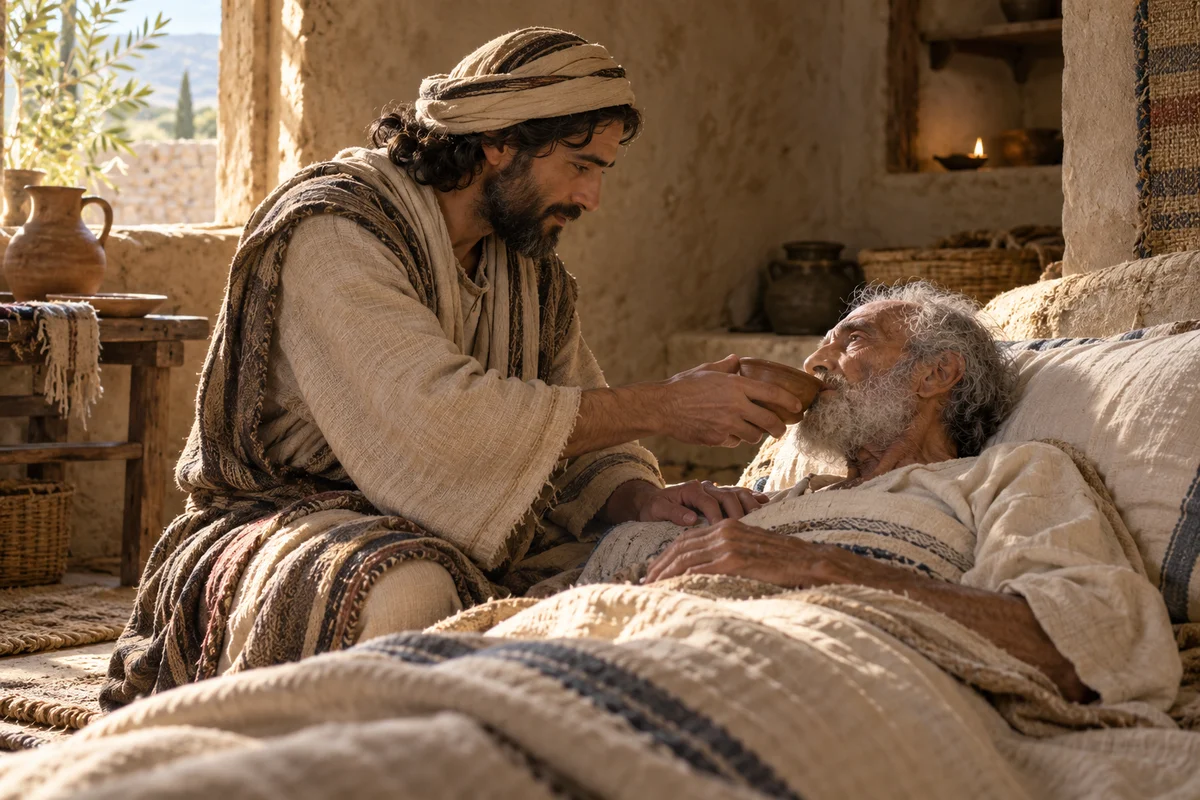
14. “For My Thirst They Gave Me Vinegar”
Psalm 69:21
The psalmist expected comfort and received bitterness.
Food becomes poison.
Drink becomes sour.
Instead of compassion, suffering is made worse.
The Gospels later echo this verse in the crucifixion narratives, where Jesus is offered sour wine or vinegar (Matthew 27:34, 48; John 19:28–29).
Again, the Christian reading should not erase the psalmist’s original suffering.
But the pattern reaches extraordinary depth at the cross.
The righteous sufferer is mocked.
He is thirsty.
He is surrounded by hostility.
And those around him do not remove the pain.
Psalm 69 gives the early Christians language for recognizing what happens to Jesus.
18
THE HARD SECTION: PRAYERS FOR JUDGMENT
19
15. “Let Their Table Become a Snare”
Psalm 69:22–28
The psalm now becomes difficult.
The sufferer asks God to judge the persecutors severely.
He asks that their security fail, their strength collapse, their homes become desolate, and their names disappear from the book of the living.
We should not soften these words until they say nothing.
They are angry.
They are morally fierce.
They come from someone who has been mocked, falsely accused, socially shamed, and left without comfort.
The prayer says:
“God, do not treat this evil as though it does not matter.”
That cry for justice is important.
Victims of evil should not be told that holiness means pretending they were not harmed.
But neither should Christians simply turn these lines into personal permission to curse enemies.
The Bible itself carries us farther.
20
16. How Should Christians Pray the Imprecations?
The New Testament itself uses Psalm 69’s judgment language.
Paul cites Psalm 69:22–23 in Romans 11:9–10, and Acts 1:20 draws on Psalm 69:25 in connection with Judas.
So the New Testament does not erase the conviction that God judges evil.
Yet Jesus also changes the posture of God’s people toward enemies.
He commands:
“Love your enemies and pray for those who persecute you” (Matthew 5:44).
At the cross, Jesus prays for forgiveness for his executioners.
The difference is not that justice suddenly becomes unimportant.
The cross shows how seriously God takes evil.
But in Jesus, judgment and mercy meet in a new way.
The Christian can therefore pray the moral heart of the imprecation:
“God, stop evil. Expose lies. Defend the vulnerable. Bring oppressors to account. Do not let injustice win.”
And at the same time:
“Bring enemies to repentance. Keep hatred from ruling my heart. Let me not become what wounded me. Leave final judgment in your hands.”
The imprecations become prayers for God’s justice rather than fuel for personal vengeance.
21
17. “They Persecute the One You Have Struck”
Psalm 69:26
One of the reasons the psalmist is outraged is that his enemies intensify suffering rather than relieve it.
They see someone already afflicted and add pain.
That is a profound moral failure.
Biblical compassion moves toward wounded people.
Cruelty sees vulnerability and uses it as an opportunity.
Psalm 69 therefore exposes one of the ugliest forms of sin:
making suffering worse for someone who is already suffering.
The God of Psalm 68 was Father to the fatherless and Defender of widows.
Psalm 69 now asks what happens when people do the opposite.
The answer is judgment.
22
18. “But I Am Poor and in Pain”
Psalm 69:29
After the long prayer for judgment, the psalmist returns to himself.
He is poor.
He is hurting.
He asks God’s salvation to lift him into safety.
This line is important because it reveals the deeper reality beneath the anger.
The speaker is not a detached judge.
He is a wounded person.
Often beneath rage is pain.
The psalm does not excuse every expression of anger, but it helps us understand where anger may come from.
God is invited into the wound beneath the curse.
23
FROM LAMENT TO PRAISE
24
19. “I Will Praise the Name of God With a Song”
Psalm 69:30
The transition is striking.
The circumstances have not been described as fully resolved.
Yet praise begins.
This is common in biblical lament.
Prayer can move a person before circumstances move.
The psalmist has poured out fear, shame, protest, grief, and anger.
Now he can imagine praise again.
This is not emotional denial.
It is the fruit of having told the truth before God.
Lament clears space for praise because nothing has to remain hidden.
25
20. Praise Better Than an Ox
Psalm 69:31
The psalmist says heartfelt praise pleases God more than an expensive animal sacrifice.
This does not mean Israel’s sacrifices were meaningless.
It means the ritual was never the deepest reality.
God wanted worshipers whose hearts actually turned toward him.
Psalm 50 makes a similar point.
So do the prophets.
Religious performance cannot substitute for genuine relationship.
A song arising from a heart that has passed through suffering and still turns toward God can be more spiritually significant than impressive outward religion.
26
21. “The Needy See and Are Glad”
Psalm 69:32–33
The praise of one sufferer becomes encouragement for others.
The needy see and rejoice.
Those who seek God take heart.
Why?
Because:
“The LORD hears the needy and does not despise his prisoners.”
This is one of the great theological conclusions of Psalm 69.
The sufferer who feared being ignored discovers that God is precisely the kind of God who listens to the needy.
Human society may despise prisoners.
God does not.
People may mock the vulnerable.
God hears them.
The psalm moves from:
“Will you hear me?”
to:
“God hears people like me.”
Personal deliverance becomes communal hope.
27
22. Heaven, Earth, and Seas Join the Praise
Psalm 69:34
The praise expands.
Heaven joins.
Earth joins.
Seas join.
Everything moving in them joins.
The suffering of one person has opened into cosmic praise.
This is a dramatic reversal from the beginning of the psalm.
At first the waters were swallowing the worshiper.
Now the seas themselves are summoned to praise God.
The chaos that seemed to threaten life no longer has the final word.
Creation belongs to God.
28
23. God Will Save Zion
Psalm 69:35–36
The psalm ends by widening from the individual to the community.
God will save Zion.
The cities of Judah will be restored.
The people will dwell securely.
The descendants of God’s servants will inherit.
This ending reminds us that biblical salvation rarely stops with one person.
The individual’s prayer belongs inside the destiny of God’s people.
The sufferer wants not merely personal relief, but a restored community in which God’s servants can live and belong.
The final movement is therefore:
from drowning alone to dwelling together.
29
PSALM 69 AND JESUS
30
24. A Psalm the New Testament Heard in the Story of Jesus
Psalm 69 is one of the psalms most frequently echoed in the New Testament.
The connections include:
hatred “without cause” and the opposition Jesus receives (compare Psalm 69:4 with John 15:25),
zeal for God’s house (Psalm 69:9; John 2:17),
bearing reproach directed toward God (Psalm 69:9; Romans 15:3),
the bitter drink and vinegar imagery (Psalm 69:21; Matthew 27:34, 48; John 19:28–29),
judgment language later reused in Romans 11:9–10 and Acts 1:20.
These connections should not flatten Psalm 69 into a codebook of predictions.
The psalm first belongs to the experience of a faithful sufferer in Israel.
But Jesus enters that scriptural world so fully that the early church recognizes the pattern reaching its deepest expression in him.
He is the faithful Israelite.
He is zealous for his Father’s house.
He bears reproach.
He suffers false hostility.
He thirsts.
He is abandoned.
Yet he does something that also transforms how the psalm is read:
he bears the curse rather than simply calling it down.
At the cross, righteous suffering and divine mercy meet.
31
25. The Cross Does Not Make Injustice Small
Reading Psalm 69 through Jesus must never mean telling wounded people:
“Do not be angry. Just forgive.”
The cross does not trivialize evil.
It reveals its cost.
Jesus’ forgiveness is not denial.
The wounds remain real.
The crucifixion shows that God takes violence, injustice, shame, and sin so seriously that redemption passes through them rather than pretending they are harmless.
Christian forgiveness therefore does not mean:
“Nothing happened.”
It means:
“What happened will not own my future, and I entrust final justice to God.”
Psalm 69 gives us the language to tell the truth.
Jesus gives us the way to carry that truth without becoming consumed by vengeance.
32
MAJOR THEOLOGICAL THEMES
33
1. Lament Is an Act of Faith
The psalmist complains to God because he still believes God is the One worth addressing.
Lament is not the opposite of faith.
It is faith refusing to suffer without bringing the suffering into relationship with God.
34
2. We Can Confess Real Sin Without Accepting False Guilt
Psalm 69:5 is remarkably honest.
The psalmist admits that God knows his actual foolishness.
Yet he still rejects false accusations.
Spiritual humility does not require accepting lies about ourselves.
35
3. Shame Is a Serious Form of Suffering
The psalm repeatedly names reproach, dishonor, mockery, and isolation.
God cares about the wounds created by social humiliation.
36
4. Zeal for God Can Be Costly
Faithfulness is not always rewarded with admiration.
Sometimes devotion to God makes a person misunderstood, mocked, or rejected.
Jesus embodies this pattern fully.
37
5. God’s Steadfast Love Is the Ground of Prayer
The psalmist’s hope does not rest on emotional strength.
It rests on God’s hesed—his faithful covenant love.
38
6. Anger Can Be Brought to God
Psalm 69 does not sanitize rage.
It puts rage into prayer.
That is safer than allowing rage to become uncontrolled action.
Prayer gives God the final courtroom.
39
7. Jesus Reshapes the Way We Carry Imprecation
The Christian still longs for justice.
But the enemy is no longer merely a target for our hatred.
We pray for evil to end, for victims to be defended, for perpetrators to repent, and for final judgment to remain with God.
40
8. Praise Can Begin Before Circumstances Fully Change
Psalm 69 turns toward song before every detail has been visibly resolved.
Prayer changes the worshiper’s horizon.
41
9. God Hears the Needy
The psalm’s final theology is not that strong people successfully reached God.
It is that God listens to people who are poor, bound, and hurting.
42
CONNECTIONS ACROSS SCRIPTURE
43
Deep Waters and the Cry for Rescue
The Bible often uses overwhelming waters to picture danger and death (Psalms 18:16; 42:7; Jonah 2:3–6).
In Psalm 69, the image becomes deeply personal: there is no place to stand.
Yet Israel’s great salvation story was already a story of God making a way through waters (Exodus 14–15).
The water that appears unbeatable is not beyond God’s authority.
44
Jeremiah in the Mud
Jeremiah was literally lowered into a muddy cistern and sank into the mire (Jeremiah 38:6).
His experience gives a vivid historical counterpart to Psalm 69’s language.
Both Jeremiah and the psalmist know what it means to suffer because of faithfulness and to be opposed by people who reject the message associated with God.
The prophetic life is not protected from humiliation.
45
Zeal for God’s House
John 2:17 quotes Psalm 69:9 when Jesus cleanses the temple.
The connection is not merely emotional intensity.
Jesus’ zeal is directed toward restoring the temple’s purpose under God.
That zeal becomes costly because corrupted systems rarely welcome exposure.
Psalm 69 helps us see that genuine devotion can provoke resistance when religious practice has become distorted.
46
Reproach and the Messiah
Paul quotes Psalm 69:9 in Romans 15:3:
Christ did not live to please himself; he bore reproach.
Paul uses the psalm pastorally.
The suffering of the righteous Messiah becomes a model for a community learning not to center itself on self-protection.
The psalm therefore moves from Davidic suffering to messianic suffering to Christian discipleship.
47
Vinegar at the Cross
The bitterness of Psalm 69:21 echoes in the crucifixion narratives (Matthew 27:34, 48; John 19:28–29).
The early Christian story sees Jesus entering the world of the mocked, thirsty, rejected righteous sufferer.
The Gospel does not bypass lament.
The Messiah inhabits it.
48
The Desolate Dwelling
Acts 1:20 draws on Psalm 69:25 in speaking about Judas.
This shows that the early church also heard the psalm’s judgment language as relevant to betrayal and the collapse that follows resistance to God’s purpose.
Yet Acts does not turn the verse into a general license for Christians to curse opponents.
The church leaves judgment in God’s hands while moving forward in mission.
49
The God Who Hears the Needy
Psalm 69 ends by declaring that Yahweh hears the needy.
That conviction runs throughout Scripture.
God hears Israel’s groaning in Egypt (Exodus 2:23–25).
He hears Hannah’s anguish (1 Samuel 1).
Jesus repeatedly moves toward people whose need is visible and socially inconvenient.
The biblical God is not embarrassed by need.
Need becomes a place where mercy is revealed.
50
DISCUSSION QUESTIONS
1. What does the image of sinking water communicate that ordinary descriptions of stress might not? 2. How does Psalm 69 help us think about long periods of apparently unanswered prayer? 3. Why is it important that the psalmist admits real sin while rejecting false accusations? 4. What kinds of public shame or reputational injury can people experience today? 5. What does “zeal for your house” look like when it is healthy rather than self-righteous? 6. How should Christians understand the imprecatory section of Psalm 69? 7. What is the difference between asking God for justice and personally seeking vengeance? 8. How does Jesus deepen and transform the suffering pattern of Psalm 69? 9. Why does praise become more important than sacrifice near the end of the psalm? 10. What would it mean for you to trust that God “hears the needy” in your present situation?
51
PERSONAL PRACTICE: PRAY PSALM 69 IN FIVE MOVEMENTS
1. Name the Waters
“God, the situation in which I feel I have no place to stand is…”
2. Tell the Truth About Shame
“What has wounded my dignity, reputation, or sense of belonging is…”
3. Search the Heart
“Show me what is truly mine to confess, and free me from false guilt that does not belong to me.”
4. Give God the Anger
“God, stop what is evil. Protect those being harmed. Keep hatred from controlling me. Bring truth and justice.”
5. Move Toward Praise
“Even before everything changes, I will praise you because your steadfast love is good.”
Then sit quietly with this prayer:
“Come near to me and redeem me.”
52
CLOSING PRAYER
God, save us when the waters rise.
When there is no firm ground beneath our feet, when our throats are tired from calling, when our eyes ache from waiting, do not hide your face.
You know what is true.
You know our real sins, and you know the accusations that are false.
Give us courage to confess what is ours without carrying guilt that belongs to someone else’s lie.
When zeal for you brings misunderstanding, keep us faithful without making us proud.
When shame breaks the heart, come near.
When anger burns, receive it before it becomes hatred.
Stop evil. Expose falsehood. Defend the wounded. Bring oppressors to repentance or judgment according to your wisdom.
And through Jesus, the faithful sufferer who bore reproach, thirst, mockery, and the cross, teach us the harder victory of mercy without denial and justice without vengeance.
Turn lament into praise.
Let the needy hear and take heart.
Let heaven and earth join the song.
And lead your people from deep waters into the restored dwelling of your peace.
Amen.
53
Sources Consulted
John Goldingay, Psalms, Volume 2: Psalms 42–89, especially “Psalm 69: When People Mock Zeal for Yhwh’s House.”
Derek Kidner, Psalms 1–72, especially “Psalm 69: Persecution.”
The biblical text of Psalm 69 and the related Scripture passages cited in the study.

Be the first to leave a comment.