


“But I am poor and needy; come quickly to me, O God. You are my help and my deliverer; LORD, do not delay.”
01
A Study in Urgent Prayer, Human Need, Reversed Shame, and the God Who Helps
Key Verse “But I am poor and needy; come quickly to me, O God. You are my help and my deliverer; LORD, do not delay.” — Psalm 70:5
02
Big Idea
Psalm 70 is a prayer for the moment when there seems to be no time for a long prayer.
It is only five verses long. Almost every line is a request. There is little explanation, no extended reflection on the past, and no description of an answer already received. The psalmist simply cries:
“Hurry.” “Help.” “Turn them back.” “Let your people rejoice.” “Do not delay.”
This urgency is part of the theology of the psalm.
Psalm 70 teaches us that prayer does not have to become polished before it becomes real. When danger is near and strength is low, “Help me” can be a complete prayer.
Yet the psalm does not remain trapped inside the speaker’s own emergency. At its center, the prayer widens. The psalmist asks that everyone who seeks God may rejoice and continually say:
“God is great!”
So the prayer moves from my rescue to their joy and back again to my need.
The worshiper is poor and needy, but he knows who God is:
“You are my help and my deliverer.”
The urgency of the crisis is held inside the character of God.
03
1. Psalm 70 in Book Two of the Psalms
Psalm 70 belongs to Book Two of the Psalms (Psalms 42–72) and follows directly after the long lament of Psalm 69.
The connection is strong.
Psalm 69 spoke repeatedly about shame, reproach, enemies, rescue, the needy, and people who seek God. Psalm 70 gathers many of those themes into a much shorter prayer.
If Psalm 69 is a long cry from deep waters, Psalm 70 is the cry that remains when there is hardly time to say anything more:
“God, hurry.”
John Goldingay calls Psalm 70 “A Plea for Haste.” Almost every line contains a direct appeal or wish for God to act.
Derek Kidner titles it “Be Quick, Lord!” and emphasizes the compressed urgency of the prayer.
Psalm 70 therefore gives us a biblical form for emergency prayer.
Not every moment allows a long explanation.
Sometimes the soul needs words that can be prayed in one breath.
04
2. Psalm 70 and Psalm 40
Psalm 70 is almost identical to Psalm 40:13–17.
The same prayer appears once as the conclusion of a longer psalm and once as a psalm by itself.
That is significant.
Psalm 40 surrounds the prayer with testimony about past deliverance and trust. Psalm 70 strips the prayer down to urgency.
The shorter form allows these words to stand on their own.
This reminds us that Scripture itself can reuse prayer.
A prayer spoken in one setting can become the prayer of another generation.
Words learned during one crisis can become ready language when another crisis arrives.
We do not always need new words.
Sometimes we need faithful words already given to us.
05
3. The Movement of the Psalm
Psalm 70 has a simple but carefully balanced movement.
Verse 1 — Hurry to Save Me
The psalm opens with an urgent appeal for rescue and help.
Verses 2–3 — Turn Back Those Who Seek My Harm
The psalmist asks that attackers be frustrated, dishonored, and turned back.
Verse 4 — Let Those Who Seek God Rejoice
The focus shifts from enemies to worshipers. Those who love God’s salvation are invited into joy and praise.
Verse 5 — I Am Poor and Needy; Do Not Delay
The psalm returns to the speaker’s need and ends with another urgent appeal.
The movement is therefore:
help me → stop evil → let your people rejoice → help me
The psalm begins and ends with need, but praise stands in the middle.
06
WALKING THROUGH THE PSALM
07
4. “Make Haste, O God, to Deliver Me”
Psalm 70:1
The opening is abrupt.
There is no introduction.
No explanation of background.
No carefully prepared address.
The psalmist goes directly to the need:
Save me. Help me. Hurry.
Goldingay notes the jerky quality of the Hebrew. The line itself sounds urgent, almost breathless.
That matters.
The literary form carries the emotional force of the prayer.
The psalmist does not believe urgency is irreverent.
He speaks to God as though timing matters.
There are circumstances in which waiting feels dangerous.
A decision is approaching.
A threat is moving.
Strength is failing.
A door is closing.
Psalm 70 gives permission to pray about when, not only about what.
08
5. Can We Tell God to Hurry?
The language can make some believers uncomfortable.
Should we say to God:
“Hurry”?
Psalm 70 says yes.
This does not mean we control God.
It means covenant relationship allows honesty.
The Psalms do not always pray with calm distance. They plead. They argue. They ask how long. They urge God to arise, remember, listen, act, and come quickly.
Such prayer is not a denial of divine wisdom.
It is the language of dependence.
A child who cries, “Come quickly!” is not claiming authority over a loving parent.
The cry reveals trust:
“You are the one I need.”
09
6. “May Those Who Seek My Life Be Put to Shame”
Psalm 70:2
The psalmist now turns toward the people seeking his harm.
He asks that they be ashamed, confused, and turned back.
The desired reversal is important.
The attackers intend shame for the psalmist.
He asks that the shame return upon the attack itself.
In the biblical world, public shame was more than embarrassment. It could mean exposure, defeat, and the collapse of a claim to power or honor.
The prayer therefore asks God to make evil fail publicly.
It is not merely:
“Make me feel better.”
It is:
“Do not let the people trying to destroy life succeed.”
10
7. “May They Turn Back” — A Prayer for Evil to Stop
Psalm 70:2–3
The repeated request is that the attackers turn back.
That is worth noticing.
The psalm asks for the destructive movement to stop.
They are moving forward with harmful intent.
The prayer asks God to reverse their direction.
This gives us a useful way to pray when confronted by injustice:
“God, stop this.”
Stop the lie.
Stop the abuse.
Stop the exploitation.
Stop the plan that destroys.
Stop the momentum of evil.
Prayer for judgment need not begin with imagining punishment.
It can begin with asking God to make evil turn around.
11
8. “Aha! Aha!” — The Cruelty of Mockery
Psalm 70:3
The attackers are not only acting against the psalmist.
They are enjoying it.
Their mocking “Aha! Aha!” is the sound of malicious satisfaction.
There is a difference between opposing someone and taking pleasure in that person’s humiliation.
Psalm 70 exposes that difference.
Mockery dehumanizes.
It turns another person’s pain into entertainment.
The psalmist asks God to reverse that laughter.
This theme also links Psalm 70 closely with Psalm 69, where public shame and mockery were central wounds.
God is asked to defend not only life, but dignity.
12
9. “But May All Who Seek You Rejoice”
Psalm 70:4
Then the psalm turns.
The attackers are seeking the psalmist’s life.
Another group is also seeking:
they seek God.
This contrast is one of the psalm’s most beautiful features.
Two kinds of seeking are placed side by side.
Some seek to destroy.
Others seek God.
Some desire another person’s trouble.
Others love God’s salvation.
Some say, “Aha!”
Others say:
“God is great!”
The psalm is asking not merely for one person’s rescue, but for one kind of world to replace another.
May destructive desire lose.
May God-seeking people rejoice.
May mockery give way to worship.
13
10. “Let God Be Magnified”
Psalm 70:4
Those who love God’s salvation are to say continually:
“God is great!”
This does not mean human praise makes God larger than he is.
To magnify God is to recognize his greatness and make that greatness visible in our speech and life.
The phrase “continually” matters.
The psalmist wants rescue to produce ongoing worship.
If God answers this crisis, the result should not be:
“How fortunate I was.”
It should be:
“Look how great God is.”
Deliverance becomes testimony.
And testimony becomes praise.
14
11. The Prayer Is Still Bigger Than “Me”
It is easy to miss the generosity of verse 4 because Psalm 70 is so urgent.
The psalmist is in danger.
Yet he still remembers other people who seek God.
He wants them to rejoice.
He wants their faith strengthened.
He wants God’s greatness confessed by the community.
This is spiritually significant.
Crisis can shrink our world until only our pain remains visible.
Psalm 70 refuses to let urgency become complete self-absorption.
Even while crying:
“Help me!”
the worshiper can still pray:
“Let everyone who seeks you rejoice.”
15
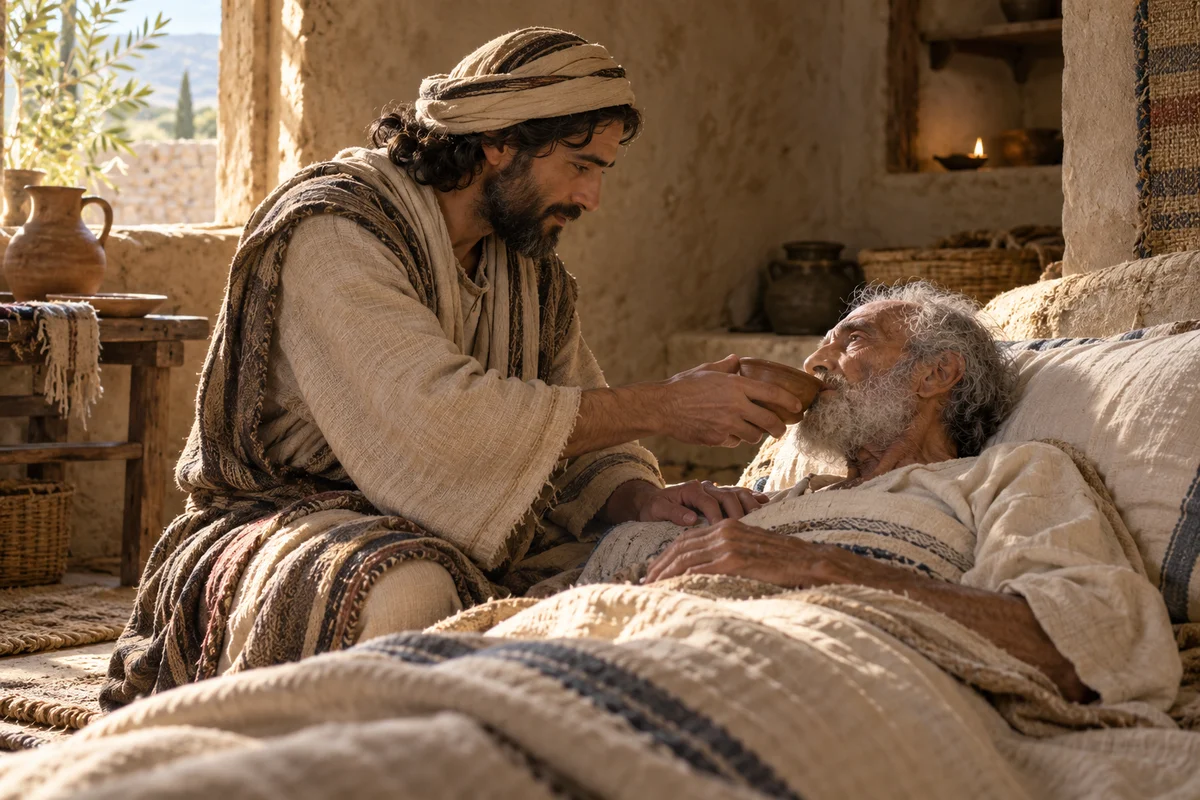
12. “I Am Poor and Needy”
Psalm 70:5
The psalmist now names himself.
He is poor and needy.
The language is not primarily a claim about virtue.
It is an admission of insufficiency.
He does not have enough power to rescue himself.
He needs help from outside himself.
Goldingay emphasizes this recognition of helplessness as fundamental to prayer.
Prayer begins when we stop pretending self-sufficiency.
This does not mean we do nothing.
It means we recognize that our action does not make us sovereign.
There are moments when wisdom says:
“I cannot carry this alone.”
Psalm 70 turns that admission into worship.
16
13. “You Are My Help and My Deliverer”
Psalm 70:5
The psalmist’s description of himself is matched by his confession about God.
I am poor and needy. You are my help and my deliverer.
The two statements belong together.
Need alone can become despair.
A theology of divine power without honest need can become abstraction.
Psalm 70 joins them:
This is who I am in this moment. This is who you are.
The psalm does not end with the size of the problem.
It ends with the identity of God.
17
14. “O LORD, Do Not Delay”
Psalm 70:5
The last words repeat the urgency of the first.
Psalm 70 is framed by haste.
The situation has not visibly changed within the poem.
The enemies have not yet been described as defeated.
The rescue has not yet been narrated.
The psalm ends still waiting.
But it waits differently.
The final line is not simply:
“I am needy.”
It is:
“You are my help.”
Urgency and trust remain in the same sentence.
That is mature lament.
We can believe God is our help and still say:
“Please come quickly.”
18
MAJOR THEOLOGICAL THEMES
19
1. Short Prayers Can Be Deep Prayers
Psalm 70 is brief because the crisis is urgent.
Length is not the measure of spiritual depth.
A single cry of genuine dependence can carry profound faith.
20
2. Prayer Can Speak Honestly About Timing
The psalm repeatedly asks God to hurry.
Biblical faith does not require us to pretend delay feels easy.
We can ask God both to act and to act soon.
21
3. Human Need Is Not a Barrier to Prayer
The psalmist comes because he is poor and needy.
Need is not a qualification that disqualifies us.
It is often what drives us toward God.
22
4. God Is Known as Help and Deliverer
The psalmist’s hope rests in God’s identity.
He does not merely ask for help.
He says:
“You are my help.”
God’s action flows from who God is.
23
5. Justice Includes the Stopping of Evil
The psalmist asks destructive people to be turned back.
Biblical justice is not passive indifference.
It includes restraining actions that threaten life.
24
6. Crisis Need Not Make Us Self-Centered
At the center of the psalm, the worshiper remembers everyone who seeks God.
The prayer enlarges:
“Let them rejoice too.”
25
7. Deliverance Should Magnify God
The desired outcome is not merely survival.
It is worship:
“God is great.”
Rescue becomes a reason for the community to trust God more deeply.
26
CONNECTIONS ACROSS SCRIPTURE
27
Psalm 70 and Psalm 40
Psalm 70 is nearly the same as Psalm 40:13–17.
In Psalm 40, the urgent plea appears after a longer testimony about God’s past rescue.
In Psalm 70, the plea stands alone.
Together they teach something important.
Sometimes we pray by remembering a long history of grace.
Sometimes all we can say is:
“Help.”
Both prayers belong in Scripture.
28
“How Long?” and “Hurry!”
Psalm 70 belongs to the wider language of biblical lament.
Other psalms ask:
“How long, LORD?” (Psalm 13:1).
Others plead:
“Do not be far from me” or “Come quickly to help me” (Psalm 22:19; 38:22).
The Bible does not treat impatience in suffering as automatically faithless.
It teaches sufferers to direct urgency toward God rather than away from him.
29
Poor and Needy Before God
The phrase “poor and needy” appears repeatedly in the Psalms.
It describes people without sufficient resources or power to secure their own rescue (see Psalms 35:10; 40:17; 69:29, 33).
This theme reaches strongly into the biblical picture of God as defender of the vulnerable.
Psalm 72 will soon celebrate the righteous king who rescues the poor and needy.
The God to whom Psalm 70 cries is the God whose kingdom pays attention to people the powerful can overlook.
30
Jesus and the Prayer of Dependence
Jesus’ own prayers show that faithful prayer can include urgency, anguish, and repeated petition.
In Gethsemane he brings his distress honestly before the Father while still entrusting himself to the Father’s will (Matthew 26:36–44).
Psalm 70 is not a direct prophecy of Gethsemane, but both teach us that trust does not eliminate urgent petition.
Biblical faith can say:
“Father, I trust you”
and:
“Please act.”
31
Persistent Prayer
Jesus teaches his disciples to pray persistently and not lose heart (Luke 18:1–8).
Psalm 70 gives ancient words to that persistence.
The psalm does not assume that asking once means we must never ask again.
It repeats:
Hurry. Help. Do not delay.
Persistent prayer is not informing God of something he forgot.
It is remaining turned toward God while the need continues.
32
From Mockery to Praise
Psalm 70 contrasts the taunt “Aha! Aha!” with the confession “God is great!”
The Psalms repeatedly envision God reversing public shame and giving the faithful reason to praise.
The New Testament brings that reversal into sharp focus in Jesus.
The crucified Messiah is mocked, yet resurrection overturns the verdict of his enemies.
The movement from mockery to praise therefore belongs to the larger biblical hope that human contempt does not have the final word.
33
DISCUSSION QUESTIONS
1. Why might Scripture preserve such a short and urgent prayer? 2. What does Psalm 70 teach about asking God to act quickly? 3. How is asking enemies to “turn back” different from simply desiring revenge? 4. What does the mocking “Aha! Aha!” reveal about the character of the opposition? 5. Why is verse 4 so important in a psalm focused on personal danger? 6. What is the difference between saying “God helped me” and “God is my help”? 7. How can admitting “I am poor and needy” become an act of faith rather than despair? 8. Why do you think Psalm 70 appears both here and as part of Psalm 40? 9. What short prayer do you return to when you do not have words for a long prayer? 10. Where in your life are you presently praying, “Lord, do not delay”?
34
PERSONAL PRACTICE: PRAY PSALM 70 IN FOUR BREATHS
Psalm 70 is short enough to become a prayer you can carry through the day.
1. Breathe In: Name the Need
“God, I need your help with…”
2. Breathe Out: Ask Evil to Stop
“Turn back what is seeking to harm, deceive, or destroy.”
3. Breathe In: Remember Others
“Let all who seek you rejoice and say, ‘God is great.’”
4. Breathe Out: Confess Dependence
“I am needy. You are my help. Lord, do not delay.”
Repeat the final sentence whenever anxiety rises:
“You are my help and my deliverer.”
35
CLOSING PRAYER
God, hurry to help us.
When there is no time for polished words, receive the cry:
Help.
When destructive plans are moving forward, turn them back.
When mockery becomes cruel, defend the dignity of those being wounded.
When crisis narrows our vision, remind us that we are not the only people seeking you.
Let your people rejoice.
Let those who love your salvation say continually:
“God is great.”
We confess that we are poor and needy.
We do not possess enough strength, wisdom, influence, or control to rescue ourselves from everything that threatens us.
But you are our help.
You are our deliverer.
Through Jesus, who prayed in anguish and entrusted himself to the Father, teach us to pray honestly, persistently, and faithfully.
When we must wait, hold us.
When it is time to act, act.
And when danger is near, O Lord,
do not delay.
Amen.
36
Sources Consulted
John Goldingay, Psalms, Volume 2: Psalms 42–89, especially “Psalm 70: A Plea for Haste.”
Derek Kidner, Psalms 1–72, especially “Psalm 70: Be Quick, Lord!”
The biblical text of Psalm 70, Psalm 40:13–17, and the related Scripture passages cited in the study.

Be the first to leave a comment.