


When strength fades, how can we keep singing hope and pass it to the next generation?
01
Overview
A lifelong refuge and a testimony for the coming generation
“Don’t reject me in my old age. Don’t forsake me when my strength fails.” Psalm 71:9, World English Bible
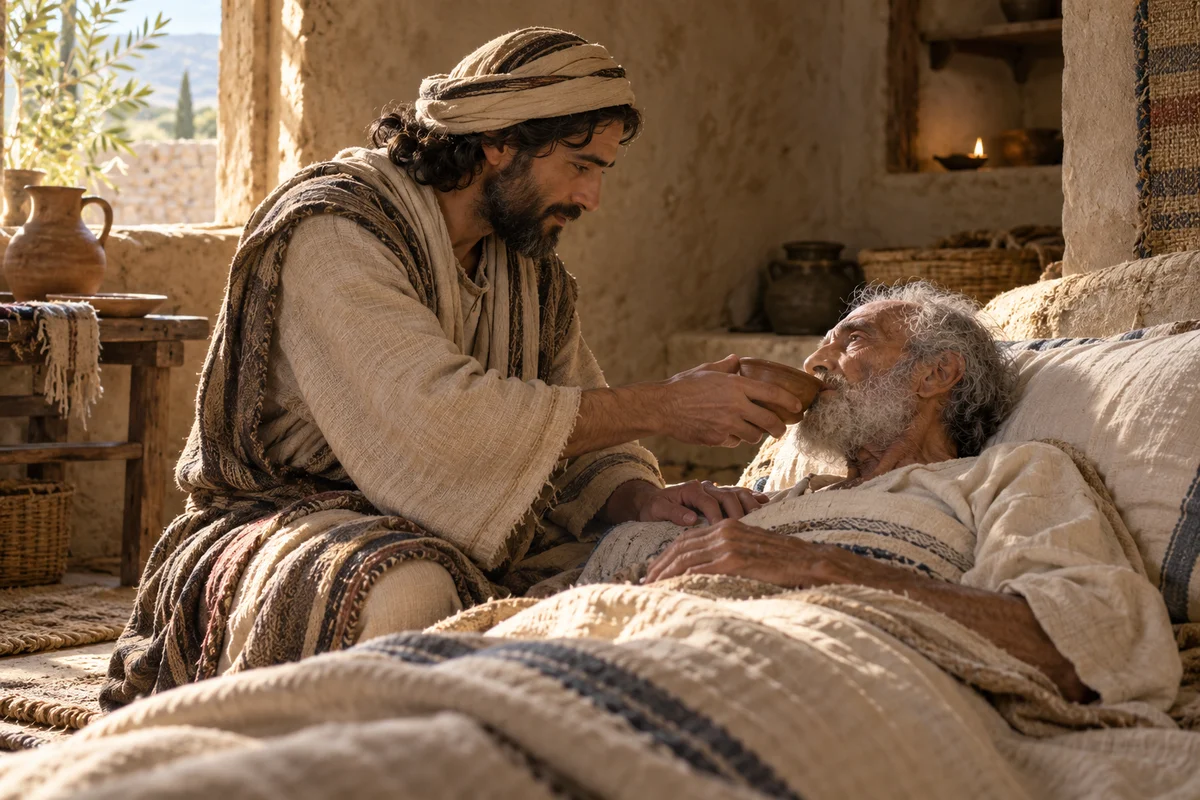
An aging hand may tremble while reaching for a cup. The prayer on those lips can still carry a lifetime of trust. Psalm 71 asks whether the God who sustained us at the beginning will remain our refuge when strength fails.
02
1.0 Introduction
Growing older can awaken a fear that reaches deeper than physical weakness. Will we still be heard? Will people who once depended on us remain beside us when we need their help? Can we continue to contribute when familiar abilities begin to fade?
Psalm 71 brings these questions into prayer. Its worshiper remembers dependence on God from birth, recalls being taught from youth, and looks toward the vulnerability of old age. Yet the memory of divine care stands alongside an urgent threat: enemies interpret weakness as evidence that God has abandoned him.
The singer asks for rescue and also for time to tell another generation what God has done. The psalm moves from lifelong dependence, through the fear of abandonment, toward renewed hope and testimony. God’s faithfulness gives a weakening person a place of refuge and a voice worth hearing.
03
2.0 Historical and Literary Context
Psalm 71 belongs to Book Two of the Psalter, Psalms 42–72. Its position near the end of this collection places a prayer about lifelong dependence beside Psalm 72’s prayer for a king who protects vulnerable people. Read together, these prayers connect personal need with the public responsibility to defend those who cannot defend themselves (BibleProject, n.d., 2–3, 14–15).
The Hebrew text supplies no heading naming an author or occasion. Davidic language and later traditions have encouraged readers to associate it with David, but neither authorship nor a particular crisis can be established. The speaker may already be old or may be anticipating old age (Kidner 2014, 269; Goldingay 2007, 365–66, 371).
This is a lament woven with trust and anticipated praise. Its opening closely resembles Psalm 31:1–3; memories of birth and appeals for help recall Psalm 22; its urgent request in verse 12 echoes Psalm 70:1. The worshiper draws on Israel’s shared language of prayer to speak a personal need.
Repeated references to God’s righteousness, continual hope, and praise throughout the day hold the poem together. Three broad movements, verses 1–8, 9–16, and 17–24, each carry prayer toward praise (Goldingay 2007, 365–67).
04
3.0 Walking Through the Text
3.1 A refuge to which we can always return
Psalm 71:1–4
The psalm opens with a decision to seek shelter in the Lord. The worshiper asks God to listen, rescue, and become a rock of refuge. The rock is also a dwelling place: somewhere he can keep returning, rather than a shelter available for one emergency alone.
The plea rests on God’s righteousness. In this setting, righteousness includes God’s faithful and just action to deliver someone threatened by wrongdoing. The worshiper appeals to the character of the God who does right by those who seek his help.
Verse 4 names the danger: wicked, unjust, and cruel people have power over him. The imagery of their grasp makes the request concrete. He needs protection from real harm, and he turns to God as the strong place his own strength cannot provide.
3.2 Held before memory began
Psalm 71:5–8
The worshiper looks back from youth to birth. Before he could understand God’s care or express trust, his life was already being upheld. Memory therefore reaches beyond remembered achievements toward received life. Dependence belongs to his whole story.
Verse 7 introduces a difficult image: he has become a remarkable sign to many. Kidner understands his suffering as an ominous spectacle from which onlookers draw dark conclusions. Goldingay reads his preservation as a sign of God’s protecting power. The interpretations differ, but the second half of the verse makes the singer’s own conviction clear: God remains his strong refuge (Kidner 2014, 270; Goldingay 2007, 370).
Other people’s readings of his life cannot settle the meaning of his relationship with God. His response is to fill his mouth with praise. Remembered care gives him words when the present threatens to take them away.
3.3 When weakness becomes an opportunity for cruelty
Psalm 71:9–13
Verse 9 names the fear of being cast aside as strength diminishes. The next verses show why it is urgent: enemies are watching, talking, and planning together. They claim that God has forsaken the worshiper and therefore no one will rescue him.
Their conclusion turns vulnerability into permission to harm. The psalm exposes the cruelty of treating another person’s suffering as proof that they have lost God’s care. The worshiper brings that accusation to God and asks for immediate help.
Verse 13 asks for the accusers to be shamed and consumed. Its severity expresses the danger they pose. The threatened person entrusts judgment to God and asks for the destructive attack to end. This prayer should form our resistance to oppression while placing our desire for vindication under God’s judgment.
3.4 Hope finds words before the crisis ends
Psalm 71:14–16
The emphatic turn in verse 14 changes the direction of the prayer. While enemies speak of abandonment, the singer commits himself to continued hope and increasing praise. His attention settles on God’s righteousness and saving deeds.
The final phrase of verse 15 is difficult. Many translations understand it as an inability to count or measure God’s saving acts; Kidner supports this reading. Goldingay understands it as a confession of limited literary skill. On either reading, the testimony is carried by what God has done, beyond what the speaker can fully enumerate or artfully express (Kidner 2014, 271; Goldingay 2007, 373–74).
Verse 16 continues that focus. The worshiper comes with God’s mighty deeds as the content of his praise. The resolve grows from dependence: he will keep speaking of the righteousness of God, whose actions give him reason to hope.
3.5 A remaining lifetime becomes a gift to others
Psalm 71:17–21
The memory of being taught from youth now opens toward another generation. Verse 18 repeats the plea against abandonment, with a purpose: the singer wants to proclaim God’s power to those who come after him. He asks for a future in which his remaining life can bear witness.
The arm or strength he wants to announce belongs to God. As his own strength diminishes, the subject of his testimony remains secure. The question in verse 19, “God, who is like you?”, recalls the wonder of Israel’s song after deliverance through the sea (Exodus 15:11).
Verse 20 brings the painful history back into view. The worshiper addresses God as the one who has shown him many bitter troubles, then expresses confidence that God will restore his life. The prayer holds suffering and hope within the same relationship, leaving room for questions it does not resolve.
Being brought up from the depths of the earth most naturally describes rescue from a condition that feels close to death. The immediate emphasis is restored life, dignity, and comfort, rather than a fully developed statement about bodily resurrection. Within the wider biblical story, this hope of renewal can open toward the resurrection God promises in Christ (Kidner 2014, 272; Goldingay 2007, 375–76).
3.6 The redeemed person returns to song
Psalm 71:22–24
The closing verses gather instruments, lips, tongue, and the redeemed self into praise. The designation Holy One of Israel places this personal testimony within Israel’s relationship with God. The singer’s rescue belongs within the story of the people whose God he worships.
Some translations speak of his redeemed soul in verse 23. Here the expression refers to the living person who rejoices: his whole life participates in thanksgiving. By the final verse, the enemies’ defeat is spoken of as accomplished. The poem reaches confident praise without giving us a narrative of how the rescue occurred.
05
4.0 Theological Reflection
4.1 Faithfulness embraces a whole lifetime
Birth, youth, and old age belong within one relationship with God. Remembering earlier care provides a basis for asking for help today. This memory also allows honest lament: the worshiper who recalls God’s protection still asks for help when he feels exposed.
4.2 God’s righteousness takes the form of saving action
Righteousness appears repeatedly in verses 2, 15, 16, 19, and 24. It describes a God whose goodness acts against the wrong that threatens the worshiper. Hope rests on God’s faithful character and just intervention, reaching beyond the community’s changing judgment of a suffering person.
4.3 Testimony can outlive the strength of the witness
Verse 18 gives the prayer a horizon beyond personal survival. What God has taught one person can nourish others. For the church, this creates a responsibility to listen to older people and care for those whose speech or memory is failing. Their dignity remains grounded in God’s care, including when they can no longer tell their story.
06
5.0 Canonical and Christological Horizon
Isaiah 46:3–4 offers a close companion to this prayer. God addresses Israel as a people carried from birth and promises continued care through old age and gray hair. Psalm 71 voices the plea of dependence; Isaiah announces the divine commitment that makes such dependence possible. Psalm 78:4–7 likewise places testimony to God’s works within the task of nurturing the next generation’s hope.
The psalm’s links with Psalms 22 and 31 also invite Christian reflection. On the cross, Jesus prays the abandonment cry of Psalm 22:1 and entrusts his spirit to the Father with the words of Psalm 31:5 (Mark 15:34; Luke 23:46). These connections place Psalm 71 within the scriptural language through which Jesus expresses suffering and trust. The threatened worshiper’s prayer is heard within the story of the Messiah who suffers and is raised.
Christ’s resurrection gives the hope of renewed life a fuller horizon. God’s Spirit will give life to mortal bodies, and the body marked by weakness will be raised in power (Romans 8:11; 1 Corinthians 15:42–44). This Christian reading carries the psalm’s longing forward while respecting its immediate concern for rescue. The weakening body belongs within God’s promised renewal, and care for that body now becomes a fitting expression of hope.
07
6.0 Life Application
1. Remember particular acts of care. Write down two occasions when God sustained you, including help received through other people. Bring those memories into a present prayer instead of letting them become a closed chapter.
2. Name the fear beneath declining strength. Speak honestly to God about dependence, isolation, or being overlooked. Ask a trusted person for one specific form of help you need.
3. Protect someone whose vulnerability is being exploited. Listen to their account, help them reach practical support, and challenge the claim that suffering proves divine rejection. Let refuge become something your community helps them experience.
4. Pass on testimony with honesty. Share one story of God’s faithfulness with a younger person. Include the waiting and unanswered questions so that your account prepares them for real life with God.
5. Make room for older people this week. Offer a visit, transport, a shared meal, or unhurried listening. Include people who can no longer speak clearly; their place among us remains precious.
08
7.0 Reflection Questions
1. Which part of the worshiper’s fear most closely resembles a fear you carry today? 2. What has God taught you through your life that another generation needs to hear? 3. How have you interpreted someone else’s suffering too quickly, and what would help you listen more carefully? 4. What would it mean for your home or church to become a place of refuge for an older or vulnerable person? 5. How can you offer hopeful testimony while being truthful about a prayer that remains unanswered?
09
8.0 Response Prayer
Lord, my rock and dwelling place, you have held me through years I remember and days I cannot recall.
Draw near when strength diminishes and the fear of being forgotten grows. Protect those whose weakness others would exploit.
Give me words to tell of your faithfulness, and give your people patience to listen. Help us care for those whose words have fallen silent.
Receive the years still before me. Let the hope you have planted in my life bear fruit in another generation. Through Jesus Christ, amen.
10
9.0 Window into What Comes Next
Psalm 71 asks God to protect a vulnerable worshiper. Psalm 72 asks God to shape a king who protects the vulnerable. The movement from one prayer to the next widens our view: the refuge sought in private prayer should also be reflected in public justice. The next psalm will picture a ruler who delivers the needy and confronts oppression. As Book Two approaches its close, personal hope opens toward a wider question: what should God’s righteous rule mean for a whole community?
11
10.0 Bibliography
Scripture: Psalm 71, World English Bible, with the biblical passages cited throughout the study.
Goldingay, John. 2007. Psalms. Volume 2: Psalms 42–89. Baker Commentary on the Old Testament Wisdom and Psalms. Grand Rapids, MI: Baker Academic. Psalm 71, 363–78.
Kidner, Derek. 2014. Psalms 1–72. Kidner Classic Commentaries. Downers Grove, IL: InterVarsity Press. Originally published 1973. Psalm 71, 269–72.
BibleProject. n.d. The Book of Psalms: Study Notes. Especially 2–3 and 14–15, on the Psalter’s literary design and Book Two.

Be the first to leave a comment.