


When danger comes, how does trusting God differ from demanding that we never suffer?
01
Overview
Refuge, trust, and the promise of God's presence in trouble
Key text — Psalm 91:15 (sense): God promises to answer the one who calls on him and to be with that person in trouble.
A sudden illness. A threatening message. A journey through a place that no longer feels safe. When danger approaches, people reach for whatever offers protection: locked doors, trusted friends, medicine, savings, influence. Psalm 91 speaks into that instinct, yet it begins with something we cannot manufacture: a place beneath God's wings.
Its promise is magnificent. Its interpretation requires care. Is this an assurance that no harm can ever touch someone who trusts God? Or does it teach a deeper confidence that remains possible even when believers suffer?
02
1.0 Introduction
Psalm 90 begins Book Four with a prayer: the eternal God has been Israel's dwelling place through all generations (90:1). Psalm 91 brings that confession into the experience of a single person surrounded by uncertainty. God is a dwelling, a shadow, a refuge, a fortress, a parent's wings, and a defender. The images move between tenderness and strength because danger does not take only one form.
This is a psalm beloved in households, hospitals, and times of public crisis. Its language also appears in a profoundly important New Testament encounter: the devil quotes verses 11–12 while tempting Jesus to leap from the temple (Matthew 4:5–7; Luke 4:9–12). The temptation forces readers to ask whether trusting a promise means demanding a particular display of protection.
The psalm's central claim is not that the faithful can dictate a trouble-free life. It is that the Lord is worthy of wholehearted trust, and that his presence and final saving purpose are more secure than the threats surrounding us.
03
2.0 Historical and Literary Context
The Hebrew text does not name an author or give a historical occasion. The Greek Septuagint associates the psalm with David, but that does not establish Davidic authorship. Its language recalls the Song of Moses (Deuteronomy 32), especially the protective bird imagery (Deut. 32:11). Following Psalm 90, which bears Moses' name, this echo enriches the relationship between the two poems without proving that Moses wrote Psalm 91.
The poem alternates voices. Verses 1–2 present the refuge and a personal confession of trust. Verses 3–13 address a person directly: you will be covered, rescued, and guarded. Finally, in verses 14–16, God himself speaks in the first person, promising deliverance, companionship, and salvation. Derek Kidner organizes the psalm around “my refuge,” “your refuge,” and “God's pledge” (Psalms 73–150, 363–66). John Goldingay considers whether the promises might originally have been spoken over a king but finds nothing in the text that requires a royal recipient (Psalms, vol. 3, “Psalm 91: Shadow of the Almighty”).
The changing voices matter: the psalm is not merely someone making claims about God. It culminates with God personally pledging to hear a person who calls to him.
Its images range from hunters' traps to epidemics, arrows, military attack, lions, and serpents. Some are literal threats; some are poetic metaphors. Their breadth allows generations facing different dangers to pray the same psalm. Yet poetry must be heard as poetry: its sweeping assurances are not a formula with which to control God.
04
3.0 Walking Through the Text
3.1 Psalm 91:1–2 — Dwelling beneath the shadow
The opening is not about a brief visit to a sacred site. To dwell or remain under God's shadow suggests an ongoing relationship of reliance. Four divine designations gather in two verses: Most High, Almighty (Shaddai), LORD (YHWH), and “my God.” The One above every power is also the One the speaker can address personally.
“Shelter,” “shadow,” “refuge,” and “fortress” form a rich cluster. Shade offers relief from scorching exposure; a fortress offers security amid attack. The speaker does not claim to be strong enough to manage every risk but confesses, “my God, in whom I trust” (v. 2). Trust is not denial of danger. It is the decision about whom to rely on in its presence.
3.2 Psalm 91:3–4 — The trap, the disease, and the wings
Verse 3 imagines rescue from a hunter's snare and deadly pestilence. The first image suggests concealed plans intended to catch an unsuspecting victim; the second suggests threats that cannot be seen or easily controlled. Both expose the limits of human foresight.
Verse 4 shifts suddenly from a military fortress to a protective bird. The Lord covers the endangered person as a parent bird shelters vulnerable young. His faithfulness is also likened to shield and armor. The God who is strong enough to defend is tender enough to shelter.
Kidner notes that the images of pestilence and destruction need not be treated as names of demons; personification makes threats vivid without requiring that interpretation (Kidner, 364). The imagery can speak to people facing illness without suggesting that prayer replaces medical care.
3.3 Psalm 91:5–8 — Day and night are not beyond God's reach
Night terrors, arrows by day, disease in darkness, and devastation at noon occupy every part of the day. The psalmist makes the assurance comprehensive by pairing times and threats: there is no hour when God loses sight of his people.
Verses 7–8 intensify the language with thousands falling nearby. These words voice radical confidence in God's power to distinguish the fate of the faithful from the triumph of wickedness. But Scripture itself records righteous people suffering and dying (Psalm 44; Psalm 88; Hebrews 11:35–38). Psalm 91 must be read alongside those testimonies rather than used to contradict them.
The promise is not permission to conclude that sufferers must have lacked faith. It is a poem of trust in divine care, not a tool for blaming the bereaved.
3.4 Psalm 91:9–10 — Making God one's dwelling
The language returns to “refuge” and “dwelling,” bringing the reader back to the opening. God's presence is not a protective object possessed by the believer; God himself is the refuge. The text says that disaster will not come near the dwelling of the one who trusts him, which is a striking poetic assurance, not an invulnerability contract.
The grammar around verse 9 shifts persons and is not entirely smooth in Hebrew. Some translations adjust its presentation. The essential point is consistent: the one addressed is invited to make the Most High the place of security. Such confidence does not eliminate ordinary responsibilities to seek safety, protect others, or receive treatment.
3.5 Psalm 91:11–13 — Angels on the road, not a license to leap
God commands his angels to guard the trusting person on the road. The image is of assistance along the path one actually walks. Verse 13 extends the portrayal into victory over lions and serpents—dangerous creatures that also readily symbolize hostile powers.
These verses are pivotal because the tempter quotes verses 11–12 to Jesus at the temple (Matthew 4:5–7; Luke 4:9–12). He urges Jesus to jump in order to secure a spectacular rescue. Jesus answers from Deuteronomy 6:16: one must not put the Lord God to the test. The response does not reject Psalm 91. It rejects a way of using Psalm 91 against the wider scriptural call to trust and obey.
Faith receives God's care without staging danger to compel proof. It would be a misuse of the psalm to abandon sensible precautions, neglect medicine, enter needless danger, or insist that a promised angelic rescue makes us immune to consequences.
3.6 Psalm 91:14–16 — God's own voice: “I will be with him in trouble”
The closing verses change the tone. God speaks directly and gives reasons for his pledged care: the person clings to him in love, knows his name, and calls on him. The promises include rescue, protection, an answer to prayer, honor, long life, and the sight of salvation.
At the center stands a phrase that disciplines every overly simple reading of the psalm: God promises to be with the faithful person in trouble (v. 15). The text itself therefore anticipates trouble. Divine companionship is not the same thing as a guarantee that hardship will never begin.
The closing assurance of “long life” reflects the Old Testament language of blessing and fullness of days. It can be treasured as hope without being turned into a timetable by which to measure the faith of those who die young. God's promise climaxes with salvation—his own gracious action on behalf of the person who belongs to him.
05
4.0 Theological Reflection
4.1 Trust is a relationship, not a technique
Psalm 91 does not instruct readers to recite a specific number of words to create an invisible shield. Its center is the living God and the human response of dwelling, trusting, loving, knowing, and calling. Prayer is communion with the Lord, not a mechanism that obliges him to perform on demand.
4.2 Divine protection and real suffering belong in the same Bible
Psalm 91 speaks with bold confidence; Psalm 88 ends in darkness; Psalm 90 knows how brief human life is. Reading the three together prevents both despair and triumphalism. God can rescue dramatically. He may also sustain a person through suffering that remains. Neither outcome authorizes spectators to pronounce judgment on the victim's faith.
4.3 God's faithfulness is protective because he is faithful
Verse 4 connects God's defense with his trustworthiness. The believer's security is not founded on predicting every event but on God's character. This is why wisdom, careful action, and asking for practical help need not compete with trusting him.
4.4 Presence is the heart of the promise
The climactic words are not simply “I will deliver.” They include “I will be with him in trouble.” Scripture's deepest hope is relational: God does not abandon those who call to him. The Christian story will take this promise into the suffering and resurrection of Jesus and, ultimately, the renewal of creation.
06
5.0 Canonical and Christological Horizon
Psalm 91 stands within Israel's Exodus-shaped story. Deuteronomy 32 portrays God as the One who cares for Israel as an eagle for its young. Psalm 90 names him the people's dwelling; Psalm 91 declares that this shelter is personally accessible. Similar notes sound in Psalms 23, 27, 46, and 121.
The New Testament's most explicit engagement with Psalm 91 comes in the wilderness/temple temptation narratives (Matthew 4:5–7; Luke 4:9–12). Jesus is God's Son, yet he will not equate sonship with freedom from vulnerability or prove the Father's faithfulness by manufacturing a crisis. His obedience interprets the promise more faithfully than the devil's selective quotation.
This matters because Jesus himself suffers. He resists temptation and later accepts the way of the cross (Matthew 26:39–46), refusing to call down overwhelming angelic force for self-preservation (Matt. 26:53–54). God has not ceased to love him because he suffers. The resurrection declares that death and human violence do not hold ultimate sovereignty (Acts 2:23–24; 1 Corinthians 15:20–26).
Romans 8:35–39 likewise speaks of tribulation, danger, and sword while maintaining that nothing can separate believers from God's love in Christ. Revelation 21:1–5 points toward the completed shelter of God when death, grief, and pain will be removed. These texts extend Christian hope beyond immediate survival without making Psalm 91 a prediction that every believer will escape every tragedy.
07
6.0 Life Application
- Name the danger without pretending it is small. Pray specifically about illness, threats, instability, or fear. Honest naming is compatible with trust.
- Choose wise protection without shame. Consult clinicians, follow safety guidance, build supportive relationships, and seek help where needed. These actions are not evidence of unbelief.
- Refuse to turn faith into a test of God. Do not create unnecessary danger or demand a miracle to prove that God loves you.
- Offer shelter to someone else. Let the image of God's wings shape the safety you create for children, the sick, those grieving, and people under threat.
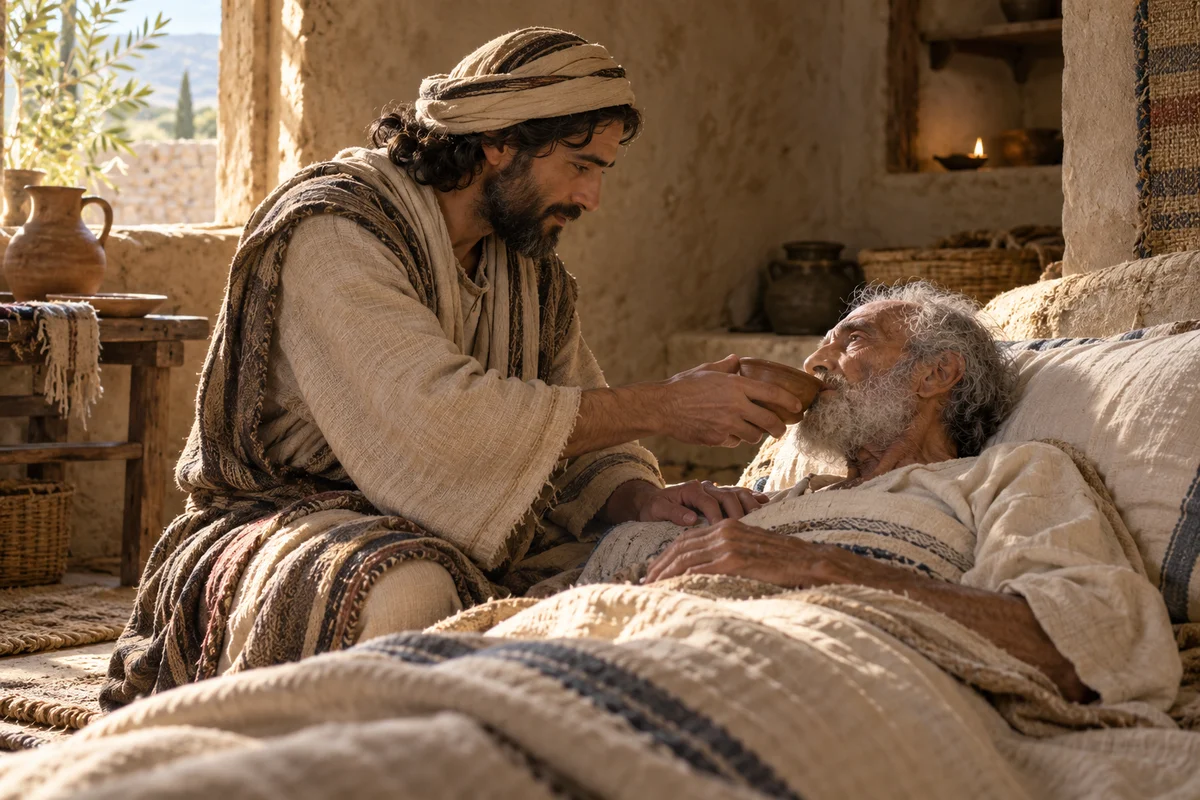
- Remember God's promise of presence. When rescue is delayed, hold to verse 15: the Lord hears those who call and is with them in trouble.
08
7.0 Reflection Questions
- Which picture of God—shadow, fortress, wings, or shield—most speaks to my present life?
- When have I confused trusting God with demanding a particular outcome?
- How does Jesus' response to the tempter correct the misuse of Psalm 91?
- What would it mean for my church to stand with people who suffer rather than question their faith?
- How might God's promise to be “with him in trouble” reshape the way I pray this week?
09
8.0 Response Prayer
Most High God, our shelter and our shade, you know the threats we can name and the fears we struggle to describe.
Gather us beneath your wings. Guard our hearts from panic and from the pride that demands proof. Teach us to trust without abandoning wisdom, to pray without blaming those who suffer, and to seek help without losing hope.
Be with the sick in their weakness, with the threatened in their uncertainty, and with the grieving in their long night. Make your people a place of refuge for their neighbors.
Through Jesus, who trusted you through temptation and the cross, keep us in your love until your saving purpose is complete. Amen.
10
9.0 Window into What Comes Next
Psalm 91 places a vulnerable person under God's shelter. Psalm 92 opens with thanksgiving and the goodness of singing God's praise. It is titled “A Song for the Sabbath Day.” The movement is fitting: the God who sustains trust amid danger is also the God whose works give his people reason to worship and rest.
Psalm 92 will ask how we understand success and endurance. The wicked may flourish briefly like grass, while the righteous are compared to trees planted in God's courts. The refuge of Psalm 91 grows into the lasting fruitfulness of Psalm 92.
11
10.0 Bibliography
- Scripture: Psalm 91; Deuteronomy 6:16; 32:10–12; Matthew 4:5–7; 26:39–54; Luke 4:9–12; Romans 8:35–39; Revelation 21:1–5.
- Goldingay, John. Psalms, Volume 3: Psalms 90–150. Baker Commentary on the Old Testament Wisdom and Psalms. Grand Rapids: Baker Academic, 2008. Commentary on Psalm 91, “Shadow of the Almighty.”
- Kidner, Derek. Psalms 73–150. Original edition 1975; reprinted 2014. Commentary on Psalm 91, “Under His Wings,” pp. 363–366.
- BibleProject. The Book of Psalms: Study Notes. Project reference for the five-book design and Book Four setting.
Be the first to leave a comment.