

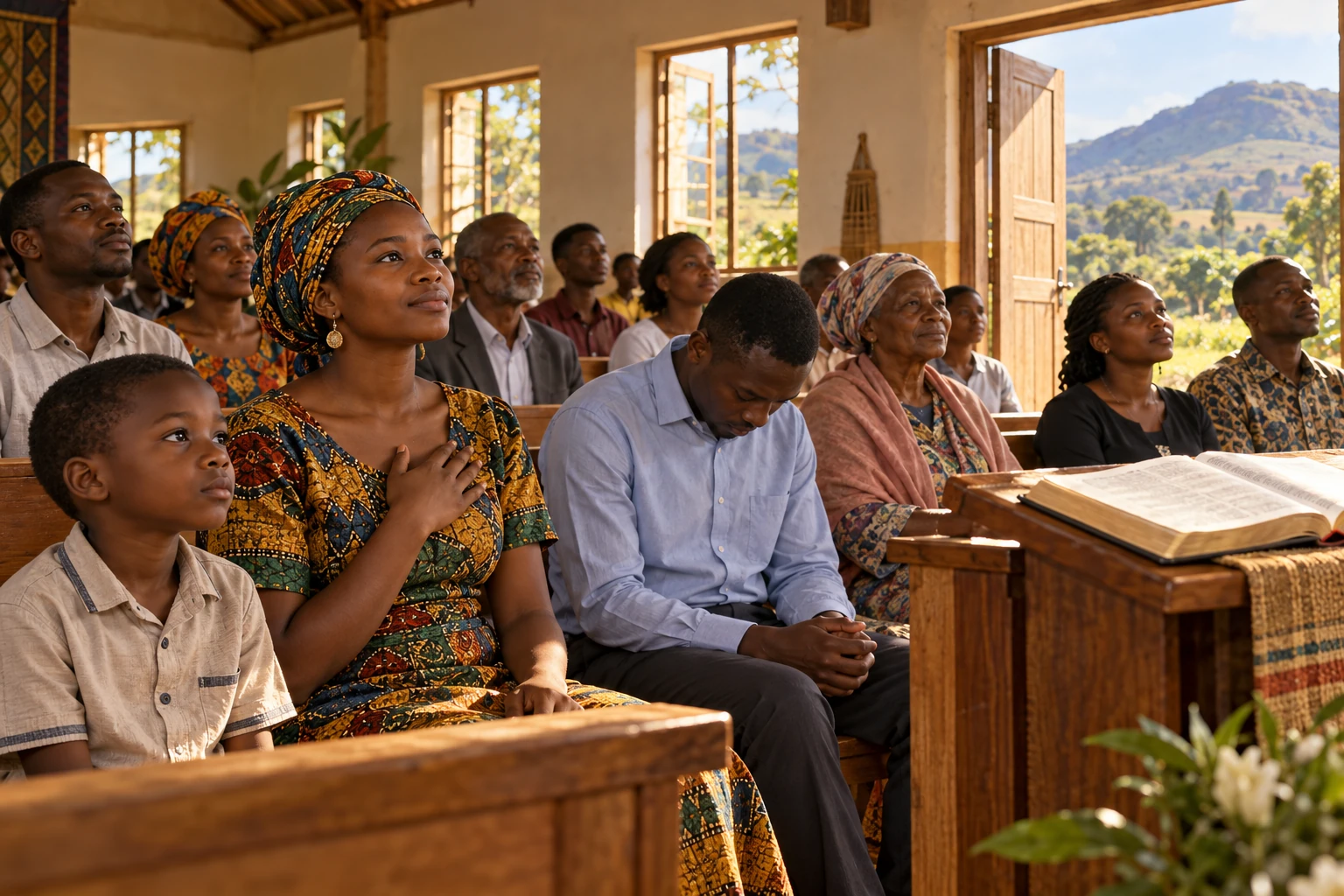
How can we sing with joy while listening to God with a heart that is not hardened?
01
Overview
The King who holds creation calls his people to praise, bow down, and respond today
Key text — Psalm 95:7–8 (study rendering): Today, if you hear his voice, do not harden your hearts as in the wilderness.
A congregation rises to sing. Voices fill the room. People speak of God's greatness, his care, and his power over creation. Then the celebration is interrupted by a question no worshiper can avoid: Are you listening to the God you have come to praise?
Psalm 95 begins with an invitation to make a joyful noise and ends with a warning about a generation that heard God's deeds but refused to trust his ways. The unexpected ending is not a flaw in the song. It is its challenge. The God we celebrate also speaks—and worship remains incomplete when his voice is welcomed in song but resisted in life.
02
1.0 Introduction
Psalm 93 proclaimed that the LORD reigns. Psalm 94 asked him to act against injustice and corrupt authority. Psalm 95 now turns toward the congregation: if this sovereign and just God is our King, what does it mean to come before him?
The psalm offers three interwoven answers. We come joyfully, acclaiming the Rock of our salvation (vv. 1–2). We come humbly, bowing before our Creator and Shepherd (vv. 3–7a). And we come responsively, hearing his voice rather than repeating the unbelief of the wilderness generation (vv. 7b–11).
The shift matters. Worship is not simply an experience we enjoy, nor is obedience a price we pay to earn God's presence. The people invited to listen are already described as his people, the flock in his hand. Belonging comes before the summons to respond, but belonging also gives the summons its urgency.
Psalm 95's central message is that true worship holds together glad praise, humble belonging, and a heart willing to heed God's voice today.
03
2.0 Historical and Literary Context
In the Hebrew Masoretic Text, Psalm 95 has no superscription identifying an author or a particular historical occasion. The ancient Greek translation associates it with David; Hebrews 4:7 likewise locates its words “in David,” but this does not settle the question of individual authorship. Its use in Jewish and Christian worship is clear, while its original festival setting is not (Kidner 2014, 375–76; Goldingay 2008, commentary on Psalm 95).
The wilderness warning might suit a gathering that remembered the Exodus, perhaps the Feast of Booths or Tabernacles (Leviticus 23:39–43). Kidner considers such a setting plausible. Goldingay cautions that the text itself does not specify a festival or preserve a recoverable worship ceremony. It would therefore be too confident to claim we know exactly when and where it was first performed.
Within Book Four of the Psalter (Psalms 90–106), this poem belongs among songs emphasizing the LORD's kingship after Psalm 89's anguished questions concerning David's throne. The language of Psalm 95:3 prepares readers for the sequence of kingship psalms that follows, while the warning recalls Psalm 81, where a festival invitation also becomes God's direct demand for listening.
The literary movement is unusually precise:
- Verses 1–2: An invitation to enthusiastic thanksgiving. - Verses 3–5: The reason for praise: the LORD reigns over all creation. - Verses 6–7a: An invitation to bow before the Creator who shepherds his people. - Verses 7b–11: A warning: hearing God's voice today must not become another wilderness refusal.
Goldingay describes the first half as two invitations, each followed by reasons for worship. The first leads to loud celebration and a confession of the LORD's universal sovereignty; the second leads to reverent bowing and an affirmation of Israel's particular relationship with him. Suddenly the call changes from “let us” to “you” and from making a sound to receiving a word (Goldingay 2008, Psalm 95, “Interpretation”). Kidner similarly treats the sharp ending not as an accidental attachment but as the moral point of the whole psalm (Kidner 2014, 375–79).
04
3.0 Walking Through the Text
3.1 Psalm 95:1–2 — Come with joy to the Rock of salvation
The poem opens with a collective invitation: Come, let us sing. It repeats the encouragement through images of joyful shouting, thanksgiving, and music. The invitation is not addressed only to a choir or a spiritual expert. It is an invitation for God's people to encourage one another to participate.
The LORD is called the Rock of our salvation. A rock suggests stability, refuge, and the strength to protect. Israel has known the LORD not merely as an abstract principle of cosmic power but as the one who delivers. Thanksgiving therefore remembers what God has done, while joyful song gives public expression to that memory.
Goldingay observes that the Hebrew verbs are vigorous and communal, not merely descriptions of inward feelings. Kidner adds that joy is a fitting expression of love, though Scripture also makes room for silent prayer and tears (Goldingay 2008, Psalm 95:1–2; Kidner 2014, 376). This is important for communities where worshipers arrive carrying different burdens. Psalm 95 encourages wholehearted praise; it does not require us to pretend that grief has disappeared.
Notice the repeated first-person plural: let us. The congregation is not a gathering of spectators who have come to watch others worship. It is a community being summoned to respond together.
3.2 Psalm 95:3–5 — The King holds depths, heights, sea, and land
The reason for praise reaches far beyond Israel's immediate circumstances: the LORD is the great God and King above all gods. The language reflects a world in which many peoples acknowledged various divine powers. Rather than presenting the LORD as a tribal deity with a small territory, the psalm declares his supremacy over everything.
Four images make the argument visible. The deepest places of the earth are in his hand. The mountain peaks belong to him. The sea is his, because he made it. The dry land was formed by his hands. These are not maps or lessons in geology. They are poetic ways of saying that no place lies beyond the Creator's ownership and care.
The sea is especially telling. In biblical poetry, great waters can represent chaos and threatening power (Psalm 93:3–4). Yet here the sea does not compete with God: he made it. The world may look immense and unpredictable, but it is not an independent rival to its Maker.
For the original worshipers, such praise relativized the claims of intimidating rulers and deities. For us, it also challenges the habit of measuring God's greatness by whether our present difficulties quickly disappear. The LORD is worthy of worship because he is Creator and King—even while his people still need deliverance.
3.3 Psalm 95:6–7a — Bow before the Maker who is also our Shepherd
After joyful shouting, the invitation changes: Come, let us bow down. Three expressions of lowering oneself communicate reverence. The worshipers who have celebrated God's majesty now acknowledge their own place before him.
The shift is not from friendliness to hostility. The LORD is our Maker, and we are the people of his pasture, the sheep in his hand. The same divine hand that holds the world's depths also holds and tends a vulnerable flock. Cosmic sovereignty and personal care belong together.
Kidner emphasizes the difference between reverent homage and empty religious performance. The worshipers are not strangers paying tribute to a remote power; they belong to the Shepherd who cares for them (Kidner 2014, 377). Goldingay points out the movement from the Creator of the whole world to the God who has entered a distinct covenant relationship with a people (Goldingay 2008, Psalm 95:6–7).
The image of sheep is affectionate but also searching. Sheep need guidance. Calling God our Shepherd while refusing his direction would turn a beautiful confession into a contradiction. The next line makes exactly that point.
3.4 Psalm 95:7b — Today, if you hear his voice
This is the hinge of the psalm. After singing and bowing, a new demand arrives: listen. The word today places the worshiper in the present tense of responsibility. The wilderness events happened long ago; the call to respond happens now.
The phrase is conditional: if you hear his voice. Its purpose is not to deny God's willingness to speak, but to summon genuine attention. In Scripture, hearing often includes heeding and obedience (Deuteronomy 6:4–6; 1 Samuel 15:22). Worship should change how the people live after they leave the gathering.
Goldingay notices that the Hebrew construction need not be reduced to a wish such as “If only you would listen”; it puts a real decision before the congregation. He also connects today with the way covenant teaching renews its claim on each generation (Goldingay 2008, Psalm 95:7–8). The past is no longer someone else's problem.
It is possible to sing about the Shepherd and still resist his voice. The psalm asks whether our inward response matches our outward posture.
3.5 Psalm 95:8–9 — Do not turn need into a refusal to trust
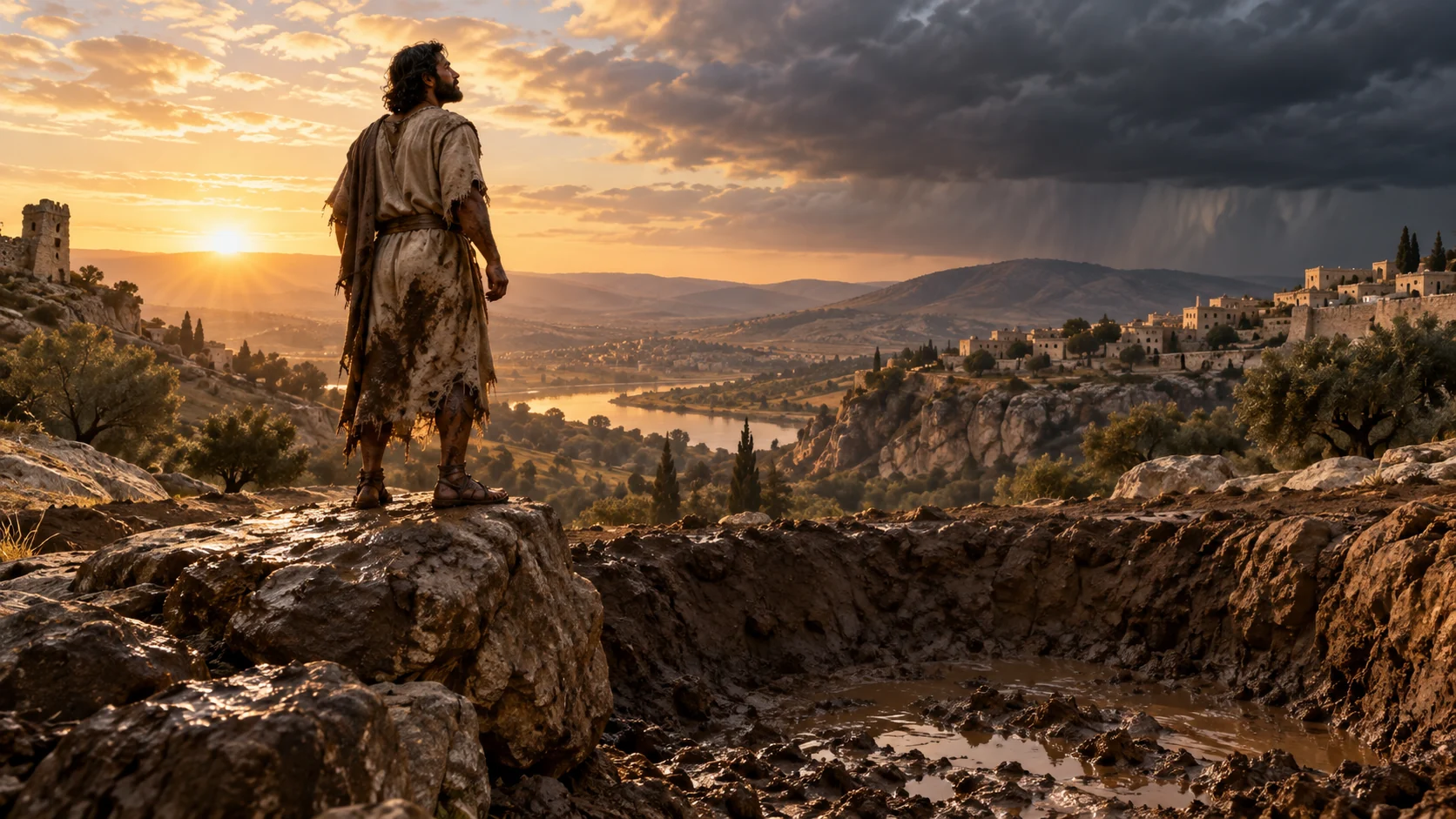
The voice now recalls Meribah and Massah, names associated with quarreling and testing in the wilderness (Exodus 17:1–7; compare Numbers 20:1–13). Israel faced real thirst. Its need for water was not imaginary or shameful. Yet the episode came to expose an accusatory refusal to trust the LORD's presence after the people had already witnessed his deliverance.
That distinction is vital. The psalm does not condemn asking questions, naming deprivation, or seeking help. The Psalter is filled with legitimate cries of “How long?” The warning concerns a heart that sets itself against God, insists on testing his reliability on its own terms, and closes itself to the deeds already seen.
The names tell the story: Meribah evokes contention; Massah evokes testing. Psalm 95 draws the older crisis into the present and warns worshipers not to repeat it. Kidner notes that the problem is the refusal to take God's word seriously; Goldingay stresses the inconsistency between the people's experience of his actions and their continued testing of him (Kidner 2014, 378; Goldingay 2008, Psalm 95:8–9).
Honest struggle can be an act of faith. Hardness of heart begins when the struggle becomes a settled refusal to hear.
3.6 Psalm 95:10–11 — The tragedy of missing God's rest
The warning grows severe. For forty years God endured the generation's wandering in heart. They had observed his mighty deeds yet refused to learn his ways. The forty years point to the wilderness generation and the long consequence of its unbelief (Numbers 14:20–35; Deuteronomy 1:34–35).
The closing declaration says that they would not enter God's rest. In its historical setting, this refers primarily to the promised settled life in the land, in contrast to continued wandering. The phrase can also evoke the place where God grants secure fellowship and worship (Deuteronomy 12:9–11; Psalm 132:13–14). The psalm does not, by itself, provide a detailed map of the future life or a full doctrine of Sabbath observance.
Remarkably, it ends here. There is no final chorus of celebration to soften the warning. That is deliberate: the singers must decide whether they will respond. A congregation may be physically present in a place of worship and still be inwardly resistant to the God it claims to honor (Goldingay 2008, “Theological Implications”).
The ending is serious, but the preceding word today also means that the hearer is still being addressed. The warning itself is a merciful summons to turn and listen before refusal becomes entrenched.
05
4.0 Theological Reflection
4.1 Praise is not a substitute for listening
Psalm 95 refuses the false choice between expressive worship and obedience. Joyful singing matters; bowing matters; hearing and heeding matter. Worship becomes distorted when the most impressive part of a gathering is its sound while the voice of the LORD receives little attention (Isaiah 1:11–17; Amos 5:21–24).
4.2 The King of creation is the Shepherd of a people
The LORD rules the mountains and seas, but his greatness does not make his flock insignificant. Creation and covenant meet in the same hands. That invites both reverence and trust: the one who holds the earth also cares where his people walk.
4.3 A hardened heart is a habit, not merely a moment of doubt
The wilderness story unfolds over time. People experience care, encounter new difficulty, and repeatedly resist what they have learned. Spiritual hardness often develops through accumulated refusals, not one dramatic crisis. The remedy begins with receptive attention today.
4.4 Rest is a gift to receive, not a prize to seize
The contrast between wilderness wandering and divine rest points to the life God intends for his people. It is not achieved by shouting louder or claiming entitlement. It is entered through the trusting response God calls forth. Psalm 95 keeps blessing and responsibility together without making God's favor a transaction.
06
5.0 Canonical and Christological Horizon
Psalm 95 belongs to the larger story of creation, Exodus, wilderness, covenant, and promised rest. Its confession that God made land and sea recalls Genesis 1 and Israel's deliverance through the sea (Exodus 14–15). Its Shepherd language echoes Psalm 23, Psalm 80, and later prophetic promises that God will seek and care for his scattered sheep (Ezekiel 34:11–16).
Jesus stands within that story. He identifies himself as the good Shepherd who knows his sheep, gives his life for them, and calls them to recognize his voice (John 10:1–18, 27–28). He also refuses to turn trust in God into an experiment that demands proof (Matthew 4:5–7; Deuteronomy 6:16). His way of worship joins devotion to obedient trust, even amid suffering.
Hebrews 3:7–4:13 offers the New Testament's most sustained reading of Psalm 95. It quotes the warning about today, identifies hardness of heart and unbelief as continuing dangers, and urges believers to encourage one another while the invitation still stands (Hebrews 3:12–13). It also argues that the rest promised by God cannot be exhausted by Israel's entrance into Canaan under Joshua (Hebrews 4:6–9). The author connects the promised rest with God's rest after creation (Genesis 2:2–3) and speaks of a continuing Sabbath rest for God's people (Hebrews 4:9–11).
Christians differ on exactly how this argument relates to the weekly seventh-day Sabbath and the practices of the new covenant. Some regard the seventh-day Sabbath as an abiding rhythm that witnesses to God's promised future; others emphasize Christ's fulfillment of Sabbath and differ over the ongoing weekly obligation. Whatever position one takes on weekly practice, Hebrews clearly does not turn Psalm 95 into permission to ignore God's voice. It urges a persevering response of faith and points beyond mere possession of land or attendance at worship toward sharing in God's life-giving rest.
That rest should not be confused with an effortless life or freedom from all suffering now. The risen Christ leads his people toward the completion of God's renewing work (Matthew 11:28–30; Revelation 21:1–5). The voice calling in Psalm 95 still says: today.
07
6.0 Life Application
- Make room for both joy and reverence. Sing with gratitude, but also leave space for humility, confession, and attentive silence. Neither emotional enthusiasm nor outward solemnity alone measures worship.
- Ask what obedience your worship requires this week. Identify one clear aspect of God's teaching you have been avoiding—perhaps telling the truth, making restitution, protecting someone vulnerable, or reconciling with a neighbor.
- Do not confuse honest questions with rebellion. Bring genuine needs and disappointments before God. Seek help and wise counsel without turning unresolved pain into a final verdict that God cannot be trusted.
- Practice listening together. In family or congregational Bible study, ask not only “What does this mean?” but also “How should this shape our conduct?” Invite mutual encouragement rather than shaming those who struggle.
- Receive rest as a sign of trust. Make regular space for worship, prayer, relief from relentless striving, and service shaped by mercy. Let rhythms of rest point beyond self-protection toward God's larger promise of renewed creation.
08
7.0 Reflection Questions
- Which comes more easily to me—singing God's praises or listening when his word challenges my habits?
- What do the sea, mountains, and Shepherd's hand teach me about the relationship between God's power and his care?
- How can I distinguish an honest cry for help from a settled refusal to trust?
- What does the word today require of me that I have postponed?
- How does Hebrews 3–4 enlarge my understanding of God's promised rest without erasing Psalm 95's original wilderness setting?
09
8.0 Response Prayer
LORD, our Rock and our Shepherd, we come with grateful voices because the earth is yours and our lives are not forgotten in your hands.
Teach us to bow with more than our bodies. Let our songs be truthful, our thanksgiving generous, and our hearts open to your voice.
Where disappointment has made us defensive, give us courage to speak honestly. Where pride has made us stubborn, give us grace to listen and turn. Where we have heard your word but postponed its claims, remind us that your invitation is for today.
Lead us through our wilderness places without teaching us to despise the people beside us. Give our communities patience, obedience shaped by love, and rest that frees us to serve.
Through Jesus Christ, the good Shepherd, keep us faithful until your promised renewal is complete and all creation rejoices in your peace.
Amen.
10
9.0 Window into What Comes Next
Psalm 95 begins by summoning God's people to celebrate the great King, then asks whether they will heed his voice. Psalm 96 will extend the invitation outward: sing a new song; tell the nations of his salvation; declare his glory among all peoples (Psalm 96:1–3).
That sequence matters. The community must listen to the God it worships; then its praise can become public witness. Psalm 96 will also enlarge the vision of divine kingship by celebrating the LORD who comes to judge the earth with righteousness and faithfulness. Worship is not enclosed within one assembly: the nations and even creation itself are invited to rejoice.
11
10.0 Bibliography
- Scripture: Psalm 95; Genesis 1:1–2:3; Exodus 14–17; Leviticus 23:39–43; Numbers 14:20–35; 20:1–13; Deuteronomy 1:34–35; 6:4–16; 12:9–11; Psalms 23; 80; 81; 89; 93–96; 132:13–14; Isaiah 1:11–17; Ezekiel 34:11–16; Amos 5:21–24; Matthew 4:5–7; 11:28–30; John 10:1–18, 27–28; Hebrews 3:7–4:13; Revelation 21:1–5. The key-text line is a study rendering, not a verbatim quotation attributed to a particular modern English translation.
- Goldingay, John. 2008. Psalms. Volume 3: Psalms 90–150. Baker Commentary on the Old Testament Wisdom and Psalms. Grand Rapids, MI: Baker Academic. “Psalm 95: Praise, Prostration, Obedience.”
- Kidner, Derek. 2014. Psalms 73–150. Kidner Classic Commentaries. Downers Grove, IL: InterVarsity Press. Originally published 1975. “Psalm 95: The Way to Worship,” 375–79.
- BibleProject. n.d. The Book of Psalms: Study Notes. Project study resource on the Psalter's five-book structure and the kingship themes of Book Four.
Be the first to leave a comment.