


When injustice wears the robes of authority, what hope does God give the oppressed?
01
Overview
The God who sees the oppressed, challenges corrupt judgment, and steadies the anxious heart
Key text — Psalm 94:19 (sense): When anxieties multiplied within me, your consolations brought joy to my soul.
A courtroom is supposed to be a place where truth can be heard. But what happens when those seated in judgment become the ones who twist the law? Where does a widow turn when powerful people take advantage of her? Who will speak for a migrant whom no one seems willing to protect? And what becomes of faith when the wicked appear free to do whatever they please?
Psalm 94 refuses to treat these questions as merely political problems or private worries. It carries them into prayer. It calls upon the God who judges the earth, challenges the assumption that divine silence means divine blindness, and insists that justice must once again belong with righteousness. Then, unexpectedly, it moves into the intimate testimony of someone whose foot was slipping and whose troubled thoughts were many.
This is a psalm for a world in which the law can be used to injure the innocent, yet God remains the refuge of those whom the powerful fail to protect.
02
1.0 Introduction
Psalm 93 declares that the LORD reigns and that his throne cannot be shaken. Psalm 94 asks the question that inevitably follows: If God is King, why do the cruel still boast and the vulnerable still suffer? The psalm does not abandon the confession of God's kingship. It brings that confession into a public crisis.
Its opening is striking. Rather than asking for success or comfort, the poet calls on the God of vengeance to shine forth (vv. 1–2). In modern ears, “vengeance” easily sounds like personal retaliation. Here, however, the appeal is to God's rightful work of setting wrongs right. The complaint is grounded in particular injuries: God's people are crushed, and widows, resident foreigners, and orphans are attacked (vv. 5–6). The oppressors even claim that the God of Jacob does not notice (v. 7).
The answer unfolds in stages. First, the Creator of human ears and eyes is not deaf or blind (vv. 8–11). Second, divine instruction can sustain people during a long wait for justice (vv. 12–15). Third, God's steadfast love has already helped the psalmist when no other defender appeared (vv. 16–19). Finally, an unjust throne cannot claim God's partnership merely because its cruelty has been made legal (vv. 20–23).
The central message is not that every wrong will disappear immediately. It is that God's rule is morally serious, his concern reaches the exposed and powerless, and his faithful love can sustain people while they seek justice.
03
2.0 Historical and Literary Context
Psalm 94 has no superscription in the Hebrew Masoretic Text, so its author and original occasion cannot be established. The ancient Greek tradition attaches it to David and the fourth day of the week; this tells us something about later worship practice but does not prove authorship or date. Its setting could involve oppressive leaders within Israel, foreign aggression, or a community recalling both (Goldingay 2008, commentary on Psalm 94; Kidner 2014, 372–75).
The charge against those who kill widows, migrants, and orphans (v. 6), and who use law to authorize harm (v. 20), makes domestic corruption particularly plausible. Goldingay stresses that the powerful who assault these vulnerable people may belong to the same covenant community as their victims. Kidner similarly cautions that the tyrants need not be foreigners; they may be homegrown (Goldingay 2008, Psalm 94:2–7; Kidner 2014, 373). No named king, invasion, or court case is supplied, however, and it would be unwarranted to identify a particular regime with certainty.
Its literary placement matters. Psalm 93 celebrates divine kingship; Psalm 94 demands that God's kingship become visible in justice; Psalm 95 will summon the people to worship and listen to his voice. Praise, protest, and obedience therefore belong together rather than inhabiting separate worlds. Within Book Four (Psalms 90–106), after the crisis surrounding the Davidic throne at the end of Book Three (Psalm 89), the people repeatedly learn to depend on the LORD's enduring reign rather than on an unshakable human institution.
The poem can be traced through three overlapping movements:
- Verses 1–7: A public appeal for the Judge to intervene against brazen oppression. - Verses 8–15: A challenge to those who suppose that God cannot see, followed by instruction in patient trust and the hope of righteous judgment. - Verses 16–23: Personal testimony about divine help, followed by the rejection of corrupt authority and renewed confidence in God's justice.
Goldingay notes its blend of communal prayer, wisdom-like teaching, and individual testimony; Kidner hears urgent protest undergirded by a confident understanding of God's character. Its shifts of voice are part of the argument: the issue concerns the whole community, but it has also reached into one person's life (Goldingay 2008, Interpretation; Kidner 2014, 372).
04
3.0 Walking Through the Text
3.1 Psalm 94:1–3 — The Judge of the earth is asked to act
The double invocation in verse 1 gives the opening its urgency. The God of redress is asked to “shine forth,” as though the light of his justice must be seen where wrongdoing now appears to occupy the stage. Verse 2 identifies him as the Judge of the earth and asks him to give the proud what their deeds deserve.
This is judicial language, not a license for the worshiper to become an executioner. The psalmist entrusts the reckoning to the One whose judgments are not corrupted by personal vendettas. Biblical language about divine vengeance must be read alongside God's concern for the defenseless (Deuteronomy 32:35–36; Genesis 18:25; Psalm 82:3–4). Kidner prefers to speak of punishment here precisely to distinguish lawful reckoning from the modern emotional sense of revenge; Goldingay's term redress highlights the correction of wrong (Kidner 2014, 372–73; Goldingay 2008, Psalm 94:1–2).
Then comes a question familiar throughout the lament psalms: How long? It is not a request for a calendar date. It is a protest that oppressive people continue to celebrate as if no moral reckoning will ever arrive.
Faith asks “How long?” because it believes God's character and the world's present condition cannot finally be reconciled by pretending the suffering does not matter.
3.2 Psalm 94:4–7 — The victims expose the emptiness of arrogant speech
The oppressors overflow with boastful words. Yet the deepest accusation is not that they are loud. It is that their words accompany the crushing of God's people. The poet moves from arrogance to action: they exploit the people God calls his own and harm widows, foreigners living among them, and children without parents.
This grouping is deeply rooted in Israel's covenant instruction. Such people frequently lacked the security provided by inherited land, established kinship networks, and powerful advocates (Exodus 22:21–24; Deuteronomy 10:18–19; 24:17–22). Their treatment was therefore a direct test of whether Israel's worship reflected the character of its God.
Calling people God's inheritance while crushing them is a contradiction within the covenant itself. Psalm 94 is not satisfied with impressive worship where vulnerable neighbors are left unprotected. Its outrage arises because the victims matter to the LORD.
Verse 7 gives the perpetrators' practical theology: God does not see or notice. They may not deny God's existence. Their behavior suggests something almost as dangerous—that he is too distant to hold them accountable. Goldingay reads the complaint as a serious indictment of powerful members of the community who have come to treat the weak as disposable (Goldingay 2008, Psalm 94:5–7).
The psalm's language is severe because the violence is severe. We should neither soften the injustice into a vague problem of “bad attitudes” nor use the passage to demonize whole populations today. Its moral target is conduct that destroys vulnerable lives.
3.3 Psalm 94:8–11 — The Maker of the ear hears; the Maker of the eye sees
The psalmist now turns the oppressors' claim on its head. If God formed ears, can he be unable to hear? If he fashioned eyes, can he be unable to see? The questions are poetic arguments from God's role as Creator. The God who gave creatures the capacity to perceive is not morally inattentive to the world he made.
Verses 10–11 add that he corrects nations and knows the thoughts and plans of humanity. Those who presume they can make oppression permanent are building on something fleeting. Human schemes may appear impressive for a season, but they are not ultimate.
We should not mistake the point for a claim that every instance of injustice will be visibly punished during the victim's lifetime. The psalm itself is a prayer because that resolution has not yet happened. It asks readers to distinguish God's capacity to judge from our ability to predict the moment of judgment.
Goldingay also notices that these verses address the community members tempted to adopt the powerful people's cynicism. When injustice seems successful, ordinary people can conclude that ethical faithfulness is foolish. Psalm 94 resists that conclusion: the Creator is still capable of hearing, seeing, teaching, and correcting (Goldingay 2008, Psalm 94:8–11).
3.4 Psalm 94:12–15 — Learning while justice is delayed
Here the tone shifts from sharp accusation to a blessing. Blessed is the person whom the LORD instructs and teaches from his Torah (v. 12). Instruction is not introduced as a way of excusing oppression. It is how the faithful learn to live wisely while the work of justice remains unfinished.
Verse 13 speaks of receiving rest amid troublesome days until the wicked face the consequences of their actions. The word “rest” should not be stretched into a promise of a trouble-free life. Kidner understands it particularly as inward steadiness during outward turmoil; Goldingay considers both intervals of relief and a calm confidence sustained by knowledge of God's ways (Kidner 2014, 374; Goldingay 2008, Psalm 94:12–13).
The reason for this confidence follows in verse 14: the LORD will not abandon his people or forsake his inheritance. This answers the earlier accusation that his people are being crushed (v. 5). Human institutions may neglect people; their covenant God is not committed to such abandonment.
Verse 15 pictures judgment returning to righteousness, with upright hearts following it. Translations differ in how they express the relationship between justice and righteousness, but the image points to public judgment being brought back into alignment with what is right. The hope is not merely for a change of officials but for a change in the moral character of judgment itself (Kidner 2014, 374; Goldingay 2008, Psalm 94:14–15).
Teaching, therefore, does not cancel a demand for reform. It equips people to seek it without surrendering to bitterness or cynicism.
3.5 Psalm 94:16–19 — When there is no defender, God's love holds me up
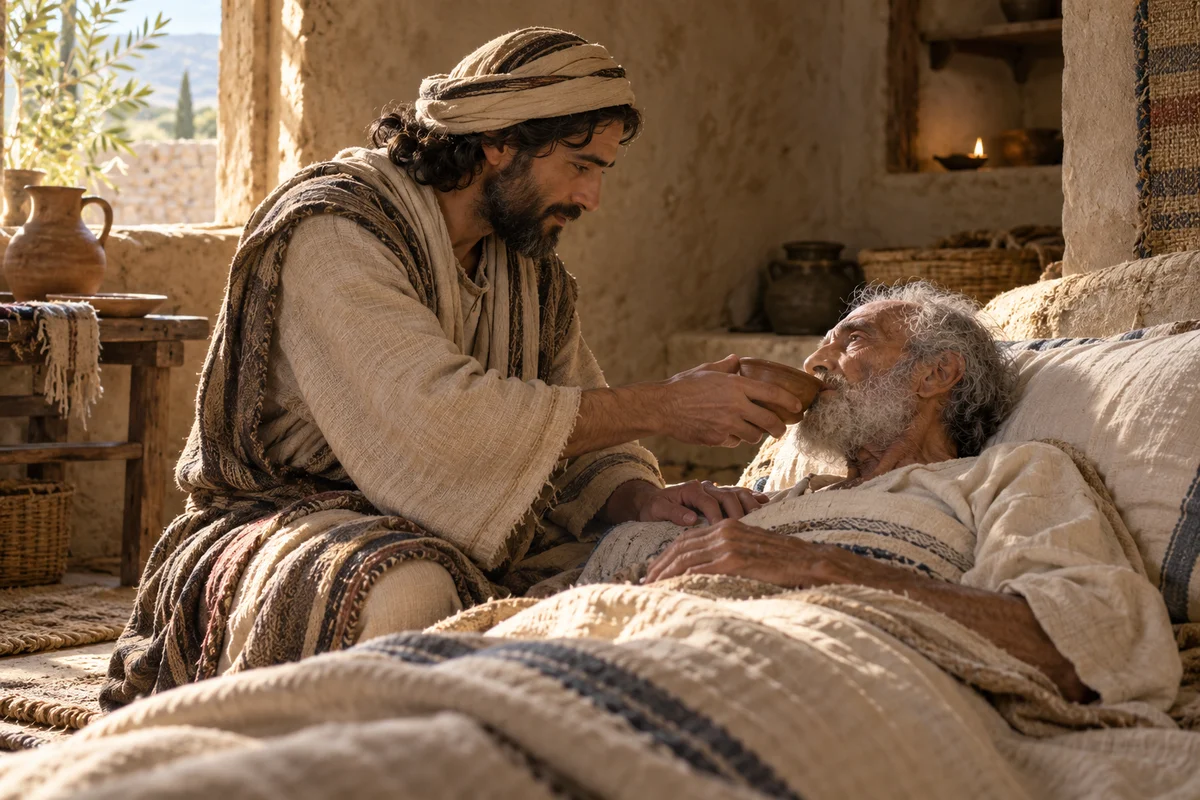
Now the public complaint becomes strikingly personal. Who will stand beside the speaker against evildoers? The question is not theoretical. The psalmist has known isolation and danger. Without the LORD's help, the speaker says, life would have ended in the silence associated with the grave (vv. 16–17).
Then comes a different kind of danger: my foot is slipping (v. 18). The image suggests how quickly a person near the edge can lose balance. The answer is God's steadfast love—ḥesed, his reliable covenant commitment—which holds the person up.
Verse 19 moves still closer to the heart: anxious thoughts multiply, but God's consolations bring delight or encouragement. The psalm does not scold the worshiper for being distressed. It gives language to the experience of overwhelming thoughts and testifies that comfort was found while those thoughts were real.
Neither verse should be used as an easy formula for mental or emotional suffering. Some believers continue to experience severe anxiety, grief, or depression and may need the support of trusted people and appropriate professional care. The text gives a testimony of divine consolation, not an instruction to hide suffering or a guarantee that prayer eliminates every symptom.
The progression is powerful: the LORD defends someone who has no defender, supports someone whose foot is slipping, and comforts someone whose inner life has become crowded with fear. The God who judges the earth is not too great to notice one troubled person.
3.6 Psalm 94:20–21 — Can a corrupt throne claim God's alliance?
The question in verse 20 cuts to the heart of religiously endorsed injustice: can a throne that produces destruction be allied with God when it fashions harm through legislation? The poet's expected answer is no.
The disturbing point is that injustice can wear the form of legality. Rules can be written and procedures followed while innocent people are targeted. Verse 21 speaks of powerful people combining against the righteous and condemning innocent blood. A lawful appearance does not transform cruelty into justice.
Goldingay interprets the image as a court or governing authority using the very structures meant to safeguard justice to produce the opposite result. Kidner likewise underlines the chilling union of power and legal respectability (Goldingay 2008, Psalm 94:20–21; Kidner 2014, 375).
For communities of faith, this is a searching warning. A government, employer, religious organization, or influential person cannot claim God's endorsement merely by invoking his name or pointing to established procedures. The treatment of the innocent and vulnerable tests the moral credibility of authority.
3.7 Psalm 94:22–23 — Refuge and the final reckoning
The closing confession returns to personal assurance: the LORD has become the speaker's stronghold and rock of refuge. Such images do not mean the danger never existed. They testify that God's protection has mattered within the danger.
The final verse again speaks sternly of evil returning upon the wrongdoers. The confidence is that injustice does not possess an eternal right to continue. Goldingay notes the pattern by which harm may rebound upon the people who devise it; Kidner sees the ending as answering the opening plea for divine judgment (Goldingay 2008, Psalm 94:22–23; Kidner 2014, 375).
The psalm does not supply a timetable or authorize its readers to administer vengeance themselves. It hands ultimate judgment back to God. That matters precisely because human judgment can be corrupted—one of the very evils the psalm has exposed.
05
4.0 Theological Reflection
4.1 God's kingship is accountable to his own justice
Psalm 93 announced God's secure throne; Psalm 94 measures all other thrones by the righteousness of his rule. Divine sovereignty is not an excuse for passivity in the face of suffering. Rather, it is a reason to believe that oppression is not the final moral order of the world.
4.2 The vulnerable are not a marginal concern
The widow, resident foreigner, and orphan are not decorative details in this prayer. Their treatment shows what kind of society the powerful are creating. Scripture consistently associates knowledge of God with justice toward those who cannot easily defend themselves (Deuteronomy 10:18–19; Isaiah 1:16–17; Jeremiah 22:15–16; James 1:27).
4.3 God's apparent silence is neither approval nor absence
The question “How long?” has force because wrongdoing appears to flourish. The psalm does not answer with an exact date or by denying the evidence of suffering. It responds through a larger understanding of the Creator, his covenant fidelity, and the future of judgment. That hope should strengthen—not replace—practical acts of protection and accountability.
4.4 Divine instruction produces steadiness, not indifference
The blessing of verses 12–15 describes people who learn God's ways during trouble. Their rest is not moral numbness. They continue to seek the return of judgment to righteousness. Wisdom is learning how to resist both despair and the temptation to imitate the oppressor.
4.5 Justice and consolation belong to the same God
The psalm moves from the judgment of earth's rulers to comfort in a heart crowded by anxiety. These are not unrelated subjects. Injustice wounds both public life and private lives. God's covenant love speaks to both: the need for wrongs to be corrected and the need for threatened people to be upheld.
06
5.0 Canonical and Christological Horizon
Psalm 94 stands within a biblical story in which God hears the cries of the enslaved (Exodus 3:7–10), requires fair treatment of those without powerful defenders (Deuteronomy 24:17–22), and condemns worship detached from justice (Isaiah 1:10–17; Amos 5:21–24). Its image of a corrupt court resonates with the prophets' accusations that rulers can turn law into an instrument of harm.
Jesus continues this concern. He announces good news to the poor and liberation to the oppressed (Luke 4:16–21), warns against religious leaders who neglect justice and mercy (Matthew 23:23), and tells a parable about a widow seeking justice from an unjust judge (Luke 18:1–8). These passages do not reduce his mission to political reform, but neither allow his kingdom to be detached from what happens to people who suffer injustice.
The cross adds a sobering dimension: Jesus himself is condemned through a distorted use of legal and political authority. The innocent one suffers, yet the resurrection declares that injustice and death are not God's last word (Luke 23:13–25; Acts 2:23–24; 1 Corinthians 15:20–26). The cross is not evidence that oppression is good; it exposes the depths of human wrongdoing while displaying God's way of overcoming it.
Christians are therefore called to resist personal revenge and to leave ultimate recompense to God (Romans 12:17–21), while continuing to pursue justice and protect those at risk. Revelation 6:9–11 shows that the prayer “How long?” still belongs within the faithful longing for God's final judgment. Revelation 21:1–5 sets that longing within the promise of a world where death, grief, and suffering will be removed.
Psalm 94 is not a direct prediction of each of these New Testament events. It provides a truthful language of lament, justice, and confidence that the wider biblical story deepens in the crucified and risen Messiah.
07
6.0 Life Application
- Pay attention to the people most easily ignored. Ask who in your community lacks access to protection, fair hearings, or reliable support. Begin with listening rather than making assumptions about their needs.
- Do not confuse legality with righteousness. A policy may be officially approved yet still harm innocent people. Evaluate its consequences and pursue lawful, nonviolent ways to correct what is unjust.
- Bring anger about injustice into prayer without feeding revenge. Name the wrong honestly. Ask God for truth, protection, repentance where possible, and accountable judgment.
- Receive instruction while you wait. Let Scripture, wise counsel, and the experience of affected people shape how you respond. Patient trust can accompany courageous action.
- Make room for honest anxiety. If your thoughts are multiplying, you need not pretend to be untroubled. Seek God's comfort and, where needed, the practical companionship and care of others.
- Examine your own use of influence. Before condemning distant rulers, consider how your decisions affect employees, children, church members, neighbors, or those who depend on you.
08
7.0 Reflection Questions
- Why does the appeal for divine vengeance in verses 1–2 differ from a desire for personal revenge?
- What makes the widow, migrant, and orphan such important tests of a community's faithfulness in verses 5–6?
- Have I ever mistaken God's delay in acting for indifference—or used that delay as an excuse not to act responsibly?
- How does the promise of God's steadying love in verses 18–19 speak to seasons of fear without trivializing them?
- Where might an organization or authority be using procedures to excuse wrongdoing, and what constructive steps could restore justice?
- How should the confession that the LORD is our refuge change the way we defend those who cannot defend themselves?
09
8.0 Response Prayer
LORD, Judge of all the earth, we bring before you the wounds that powerful people have caused and the cries that institutions have failed to hear.
You see the widow and the orphan; you know the stranger who lacks a defender; you know the innocent person whose voice has been silenced. Let not cruelty borrow your name, nor let unjust laws disguise what is wrong.
Teach us to seek justice without becoming cruel. Guard us from revenge, and also from the comfortable silence that abandons our neighbors. Give courage to those who speak the truth and wisdom to those entrusted with decisions.
When our feet slip, hold us by your steadfast love. When anxious thoughts multiply, meet us with your consolations and with faithful companions. Let your mercy strengthen us for the work of repair.
Through Jesus Christ, the innocent one who suffered and rose again, keep us faithful while we wait for your righteous kingdom, where justice and peace will no longer be strangers.
Amen.
10
9.0 Window into What Comes Next
Psalm 94 asks whether rulers who make injustice legal can possibly claim fellowship with God. It insists that divine kingship must matter in the courtroom, in public power, and in the life of the distressed. Psalm 95 then begins with an invitation to sing, shout for joy, and bow before the LORD our Maker.
At first the transition may seem surprising. But Psalm 95 will not permit worship to become an escape from obedience. Its celebration turns into a warning: “Today, if you hear his voice, do not harden your hearts” (Psalm 95:7–8, sense). The God who hears the cries of the vulnerable also calls his people to listen. The question that follows Psalm 94's demand for justice is whether worshipers will receive the King's word and put it into practice.
11
10.0 Bibliography
- Scripture: Psalm 94; Exodus 3:7–10; 22:21–24; Deuteronomy 10:18–19; 24:17–22; 32:35–36; Isaiah 1:16–17; Jeremiah 22:15–16; Amos 5:21–24; Luke 4:16–21; 18:1–8; 23:13–25; Romans 12:17–21; James 1:27; Revelation 6:9–11; 21:1–5. The key-text line above is a sense rendering, not a quotation from a specific copyrighted translation.
- Goldingay, John. 2008. Psalms. Volume 3: Psalms 90–150. Baker Commentary on the Old Testament Wisdom and Psalms. Grand Rapids, MI: Baker Academic. “Psalm 94: God of Redress.”
- Kidner, Derek. 2014. Psalms 73–150. Kidner Classic Commentaries. Downers Grove, IL: InterVarsity Press. Originally published 1975. “Psalm 94: A God Who Punishes,” 372–75.

Be the first to leave a comment.