

How can remembered mercy become daily service and witness among the nations?
Study overview
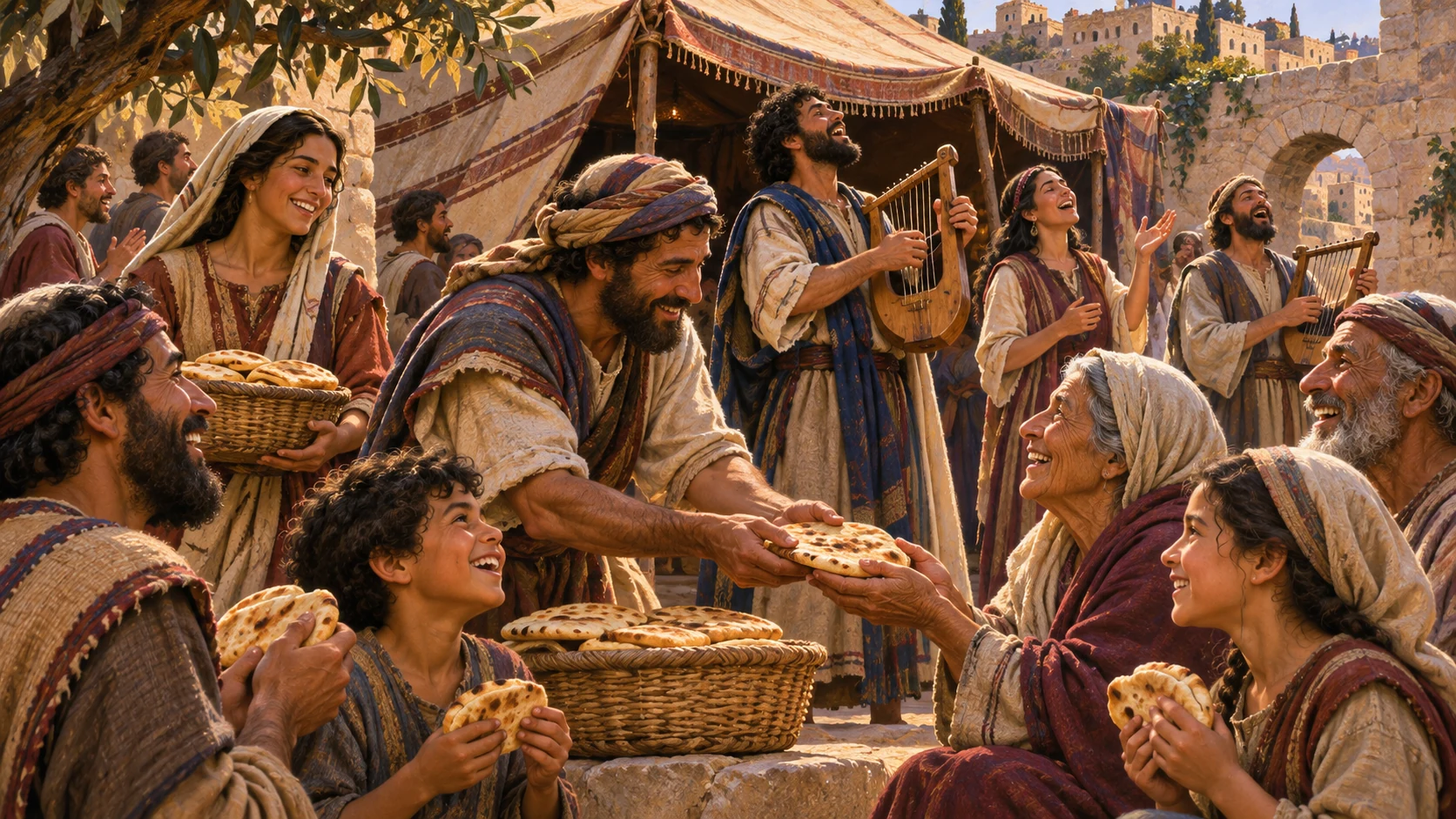
The ark has reached its resting place; the song cannot remain inside the tent. Bread passes from hand to hand, and forgotten promises are spoken aloud. Before the throne of Israel's God, praise becomes good news for the nations.
Passage: 1 Chronicles 16:1–43
Controlling metaphor: A song rising before the divine throne and traveling beyond Jerusalem
Heart-question: Does worship end with a joyful gathering, or does remembered mercy reshape the community's daily service and witness?
Introduction: When Joy Needs a Memory
A community may celebrate achievement but forget its purpose the next morning. Music fades, guests depart, and responsibility returns to exhausted workers. Without memory and new habits, celebration becomes a photograph.
With the ark in Jerusalem, David feeds the people, appoints Levites, and commissions Asaph’s hymn. The song remembers Abraham, announces God’s reign, calls creation to rejoice, and asks for deliverance. The day ends with regular service and family blessing.
This text is about remembered covenant mercy becoming public praise, faithful service, and hope for the nations. Worship extends beyond the tent door; the people must live by the song.
Historical and Literary Context: From the Ark's Journey to the People's Song
First Chronicles 10–12 moves from Saul's failed leadership to the gathering of Israel around David. Neglected instructions bring judgment during the first ark procession (13:7–14). David seeks God in battle (14:10, 14); the Levites carry the ark properly (15:13–28). Chapter 16 reveals restored worship.
The Chronicler writes for a people shaped by exile and return, not merely to recreate David's festivities. In 16:8–36, the hymn draws on material also found in Psalms 105:1–15; 96:1–13; and 106:1, 47–48. The combination shapes covenant memory and postexilic hope. Whether every line was sung in this form during David’s lifetime is unknown (Japhet 1993; Knoppers 2004).
Sailhamer (1983) emphasizes the hymn's outward horizon: God's gracious purposes for Israel ultimately concern the nations (Gen 12:3). The ark's arrival is therefore neither royal self-congratulation nor private religious nostalgia.
Walking Through the Text
When the Ark Rests and Bread Reaches Every Hand (16:1–3)
The ark is placed inside the tent David prepared. Burnt offerings and offerings of well-being accompany the arrival (16:1). David blesses the people in the Lord's name and distributes food to men and women alike (16:2–3).
David directs the celebration without necessarily performing every priestly duty. Translations differ on one food item in verse 3, but the distribution is unmistakable.
The ark rests, but blessing moves through shared food. Worship cannot ignore the needs of the gathered people.
When Praise Becomes an Assigned Ministry (16:4–7)
David appoints Levites to invoke, thank, and praise the Lord before the ark. Asaph leads, other musicians play instruments, and the priests Benaiah and Jahaziel sound trumpets regularly (16:4–6). On that day David entrusts a thanksgiving hymn to Asaph and fellow ministers (16:7).
Joy and structure belong together. Named workers preserve worship beyond impressive events. After Uzzah, organized ministry protects continuing devotion.
Asaph's commission joins Davidic leadership to Levitical calling. The center of Israel's future is not simply what the king builds, but the God whom the people remember and praise.
When a Small Family Remembers an Everlasting Covenant (16:8–22)
The hymn begins with commands: give thanks, call, sing, tell, seek, remember (16:8–12). These verbs move inward and outward. Worshipers seek God's presence continually while making God's deeds known among peoples.
The song recalls the covenant with Abraham, Isaac, and Jacob and the land (16:13–18; Gen 12:1–3; 17:1–8). The ancestors were once few, vulnerable, and wandering from nation to nation (16:19–20). God protected the family, even warning rulers not to harm God's anointed ones and prophets (16:21–22).
In context, “anointed ones” recalls the protected ancestors; the line should not be reduced to a blanket exemption for contemporary religious leaders from accountability. A vulnerable family survived by divine faithfulness, not uninterrupted power.
God has not forgotten the scattered descendants of wandering ancestors.
When Israel's Song Calls the Nations and Creation (16:23–33)
A fresh call rises: all the earth is summoned to sing and announce the Lord's salvation day after day (16:23). The nations are to hear God's glory and marvelous works (16:24). The hymn contrasts idols with the Lord, maker of the heavens (16:25–26).
Glory, strength, holiness, and reverence surround the divine King (16:27–30). Then the horizon grows wider: heavens rejoice, earth is glad, sea resounds, fields celebrate, and forest trees sing before the Lord who comes to judge the earth (16:31–33; cf. Ps 96).
Judgment here is not merely an image of terror. The Creator's righteous government gives endangered creation reason to hope (Ps 96:13; Isa 11:1–9). Israel's witness invites recognition of God's reign, not humiliation of other peoples. The blessing promised to Abraham was always meant to reach the families of the earth (Gen 12:3).
When Thanksgiving Becomes a Prayer for Return (16:34–36)
The song declares God's goodness and enduring covenant love (16:34). Then, unexpectedly within David's celebration, the community prays to be saved and gathered from the nations (16:35). The hymn closes in praise, and the people respond with Amen and praise to the Lord (16:36).
Echoing Psalm 106:47–48, the prayer addresses readers who knew exile and later national brokenness. Even gathered people still need deliverance.
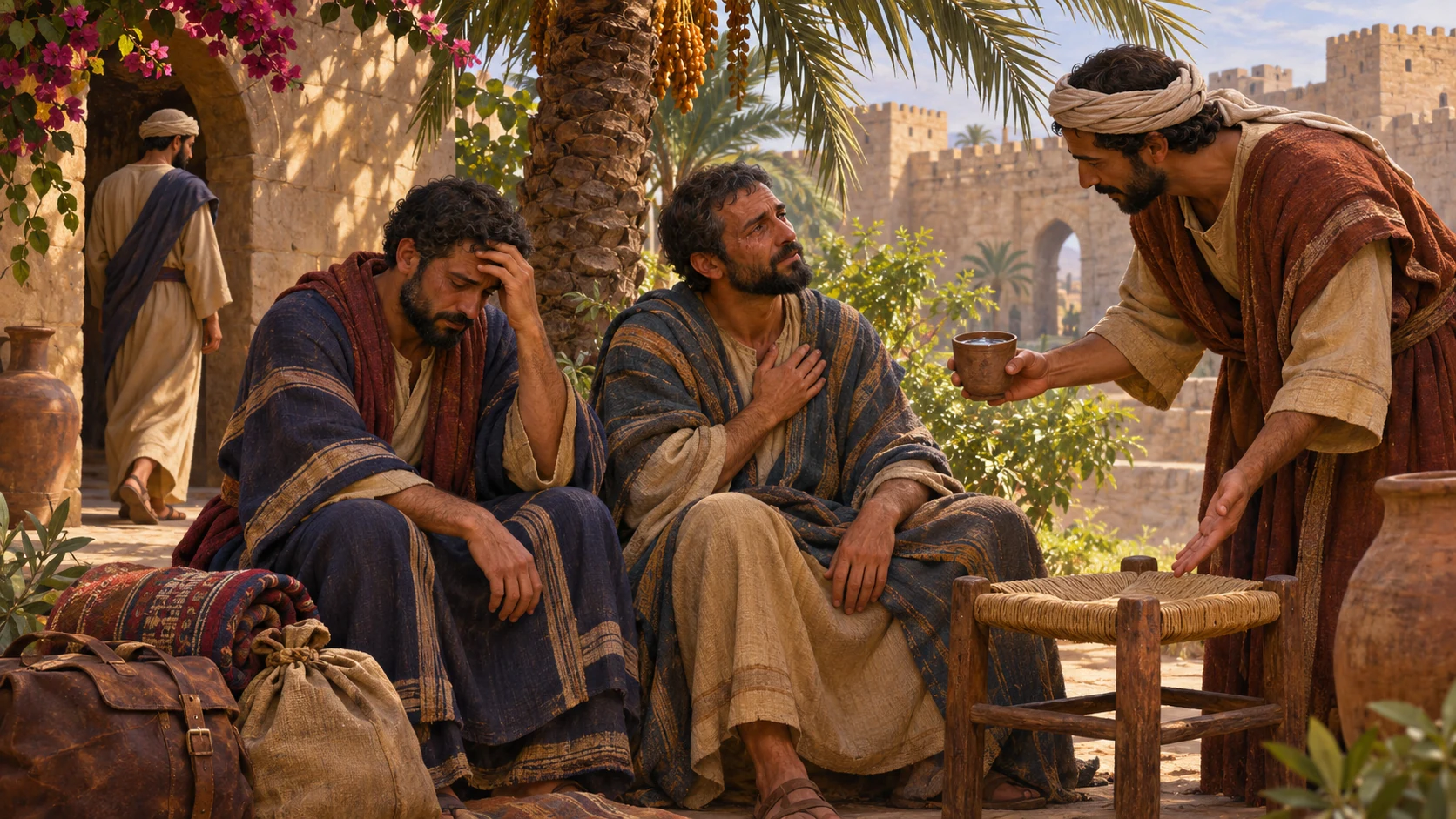
Remembered mercy does not erase repentance or future need. Praise becomes credible when thanksgiving makes room for an honest cry for restoration.
When the Festival Becomes Daily Faithfulness (16:37–43)
After the hymn, David appoints Asaph and fellow Levites to minister regularly before the ark in Jerusalem (16:37–38). Zadok and other priests remain before the Lord's tabernacle at Gibeon, offering sacrifices morning and evening according to the law (16:39–40). Heman, Jeduthun, singers, instrumentalists, and gatekeepers carry their assigned work (16:41–42).
The ark is in Jerusalem; the tabernacle and altar continue at Gibeon. This is a transitional arrangement, not competing divine presences (1 Chr 21:29; 2 Chr 1:3–6). The temple lies ahead.
Finally the people return home, and David blesses his household (16:43). The song has done more than fill a day. Public praise becomes daily worship and family blessing.
Theological Reflection: The Song of a Renewed People
Covenant Memory Sustains Identity
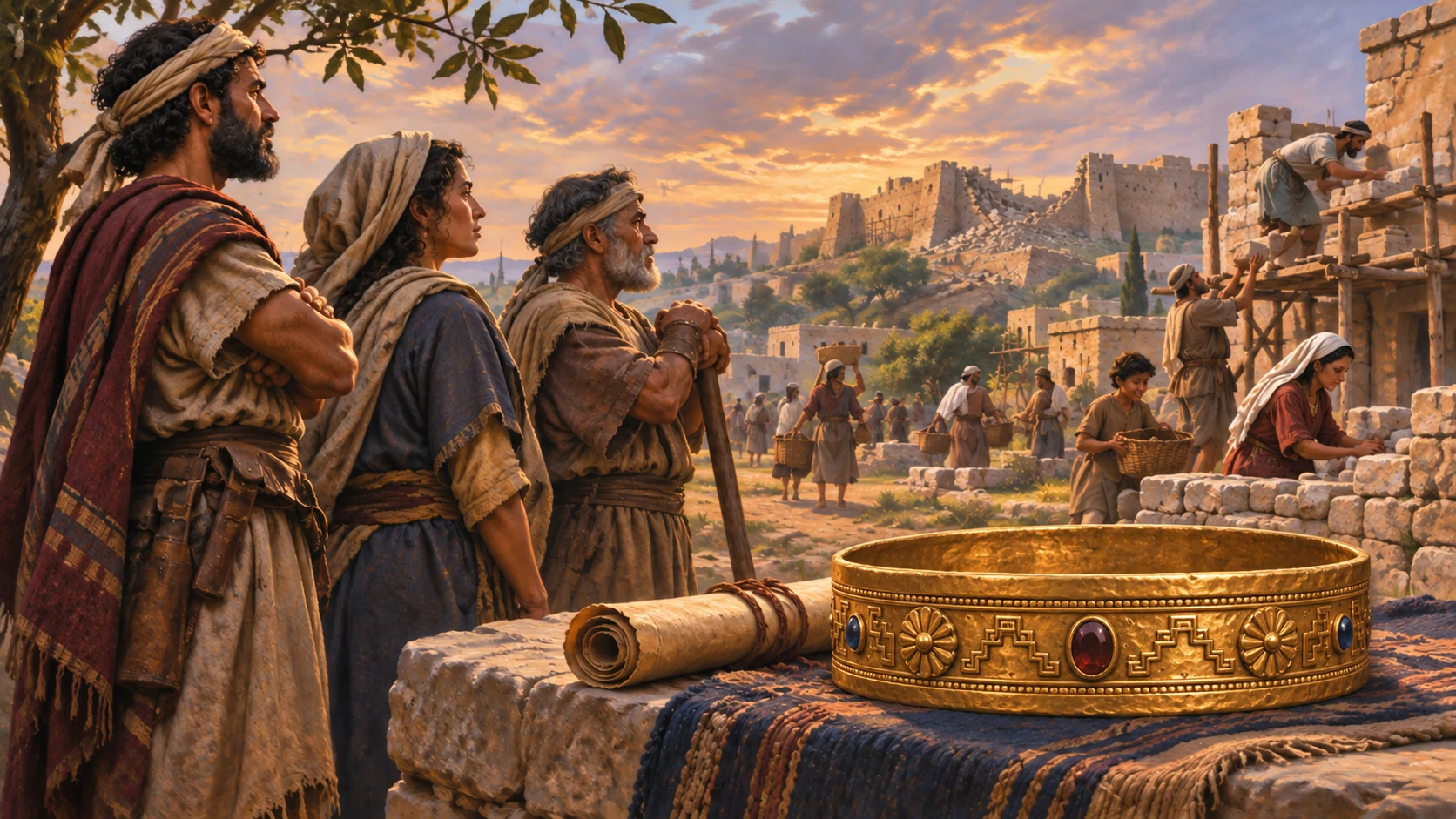
Remembering Abraham's vulnerable family (16:15–22) teaches exiles that failure and displacement are not the final definition of God's people. God's covenant does not excuse disobedience, but God's faithfulness sustains the possibility of return (Lev 26:40–45; 2 Chr 36:22–23).
Worship and Witness Belong Together
The repeated summons to declare God's deeds among the nations (16:8, 23–24) places mission inside praise. The worshiping community is blessed in order to become a blessing (Gen 12:3; Isa 12:4). Christian witness should likewise communicate God's mercy through truthful words, generosity, and humble service rather than spectacle.
Holiness Requires Both Song and Stewardship
Asaph's singers and Zadok's priests are both needed; Jerusalem and Gibeon receive assigned service (16:37–42). Worship without disciplined responsibility can decay into a festival without faithfulness. Conversely, routine without thanksgiving can become empty religion (Isa 1:11–17). Ordered care and joyful praise must remain together.
The Reigning Lord Opens Hope for All Creation
The song praises the Creator who judges the earth rightly (16:25–33). Its universal horizon anticipates prophetic hope for the nations and renewed creation (Isa 2:2–4; 11:6–9). Christians see God's kingship revealed through Jesus, the Son of David, whose resurrection begins the promised renewal (Luke 1:32–33; Col 1:15–20; Rev 21:1–5). The true temple and the gathering of the nations meet in Christ (John 2:19–21; Eph 2:19–22).
Life Application: Let the Song Leave the Tent
- Build practices of remembrance. Recount biblical acts of mercy and record truthful stories of congregational deliverance, including seasons of failure and repair.
- Share the feast fairly. Budget for hospitality and practical support so that widows, visitors, struggling families, and overlooked workers can participate with dignity.
- Give praise a daily rhythm. Appoint and train reliable people for Scripture reading, prayer, music, and care beyond special celebrations.
- Speak of God beyond the sanctuary. Practice respectful witness through teaching, neighborhood service, and honest conversations that invite rather than coerce.
- Pray for scattered people. Remember migrants, displaced families, estranged members, and isolated congregations; accompany prayer with practical help.
- Keep worship accountable. Review stewardship, safeguards, and the treatment of volunteers; beautiful songs cannot justify negligent leadership.
- Carry blessing home. End gatherings with concrete commitments to reconciliation, generosity, Sabbath rest, and care within households.
Reflection Questions
- What act of God's mercy has the congregation stopped remembering?
- Where has celebration replaced sustained care, prayer, or obedience?
- Which neighbors or nations are absent from the community's concern and witness?
- What truth about loss or exile must be brought into thanksgiving rather than hidden?
- How will the next gathering's blessing become visible in homes and neighborhoods?
Response Prayer
Lord of the covenant, receive the song before the throne. Teach the church to remember Abraham's promise, confess failures, and seek divine presence continually. Place bread in generous hands and truth upon worshipers' lips. Let Asaph's song become daily service, and let praise travel to the places where neighbors ache for hope. Gather the scattered, heal divided households, and guard the ministry of the sanctuary against empty display. Through Jesus Christ, Son of David and hope of creation, make thankful people into a blessing for the nations. Amen.
Window into What Comes Next
The song has filled Jerusalem, and the people have returned to their homes. In 1 Chronicles 17, David looks at the royal house and the tent that shelters the ark. The king wants to build God a house—but God responds by promising to establish David's house. The song before the throne now opens into the surprising architecture of covenant grace.
Annotated Bibliography
- Hill, Andrew E. 1 & 2 Chronicles. NIV Application Commentary. Grand Rapids: Zondervan, 2003. Relates remembered worship and public thanksgiving to contemporary communal practices.
- Japhet, Sara. I & II Chronicles: A Commentary. Old Testament Library. Louisville: Westminster John Knox, 1993. Analyzes the literary shaping of the hymn and the Chronicler's temple-centered historical perspective.
- Klein, Ralph W. 1 Chronicles: A Commentary. Hermeneia. Minneapolis: Fortress, 2006. Clarifies the composite psalm, worship personnel, and textual questions.
- Knoppers, Gary N. I Chronicles 10–29: A New Translation with Introduction and Commentary. Anchor Bible 12A. New York: Doubleday, 2004. Offers detailed analysis of Davidic worship and the Chronicler's reuse of psalm traditions.
- Sailhamer, John. First and Second Chronicles. Everyman's Bible Commentary. Chicago: Moody Press, 1983. The supplied commentary emphasizes covenant memory and the hymn's outward call to the nations.
- Williamson, H. G. M. 1 and 2 Chronicles. New Century Bible Commentary. Grand Rapids: Eerdmans, 1982. Situates the ark's arrival and the continuing worship order within the Chronicler's postexilic hope.
Be the first to leave a comment.