

How does a plea for a lighter yoke become a divided kingdom and a religion shaped by fear?
Study overview
A Kingdom Broken by Pride, Worship Reshaped by Fear, and the King’s Call to Serve
Key passage: 1 Kings 12:7 — The elders counsel Rehoboam to serve the people, answer graciously, and establish a relationship of willing service. (Summary, not a direct quotation.)
Beneath the palace’s splendor, tired shoulders wait. A king answers pain with a heavier yoke. Across the broken kingdom, fear begins to cast gold. Along the road to war, the word of God calls brothers home.
Introduction — When Listening Feels Like Losing
A farmer can tighten a yoke until the wood bites into an animal’s neck. Greater pressure may produce a brief movement, but an injured animal cannot carry an endless load. Strength without care eventually destroys the possibility of useful work.
First Kings 12 brings the kingdom’s aching shoulders into view. Solomon’s buildings have drawn admiration; Solomon’s labor demands have also left a burden. The people approach Rehoboam with a request for relief. The new king hears an opportunity to negotiate loyalty, yet royal pride turns the meeting into a demonstration of force.
The consequences spread quickly. A kingdom divides, an official dies, and soldiers prepare for war. Then another danger grows across the border. Jeroboam, released from Solomon’s domination, begins organizing worship around anxiety about losing power. Freedom from one oppressive ruler fails to guarantee freedom from fear.
What happens when authority treats listening as weakness and worship as protection for a throne? First Kings 12 portrays neglected service becoming national fracture, and political fear becoming manufactured religion.
The chapter searches leadership in the palace, congregation, workplace, and home. A title can become a shelter for pride. A religious program can become a fence around influence. Yet God still speaks into the wreckage. The road toward bloodshed can close when a king finally listens.
Historical and Literary Context — The Torn Cloak Becomes a Divided Kingdom
Chapter 11 announced judgment through Ahijah’s torn garment. Solomon’s apostasy would lead to the loss of most of the kingdom, while God preserved a Davidic future in Jerusalem. Jeroboam received both a promise of rule and a call to obedience (11:29–39). Chapter 12 shows the division taking public shape after Solomon’s death.
Shechem carries memories older than David’s dynasty. Abraham encountered God’s promise nearby, and Joshua gathered Israel at Shechem for covenant commitment (Gen 12:6–7; Josh 24:1–28). The setting recalls a people under God before a people under a palace. Rehoboam’s arrival for recognition as king therefore matters: northern allegiance requires a response to real grievances.
The book now enters the divided monarchy. Chapters 1–11 traced Solomon’s rise and failure; chapters 12–16 introduce the rival kingdoms. The prophetic confrontations running through 1 Kings 17–2 Kings 8 precede the long movement toward collapse and exile. Throughout, royal achievement remains subject to covenant judgment. The BibleProject overview highlights worship, justice, and covenant faithfulness as the narrative’s standards for evaluating kings (BibleProject n.d., 2–4).
The chapter joins economics and worship without confusing the issues. Rehoboam’s harsh policy exposes the misuse of people. Jeroboam’s shrines expose the misuse of devotion. Both rulers face a common question: will authority remain accountable to God? Brueggemann reads the failed negotiations and the rival religious establishment as connected expressions of power in public life (Brueggemann 2000, 153–62).
Walking Through the Text
Tired Shoulders Reach the Negotiating Table — 12:1–5
Israel gathers at Shechem to make Rehoboam king. Jeroboam returns from Egypt and joins the assembly’s appeal. The request is specific: reduce the severe service and heavy yoke imposed under Solomon. The people offer continued service in response to lighter burdens.
The language brings earlier labor arrangements into focus (5:13–18; 9:15–23). The narrative does not provide a complete economic ledger. The complaint nevertheless makes the human cost unmistakable. Admiration for a building cannot cancel concern for exhausted workers.
Rehoboam asks for three days. The delay creates room for careful judgment. An inherited system need not become an unquestioned obligation. A new ruler can honor a predecessor’s achievements while changing damaging practices. The opening remains an opportunity for repair.
A Servant’s Answer Is Replaced by a Threat — 12:6–15
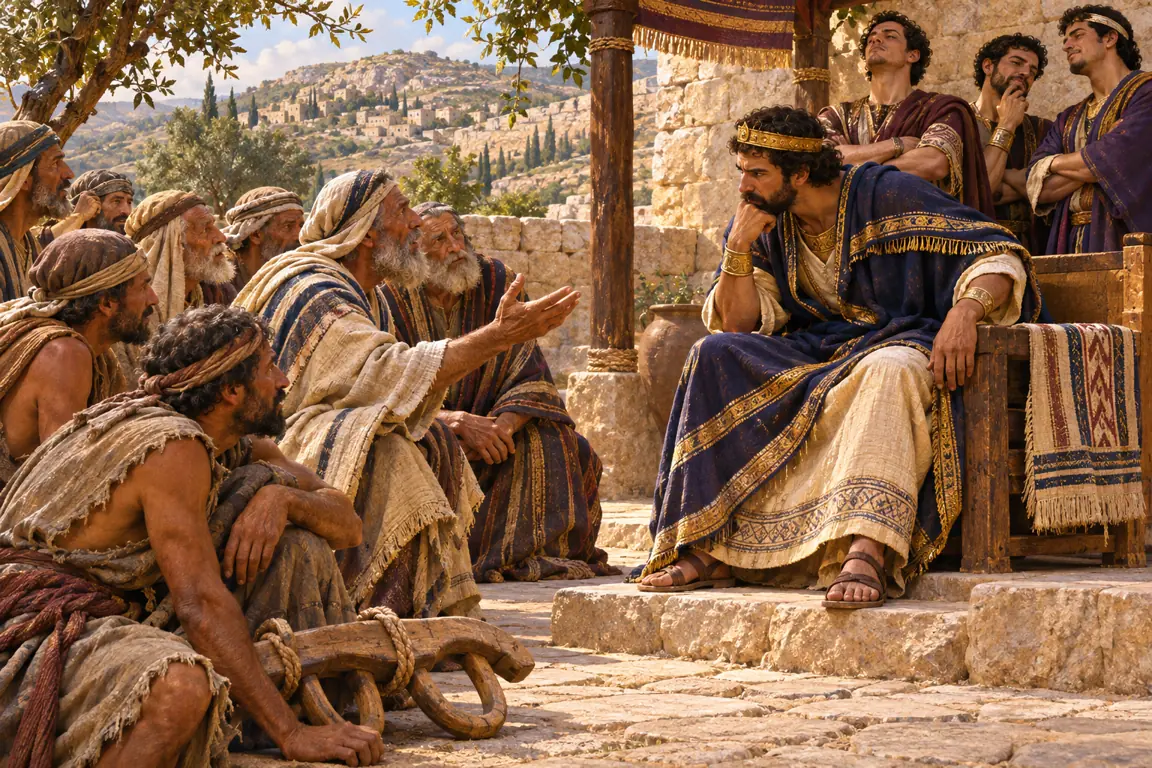
The elders previously serving Solomon advise gracious attention and service. Rehoboam should first act as a servant toward the people; lasting loyalty can grow from such leadership. The advice concerns more than a pleasant tone. Lightening the yoke would affect royal expectations and resources.
Rehoboam rejects the counsel and consults companions raised alongside the king. The companions recommend a boast of superior strength and threats of harsher discipline. The repeated contrast between a lighter and heavier yoke exposes the choice. The people ask for relief; the court prepares intimidation.
The warning against a restricted circle of advisers does not amount to a rule declaring every older person wise and every younger person foolish. The decisive issue is the quality of counsel and the king’s willingness to hear unwelcome truth. Provan emphasizes the contrast between service and the hardening pattern associated with Pharaoh (Provan 2012, commentary on 1 Kgs 12:1–24).
Rehoboam repeats the threats when the delegation returns. Verse 15 then identifies God’s purpose within the turn of events, fulfilling Ahijah’s word. Divine sovereignty does not make cruelty righteous. The narrator holds royal responsibility and God’s judgment together.
A Harsh Answer Opens an Old Wound — 12:16–20
The northern assembly rejects allegiance to David’s house. The language recalls the earlier revolt under Sheba (2 Sam 20:1). Beneath the appearance of national unity, old divisions have remained capable of reopening.
Rehoboam sends Adoram, the official over the labor levy. The appointment makes the encounter especially charged after the complaint about forced service. Israel stones Adoram to death, and Rehoboam escapes to Jerusalem. The violent outcome must retain the weight of a lost human life. The account records the collapse of royal authority; the account does not supply permission for settling present grievances through murder.
Jeroboam becomes king over the northern kingdom, while the Davidic throne retains Judah. The judgment announced through a torn cloak now appears in torn relationships and divided government. Political arrogance has consequences beyond a poorly chosen speech. A refusal to listen can leave households carrying wounds long after the meeting ends.
The Word of God Stops a Brother’s Sword — 12:21–24
Rehoboam assembles 180,000 chosen warriors from Judah and Benjamin to recover the kingdom. Military action appears to offer a way of reversing the loss. God sends Shemaiah, the man of God, with a different instruction: abandon the campaign and return home.
The northern Israelites remain brothers despite political separation. God also identifies the division as part of divine judgment. Rehoboam cannot heal the rupture by refusing the word governing the rupture.
Remarkably, the king and the assembled people obey. The earlier refusal to hear wise counsel does not make later obedience impossible. The campaign ends before battle begins. Later hostility between the kingdoms prevents a claim of permanent peace (14:30), but the restraint remains significant. God’s word interrupts the assumption that wounded prestige must be repaired through bloodshed. A halted campaign can become a greater act of leadership than a victorious march.
Fear Begins to Cast Gold — 12:25–30
Jeroboam fortifies Shechem and Penuel. Then the narrator opens the king’s inner reasoning. Pilgrimages to Jerusalem might restore loyalty to Rehoboam and lead to Jeroboam’s death. Fear now interprets the future more forcefully than God’s promise of an enduring house through obedience (11:38).
The king makes two golden calves, placing a calf at Bethel and a calf at Dan. Jeroboam presents the arrangement as relief from travel to Jerusalem and connects the images with Israel’s deliverance from Egypt. The wording recalls the golden calf account in Exodus 32:4. A king emerging from an oppression resembling Pharaoh’s rule now repeats an error associated with Aaron.
Scholars discuss whether the images were intended as representations of a deity or as supports for an invisible divine presence. The historical reconstruction remains debated. The narrative’s assessment remains clear: the arrangement becomes sin (12:30). Familiar language about deliverance cannot authorize worship engineered to secure a ruler’s position (Provan 2012, commentary on 1 Kgs 12:25–33).
The King Organizes Devotion around the Throne — 12:31–33
Jeroboam builds shrines, appoints priests outside the Levites, and establishes a festival on the fifteenth day of the eighth month. The celebration imitates Judah’s feast, while changing the appointed setting and calendar; the Feast of Booths belonged to the seventh month (Lev 23:34).
The objection to the priests concerns covenant authorization, not contempt for poverty or ordinary social standing. The passage identifies the priests as non-Levites. Translating the concern into a claim that poor people are spiritually inferior would distort the issue.
The final emphasis falls on the king’s initiative: the date comes from the king’s own heart. God’s instruction has yielded to royal design. The passage does not condemn every practical adjustment in ministry. The deeper concern is authority rearranging allegiance for political survival. Jeroboam offers an apparently convenient religious system, but the system teaches a kingdom to trust arrangements born from fear.
Theological Reflection
Service Measures Authority
The elders’ counsel places service before the security of the throne (12:7). Deuteronomy had already required the king to remain a brother among the people, subject to Torah rather than elevated above fellow Israelites (Deut 17:18–20). Rehoboam reverses the relationship by treating the people’s exhaustion as an obstacle to royal greatness. A covenant understanding of leadership asks about the condition of the shoulders beneath the public achievement. Good order should help neighbors flourish; prestige cannot justify endless extraction.
God’s Rule Does Not Cancel Human Responsibility
Verse 15 locates the turn of events within God’s announced purpose. Rehoboam still chooses harsh counsel, and Jeroboam remains responsible for false worship. God’s sovereignty cannot become an excuse for arrogance, fatalism, or silence before injustice. Shemaiah’s message also resists the opposite error: treating force as the answer to every unwelcome development. Faithful action sometimes requires accepting a loss, laying down a campaign, and obeying a boundary established by God.
Fear Can Borrow the Vocabulary of Faith
Jeroboam does not abandon religious activity. The king expands religious provision. Shrines, priests, offerings, and a festival become the framework of disobedience. Religious energy therefore requires discernment. The central question concerns the authority shaping devotion: God’s word or a leader’s anxiety? The promise of 11:38 had called Jeroboam toward obedience. The fear of 12:26–27 moves the king toward control. Worship becomes distorted when God’s name supports a strategy for making human power feel safe.
Deliverance Must Continue into Covenant Faithfulness
The northern kingdom escapes Rehoboam’s heavier yoke, yet a new beginning soon develops a familiar spiritual danger. Liberation from oppressive authority remains precious; freedom also needs direction. The exodus pattern reinforces the warning: departure from Egypt did not prevent the golden calf. The chapter invites gratitude for relief alongside patient formation in obedience. A changed structure can open a door. A community still needs a faithful path through the doorway.
Canonical and Christological Horizon — A Gentle King beneath the Yoke
Jesus brings the rejected pattern of service into full expression. In Mark 10:42–45, Jesus confronts domination among rulers and defines greatness through service, culminating in the Son of Man’s life given as a ransom. The cross carries the cost of faithful kingship. The King serves beyond the point of securing applause.
Matthew 11:28–30 also gives the yoke image a searching contrast. Rehoboam promises added weight; Jesus welcomes the weary into the learning of a gentle master. The invitation offers rest within discipleship, not freedom from love’s responsibilities. The authority of Jesus restores strength for faithful living.
The divided kingdom also belongs to a larger biblical longing for reconciliation. Ezekiel 37:15–28 pictures Judah and Joseph brought together under a Davidic shepherd. John 10:16 speaks of a single flock under a single shepherd. Such hope reaches beyond royal coercion. God’s promised unity grows under faithful shepherding. The road from Shechem finally directs attention toward a King capable of joining service, truth, and peace.
Life Application
- Audit the weight carried by neighbors. A pastor, employer, or parent can review expectations with volunteers, workers, or family members. Remove one unnecessary demand and accept the resulting reduction in personal convenience.
- Invite counsel beyond the familiar circle. Before a major decision, consult a person likely to challenge the preferred answer. Record the concern accurately before defending the existing plan.
- Replace an intimidating response with a fair action. Where a complaint concerns workload or treatment, establish a date for a practical adjustment. A softer voice needs an accompanying change in conduct.
- Stop a campaign driven by injured pride. Suspend retaliation, hostile messages, or pressure against a perceived rival. Seek a truthful conversation with appropriate accountability before further action.
- Examine the fear beneath religious decisions. Church leaders can ask whether a program serves biblical discipleship or protects a personality, budget, or position. Change one practice supported mainly by anxiety about losing influence.
- Learn service at the feet of Jesus. Read Mark 10:35–45 with a ministry team or household. Choose an overlooked task, share the work, and discuss the actual cost of serving without public recognition.
Reflection Questions
- Which burdens beneath a successful ministry, business, or household have received too little attention?
- Which unwelcome counsel has been dismissed because agreement would require surrendering status, money, or convenience?
- Where has wounded pride begun preparing a battle against brothers or sisters?
- Which religious practices reveal trust in God, and which practices mainly protect a leader’s influence?
- What concrete act of service could make the gentleness of Jesus visible during the coming week?
Response Prayer
God of the covenant, the road from Shechem carries the grief of divided households and injured trust. Give leaders the courage to hear tired voices before resentment becomes a wound. Break the pride behind harsh answers. Teach churches, workplaces, and families to measure success by faithful service and the flourishing of neighbors.
Lord Jesus, gentle King, train fearful hearts beneath the good yoke of discipleship. Expose the golden calves formed from anxiety about position, reputation, and survival. Restore worship shaped by Scripture, gratitude, and love. Give communities the honesty to change damaging practices and the patience to rebuild broken trust.
Where anger prepares another campaign, let the word of God interrupt the march. Replace the appetite for victory with courage for truth and peace. Let the cross shape authority, and let humble service carry the fragrance of the coming kingdom. Amen.
Window into What Comes Next — A Voice beside the New Altar
Chapter 12 ends with Jeroboam standing at the altar established under royal authority. The new religious order appears organized and active. Yet an altar cannot silence God under the pretext of honoring God.
Chapter 13 brings a man of God from Judah into the scene at Bethel. A prophetic word will confront the royal project, and a disturbing sequence of obedience, deception, and judgment will follow. Watch the tension between visible religious authority and the command of God. The next question reaches beyond a king’s willingness to listen: can a messenger remain faithful after the first courageous act?
Bibliography
- Bible. 1769. The Holy Bible: King James Version. 1 Kings 12. BibleGateway. https://www.biblegateway.com/passage/?search=1%20Kings%2012&version=KJV. Scripture wording in the study is paraphrased unless otherwise indicated.
- BibleProject. n.d. “The Books of Kings.” Old Testament Overviews. Supplied PDF, “Books of 1 and 2 Kings: Guide with Key Information and Resources,” 1–4.
- Brueggemann, Walter. 2000. 1 & 2 Kings. Smyth & Helwys Bible Commentary. Macon, GA: Smyth & Helwys. See “An Urgent Political Settlement,” 153–62.
- Provan, Iain W. 2012. 1 & 2 Kings. Understanding the Bible Commentary Series. Grand Rapids: Baker Books. See commentary sections “The Kingdom Torn Away (1 Kgs. 12:1–24)” and “Jeroboam’s Sin (1 Kgs. 12:25–33).”
Be the first to leave a comment.